I devised a list of how to participate in the healing of men and women who have been hurt:
Be willing to listen, even if what is being said is what you’d prefer to not hear. Try not to re-engineer (re-frame, recast) what you have heard so it is more fitting with what you’d really like to hear.
Resist understandable attempts to short-circuit growth by trying to ease necessary pain, by offering false affirmations, and by accepting empty excuses for irresponsible behavior. Pain is a very good motivator for change. Resist the urge to remove it when it appears to be helpful.
Offer your presence, not your answers. “I am with you” is more helpful than “let me help you fix it.”
Welcome silence. There are ways to communicate that do not include words. Resist the understandable urge to chase healing and learning away with the incessant use of words and stories.
Avoid minimizing (“it’s not so bad!”) or rationalizing (“What else did you expect?”) or normalizing (“Anyone would have done that!”) the issues that resulted in pain. Do not rob necessary pain of its usefulness.
Promote “future thinking.” Ask questions focused on future wellness and success.
Try to avoid searching for the genesis (the cause) of what has led to pain. Where something comes from is not nearly as important living your way out of it.
As well-intentioned as we may be in desiring to avoid conflict and “keep the peace,” we create more problems we must face later by running or playing hide and seek. Then, when we do face matters, we’re not the people we once were.
Avoidance is a quick-change artist! It changes us in ways we are likely to regret.
We cannot solve or improve what we will not face. Denial gets us no place worthy of the journey or the unintended, unwanted destination. Until we gather the courage to look difficult situations directly in the eye and expedite what is necessary to face the difficulties, conflicts will stay as they are and they’re likely to deteriorate.
What we avoid shapes us in ways we may never notice. We modify our habits in order to sustain our denial and avoidance. We change our friendships in order to sustain our patterns. We go out of our way to keep the peace but the new path is one to further avoidance. Our defensive habits defend us in unhealthy and unhelpful ways and make us into people we’d rather not be.
Avoidance of necessary battles creates unintended distance from others — even those we truly love.
There is no worthwhile substitute for early honest approaches to family or business conflicts.
Avoidance makes the heart grow harder.
Ours.
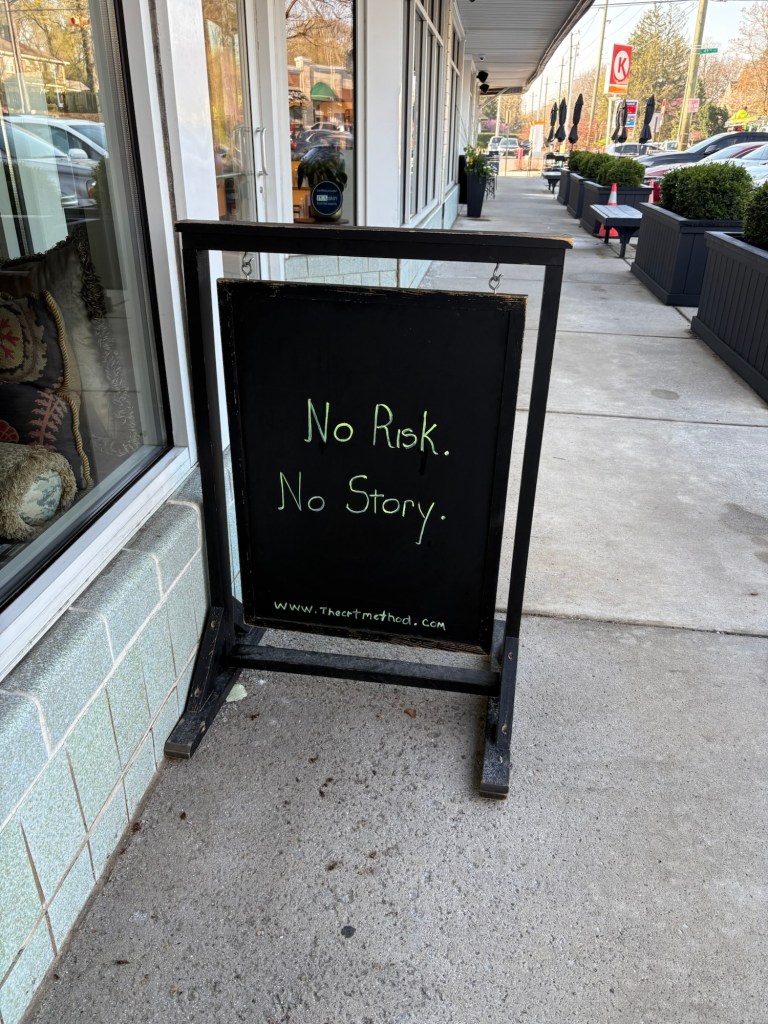
I enjoyed this side-walk art…… 49th and Penn in Meridian Kessler, Indianapolis
“What parenting advice could you offer my wife and me,” said the delighted dad, “my son is 16 months young.”
Above all, love your wife with joy, freedom and courage. This will reduce and deflect loads of the anxiety that naturally tries to derail all childhoods.
Lavish your baby, then young child, then pre-teen and teenager with affirmation and affection. No matter what you and your wife face, when you come home from work, or he returns after time away, or when he wakes in the morning or in the middle of the night — baby or teenager — be glad to see him, and, say so. Verbally express the joys your son brings you, to each other, and to him.
Teach him to talk Joy.
Regard the ages 5, 8, 12, 14 and 16 as transition ages. At these times discuss with him your parental plans (your mutually agreed upon plans you’ve made as parents) to do less and less for him, while expecting more and more from him. Yes, even at 5 — point out that he can make his own, age-appropriate decisions. Include him in planning and establishing his growing independence. Plan your parenting so that by his eighteenth year your parenting roles are accomplished and he has all it takes to be an interdependent young adult.
Hold in high regard the beautiful idea that you parent (the verb) for his sake and not yours.
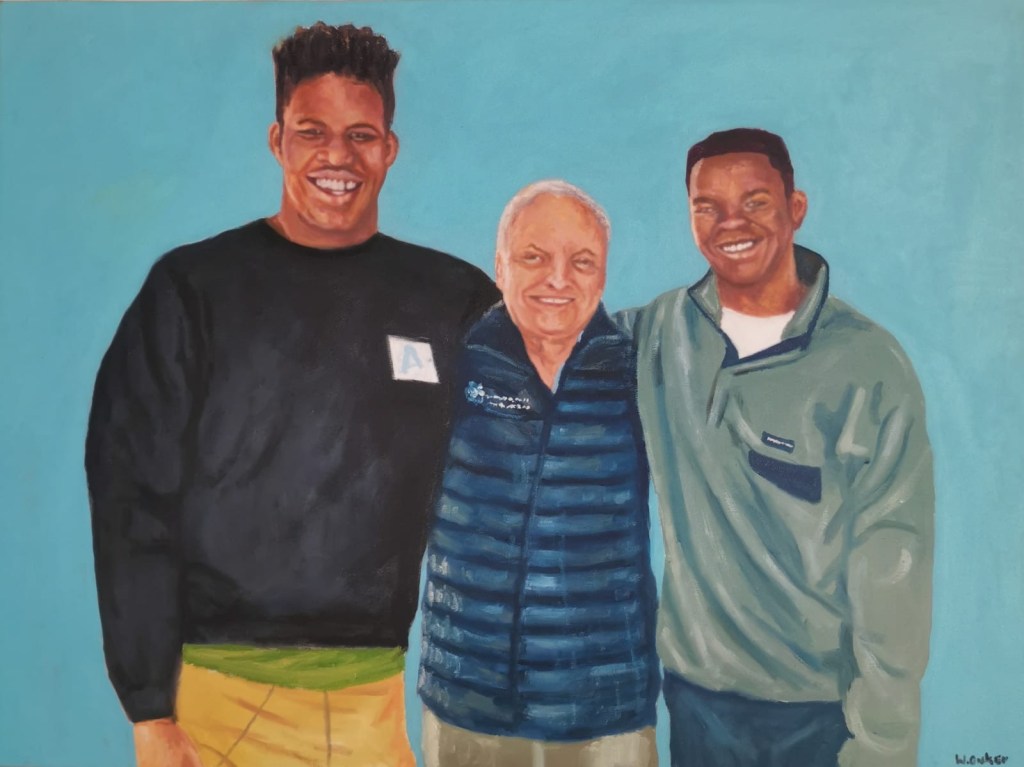
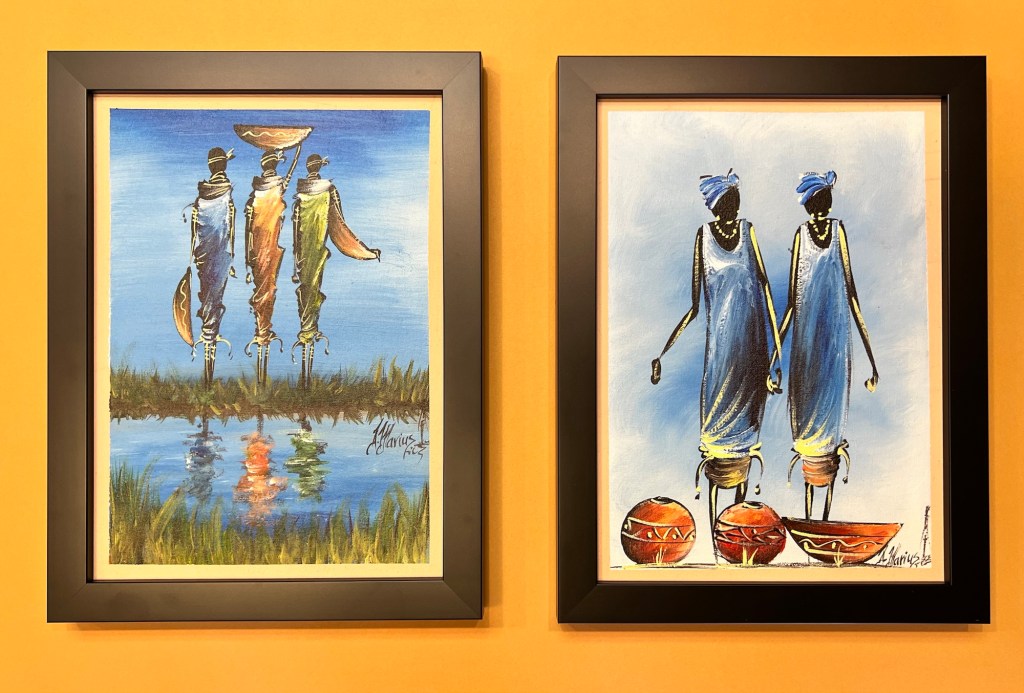
Our new painting will go up in my home-office this week….. from Friday this week, both of my adult sons are launched and living independently of me. Oh the joy; oh the niggling pain. #graceupongrace
“I hate being in the middle. My son tells me stuff about his wife’s family. My neighbor tells me things about the people over the road (also our friends but she doesn’t know we are friends) and even my grandchild tells me things going on in his family that I have to keep quiet about. I feel like I am living on egg-shells every time I meet people who are close to me.”
If you hate being in the middle then get out of it.
You’re only there because you have cooperated with the gossip that has flowed your way. All you had to say to your neighbor is “you do know you are talking about people who are my friends.”
Quietly declare to people who speak to you about those not present that such talk is not something you choose to do.
Yes, you can even tell your grandchild you’d prefer he talk with his parents about what is going on in his family.
If you do this with your grandchild (unless he is in an intolerable circumstance or something illegal is occurring) you will be teaching him the valuable art of going to the source or addressing his issues with those empowered to do something about the circumstances.
Gossip never forms “special bonds” – it is always unhealthy for all involved.
Within milliseconds the drawbridge – we each have one – may go down with a hearty welcome or remain up and sealed shut.
There may be Immediate comfort or discomfort, or levels of both.
Suspicions may be endorsed or deleted.
Information and misinformation transmission occurs at a speedy rate.
We read and misread and read and misread each other constantly – all within the backdrop of our unique experiences and training, our hurts, pains, goals, and desires – known and unknown.
The accent (if one party is not from “here”) is loaded with meaning. Clothes (anything unusual); laid-back or dominant stance; voice tone, volume, intonations; levels of energy or lack thereof, are cumulatively processed.
Triggers can be triggered. Stereotypes ignited. Warmth flows, or doesn’t.
The wave, the handshake, the hug, smile or frown, degrees of sincerity or insincerity are downloaded by the “who-are-you” antenna and the “can I trust you” antenna issued to all at birth to be processed with the morass of stored history, experience, memories, good and bad.
Every encounter is a miracle.
And, yes, with all that, we — you and I – are called to be neighbors and to love one another.
The “outside world” can be a dangerous place for children.
Another exceedingly dangerous environment for children can also be their own homes. While medicine cabinets, cleaning materials and unlocked swimming pool gates are a legitimate threat to the child-safety, the unguarded mouth of an angry adult can inflict grievous harm to a child.
A vigilant parent might install childproof locks yet leave a totally exposed web of anger in every room of the house. Unresolved anger in a parent, expressed through unpredictable displays of frustration and annoyance or rage, can quite effectively sabotage a childhood and even pass a baton of anxiety and rage to unborn generations. It is in their own homes that children might be at most in danger. At home they learn about trust, and exercise the most trust. It is at home they will learn, or fail to learn, by watching and experiencing, almost everything they will ever know about love.
It is at home they will make the most mistakes and receive the most affirmation and correction. It is at home that children will learn about fear and hurt and rejection and empathy and love and acceptance.
Children are constantly seeing, feeling, learning, trying, sometimes succeeding, sometimes failing, watching, waiting and taking it all in.
Monitoring diets is a crucial aspect of childhood health. Another “diet” is the calm, security, predictability and warmth healthy parents can provide.
If you have the opportunity to see “The King of Broken Things” run at it.
Your family – blood-, marriage, relatives-by-choice, adoption, and any other means people become family – is vastly more than a list of people on your group-chat or birthdays to try and remember or the ready-made crowd for weddings and funerals.
The hundreds of links (a family of 4 has 16 relationships) in your network – your family – and how you are linked (just right, over-connected, under-connected, loosely-affiliated, cut-off in anger, the “I’ll never talk to him/her-again” kind of connection) is of crucial importance.
How you are connected will either sustain and support and nourish you or drain and exhaust you. And, there is no escaping. Severe disconnections can wield a driving power even in a so-called non-relationship.
We are all “linked” and positioned in a variety of ways within the same extended family and so a family can nourish and support while, at the same time, it can rip to shreds and bleed someone dry.
I’d like to avoid this dramatic contrast but simply look around — listen to people’s family stories — you’ll see it is so.
We are each integral to the health (and un-health) of our family.
We are each a cell-within-the-whole.
The healthier we are, the more “just right” our connections, the more we will be nourishers and be nourished within the unique group of people we each call family.
The healthier I am will lead to a healthier “we” even if it results in hardship* along the way.
* attempts at greater health will be met with resistance from those around, especially those who’ve “benefited” from unhealthy habits and patterns.
Listen to your conversations, yes, eavesdrop on yourself.
I try to do this and I am often embarrassed how regularly I’m on auto-play. I hear the same stuff – the same stories and one-liners – coming out of me over and over again.
It is as if I am bored with myself and those who are part of the “conversation.”
I don’t like this about me and I don’t particularly like it when I’m caught in someone else’s well-worn loop.
Sometimes I hear traces of contempt and sarcasm in my conversations.
I am very careful about avoiding swearing and blasphemy, yet there are times I am apparently okay with using words as clubs and bullying others with snarky sarcasm. These verbal habits are surely at least as toxic as possessing a foul mouth.
The gift of thoughtful conversations, where people listen without waiting to talk and people hear what is really being said is something to which I deeply aspire despite what sometimes comes out of my mouth.
By the way, I am heading to Duban during much of February.
I would be delighted to speak at your school, church, business, or club – and I promise to watch my mouth.
Drop me an email if you are interested.
Let’s see what time permits.
Two new pieces in our home — picked up in Lome, Togo and framed locally.
I have had the joy of being with you this past week: several of you shared meals with me and we met in ways I know I will remember. I hope you will, too. Thank you. Given the time I would have enjoyed such an opportunity with each of you. During your first session with me I told you I would give you my notes from each of my talks. If you read this letter today or in ten years it is all ok with me. People do what they are ready to do. Keep them. See how well they age. Remind yourself that I repeatedly said I am addressing the future you.
Day One I tried to tell you how unique and beautiful you are. This is not an older adult attempting to convince you of something adults generally want you to believe. As I said I really have never met – 50 countries and thousands of people later – anyone, anywhere who is not beautiful. Yes, I have met people who have done really ugly things and done a few myself, but, you (we) are beautiful. Get to know any human by listening, really listening, and I believe you will soon agree with me. We talked about leadership: I said Leadership is a Function, a role, not a position. If your motive in becoming a leader is to see your name at the top of a list or to be the boss, your distorted motive will be your constant hurdle. Leadership is about who and what you are and what you do within a community. It is not about status. If it is the status you seek, your drive for recognition will persistently contaminate your leadership. To lead others effectively it is necessary to know what you are good at and what you are not good at. Work at your strengths. Accommodate your weaknesses. Both are yours for the long-haul.
I encouraged you to consistently define yourself. If you don’t, someone will. Resist the natural anxious urge to define others. Become an expert in your own behavior. Resist the natural (anxious) urge to be an expert in the behavior of others, especially those who annoy you. Listen more than you speak. Make sure you are hearing, not waiting to talk. I closed saying Self-Leadership has by far the greatest impact on how effective you are as a leader. If you can’t lead yourself you can effectively lead nothing and no one.
Day Two I emphasized your (and my) uniqueness. I urged you to find within the depths of where your hearts, minds, spirits, souls meet (see it as a kind of Venn diagram) the beautiful “place” generally referred to as the SELF. YourSELF is beautiful, it’s as unique as your fingerprints, your voice, and your personality. It is shaped by your family history, your DNA, by enduring joyful and nurturing experiences. It is shaped also by trauma, by loss, grief and so much else. This SELF is resilient. The Self wants to be well. It self-repairs (given conducive conditions). It is not Selfish to find and love and know yourSelf. I would suggest it is selfish NOT to. People who avoid Self-Awareness because they consider it selfISH are usually people who put stress on leadership teams and on friendships and battle with boundary confusion – “I am I, you are you, we are we, Let’s not confuse the three” – Remember? It’s corny BUT if you live it, it will save you a LOT of pain and therapist bills!
Day Three I emphasized your God-given desire for Autonomy. It’s part of your humanity. To desire self-directedness (AUTONOMY – SPACE, ROOM TO MOVE, freedom to be yourself) comes with your birth package. When it is unfulfilled – or ignored – you will be discontent. You have a similar God-given desire for Intimacy. This is part of your humanity. We all want some closeness, to belong, to be part of. Accepting that these Dueling Desires live within you and recognizing they are present in all the people will make it easier for you to welcome both into their legitimate place within your life. You (and I) really grow up when you (we) meet these needs in yourself AND understand that others are similarly driven. When your best friend chooses to be alone (wants Autonomy) it is not a rejection of you (necessarily) if you, at the same time, want Intimacy. Remember, you cannot LOVE and CONTROL the same person.
This afternoon (Thursday) and Day Four, I left you with eight things I would tell my younger self:
Save, and never touch, one third of all the money you earn. Few people regret having saved from an early age. Few things upset adulthood as well as financial pressures.
Honor your family and extended family relationships above all other relationships. If you are a brother or a son, a niece or an aunt, be the best one you can be.
Learn to live without blaming others. While others are indeed imperfect, blaming others for anything will seldom get you to where you really want to go. There are exceptions which I made clear (I hope).
Forgive, truly forgive, but remember. To forgive and forget is often foolish and even impossible. Remembering is not the same as holding a grudge. There are exceptions which I made clear (I hope).
Find your VOICE and hold onto it. Finding your voice means figuring out what you want your life to say. Only a small portion of finding your voice has to do with actual words.
Every unfortunate or bad thing that happens to you will ultimately offer you a choice. Will it become SEED (for growth) or STONE (resentment or hardness)? Seed will be most helpful to you. The choice will always be yours.
Pursue (chase) education even over romance. Few people regret having a sound education.
Gain understanding about your power, the power that comes with being human. Treasure it; Protect it, Deploy it. Use it for its intended purpose only.
I have loved being with you. Thank you. I especially enjoyed the Talent Show and the party. I loved watching your amazing capacity to have fun and I particularly enjoyed seeing some of you who arrived earlier this week appearing shy and withdrawn having the time of your lives.
Rod
Dad, Uber Driver, International Speaker and Newspaper Columnist
Things to try for a few days in the hopes will soon see they are life-style habits worthy of developing:
Plan your day.
Plan who you will seek to empower and encourage.
Write (using a pencil and paper) a few ideas as to how you will empower others no matter what your station in life.
Oddly, the more you plan, the more you will allow for a serendipitous life.
Besides, getting yourself ready for a great day will sharpen your eyes to recognize when great days come your way.
Plan your day as if planning a great day is in your power to do so.
Write a few notes to yourself about how much money you will spend, how much you will try to save.
Plan what and whom you will avoid because some things suck the life out of you.
As you plan your day, remind yourself that you are not all-powerful and that things happen to derail the best made plans. This does not mean a plan is not worth making.
Plan your responses to tough or challenging circumstances and situations so that you are unlikely to spend the day in a reactive mode with fight or flight as your defaults. Write a few notes to yourself about what you will or will not say and whom you will and will not engage.




 difficultrelationships.com