Archive for ‘Attraction’

July 9, 2009

My husband is steadily gaining weight…..

by Rod Smith

“My husband is steadily gaining weight. He is obese (30kg over-weight) and we’re in our thirties. I’ve tried changing to a healthy eating routine and he loses interest. I’ve bought trainers to encourage him to begin walking with me. I have told him directly he needs to lose weight and he does nothing. It angers me that I make the effort to stay in shape by eating healthily and exercising regularly for various reasons, one of which is so that he can be proud of me in public. I am turned off in the bedroom and avoid intimacy whenever. I’m bothered that I’m looking at other men because I do love my husband. How do I get him to realize that this is a serious issue for me without hurting his feelings?”

KATHRYN: Pushing him to lose weight is producing the opposite results. No amount of energy spent on your part will ever be enough. The weight is symptomatic of a deeper issue, perhaps feelings of inadequacy. Thoughts about other men points to intimacy problems in your marriage that have nothing to do with sex. Plan a date for the two of you and look beneath the layers of subcutaneous tissue where you will indeed find your husband again. Energy spent in this way will not be wasted and perhaps he will begin discovering who he is and see you again in the process.

ROD: 1. Get his weight off your shoulders by telling him your complete truth. Your emotional health is more important than his feelings. Incredibly, he is free to dig his grave with his teeth or to find appropriate help.
2. Never have sex you don’t want.
3. Realize that while you perceive yourself as responsible for his health you will ruin your own. While it’s your issue it will never be his. The best help you can be is by NOT helping.
4. Get out of his sinking boat by taking your hands off his diet, exercise, and image. Remember the more your work the more he won’t. Sorry, this is not because your husband is in some manner peculiar, it is the nature of dependency.

JEAN: If you are frustrated that your husbandhas gained weight since your marriage, there must be frustration on his part too. Advice we listen to; but it’s pain we obey. Your husband will need to realize himself that he doesn’t want to be overweight because recovery for him will be hard work. Addiction in a relationship can subtly draw in the partner who tries to ‘fix’ the other. When he or she can’t, he or she can become controlling, angry, and resentful. Find ways to encourage your husband but look after your own needs. Seek help about wanting someone else.


July 6, 2009

I wonder if I drive my partners to alcohol….

by Rod Smith

ONE QUESTION / THREE THERAPISTS ANSWER INDEPENDENTLY:

“I am divorced and engaged. Our relationship was idyllic and we plan to be married in September. I have serious misgivings. He is fine when not drinking though as soon as alcohol is involved he thinks nothing of disappearing for days on end, doesn’t take my calls and skips work. He always has a reason for this hurtful behavior – it’s normally my fault. He has been in a rehabilitation centre early last year at risk of losing his job and was fine for a few months and then reverted to this pattern again. As I type he is continuing with last night’s party, called in sick and is refusing to talk to me. When this binge is over he is very apologetic. My previous marriage was very similar, which brings me to wonder if I drive my partners to alcohol. I’m terrified of failing at another relationship.”

You don't DRIVE him anywhere....

You don't DRIVE him anywhere....

ROD: No. You do not “drive” your partners to alcohol. If you were that powerful you could similarly “drive” them away from it. I’d encourage you to discover why you find drunks attractive. If being engaged is stressful, full of games of hide, seek, and blame – your marriage will be all this and much, much more. Cut ties, move on, don’t date, and get healthy!

Jean, Canberra, Australia

Jean, Canberra, Australia

JEAN: I applaud you for listening to your heart and mentioning that you have serious misgivings. Everything that you communicate about this person who, by the way, is who he is because he chooses to be and not because you “drive” him to it, indicates that he is not a good candidate for marriage. Take steps to find out why you are so vulnerable to loving this kind of a man.

Alcohol is HIS problem...

Alcohol is HIS problem...

KATHRYN: His alcohol problem is his. It will not improve until he is willing to take necessary steps. Marrying him will solve nothing. Learning from your previous marriage is essential. His blaming and cutting you off are unloving behaviors, regardless of how well he apologizes. Over-functioning for him will help no one. Take steps to get yourself healthier and all your relationships, even with your daughters, will benefit.

July 3, 2009

(Mis)beliefs about love…

by Rod Smith

You can love and NOT worry...

You can love and NOT worry...

Easy-to-make fundamental (primordial) errors of belief humans often make in relationships can unsettle (challenge) the strongest of commitments. These “emotional fault-lines” can require intensive understanding on behalf of the one so inflicted, and, when not embraced and accepted by others (I do not mean appeased) these troubled foundations can result in consequential ramifications in day-to-day loving, living, and parenting:

1. Attention equals love and the amount of attention reflects the amount of love. To mistake attention with love and the lack of attention with the lack of love. “If you love me then I will be the focus of much (hopefully all) of your attention,” and,”If you give your attention to someone else it means you love them and not me or you love them more than you love me.”
2. Worry (anxiety) equals love. To think (or feel) that the presence of anxiety or worry or concern is a sign of love and commitment. “If I love you then I must worry about you,” or “If you love me then how can you be so seemingly worry-free about me?” or “When you love someone you think about that person and worry about what they are doing all day, or you don’t love them.”
3. Togetherness, unity, and being “on the same page” are signs of love and commitment. “How can we possibly love each other if we don’t think and feel and see things in as much the same way as possible? There, look at Jack and Jill across the street, they are so in love she even thinks for him, they dress the same, and he calls her 15 times a day at work to let her know he’s concerned about her safety. Now that – that is love.”

July 2, 2009

I refuse to compete with a child…..

by Rod Smith

“My three children live with my partner of 9 months and me. His children visit regularly. His son (12) pushes the boundaries and my partner allows him get away with a lot more than the other kids, including his daughter. My partner, who is brilliant with my children, will comment on bad behavior from my children, yet will not judge his son for the same behavior. His son lies to get the other kids into trouble and when I am near his father he makes sure that I cannot get too near. I refuse to compete with a 12-year-old for the affections of his father. My issue is the unfairness. It drives me up the wall. His father feels his son is sensitive and because he sees him so little that he will be less harsh with him. I understand this and am not sure if I am being unfair. I am starting to dislike the boy more and more. Please help.”

Get out of the middle...

Get out of the middle...

Rod: You are already competing and the boy is winning! Get off the “life is fair” gig and out of the middle. Leave EVERYTHING about his children UP TO HIM. While you are 12-year-old-focused, dad doesn’t have to be, – and you will always, always, end up looking like the enemy!

Kathryn

Kathryn

Kathryn: Ignoring the behavior is not loving to anyone. The boy’s “sensitivity” is never a good reason for parents not to discipline a child. Consistently setting good boundaries with children is very loving. Spend intentional time together and perhaps your partner’s own guilt may dissipate bringing change into the dynamic. Be honest.

July 1, 2009

Why am I always the bridesmaid?

by Rod Smith

“I’m 30, 6′2″ and Christian. I am a former athlete and model with two masters degrees and still a virgin. Recently I had an affair with a married man and I broke it off but he text-ed me yesterday and I changed my mind. Me? The other woman! Never. He’s well known, charismatic, a leader/mentor/father and is almost 20 years my senior. I’m tired of being alone and somewhere close to the twentieth bridesmaid dress. Men come along, but they’re significantly shorter than I am. I always like feeling protected and taller guys are preferred. My friend asked me, ‘What is it about you and unavailable men?’ Please help.”

Write to us...

Write to us...

ROD: Your height, attractiveness, and education – are irrelevant. Desperation, no matter how educated or decently packaged, is unattractive to healthy men. Ironically, it makes you a sitting duck for predators as in the “leader/mentor/friend.” Seeing a married man will not land you in your own wedding dress.

Here’s my suggestion: Get your focus completely off finding a husband (or someone else’s husband) and make peace with your parents and the members of your family who are one generation immediately before you. Get legitimate protection – then you will not need to seek it at all costs.

Welcome, Kathryn!

Welcome, Kathryn!

KATHRYN: He’s not protecting you, you’re providing a way for him to abdicate from his role as husband. You are a quick fix, a way for him to escape into the illusion of love that only holds the attention for so long. Lasting relationships are founded on truth, if marriage is what you desire.

Consider spending time discovering who you are, what it is you need and desire out of a relationship and hopefully, when you begin to know yourself better, you may become the bride. Cut all communication and remove yourself from the situation.

June 27, 2009

Deuling desires

by Rod Smith

Desires for Autonomy and Intimacy live within the deepest recess of self, where soul, spirit, body, intellect collide, connect, and have their enduring party

Desires for Autonomy and Intimacy live within the deepest recess of self, where soul, spirit, body, intellect collide, connect, and have their enduring party

The Healthy Person continually allows himself / herself to honor and respect the deepest inclinations of self while accommodating (and celebrating and making “space”) also for the deepest desires to be honored and respected within others.

Room to be free....

Room to be free....

AUTONOMY: This is a powerful instinctual longing within you. It is the desire to be self-directed and separate from others. It is the “you” who wants to be free of all ties, all responsibilities. It is the “you” that fears absorption by others; the “you” who wants to let your hair blow in the wind, feel the sun on your back and live a carefree life without things that tie you down. This is the spirit of the Wild West in you, the lone-ranger, and pioneer “get-me-out-of here” spirit within you. This desire, I believe, is God-breathed, God-inspired, and a necessary part of your survival and growth.

Connected to others....

Connected to others....

INTIMACY: This is a powerful instinctual longing within you. It is the desire to be close and connected with others. It is the “you” that wants to belong, be known and be part of a family, a team. It is the “you” that fears abandonment and desertion; the you who longs for a unified journey with others, the you that wakes up at night and wonders with horror, what it would be like to be totally alone. This is the nest-making part of you, the part who longs for the sounds, symbols and reality of a shared life. This desire, I believe, is God-breathed, God-inspired and a necessary part of your survival and growth.

It is important to understand and acknowledge that BOTH these dueling desires are alive and well within you AND they are alive and well within everyone you know. Think, rather than the urges being fixed, demanding and insatiable, of these core desires as being fluid states, urges that flow at differing strengths and intensities within each of us. “A” is larger than “I” in some people, in some cultures, in some churches and, of course, the opposite is also true. “I” is markedly stronger than “A” in some cultures and subcultures.

One aspect of maturity is an understanding and an acceptance that the desires described live within each of us. Also, maturity is living with the knowledge that these very strong desires do not have to always be filled. They can be “overridden.” They can be overridden in the desire to demonstrate love, to be kind or show patience. Always subjecting these desires to “override,” never acknowledging them, is likely to create emotional havoc within individuals and communities. Always submitting to them, as if they are uncontrollable forces, will sow seeds of similar havoc.

June 25, 2009

Before marrying with children….!

by Rod Smith

Rod@TakeUpYourLife.com

Rod@TakeUpYourLife.com

1. Plan several sessions of “hard” talking with your potential spouse. It is essential that you temporarily forget the romantic elements of your relationship (I know this is next to impossible) to talk business. Blending families is one of life’s most difficult challenges, which is further compounded when both parties have children.
2. Don’t try to be the stepparent before you legally occupy the role. Prematurely playing a role will create problems once you legitimately occupy it. It is essential you do not assume roles you don’t occupy. If a child (or future spouse) treats you as a parent, it doesn’t mean you are one. Troubles brew when people push themselves, or are pushed by others, into roles they do not occupy. (This is true even beyond families!)
3. Bridges are best built before they are needed. It is essential that you insist on multiple meetings with both parents of ALL the children before you consider marriage (yes, you did indeed read what you just read). These meetings will focus on methods of co-parenting in order to secure everyone’s best advantage. If implementing such meetings seems overwhelming to you, you are probably heading for a minefield of countless unexpected, unwelcome complications – that will seem (believe it or not) even too large for love to overcome! What is avoided (denied, glossed over, minimized) pre-wedding will rise like a rabid monster quite soon (a month, a year, or even ten years!) after the wedding.
4. Financial integrity is as important as sexual fidelity! It is essential that you look into every detail of all financial records of your spouse-to-be and offer your own finances for similar scrutiny — before you plan a wedding. Persons who cannot responsibly handle money are unlikely to be able to handle the pressures of thriving within a blended family. If a would-be spouse suggests information of his or her finances are off-limits to you, wipe the dust off your feet and depart, no matter how much love you may feel. Authentic love, apart from having many other facets, is also measured in the degree of financial partnering established between lovers. Resilient love seeks the wise, open use of combined resources. Because blending families also often involves complex financial arrangements (child support and so forth, divorce costs, education bills for children of a former marriage) hiding the details from a would-be spouse is exceedingly unfair to all involved. I DID NOT say you have to SHARE all the money — I said you have to KNOW about it and plan about it.
5. Flee blamers. An adult who blames his/her former spouse (or parents, or childhood, the new political order) for everything will also, before long, blame you for everything.
6. Avoid people who cannot engage in civil conversations with an ex, with their parents, or their children.
7. Getting Johnny (or Mary) a stepparent will not ease his dissatisfaction with the divorce, school, or his craving for a “real family.” It is essential to understand that getting married will not solve any but the most superficial current family issues. Blending families is likely to unveil and exacerbate more problems than it solves.

All this said, and so much of it sounds negative, blended families hold the potential to enrich and empower all the people involved. Some of the healthiest, happiest families I have met in many years of meeting with families (in all manner of circumstances) have been blended families! Go for it, work through all 7 points above, and you will be all set to go!

June 25, 2009

His behavior degrades me…

by Rod Smith

“My partner would constantly question me about my feelings for my coworkers. He would accuse me of smiling, of trying to get attention of another man. He would check my emails and text messages. When he called me at work and I could not answer he got angry and would tell me that I’m talking to someone else and purposely not answering his phone calls. Once he sent me email in someone’s name saying he had feelings for me. I still love him very much but I cannot take it any more because it degrades me. He will never change and will never trust me no mater how much I tell him that I love him.” (Edited)

Love makes you free...

Love makes you free...

Love makes people free, it empowers, encourages, and is not jealous, petty, or cruel. The man does not love you no matter what he says. Be aware – once you try to free yourself of his virus, it will come after you. He will try every manipulative ploy to keep you. Then, as quickly, once he sees you have escaped his toxic web, he will completely reject you. These are ALL or NOTHING people, and the journey is long and hard unless the virus is continually fed, appeased, and in control. Move on as quickly as possible. You deserve better.

June 24, 2009

The self and “self”-protection….

by Rod Smith

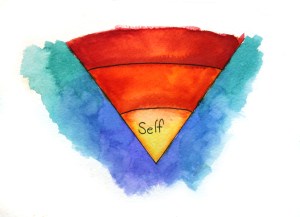
The deepest recess, where soul, spirit, body, intellect collide and connect and have their enduring party

The deepest recess, where soul, spirit, body, intellect collide and connect and have their enduring party


One failure of the so-called dysfunctional family (I prefer “higher” or “lower” functioning family) is a family’s inability to protect the emerging self (the sense of self, soul, spirit, inner being, heart) of persons in the family.

Characteristics of the self:
1. It is beautiful (created by God as the unique expression of who you are to the world). Even the “worst” person has, hidden beneath it all, a beautiful self.
2. It is relational (naturally wants to relate and engage). Every act – think about it – is an act of relationship.
3. It is sexual (naturally wants to procreate, build and nurture something larger than its-self). Nothing can be done to escape our gender; it is inextricably woven deeply within and finds expression in everything we do.
4. It naturally desires to engage in worship (naturally wants to ascribe greatness). This explains why BMWs, children, houses are “worshiped.”
5. It is enduring (it doesn’t change much in a lifetime). Parents say things like, “From the day he could walk he’s been a determined person.”
6. It is regenerative (naturally seeks to mend and heal). Like the body is always in a state of regeneration, so is the self.
7. It is resilient (can tolerate and survive enormous pain and suffering). Humans have endured untold horror when it has been inflicted upon them.
8. It is creative (naturally thinks outside its-self) and resourceful. It is the powerhouse (engine room) within every person.
9. It can be fed, trained, encouraged (one person can take better care of a self than another) and can grow.
10. Unfortunately, it can be starved, neglected (can wilt away without nurturing) and can give up the fight.
11. It is the place from within which people are able to want, to express desire; it is the center of desire within us.

Take Up Your Life

Take Up Your Life

Although the self within us all usually has a huge repertoire of protection mechanisms, when and if it is damaged, it is usually slow in healing. While the self is difficult to damage, considering its incredible resilience, it can be damaged. A damaged self displays the impacts of hurt and trauma most vividly in relational difficulties, in matters of closeness and intimacy. The effects of damage and trauma to a self can apparently leave a person quite unaffected regarding distant or impersonal encounters. It is in intimacy, in close friendships, that the damage most vividly reveals its presence. When in relationship, a person with a damaged self will find himself unable to “be him-self.”

June 23, 2009

What does Open Hand mean?

by Rod Smith

Pictured at the Sydney Zoo (2010)

Open your hand using all your strength. Stretch your fingers. Allow the lines on your palm to feel as though they might tear apart. Study the contours, colors, ridges and valleys, joints, dents and spaces. Push, pull, and rub. Move your fingers through their paces: together, apart, back, forward, curved, strained and relaxed, cooperative yet unique. Feel the texture and every curve. Touch the crevices. Spread your hand further, turn it at the wrist, examine and compare patterns from every angle. Here are pieces of yourself you might never have studied.

Your hands are your constant companions. They have met the needs of others, pioneered romantic moments and worn rings of commitment. They are the way your heart leaves fingerprints, the eyes at the end of your arms. Hands reflect a person’s being and are the front line agents of your life. If eyes are said to be the windows of a soul, hands express the soul.

Hold other people with your hand thoroughly open. Allow them to know the warmth and welcome of your hand, investigate its curves and benefit from its scars. Invite others to follow the lines into the fabric of your life and see the risks you have taken and the adventures that are yours. Allow them to wrestle and rest, search, see and speak. Let them stay; let them go, but let them find your hand always open.

The Open Hand of friendship, at its widest span, is most rewarding, most challenging and most painful, for it enduringly acknowledges the freedom others have while choosing

Rod@TakeUpYourLife.com

Rod@TakeUpYourLife.com

not to close upon, turn on, coerce, or manipulate others. In such friendships, expectations and disappointments become minimal and the reward is freedom. As others determine a unique pace within your open hand, they will see freedom and possibly embrace their own with excitement and pleasure.

Openhanded people do not attempt to “fix” others, change, or control others even for their own good. Rather, each person is given freedom to learn about life in his own way. Openhanded people, instead, express kindly and truthfully what they think and feel, when asked, knowing even in the asking, others might not be interested or willing to learn.

The Open Hand is not naive. It is willing to trust, while understanding and accepting that no person is all good or all bad, and that all behavior has meaning. The Open Hand is convinced it cannot change others; it cannot see or think or feel or believe or love or see for others, but trusts people to know what is good themselves. It will not strong-arm, pursue or even attempt to convince others because it has little investment in being right, winning or competing. Here is offered a core-freedom of the deepest and most profound nature: allowing others to live without guilt, shame and expectation.

Further, the Open Hand offers oneself freedom that extends to one’s memories, ambitions, failures and successes. This allows for growth of enduring intimacy, greater personal responsibility, authentic autonomy, and the possibility of meaningful relationships with others.

In the discovery of a closed hand, even at the end of your own arm, do not try to pry it open. Be gentle. Allow it to test the risky waters of freedom. As it is accustomed to being closed and fist-like, it will not be easily or forcefully opened. So let the closed-handed do their own releasing and trusting, little by little, and in their own time and manner.

When openhanded people meet, lives connect in trust, freedom and communion. Community is set in motion. Creativity is encouraged. Mutual support is freely given. Risks are shared. Lives are wrapped in the safety of shared adventure and individual endeavor all at the same time.

Rod Smith, July 1997 / Copyright