- My heart goes out to children who live in unsettled houses. Houses where the abuse of alcohol or drugs dominates everything. Houses where rage rips people apart.
- My heart goes out to children whose parents were once together and now are apart. Although the child may have received loving messages about how they are loved despite what mother and father do it still makes no sense to the child.
- My heart goes out to children who are fighting a deadly disease and to the siblings who are fighting it with them. The necessary lack of certainty bolstered with statements of faith, all within the same adult sentence, can be confusing. It’s at least as confusing for the child as it is for the adult trying to comfort them.
- My heart goes out to children whose boundaries are ignored and violated and whose voices are ignored or silenced. Such children might as well be invisible to those commissioned to love and protect them.
- My heart goes out to the child who must assume a defensive stance because of race, gender, or language.
- My heart goes out to children who are hungry in a nation of plenty, those born outside the dominant culture, those whose troubles are the fruit of a troubled nation.
March 2, 2017
My heart goes out to the….
September 16, 2012
Why do men do this?
“I am recently divorced and had a relationship with an athlete for 4 months. He was very keen in the beginning. I had to put on the brakes as I don’t rush into matters. He was just three weeks out of a relationship himself and I could not understand why he was in such a hurry! He lives about 45 minutes away but would never visit me. I had to go to his place. Then he mistreated me, and said I had a bad attitude and was far too sensitive! Before this he called less frequently and the invitations were less frequent. I discovered he was seeing someone else. Why do men do this? I really feel used and abused!”
Four things:
- Not all men do this. While you are willing to spend another minute with one who has already mistreated you, you will keep meeting such men.
- The first red flags waved when he expected you to do all the driving. If it is not mutual, respectful, and equal it is not worth having.
- Forget trying to understand him. It is no longer your business. Try to understand healthy men – study strength, not pathology.
- Forgive yourself. You blew it. Learn and move on.
July 12, 2012
Draw the line…..
There is no good reason ever why any person ought tolerate poor treatment from another.
You teach people how to treat you.
I know you may feel trapped and without an escape route or a friend in the world, but you must get help if this post is reaching deeply into you.
July 1, 2012
Is it ok to lie about divorce?
“I entered a relationship with a divorced woman with three children. I discovered early on that she had lied about her marital status. She was in fact separated, not divorced. I ended the relationship as she had lied to me about her marital status and felt that she had ‘unfinished business’ with her husband. I felt that I ran the risk of her going back to her husband. I have never dated a woman who is separated. Is it ever appropriate to enter into a relationship with a woman who is separated?”
- I cannot condone a blatant lie but some truth is harder to tell. I’d be inclined to give a woman a break. I have met brutally honest women who can barely utter the “D” word.
- Of course the woman is going to have “unfinished business.” She has three children and a history and a future with him, separated or divorced. Loving her will mean embracing it ALL. There is no clean slate.
- You felt you “ran the risk of her going back to her husband” suggests you are self-protecting without considering what might be best for the woman and her children.
- I’d suggest it is unwise to knowingly enter a relationship with a married person.
June 6, 2012
My husband left me for my best friend
“My husband left me for my best friend. This not only devastated me but caused my children (and her husband and children) a lot of confusion. I don’t want things back how they were but I do want some peace of mind. Her husband has gone off the rails with anger and I have bordered on depression. How am I supposed to forgive two people who have been so close to me and who have done this bitter thing to people, including children, whom they profess to love?”
My response will focus on you and the double blow you have received.
You have lost two best friends and you have lost them to each other. They have together all of what you once enjoyed and you have none of it.
I do not write this to rub salt into the wound or to tell you what you do not already know – I write it so you may see that your loss is real and at least partially understood.
Your anger and depression is justified. Grieve, wail. Express it in any helpful way over the coming years.
At the same time (in sane, healthy moments) begin to rebuild your life.
It is possible to do both: grieve, build, grieve, and build – just not at the same moments.
June 5, 2012
Readers respond regarding being “Healthily Divorced”
Two readers respond….
“Thank-you so much for answering my question. Those are very helpful points. I think the most difficult part of divorce for me has been learning to ‘unlove’ my ex-husband. Only ONE of us changed our mind in our marriage. I made a commitment to love this man until death parted us. Perhaps it was further complicated by the fact that I had already lost one husband to death and this was my second marriage. But I am SO much healthier now, in every way. A new relationship is not my goal, but I would like that to happen ‘one day’. I feel that if I am healthy within myself, keep busy and have a full life, the right relationship will come along at some stage.”
“I believe that being “Healthily Divorced” is the ability to stand emotionally independent, yet having the ability to empathize and relate to those around you. Resentment and bitterness are probably the most hindering factors to being healthily divorced – it is perfectly possible to be divorced and respectful of the other party. Letting go of the blame and pain and striving towards an amicable solution in the face of difficult odds creates the foundation to being healthily divorced. Making another person miserable can never bring you happiness.”
June 28, 2011
My wife had an affair and I am finding it hard to trust her……
The following theme comes to my attention at least several times a month: My wife had an affair. I am finding it hard to trust. Please help.

I can't MAKE you trust me
Trusting a spouse has nothing to do with your spouse. It has everything to do with you.
Each person determines his or her levels of trust with all other people – spouse included. If you hadn’t noticed, you trust people in different ways all the time.
I am not suggesting a wayward partner be fully trusted. This is exactly the point. Trust according to your levels of ability to trust, given the history and the circumstances you face.
“Prove I can trust you,” is unfair. If you are one given to suspicion nothing anyone can do will meet your standards. It is likely you will find holes given the most innocent of scenarios. This is the very nature of suspicion. It eats into everything, nothing ultimately satisfies.
A couple shipwrecked by an affair can survive. I have seen it many times. But the couple will face many challenges while the offended partner constantly seeks assurance or repeatedly brings up the past or plays the hurt puppy.
It takes two to tangle – affairs occur in a context.
It takes ONE to be unfaithful – don’t blame your partner for your actions.
It takes two to find reconciliation.
Trust can be fully restored, little by little over an extended period of time.
June 26, 2011
Four sure-fire ways to increase family emotional health and deal with overly-sensitive people
I have received several very welcome and lengthy letters from readers who find themselves in very complicated family relationships.
Here are four broad principles for all members of a family:
1. Get yourself out of “the middle” of other people’s relationships! Don’t carry messages for others, or think for others or feel for (on the behalf of) others. Allow other adults the joy or communicating their own messages, thinking their own thoughts and feeling their own feelings.
2. Regard all other adults as complete adults and your complete equals. If you’re “on eggshells” around anyone (a parent, boss, child, spouse or former spouse) this person has inappropriate power over you that I’d suggest you address. The “eggshells” means you are not seeing yourself as an equal.
3. Never allow yourself to be intimidated, dominated or manipulated. Persons who use intimidation, domination or manipulation (emotional bullies) to get their way must be confronted if you want any degree of healthy dialogue.
4. Despite age, rank or status, don’t “tread lightly” around other adults. While it is unnecessary to knowingly inflict hurt upon others, some people are so inappropriately sensitive that their oversensitivity can restrict others from normal behavior. If your actions are not in themselves hurtful, but are interpreted as such by some sensitive soul, I’d suggest you be yourself and challenge Mr. Mrs. or Ms. Oversensitive to grow up.
June 21, 2011
Love Poisons: Manipulation, Intimidation, Domination
When people have to use intimidation, manipulation or domination, the relationship is already spoiled or poisoned. It’s a power play of control. Redeeming such a relationship is possible with a wise plan, strongly re-defined boundaries, enduring commitment, and the possibility of a time of separation in order so a modified perspective might be gained.
Willingness and desire to be together, equality between people and complete mutuality are the hallmarks of healthy relationships.
Where any form of strong-arm tactics are used, the relationship has already taken a turn to become something harmful to both the parties.
Each of these relationship-poisons (manipulation, domination and intimidation) can be very subtle, coming in different shapes, sizes, and intensities.
Here are some of the evidences of manipulation, intimidation, and domination in a relationship:
1. The relationship is kept on an unequal footing that one person may keep power over another. In severely controlling relationships both parties may have forgotten there are choices at all.
2. One person tries to get what he or she wants without declaring what is wanted. In attempting to get what the one person wants, both persons are diminished.
3. One person does not see the other as totally free.
 4. One person tries to get what he or she wants through threats or withdrawal.
5. It is expected that every move, thought, and feeling will be reported at least from the less-dominant person to the other. If one person is unwilling to tell all, it is assumed there is something to hide.
6. One person is not free to make plans without consulting or getting permission from the other.
7. One person in the relationship continually evaluates and examines the commitment and love of the other.
8. The dominant person tells the other how they should feel and usually re-scripts any division or disagreement into the appearance of unity.
9. One person feels at liberty to speak for both people and then, is offended when the partner wants to express his or her own views.
10. Desire for self-expression or a distinct voice (by one) is considered betrayal or a lack of trust (by the other).
11. One person expects unilateral support for his or her opinions, choices and desires, declaring somewhat of an attitude which says: If you say you love me then you have to love everything about me, under all conditions, and all of the time.
12. Difference in opinion or having different interests is considered a lack of love, or a lack of respect and commitment.
Simple definitions and a metaphor which might be helpful in considering the three “cancers” of relationships:
Manipulation: playing chess with another person or with people. Maneuvering as if life were an attempt to checkmate others into loving us or doing what we want.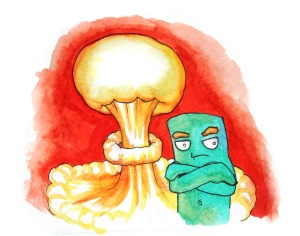
Domination: playing chess with another person or with people as in manipulation. The difference is the dominator has removed the opponent’s pieces without declaring so in the first place.
Intimidation: playing chess with another person or with people where winning and losing comes with either the threat of punishment or actual punishment.
Healthy Relationship: There is no element of either winning or losing; it is not a game. It is free of tactics, ploys, moves, and agendas.
June 13, 2011
My ex-husband asks for money all the time……
“My ex-husband is very irresponsible when it comes to finances even thought he earns more money than I do. He comes to me to lend him money all the time. I try to budget well so I feel bad to say no. But what hurts is that he also comes in and out of my house like it is his. He will come over and sit and watch a movie when he supposed to be ‘visiting’ the children. How do I set the boundaries in terms of my space and not having to worry about his financial problems, as we no longer married? He chose to be with someone else rather than stay and fix the marriage.”

Stop the supply.....
Your ex-husband will take advantage of your home and finances and invade your boundaries for as long as you permit it.
Stop the supply. Bolt (metaphorically) your doors. Cut the ties. Have the children meet or see him outside of your home. Quit being his mother, his Mother Theresa, and the one who enables his stunted development.
No problem is ever solved if you keep feeding it.
That he asks you for anything is not a sign of love, or hope, and nor is it a suggestion that anything might be mended in the future. His behavior confirms that he has failed to grow up. He will take advantage of anyone who will cooperate with his selfish ways.
Get over “feeling bad” – the man feels nothing for you. He will not starve if you don’t supply. If the man can leave his wife and children for another woman believe me he’ll find another supply-line when you stop yours up.
Every penny you give him enables his parasitic ways.
 difficultrelationships.com