There is brokenness that leads to re-building, improved character, renewed strength, refreshed creativity.
I believe this capacity lives within us all.
I have seen this with my own eyes; men and women build beautiful lives after devastation, loss, betrayal and untold grief.
There’s brokenness that leads to bitterness, regret, desire for revenge and retribution.
It, too, lives in us all.
Stubbornness, coldness of heart, perhaps based in a desire for justification, provokes a tough journey.
I’ve seen men and women “go stubborn” and “go bitter” and be lead by the nose to destinations unbearable.
Brokeness, some, not all, is inevitable, comes packaged with life, time, age, growth and misplaced or misunderstood levels of trust.
Some comes as a result of pride and selfishness — or the rather simple but trustworthy principle of reaping what we’ve sown.
What will you do with yours?
Your brokenness?
What will I do with mine?
Our response — and it need not be immediate for wisdom is seldom knee-jerk — is a crucial choice.
It is not an easy choice, but choice is where it all begins – a little like Robert Frost’s “two roads diverged in a yellow wood.”
A choice to build and learn, a choice not to defend or attack, a choice to love in the face of rejection, a choice to give people what they ask for, a choice to engage, or not – perhaps the choice less travelled, will make the difference.
I devised a list of how to participate in the healing of men and women who have been hurt:
Be willing to listen, even if what is being said is what you’d prefer to not hear. Try not to re-engineer (re-frame, recast) what you have heard so it is more fitting with what you’d really like to hear.
Resist understandable attempts to short-circuit growth by trying to ease necessary pain, by offering false affirmations, and by accepting empty excuses for irresponsible behavior. Pain is a very good motivator for change. Resist the urge to remove it when it appears to be helpful.
Offer your presence, not your answers. “I am with you” is more helpful than “let me help you fix it.”
Welcome silence. There are ways to communicate that do not include words. Resist the understandable urge to chase healing and learning away with the incessant use of words and stories.
Avoid minimizing (“it’s not so bad!”) or rationalizing (“What else did you expect?”) or normalizing (“Anyone would have done that!”) the issues that resulted in pain. Do not rob necessary pain of its usefulness.
Promote “future thinking.” Ask questions focused on future wellness and success.
Try to avoid searching for the genesis (the cause) of what has led to pain. Where something comes from is not nearly as important living your way out of it.
As well-intentioned as we may be in desiring to avoid conflict and “keep the peace,” we create more problems we must face later by running or playing hide and seek. Then, when we do face matters, we’re not the people we once were.
Avoidance is a quick-change artist! It changes us in ways we are likely to regret.
We cannot solve or improve what we will not face. Denial gets us no place worthy of the journey or the unintended, unwanted destination. Until we gather the courage to look difficult situations directly in the eye and expedite what is necessary to face the difficulties, conflicts will stay as they are and they’re likely to deteriorate.
What we avoid shapes us in ways we may never notice. We modify our habits in order to sustain our denial and avoidance. We change our friendships in order to sustain our patterns. We go out of our way to keep the peace but the new path is one to further avoidance. Our defensive habits defend us in unhealthy and unhelpful ways and make us into people we’d rather not be.
Avoidance of necessary battles creates unintended distance from others — even those we truly love.
There is no worthwhile substitute for early honest approaches to family or business conflicts.
Avoidance makes the heart grow harder.
Ours.
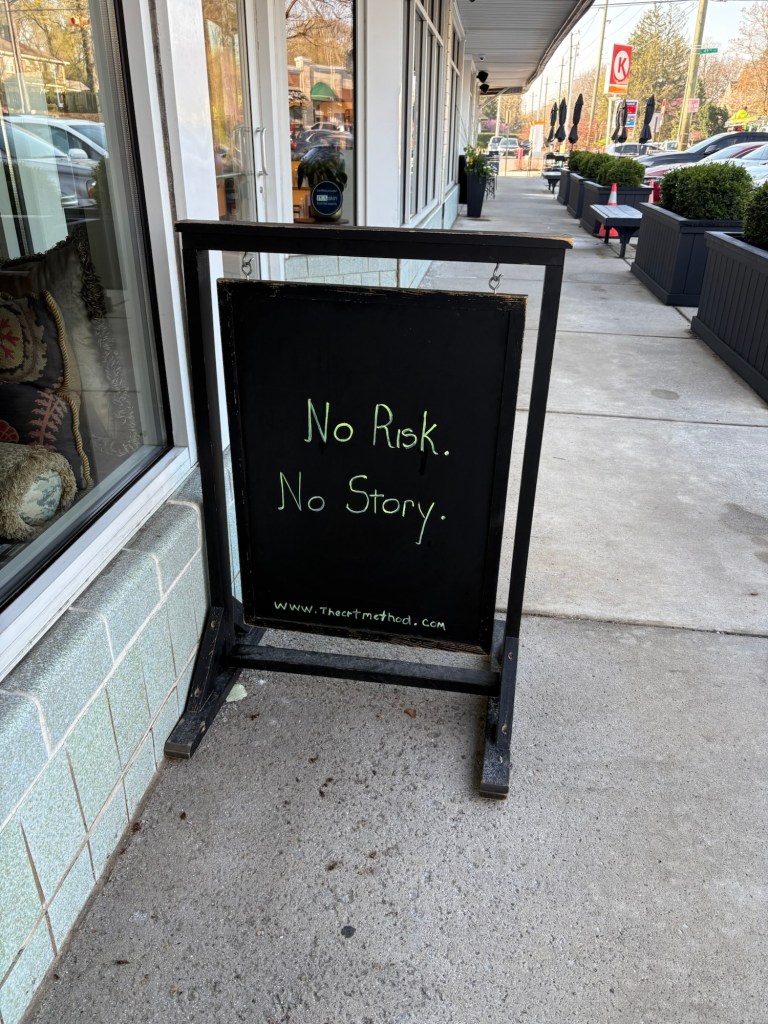
I enjoyed this side-walk art…… 49th and Penn in Meridian Kessler, Indianapolis
Finding the opportunity to seek forgiveness, participate in repair or restitution with people whom I have hurt may result in their expressing forgiveness. While hearing such comforting words warms me, self-forgiveness remains difficult.
Do you have similar battles?
I know this is a particular struggle because having known what is right, good, wholesome, I have not always done what is right and good and wholesome. I find this painful to admit and address. Knowing better was hardly helpful.
While it is no excuse, I am aware that I am not too different from many.
When I am feeling down it feels as if my failures speak louder than any successes. Despite the knowledge that “people are more than their actions” shame seeps and runs deep and makes me feel vulnerable and fragile. It can be a physical sensation.
Again, I must ask, do you ever feel this way?
When I am at my best, I can humble myself, accept my imperfections and that I am a forgiven person.
Admitting I am flawed is key to my freedom which leads me to self forgiveness at which point freedom fills my soul.
“Chased,” he said, “I’m being chased, haunted by my past, my past of multiple addictions, — they follow me.”
“Like dogs?” I asked, “I have wild dogs too.”
“No,” he said, “large lions, and a tiger, coming from behind, waiting to pounce, attack. To scorn, belittle me.”
“How do you protect yourself?” I asked.
“I outrun them; get ahead. Do heroic things to prove them wrong. But, they follow, catch up, then I have to do it all again. What about you and the wild dogs?” he asked.
“I tried to ignore them,” I told him, “but they don’t like that. They squeal, bark louder. I tried to get ahead, outrun them as you do with your pursuers, but that’s temporary relief.”
“I know,” he confessed.
“I made a decision that made a big difference,” I said, “when I was at my most desperate when they were chasing me through dark hallways of my mind, barking at my heels, I stopped, slowly turned, faced them. Told them they were right, looked them in the eyes, gave them attention — then, they withdrew, got quiet, behaved as disciplined guide dogs. Now, they do their jobs.”
“Can I train my lion? My tiger?” he asked.
“You’ll never know,” I said, “until you look them in the eyes.”
Your family – blood-, marriage, relatives-by-choice, adoption, and any other means people become family – is vastly more than a list of people on your group-chat or birthdays to try and remember or the ready-made crowd for weddings and funerals.
The hundreds of links (a family of 4 has 16 relationships) in your network – your family – and how you are linked (just right, over-connected, under-connected, loosely-affiliated, cut-off in anger, the “I’ll never talk to him/her-again” kind of connection) is of crucial importance.
How you are connected will either sustain and support and nourish you or drain and exhaust you. And, there is no escaping. Severe disconnections can wield a driving power even in a so-called non-relationship.
We are all “linked” and positioned in a variety of ways within the same extended family and so a family can nourish and support while, at the same time, it can rip to shreds and bleed someone dry.
I’d like to avoid this dramatic contrast but simply look around — listen to people’s family stories — you’ll see it is so.
We are each integral to the health (and un-health) of our family.
We are each a cell-within-the-whole.
The healthier we are, the more “just right” our connections, the more we will be nourishers and be nourished within the unique group of people we each call family.
The healthier I am will lead to a healthier “we” even if it results in hardship* along the way.
* attempts at greater health will be met with resistance from those around, especially those who’ve “benefited” from unhealthy habits and patterns.
When it seems that things are coming at you from all sides….
Hold onto yourself.
Even if you are surrounded by supportive loved ones, you are all you’ve got.
You are your own constant companion and your relationship with yourself is the longest relationship you will ever have – so you might as well be best friends.
You might as well learn to enjoy yourself.
How you treat yourself is (already) the platform from which you see others and it forms the lens through which you see all things.
When under pressure, don’t talk to everyone about what you are facing.
It’s a hopeful myth that all talking is helpful.
It’s not.
Choose a few trusted people and talk only to them
Spewing – freely-recalling, random mumblings, blaming others, yelling, speaking from a place of confusion or anger – has limited and few benefits.
Holding onto yourself involves planning what you will and will not share.
You are allowed to keep things to yourself.
You are allowed to plan and decide how you will behave, who you will be.
All this, and more, is all part of learning to hold onto yourself.
When you hold onto yourself, some will tell you are being selfish.
Self-awareness and selfishness are poles apart.
[I will be in Durban in February and April — not March — and would love to speak at your church, school, or fundraising event — make contact by email or private message.]
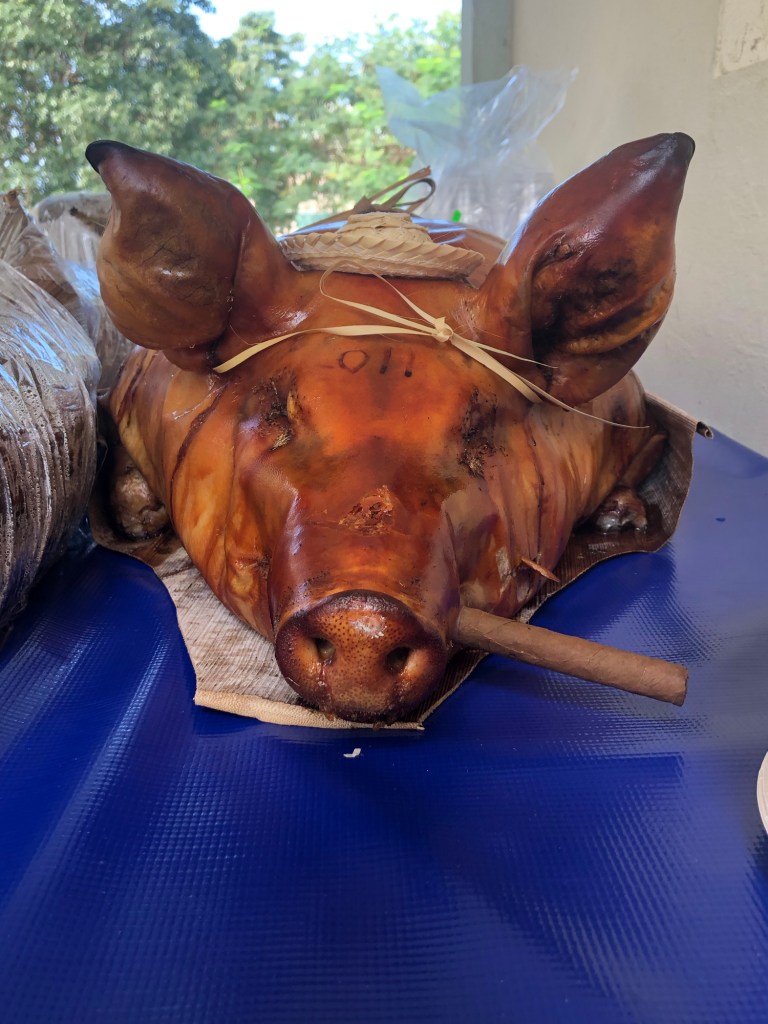
From a recent lunch in Cuba — note the hat and cigar. This vegetarian did not partake!
No matter how good or qualified your therapist — therapy will be of no help:
If you’re seeking help with your intimate relationship but you’re living with your mind made up, bags packed, and a heart full of blame and complaints.
It’s therapy, not arm-wrestling.
If you’re having an extramarital affair and you want to improve your relationship with your spouse so your divorce can be cordial.
It’s therapy, not help with deception and manipulation.
If you’re coming to change or influence a relationship you’re not directly a part of, for instance, you want to fix your son’s marriage or you want you husband to call his mom more often.
It’s therapy, not human chess.
If you’re committed to treating your adult sons and daughters as if they’re children and wonder why they resist visiting or phoning you.
It’s therapy, not guilt-tripping.
If you’re hoping for help to change the political views of people with whom you do not agree.
It’s therapy, not magic.
If you want the lazy to be hardworking, the harsh to be gentle, the stingy to be generous, and the unforgiving to find mercy.
Men and women who discover such radical transformation do so because they grow tired of their selfish, rigid, alienating and arrogant ways, and, in humility, find the courage for change.
It’s not therapy, it’s when desperation meets the Divine.
No one feels healthy, and on top of the world, all the time.
Emotional ebbs and flows are normal.
Good days and bad days come with being human.
Give yourself a break.
If you are “down” for days, if you are unwilling to get out of bed, unwilling to engage in the regular and “normal” joys and tasks common to all people: like eating, bathing or showering, wearing clean clothing, getting ready for the day, the routines required of the general population, it may be time to seek help.
If you are overly tired and unmotivated, despite having had a good deal of sleep and find it tough to identify any joyfulness in any of your surroundings or activities or relationships, it may be time to seek help. If you sometimes feel plagued by dark thoughts, scary ideas you can’t seem to shed or shake – speak up to someone who can assist you to find help.
Emotional ebbs and flows are common but when the ebbs significantly outnumber the flows, it’s probably time to let someone know you are bordering on desperate or are already desperate.
While you think and feel you’re trapped in an emotional or relational cul-de-sac of desperation, you probably don’t have to remain there.
Reach out.
There are people willing, qualified, waiting to listen.
Recap on anything the group would like to look at again or to reconsider.
The Humble Samaritan – why it this such a radical parable?
Fables and other resources
Post-traumatic Growth
Helpers’ Lives
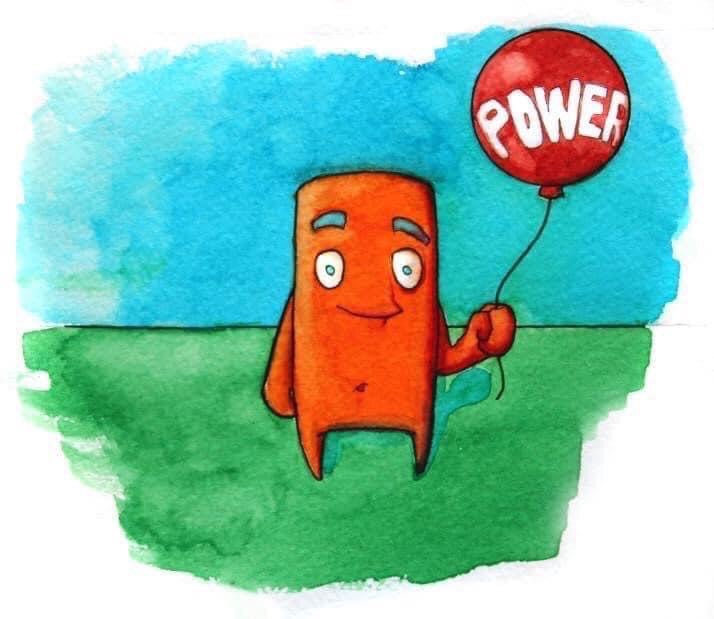
POWER Balloon
Every person has been given a Power Balloon that represents an allotment of power. This is the power to have a voice, to decide, to be, to have opinions, have fun, learn, experience, to be autonomous, to be intimate, to be fulfilled and to love.
Within every person’s capacity (power) is the ability to do research and to decide things for oneself, to worship, pray, accept, reject, remain free of abusive relationships and to create and enjoy safe relationships.
Every act of manipulation, of cruelty, of “over-functioning ” and of “under functioning ” is the denial of the power of another or of others.
People, for various reasons, will try to burst your balloon, boost your balloon, take your balloon, give you their balloon or render your balloon insignificant.
Resist such acts from others and resist doing such acts to others. Care for your balloon only; leave others to the divine task of caring for and nurturing their own balloons. This is not selfish.
Think of how selfish it is to say to someone, “Here, let me take away your power from you,” or, “Here, I do not want to take care of my own life but you have to do it.” Not even God will take your balloon from you. Your balloon is God-given to you for your care and nurture. (God has God’s own balloon to care for).
The power for you to be fully human is yours and that power should be offered to no one under any circumstances and the position of exercising power over our own lives should never be abdicated except in extreme situations of medical emergencies.
Every baby and child has his own balloon to be respected as much as the balloon of every adult. This, of course, does not mean that babies should be caring for themselves or that children must be given their every whim. Reaching such a conclusion is to misunderstand the concept of what it means to have personal power. The art of parenting a baby, of nurturing children involves respecting and nurturing their sense of personal power. Parenting is exercising the kinds of discipline and care that do not diminish a child’s self-worth or distort their capacity to discern and appreciate the power that is their birthright. Anything less is to “spoil and child.” It is to “spoil” their capacity to see and know themselves with accurate personal assessment.



 difficultrelationships.com