Archive for ‘Boundaries’

June 28, 2009

Former sister-in-law has everything…

by Rod Smith

“My ex-wife and I were divorced after a long, bitter fight. After the divorce, my ex claimed all the contents of the house: furniture, appliances, curtains, curtain-rails, everything accumulated over ten years. Recently, I picked up my children from my former sister-in-law’s. To my disgust I discovered that half my furniture now decorates her living room. For ten years I opened my house to her. She had keys to come and go as she pleased. I thought perhaps she should use better judgment when accepting gifts.”

Take up your life

Take up your life

Don’t enter the house if you don’t want to see your old curtains. The real material lies unclaimed between you and your former wife. For your sake, and for the sake of your children, get your understandable residue resentments taken care of. This action, on your part, will not necessitate even one conversation with your former wife. It is not about her. It is thoroughly and completely about your response to all that has occurred. Divorce is war. Killing a marriage is violent business, and you are its hostage. Your former sister-in-law may have poor taste and your old curtains, but it is peace you are missing. Regarding the living room, I get it. But I am not sure your former family will.

June 27, 2009

Deuling desires

by Rod Smith

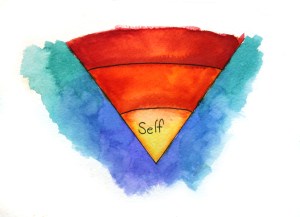
Desires for Autonomy and Intimacy live within the deepest recess of self, where soul, spirit, body, intellect collide, connect, and have their enduring party

Desires for Autonomy and Intimacy live within the deepest recess of self, where soul, spirit, body, intellect collide, connect, and have their enduring party

The Healthy Person continually allows himself / herself to honor and respect the deepest inclinations of self while accommodating (and celebrating and making “space”) also for the deepest desires to be honored and respected within others.

Room to be free....

Room to be free....

AUTONOMY: This is a powerful instinctual longing within you. It is the desire to be self-directed and separate from others. It is the “you” who wants to be free of all ties, all responsibilities. It is the “you” that fears absorption by others; the “you” who wants to let your hair blow in the wind, feel the sun on your back and live a carefree life without things that tie you down. This is the spirit of the Wild West in you, the lone-ranger, and pioneer “get-me-out-of here” spirit within you. This desire, I believe, is God-breathed, God-inspired, and a necessary part of your survival and growth.

Connected to others....

Connected to others....

INTIMACY: This is a powerful instinctual longing within you. It is the desire to be close and connected with others. It is the “you” that wants to belong, be known and be part of a family, a team. It is the “you” that fears abandonment and desertion; the you who longs for a unified journey with others, the you that wakes up at night and wonders with horror, what it would be like to be totally alone. This is the nest-making part of you, the part who longs for the sounds, symbols and reality of a shared life. This desire, I believe, is God-breathed, God-inspired and a necessary part of your survival and growth.

It is important to understand and acknowledge that BOTH these dueling desires are alive and well within you AND they are alive and well within everyone you know. Think, rather than the urges being fixed, demanding and insatiable, of these core desires as being fluid states, urges that flow at differing strengths and intensities within each of us. “A” is larger than “I” in some people, in some cultures, in some churches and, of course, the opposite is also true. “I” is markedly stronger than “A” in some cultures and subcultures.

One aspect of maturity is an understanding and an acceptance that the desires described live within each of us. Also, maturity is living with the knowledge that these very strong desires do not have to always be filled. They can be “overridden.” They can be overridden in the desire to demonstrate love, to be kind or show patience. Always subjecting these desires to “override,” never acknowledging them, is likely to create emotional havoc within individuals and communities. Always submitting to them, as if they are uncontrollable forces, will sow seeds of similar havoc.

June 25, 2009

His behavior degrades me…

by Rod Smith

“My partner would constantly question me about my feelings for my coworkers. He would accuse me of smiling, of trying to get attention of another man. He would check my emails and text messages. When he called me at work and I could not answer he got angry and would tell me that I’m talking to someone else and purposely not answering his phone calls. Once he sent me email in someone’s name saying he had feelings for me. I still love him very much but I cannot take it any more because it degrades me. He will never change and will never trust me no mater how much I tell him that I love him.” (Edited)

Love makes you free...

Love makes you free...

Love makes people free, it empowers, encourages, and is not jealous, petty, or cruel. The man does not love you no matter what he says. Be aware – once you try to free yourself of his virus, it will come after you. He will try every manipulative ploy to keep you. Then, as quickly, once he sees you have escaped his toxic web, he will completely reject you. These are ALL or NOTHING people, and the journey is long and hard unless the virus is continually fed, appeased, and in control. Move on as quickly as possible. You deserve better.

June 24, 2009

[Over]-parenting Karl

by Rod Smith

A little space goes a long way...

A little space goes a long way...

Over-protection had so overwhelmed Karl (15) that he had perfected the ability to escape from behind his own eyes. His vacant stare allowed him to see and note nothing most of the time. His head did turn slightly and very slowly in the general direction of his parents when they talked, but nothing about his demeanor allowed even a hint of interest. This did not inhibit the determined twosome in their attempts to correct this disconnection. Their every approach to Karl included rapid movements as they tried to prance into his line of vision, which was as difficult to discern, as it was to enter. His only response, which his parents found most encouraging, was a mild trace of disgust that appeared in the very minimal and effortless contortion of his lower lip. The boy had perfected the art of unspoken disdain that served only to have his animated parents increase their efforts to engage him even further. Disdain was something they found unthinkable, and it was quickly, positively, reinterpreted as they reassured each other of the widespread inability of teenagers to be demonstrative with love. They’d made a pact that they’d never believe anything negative from their son and encouraged each other with humor saying, “The Teen Monster abducted Karl.”

“Karl,” said his dad leaning elbows on his knees, “Look at me! Look at your mother. Look at anything.”

“Honey,” his mother said mirroring her husband’s pose, “you know we love you.”

The onslaught of words and emotion struck Karl’s shield, ricocheted off the ceiling and caused a shift in Karl’s posture. This encouraged his parents and they moved nearer to their son. Now his dad’s elbows were on Karl’s knees and his face was but inches from Karl’s nose. His mother had left her chair and hung earnestly over Karl’s shoulder while he pushed himself further into the furniture.

“Look at this Karl,” said father noticing their closeness, “what more could you want?”

“You have caring parents,” she said.

“You are such a popular boy,” he affirmed.

“You are so good looking,” she chimed.

“You have such a nice voice,” said one of them.

They shot their practiced affirmations at him because it was their nature to do so and because they well knew that teens are said to want acceptance and encouragement. Karl’s lower lip registered discomfort. Brief intense shudders raced the length of his face as if he was in shock treatment. He pulled his legs up onto the chair and placed his head between his knees which they saw as a covert invitation to move closer. Dad eased his own legs under the chair in the space Karl’s legs had vacated. Mother reached across the boy so that her arms were enfolding him as she placed her ear onto the exposed crown of his head.

“Karl we are not like other parents,” his dad said.

“We are here for you, Honey,” she interjected.

“You are everything to us!” they blurted.

Karl had an entirely new sensation. Somehow he was able to see into his own eyes which turned into a far-off clear inviting ocean. His meek movements toward the ocean became a strong walk which broke into a steady and powerful run. By the time he’d reached the rolling surf, he’d shed his clothes and plunged into the breaking surf. He tore through the waves as they beat upon his torso throwing him briefly into a panic until he surfaced finally in the calm of the open sea. In some dark corner of another world and over some musty chair, his parents were locked, speechless and uncomfortable in a rigid embrace, darting tentative stares into each others eyes looking for boy named Karl.

June 23, 2009

What does Open Hand mean?

by Rod Smith

Pictured at the Sydney Zoo (2010)

Open your hand using all your strength. Stretch your fingers. Allow the lines on your palm to feel as though they might tear apart. Study the contours, colors, ridges and valleys, joints, dents and spaces. Push, pull, and rub. Move your fingers through their paces: together, apart, back, forward, curved, strained and relaxed, cooperative yet unique. Feel the texture and every curve. Touch the crevices. Spread your hand further, turn it at the wrist, examine and compare patterns from every angle. Here are pieces of yourself you might never have studied.

Your hands are your constant companions. They have met the needs of others, pioneered romantic moments and worn rings of commitment. They are the way your heart leaves fingerprints, the eyes at the end of your arms. Hands reflect a person’s being and are the front line agents of your life. If eyes are said to be the windows of a soul, hands express the soul.

Hold other people with your hand thoroughly open. Allow them to know the warmth and welcome of your hand, investigate its curves and benefit from its scars. Invite others to follow the lines into the fabric of your life and see the risks you have taken and the adventures that are yours. Allow them to wrestle and rest, search, see and speak. Let them stay; let them go, but let them find your hand always open.

The Open Hand of friendship, at its widest span, is most rewarding, most challenging and most painful, for it enduringly acknowledges the freedom others have while choosing

Rod@TakeUpYourLife.com

Rod@TakeUpYourLife.com

not to close upon, turn on, coerce, or manipulate others. In such friendships, expectations and disappointments become minimal and the reward is freedom. As others determine a unique pace within your open hand, they will see freedom and possibly embrace their own with excitement and pleasure.

Openhanded people do not attempt to “fix” others, change, or control others even for their own good. Rather, each person is given freedom to learn about life in his own way. Openhanded people, instead, express kindly and truthfully what they think and feel, when asked, knowing even in the asking, others might not be interested or willing to learn.

The Open Hand is not naive. It is willing to trust, while understanding and accepting that no person is all good or all bad, and that all behavior has meaning. The Open Hand is convinced it cannot change others; it cannot see or think or feel or believe or love or see for others, but trusts people to know what is good themselves. It will not strong-arm, pursue or even attempt to convince others because it has little investment in being right, winning or competing. Here is offered a core-freedom of the deepest and most profound nature: allowing others to live without guilt, shame and expectation.

Further, the Open Hand offers oneself freedom that extends to one’s memories, ambitions, failures and successes. This allows for growth of enduring intimacy, greater personal responsibility, authentic autonomy, and the possibility of meaningful relationships with others.

In the discovery of a closed hand, even at the end of your own arm, do not try to pry it open. Be gentle. Allow it to test the risky waters of freedom. As it is accustomed to being closed and fist-like, it will not be easily or forcefully opened. So let the closed-handed do their own releasing and trusting, little by little, and in their own time and manner.

When openhanded people meet, lives connect in trust, freedom and communion. Community is set in motion. Creativity is encouraged. Mutual support is freely given. Risks are shared. Lives are wrapped in the safety of shared adventure and individual endeavor all at the same time.

Rod Smith, July 1997 / Copyright

June 23, 2009

Please paste this into your browser and take a look….

by Rod Smith

http://www.blurb.com/my/book/detail/727591

June 22, 2009

“Support” Group – how to be sure you never grow up

by Rod Smith

Take up your life

Take up your life

Marsha is divorced. When she walks through the door her divorce follows her like a bridal train. Trampled, it catches on every door keeping her from new beginnings.

“Hello, I’m Marsha,” she says looking at the group, “I don’t think you could like me very much. I cannot get over my husband of six years. If I work at it you will also abandon me.” She turned to the person next to her indicating politely that she was done introducing herself.

“I’m Kyle, thirty going on twelve. I don’t do relationships very well. It’s my dad. He drank a lot. Don’t expect me to be responsible, reasonable or respectful. If I get over him what will I do about my identity? It’s not so nice to meet all of you. You remind me of my dad.”

“Martin here,” he says, stepping into the middle of the room, “I had teachers who expected a lot from me. They gave me homework, expected me to read for myself. Cruel teachers. They are the reason I’m an underachiever today. They’re the reason I cannot hold down a job. I think I’ll sue.”

“Annabel is my name. I hate spring. It means summer’s coming. I’ll have to go outdoors and see people. Grandma had favorites. I wasn’t one of them. She’s why I don’t go out and I don’t like the sun. If it wasn’t for her, I’d be fun.”

“When I know you a little better you can know my name,” she says skirting the room, “Ok, I’ll chance it. My name is May. My neighbors made fun of me when I was growing up. It’s their fault that I cannot stay with one man. I need constant approval. Not like June over there.”

“Thanks May, I can handle this myself. I’m June. I have got to smoke to calm my nerves (dad smoked), drink to ease my boredom (mom drank) and cuss to get my way (my husband taught me to cuss). It’s the government. They do not treat me very well. Expecting me to work is the most unfair thing I’ve ever heard.”

“Move over June. I am Bob. I have got something to say. I’d be thin if it wasn’t for all those commercials for food all around America. I think I’ve got a case here. My health’s in trouble yet they keep advertising those tasty hamburgers. Anyone got a lawyer friend who wants to do pro bono?”

“I’m Anthony. What are you all doing away from your TVs? Get back in there. How will you ever know who survived, who died, who loved, who married their brother’s ex-wife the third time around. How do you expect to know anything if you keep getting away from the TV?”

“Dakota’s my name. I’ve got a very rare disease that cannot be named. But I am really tired of all this expectation placed on me. My dad just says I’m lazy, but what would he know, he’s worked all his life.”

Glen, who doesn’t talk, steps forward. Once he said something funny, people laughed so he’s never talked again in public. He’s waiting for an apology from somewhere before he moves on.

Norman doesn’t stand still. He’s high. He’s so high you do not want to get in his way. It’s the dealers who got to him. Drugs were just way too available and now he is not.

“I’m Doug, the group leader. With introductions complete, let’s begin with our group meditation:

‘Keep me mindful of my woes
And all who stepped upon my toes
Let my life be full of blame,
So I can always stay the same.’”

June 21, 2009

Easing the impact of divorce for children (if it is possible)…

by Rod Smith

Help your child take up his or her life... despite your divorce.

Help your child take up his or her life... despite your divorce.

Pain is an inevitable result of almost all divorce and hardly anyone in a family escapes it. The enduring stress, the separation period preceding the divorce, the event itself, and the process of adjustment, all impact family members. When divorce is regarded as a process, and not an event, the impact is likely to be somewhat eased. Out of the ruins of a broken marriage people do not easily embrace such principles. These are goals to work toward. Doing so is likely to ease the impact of divorce upon the children. It is worthwhile noting that remaining married is often easier than becoming divorced. There will be times when being divorced (from a person) is more difficult than being married (to that same person). Assuming no sexual abuse or violence has occurred, the following attitudes expressed by both adults will allow for the best outcome when two adults divorce:
[The writer assumes the reader understands age and development appropriateness]

1. We will discuss the divorce with you, together, on a regular basis. We will not hold it as something vague or secretive.
2. We are divorced (are no longer husband and wife) but we remain your parents.
3. It is our divorce, not yours. The implications affect everybody, but it remains our divorce.
4. We were once happy as husband and wife and you were born out of our love. We found parenting to be rich and rewarding. (Ignore if not true).
5. We will always help and protect you and willingly cooperate with each other concerning you.
6. You have done nothing to cause our divorce and nothing you do will restore our marriage.
7. We will say nothing negative about each other, ever, anywhere, and to anyone. We will “hold our peace” with each other once the legal aspects of the divorce are over.
8. We will not use you as a go-between (message bearer, mail-carrier, anxiety lightening rod) between us.
9. When you face inevitable choices, we will clearly communicate with you about your options. When this is impossible, we will tell you why it is impossible.
10. When choices cannot be made easier, we will do all we can to make them clearer. You will always have as much choice as your age can accommodate.
11. We will support each others values and rules and will try to establish a similar atmosphere in each home.
12. We want you to do well in life. Our failure at marriage does not mean you will failure at life (or marriage, or child-rearing, or school, or politics, or staying sober).
13. We cannot predict the future, but we will both talk about it with you as we see it developing. You will have as much information as possible about your family and about you.
14. You will have as much power over your life as is age appropriate.
15. You will be able to visit both extended families. Your extended family will be as helpful to you about our divorce as we are. They are also committed to speaking only well of each of your parents. (Ignore if untrue. Let this be a goal if it is untrue).
16. You have permission to embrace any person each parent might include in his or her life. Accepting and loving a stepparent some day, will not be regarded as disloyalty. You might even choose to call that person “mother” or “father” without resistance from either of your parents.
17. All the adults (step and biological parents) will regularly meet, all at one table, to discuss matters relating to you.
18. We will try to lessen the amount of travel between homes so that you might be as settled as possible.
19. Failure at any venture on your part is not because of the divorce. Many people have had divorced parents and have made successes of their lives. You can do the same.

June 20, 2009

His lover is alcohol…

by Rod Smith

“My father cheated on my beautiful mother for many years. He married the 100th ‘affair.’ For 25 years she never dated again, never said a word, but loved him all her life. I am married for the third time: met my husband two years ago, moved to another continent, gave up everything to be with him. My ‘knight in shining armor’ has not told me that he doesn’t love me anymore, but he might as well have. The emotional abuse is terrible; the things that are said remain in my heart like a knife. I try to forgive and forget. I am in a strange country, have no friends and nobody to turn to. Why do we take this? I see myself as a strong, independent woman, but lately have turned into a quivering, blubbering please-don’t-hurt-me idiot. My husband’s ‘lover’ is alcohol and I cannot compete. I am in new country, alone, still trying to hang on.” (Edited)

Take up your life

Take up your life

Your parents’ sad past is irrelevant. I will agree that it is interesting since it appears that you and your mother are (and were) willing to put up with disregard and indifference from the men on your lives, but knowing this will not help you out of this current situation. The knight you most need is the one living within you. In the stark reality of any day soon, summon your independent nature, take responsibility for your decisions and actions (the ones that got you here), and begin to plan our way out of victim-hood. You can do this. The reserves of strength are in you. How do I know? Well, moving countries is not easy, even if you were in the arms of whom you thought to be a knight in shining armor. And, in the midst of your trauma, pain, and unhappiness, you accessed this website, wrote a letter to other readers of these posts – and, while this is common, it does take some savvy. You have it, dear reader. You have all it takes to get yourself out of this and deliver yourself to your home-turf just as you had what it took to get yourself into this in the first place. TAKE UP YOUR LIFE!

June 20, 2009

The enriched pastor…

by Rod Smith

Pastor, take UP your life!

Pastor, take UP your life!

Enriched is the Pastor who…

1. Has the support, trust, and the encouragement of the congregation even when unpopular decisions become necessary.
2. Doesn’t have to combat or interpret a political minefield within the immediate leadership team and community in order to get meaningful work accomplished.
3. Is sufficiently aware and respectful of the congregation’s history, yet does not allow the history to compromise its future.
4. Is not surrounded by “yes” men and women who, in their inability to appropriately stand up to the pastor, have lost their capacity to think and, as a result of their misplaced loyalties, foster significant disruption in the community. [It’s PEACEMAKERS, not PEACEKEEPERS you want as co-leaders, pastor!]
5. Identifies the inevitable “lunatic fringe” existing in every community and can therefore effectively resist their agendas, ignore and expose their rumors, and be aware of their proclivity to disrupt and damage communities.
6. Is not engulfed by church members who use religious talk, money or threats to implement their will or their understanding of God’s will.
7. Is not too busy to have meaningful daily contact with his family.
8. Knows the most dissatisfied (loud, religiously aggressive, “conspiracy driven”) people in the congregation are usually those who are already unhappy at home and who are already difficult to live with.
9. Does not sacrifice his family or personal life for the sake of the congregation, knowing that success at home and church are inextricably connected.
10. Knows that self-care, self-preservation, self-awareness, are essential, in fact crucial to his or her leadership of a community, and that self-care, self-preservation, and self-awareness are the very antithesis of selfishness despite the chorus (in fact, it is usually the most “needy” members of the choir!) of persons who will try to dissuade him or her otherwise.
11. Knows that the essence of “giving up his or her life” or “laying down his or her life” for the sake of Jesus and the Gospel requires incredible self-knowledge, self-awareness, and self-preservation, in order that he or she may honestly, and with full integrity, make a meaningful gift of self to the service of God and God’s Kingdom.
12. Knows that it is as important for him/her to stay grounded in reading Scripture as it is for him or her to be able to see when he/she is being TRIANGLE-D, and of course, how to get out of it.
13. Knows that so-called “burn out” is not a product of hard work but a product of getting him/herself in the middle of other people’s unresolved problems and issues (or, to be perhaps blunt, to NOT mind his/her own business!)
14. Knows that morality and integrity are about understanding his or her BOUNDARIES and NOT about his or her KNOWLEDGE, or training, success, or the size of the congregation.
15. Understands the fallacy of empathy as a helpful or useful means to growing his/her team for a strong future.