February 6, 2011

Day 2 of 5: Insight requires action if you desire growth and change

by Rod Smith

Have a plan BEFORE you need it.....

Insight #2: You are a leader. Yes. And, the most important person you lead is yourself. If you run a multinational corporation, a family business, or the kitchen in your own home, your ability to self-lead will spill into, and influence all your relationships and everything over which you have influence, no matter how grand or humble that may be.

Sound, thoughtful, clear, self-leadership is pivotal to improving your level of functioning in all of your relationships and circles of influence.

When anxiety increases (over whatever: the economy, decreasing enrollment, lack of patient or customer care, the kids never put the milk away) lower functioning leaders (anxious leaders) tend to become authoritarian. They blame others, require scapegoats, and become less self-aware, more other-focused. They micro-manage, write new rules, en-FORCE, while believing that doing so will provide relief.

Action / challenge: Create a private, personal plan that is separate (apart) from your prevailing roles, issues, and anxieties. In other words, don’t allow your roles, successes, or failures to determine your identity. Write, draw, make notes, about manner in which you will self-lead, so that blindsiding problems and pressures will be less likely to shape you and dictate your behavior when anxieties inevitably intensify.

February 6, 2011

Perhaps the most encouraging letter I’ve ever received…..

by Rod Smith

Rod,

I was thinking of you today at lunch. I happened to have snagged a C.S. Lewis book on my way out the door to catch the train to work, and I was reading it at my favorite Indian place. I’d snatched the book just for train-reading, but I’ve noticed with Lewis that after you’ve put him on the shelf for awhile, when you pick him back up he blows your mind all over again. And, I suppose, somehow, you and C.S. Lewis and Anthony Hopkins are all jumbled up and associated with each other in the movie-theater in my head.

The trinity of associations probably grows out of the fact that Anthony Hopkins played C.S. Lewis in ‘The Shadowlands.’ And then you sort of look like Anthony Hopkins, or at least I’ve always thought so. There is, too, the British accent and cadence that thrums in my head when I read the words on the page. But then there is also a deeper connection between you and C.S. Lewis, insofar as you both have played similar, particular and transformative roles. C.S. Lewis having done so passively and abstractly, and you having played a more active, concrete, and engaged role. At any rate, when I came back to the office, I looked you up. I read some things you’ve written recently. I looked at pictures of you and your boys. The boys are quite handsome these days, and they appear happy in the photographs, which made me happy in turn.

The letter I’m always meaning to write you, Rod, has grown and grown in my mind as time has passed, until by now it’s an epistle of such out-sized proportions I don’t think I could ever commit it to paper, or put the majority of it into words in any sequence that would make sense, even if I was just talking to myself.

So instead, I thought, I’ll just write Rod a little note. To tell you that I think of you often, and that things that you once said to me–some of these ideas and principles that you tried to explain to me so long ago– have continued to save me in times of trouble, loosen my anxiety in tight spots, strengthen me when strength has been needed. So, I guess: thank you. A thousand times. The way I’ve lived my life Rod, if you could speed it up it up and stream it together into a single image, has been like a man pulling the trigger to blow his brains out and instead of dying his life is saved.

And, indeed, you did get through to me, Rod. Though it took awhile.

A decade and change, if I’m doing my accounting correctly. By which time, of course, we’d fallen out of touch.

Also, I’ve had occasion to think of you some of these late nights at the office. Recently, it’s become a kind of professional necessity for me to immerse myself in and commit to memory the recent history of Africa. And that gets me thinking about you, too. Both you and your boys.

I just wanted to touch base and let you know that I’m thinking about you, old man. That I love you, that in the body of Christ you are close to me always, feeding me, reanimating me, and reminding me to get my shit together. I love you, Rod.
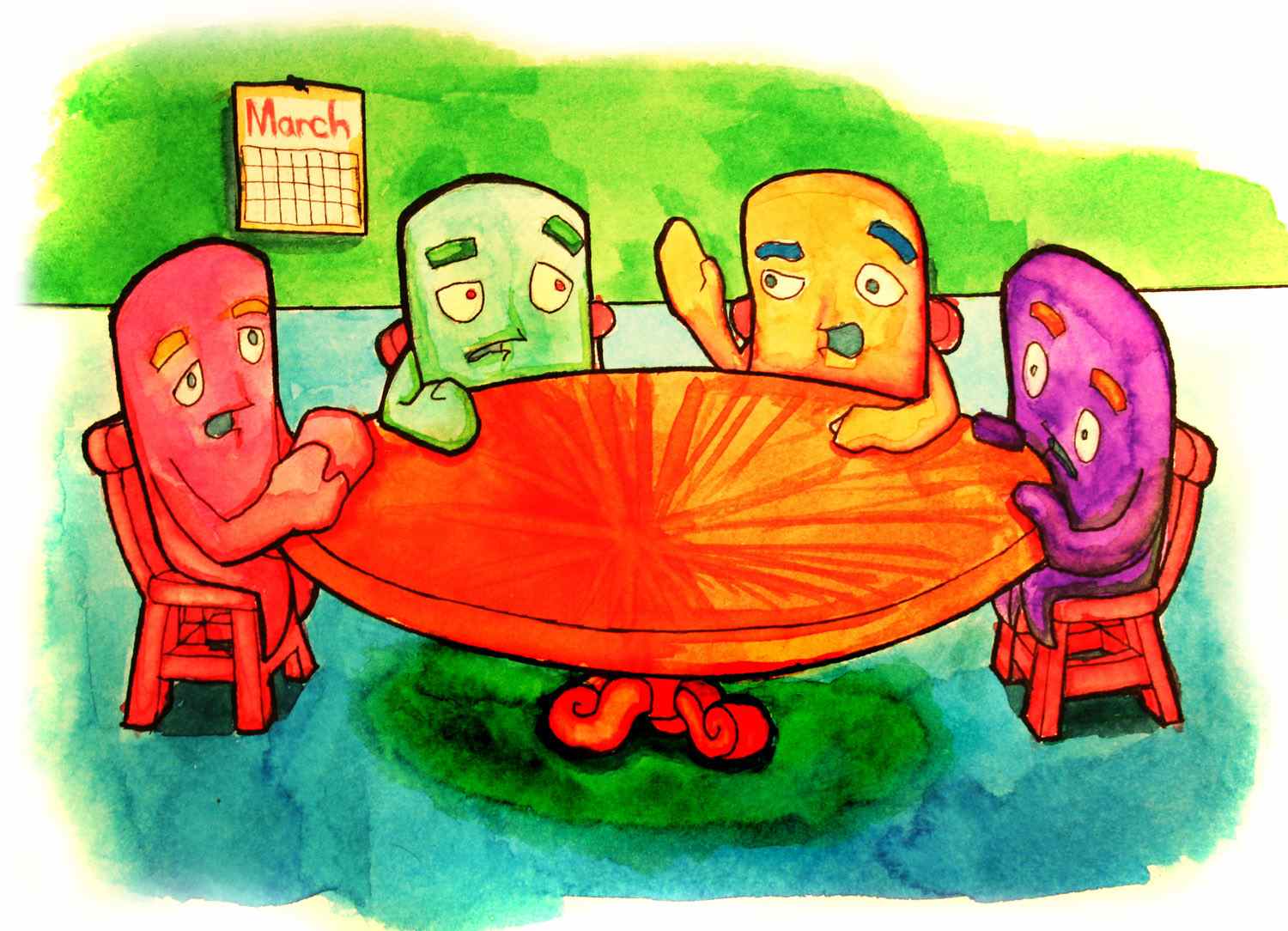
February 6, 2011

Day 1 of 5: Insights and challenges

by Rod Smith

Attraction is only enduringly poss

This is #1 of 5

Insight into your life and relationships is a prerequisite to growth or desired change.

Many people are very insightful yet appear to short-change themselves by refusing to act upon it.

Insight alone can be pleasurable (as if “understanding myself” is enough) or painful (if it leads to feelings of pessimism) but insight without appropriate action is useless if change or growth is desired.

This week I will offer you five core insights (from family systems theory) and challenge you (and challenge myself) to action based upon the insight.

Here’s the first:

When anxiety runs high, persons tend is to fight (become combative), flee (escape, or change the topic), or freeze (become immobile or useless). When faced with increased levels of anxiety, a primal protection mechanism engages and we can become inhumane (reactive, aggressive, diseased).

Thinking takes time.... reacting doesn't

Action / Challenge: Stand up to the primitive urge to fight, flee, or freeze, by deliberately engaging your “human” brain (your thinking, creative, brain) as opposed to obeying your reptilian brain (the reactive, non-thinking part of your brain) or by having a pity-party (allowing your emotions to over-rule).

Identify what’s occurring. Speak about it. Establish necessary distance. Get perspective before you react to the anxious internal or external environment and inflict unnecessary relational damage.

February 3, 2011

After 21-years I found out my wife cheated on me

by Rod Smith

“After 21-years I found out my wife cheated on me with a single man I thought was my friend. She also got pregnant and had his child. When the child was small everyone said he looked like me. Her lover was the same nationality as myself so that was not hard to misjudge. As the child got into his teens he resembled her lover. The child is 23 now. One day I asked my wife if ‘my friend’ had ever made a pass at her and she ignored me. About a month later I asked her again. She said he tried to kiss her once. Then I remembered I come home early from work sometimes and he’d be at my home. They said he was waiting for me. Neither she nor ‘my friend’ knew I would come home early. I recently came out and asked her if she had an affair and she got upset but did not deny it. Weeks later I again asked her and then she denied it. I stay with her because she was my first real love. I have always loved her.”

Although you have not said it, I will assume your son has brought you both much joy.

February 2, 2011

Is it love?

by Rod Smith

He loves me, he loves me not!

Love is not possessive. It does not try to cut you off from others. A person who restricts your freedom does not love you despite what he or she says. Sometimes a possessive person will say, “I am just this way because you are not committed,” or “it’s because you are so beautiful.” Actually, possessive people seldom become less so. Their hold on you will only intensify if you permit it.

Love is not jealous. A person who loves you will celebrate your successes and applaud the loudest. He or she will encourage your popularity with others. Sometimes a jealous person will say, “I am jealous because I love you,” or “jealousy shows I care.”

Nonsense.

People are jealous for many reasons but it is never a sign of love.

Love is not only a feeling. It is measured in financial, spiritual, emotional, and sexual fidelity. It listens. (“Emotional” added by Clif Heeney)

The loving person does not play games with your feelings, spend your resources, or keep secret from you, matters that impact your relationship.

Love desires the highest good of all the people in your family. It has no desire to exclude or separate you from others whom you love.

February 2, 2011

Whose issue is it?

by Rod Smith

“My girlfriend says she loves me and would never cheat on me. The problem is she has had a lot of casual intimate relationships in the past but says she has changed and wants to be with only me for the rest of her life. I would like to know what she does when I am not around. I can’t be around her all the time and when I am not I feel as if she is going back to her old ways. I ask her to call me and to text me every hour or so when we are not together just to be certain she is ok but she doesn’t want to do this. I want her to stay at home with her family when she is not with me just to be safe. Whenever I confront her about this stuff she starts crying. She says I don’t trust her but there is so much that has happened in the past that I think she should do what I ask so she can regain my trust.”

While her past torments you and while you monitor her behavior you will not find a mutual, trusting, and respectful relationship. It is you that has the trust issue.

February 1, 2011

Excerpts from five reader responses…….

by Rod Smith

“My in-laws are the most fantastic people who’d give my husband and me the shirts off their backs and they’d do anything for our children. When I read about families who are cut off from grandparents or from in-laws it makes me so sad. We would live together if it were convenient – but we try to get together as often as possible. I thank God for my husband’s parents who have taken me as a daughter and have given me what I could not get from my own due to sad circumstances that I will not go into here.”

“My wife’s father is really one of my best friends.”

“I call my mother and my step-mother ‘mom’ since they both do the same things.” (Peter, 11)

“My husband is the kindest man I have ever met.”

“The best gift my father gave me was the appreciation of hard work. He played hard because he worked hard and I find myself wanting to do the same.”

January 31, 2011

It really is a myth that women are the only ones who can serve as a ‘primary’ caregiver to a child…

by Rod Smith

Dear Rod Smith

I want to write this letter anonymously to protect the identify of my son.

I read your column of 26 January 2011 in The Mercury with great interest and really wish to comment.

It really is a myth that women are the only ones who can serve as a ‘primary’ caregiver to a child. Its ‘first prize’ if both parents are available and share the parenting responsibilities (even though they themselves might not be joined in a romantic or marital relationship). I am, in the same way as you, living testimony that men are totally able to provide for all the caring needs of an infant child. I reconciled with my son’s mother two days after he was born. He is not my biological son (although none of the family is aware of this) and since we took him home from the hospital, I have provided for virtually all his needs (material, emotional, developmental). His mother struggled to bond with him after his birth and with my support we worked through this period and I did my best to ensure that its effects on him are minimal. During this time, and even to now, I play the most significant parenting role in his life (and this does not mean his mom does not have a wonderful and loving relationship with him).

I believe that the myth that men are not capable or competent to nurture young children is institutionalised by views such as those expressed by the writer of the letter to you and this is as a child which leads to men being denied the opportunity to build strong and meaningful relationships with both their children and the mothers of their children. On the other hand I do feel that race can have its own dynamics, but need not necessarily be an impediment to good parenting.

Durban Dad

January 31, 2011

I was so inspired by your column I wrote a book on the subject of divorce

by Rod Smith

Hi Rod,

You probably won’t remember, but in the past you have very kindly printed some of my letters to you in The Mercury here in South Africa, and you have even E-mailed me directly on a couple of occasions. Much appreciated!

Just a touch of news, I was so inspired by your column, I set out and wrote a book on the subject of Divorce, and the shambolic events which take place when one doesn’t quite know what to do, the procedures and all the other elements which make up this sad happening. The title is, “Divorce, a beginners guide!” Much to my great surprise, the book was immediately accepted for publication! Talk about beginners luck!

I would consider it a great honour to send you a copy once the printing is complete, if you would like a copy, please let me have your postal address.

Once again, thanks for everything!

Regards,

Spike Farrell.

January 30, 2011

Key terms for at least one approach to Family Therapy….

by Rod Smith

Who shows the most health and freedom?

Readers often express interest in the Science of Family Therapy. Here are a few key words to guide any reading to stimulate further interest in at least one of many approaches:

Murray Bowen – is considered one of the pioneers;
Genogram – a diagram of a family usually starting with immediate family or “family of origin”;
Space – the distance between and among people;
Under- and over-functioning – playing more than your own role or doing less than your role deserves or requires; Anxiety and chronic anxiety;
The human need for autonomy;
The human need for intimacy;
Differentiation of self;
Cut-offs, fusion;
Mutuality; respect;
Invisible loyalties – the often irrational and rational loyalty among family members;
Low- and high-functioning individuals; low- and high-functioning families.

Keys to change in a family (if change is indeed possible):

Change in a family often comes from first identifying the most self-differentiated person in the family. This person is challenged by the therapist to move his/her life toward greater levels of health and integrity, despite the cost and the sabotage that will naturally result. Family resistance to change is to be expected. When some seek greater health there will be “push back” from those who benefit from the status quo.