What’s in your tank? When I see the way some behave I have to ask the question.
Then I find the question coming right back at me when I react to others in ways that are hurtful, even harmful.
What are you running on? Is it regret, remorse, feeling of inferiority and rejection.
Is this why you lash out at others, most of whom you don’t even know?
None of these brewing emotions will get you (or me) very far even if regret and remorse and inferiority seem earned and appropriate. Live like this for any length of time and this toxic mix will return to you from all sides.
Perhaps life has filled your tank with anger, arrogance, grievances and blame.
Running on this mixed up mix may give you a feeling of empowerment but you will never find any semblance of happiness with all that living within you. Such attitudes and emotions will alienate you from others, even those whom you love.
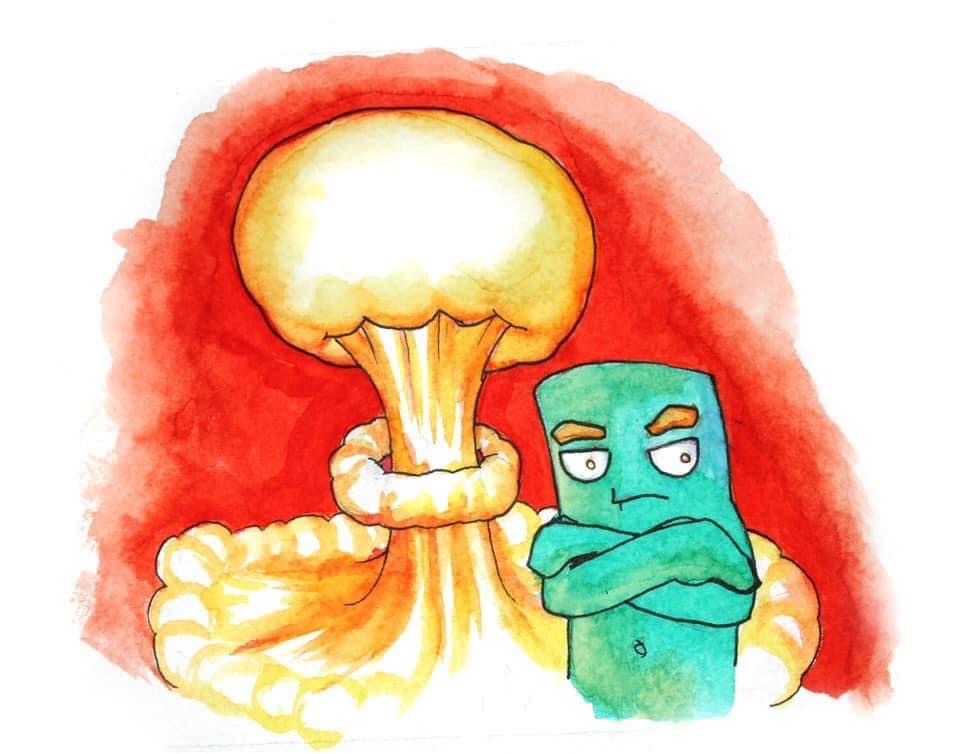
This concoction will burn you and others if you live long enough without imploding or exploding.
May we (you and I) do whatever it takes to fill our tanks with humility and kindness.
Such attitudes and emotions will take us places worth going.
With humility and kindness filling our tanks we will build solid and trustworthy friendships.
I devised a list of how to participate in the healing of men and women who have been hurt:
Be willing to listen, even if what is being said is what you’d prefer to not hear. Try not to re-engineer (re-frame, recast) what you have heard so it is more fitting with what you’d really like to hear.
Resist understandable attempts to short-circuit growth by trying to ease necessary pain, by offering false affirmations, and by accepting empty excuses for irresponsible behavior. Pain is a very good motivator for change. Resist the urge to remove it when it appears to be helpful.
Offer your presence, not your answers. “I am with you” is more helpful than “let me help you fix it.”
Welcome silence. There are ways to communicate that do not include words. Resist the understandable urge to chase healing and learning away with the incessant use of words and stories.
Avoid minimizing (“it’s not so bad!”) or rationalizing (“What else did you expect?”) or normalizing (“Anyone would have done that!”) the issues that resulted in pain. Do not rob necessary pain of its usefulness.
Promote “future thinking.” Ask questions focused on future wellness and success.
Try to avoid searching for the genesis (the cause) of what has led to pain. Where something comes from is not nearly as important living your way out of it.
Your family – blood-, marriage, relatives-by-choice, adoption, and any other means people become family – is vastly more than a list of people on your group-chat or birthdays to try and remember or the ready-made crowd for weddings and funerals.
The hundreds of links (a family of 4 has 16 relationships) in your network – your family – and how you are linked (just right, over-connected, under-connected, loosely-affiliated, cut-off in anger, the “I’ll never talk to him/her-again” kind of connection) is of crucial importance.
How you are connected will either sustain and support and nourish you or drain and exhaust you. And, there is no escaping. Severe disconnections can wield a driving power even in a so-called non-relationship.
We are all “linked” and positioned in a variety of ways within the same extended family and so a family can nourish and support while, at the same time, it can rip to shreds and bleed someone dry.
I’d like to avoid this dramatic contrast but simply look around — listen to people’s family stories — you’ll see it is so.
We are each integral to the health (and un-health) of our family.
We are each a cell-within-the-whole.
The healthier we are, the more “just right” our connections, the more we will be nourishers and be nourished within the unique group of people we each call family.
The healthier I am will lead to a healthier “we” even if it results in hardship* along the way.
* attempts at greater health will be met with resistance from those around, especially those who’ve “benefited” from unhealthy habits and patterns.
No matter how good or qualified your therapist — therapy will be of no help:
If you’re seeking help with your intimate relationship but you’re living with your mind made up, bags packed, and a heart full of blame and complaints.
It’s therapy, not arm-wrestling.
If you’re having an extramarital affair and you want to improve your relationship with your spouse so your divorce can be cordial.
It’s therapy, not help with deception and manipulation.
If you’re coming to change or influence a relationship you’re not directly a part of, for instance, you want to fix your son’s marriage or you want you husband to call his mom more often.
It’s therapy, not human chess.
If you’re committed to treating your adult sons and daughters as if they’re children and wonder why they resist visiting or phoning you.
It’s therapy, not guilt-tripping.
If you’re hoping for help to change the political views of people with whom you do not agree.
It’s therapy, not magic.
If you want the lazy to be hardworking, the harsh to be gentle, the stingy to be generous, and the unforgiving to find mercy.
Men and women who discover such radical transformation do so because they grow tired of their selfish, rigid, alienating and arrogant ways, and, in humility, find the courage for change.
It’s not therapy, it’s when desperation meets the Divine.
Respect is placing high value on privacy, even, perhaps especially, between and among people who are very intimate with each other. The deeper and greater the intimacy, the greater the need for individual space, even opportunities for extended solitude.
Respect is listening, it’s having the willingness to focus on what another is saying without correcting, interpreting, or interrupting. It’s developing an eye for what another may need or want and looking for ways to serve one another. It’s having an eye for mood and occasion, the ability to read a moment and to sense when strong emotions may call for deeper understanding.
Respect is having an ear for what is not said. It’s the capacity to read between the lines, to discern what may be uncomfortable to express. It is developing an ear to honour what another finds painful, the ability to understand that loved ones may hide pain, may want pain concealed, from some, but not from all.
Respect is found in the appropriate use of touch, touch to affirm, the kind of that says “You are not alone,” and expresses warmth, declaring the pleasure it is to share life with another.
If you are desperate, perhaps wondering if life is worth living or even contemplating ending yours, there are a few things I would like you to know:
You are more loved and treasured than you probably realize.
Your voice is your most powerful weapon. Let someone know about your experience.
You have abilities and talents you are yet to discover.
Your life is a novel worth writing.
If you are still breathing you have the capacity to love.
Even if you have encountered rejection and faced failure for most of your life you still have the capacity to forgive and to love. Both capacities come with the human package.
There are people who will listen if you let them know you want to talk.
You have probably already faced more demanding challenges so you do have the resources to face this one.
You are correct if you respond with, “He doesn’t know me” or “he’s thousands of miles away.” Being far removed does not mean that I do not care. And, I am not the only one who cares. Please, let these simple thoughts seep into your being and perhaps become stepping-stones for you to find hope.
Extended or immediate family discontent, even family rage, is more easily solved, healed, or negotiated sooner rather than later. Wait too long and it may go on for generations.
The longer schisms linger, the deeper they become and the more entrenched and “default” the reactive behaviors become. Bitterness, cynicism set in. Cut-offs become a way of life. Walls get higher and stronger.
The stories about who did what to who expand, often beyond recognition, in the heads of those who harbor and perpetuate the conflict.
To find healing or reconciliation, the “bigger” person, or the stronger member of the family, or the one who has the highest levels of “differentiation of self,” the one who wants the healing, initiates a conversation. That conversation must be devoid of all blame and all finger pointing. He or she does the necessary preparation and decides exactly what is wanted and what healing in a particular family may look like. Such an initiative demands humility, flexibility, and a deep desire for reconciliation.
Some families have been at war with each other for so long those who started it are long buried and those on the front lines do not even know anymore why they are fighting.
Please, don’t let that be true for you and for your family.
The consequences are too extreme, especially for innocent children who are inevitably caught in the crossfire.
If you’re toying with the idea of an extramarital affair or with the idea of cheating on your partner, may I caution you? Affairs are seductive. They are seductive, not because they woo you into false intimacy, but because affairs lure you away from your crucible of authentic growth, your committed relationship. This is where maturity and fulfillment are available.
An illicit relationship won’t teach you anything worth learning. It will reveal you as one who lacks integrity. It’s a character issue. It’s not about getting the sex you need or the companionship you crave.
If your marriage is not working an affair won’t enduringly help.
The one who is toying with the idea of an extramarital affair is unlikely to even read, let alone heed these words. Attraction is powerful. It’ blinds. The victims of infidelity can seem propelled on a course of self-destruction. The heat of the chase, the heat of the moment, the rush of the deceit and the intricacies of the cover-up can feel like amazing love. It’s not.
Go home. Make right with your spouse, or do whatever you need to do.
An affair won’t heal a lonely heart or help your troubled marriage. It’ll further damage both.
Love leads to listening, freedom, warmth, care, and mutual support. It’s sharing dreams; it’s facing challenges together. It’s pooling resources for mutual benefit. It’s providing a safe place for each other and for any children with whom you share your life.
Love is not love when:
Coercion is threatened or used
There are attempts to seclude or cut off from family and friends
Betrayal is threatened or used
Love is used to trap, manipulate, or possess
Confinement is threatened or used – car keys hidden, doors locked, plans cancelled without consultation or knowledge
Privacy is denied (rooms, cupboards, purses, phone, computer, email, conversations)
Traps are set to test fidelity
Stalking, watching, tracking of any manner is threatened or used
Attempt at important talk repeatedly escalate to shouting matches
Violence of any kind (physical, sexual, emotional, psychological) of any degree of severity is used
Warmth, kindness expressed to others (old friends, family, former colleagues) is given as the reason for jealousy and conflict
When the use of alcohol or legal or illegal substances deplete mutual resources and lead to aberrant behavior or conflict
“Today is the 1st anniversary of discovering that my lady friend had been having an affair over the previous month with a fast-talking operator who is half my age. She told me it was over, a mere a flash in the pan for which she felt neither remorse nor regret.
“The revelation was devastating and reduced me to an emotional wreck. Over the next two months I was almost suicidal and had to seek professional help. I still loved her; I attempted to recover with the assistance of a therapist and researched depression and heartbreak. I lurched from one temporary separation to the next but was always so pleased to reconcile that it seemed the hurt was receding. That was until the next crisis surfaced.
“Then I read your column on forgiveness and experienced a wonderful epiphany. Suddenly I realized that I was punishing myself for actions for which I was not responsible. A huge cloud lifted and healing began. Today, a year later, I have absolutely no painful memories of the incident, feel rejuvenated and bear no resentments.


 difficultrelationships.com