
Posts tagged ‘Love’

October 1, 2007

He wants to know if we are sexually compatible….

by Rod Smith

Reader’s question: My boyfriend says we have to have sex to see if we are sexually compatible before he will continue seeing me. What do you think?

Rod’s answer: What an old, and ridiculous line. Move on! Your boyfriend is what I call a “pp” or “penis propelled.” If you really want to assess sexual compatibility it can be done without removing a single item of clothing!

First: Compare credit reports and financial statements to see how each of you handles money. How you respect, use, and save money, will exert more power over your long-term sexual compatibility than any immediate sexual encounter will indicate. It’s very hard to be passionate, faithful lovers when you are fighting over maxed-out credit cards. Little will challenge your sex life as much as scrambling for money and blaming each other for the poor use of resources.

Second: Compare your attitudes toward and your relationships with your immediate family. You can tell everything worth knowing about a person by how he (or she) respects and appreciates his parents and siblings. People who show little respect for their immediate family, or little desire to care for them, are unlikely to be a successful long-term husbands or wives, no matter how good or passionate they might be in a bedroom.

Third: Assess attitudes toward hard work. A shared, healthy attitude and high regard for hard, honest work, will give both of you useful insight into your long-term compatibility much more effectively than will the immediate experimentation with each other’s bodies.

October 1, 2007

His venting is out of control. What should I do?

by Rod Smith

“My husband’s venting has gotten out of control and I’m considering a divorce. Talking about it yet it ends up in a fight. When I first met him, there were times I had to put down the phone and take a walk. It drained me. I married him, only to find out this venting was a regular thing and I became a target. It’s not what he says but the delivery, the energy behind the words. It’s gotten so bad that I can’t sleep, or concentrate, and I have a hard time being around him. Do I divorce or separate from him?” (Edited)

Get your attention off you husband’s behavior and onto your own. Like many people, you observe the finer details of a partner’s behavior while ignoring your complicity that helped fuel the very behavior you now reject. Why would you marry a man when his pre-marriage behavior was already draining you? Things would be different if you’d made a radical stand the very first time he was inappropriate.

Divorce? Separation? I have no idea. I do know nothing will change – actually they will deteriorate – until you do something radical. You are a target but you have legs! Use them. When he sees you will no longer tolerate his hurtful outrage he might do what it takes to grow up.

September 30, 2007

Questions healthy people discuss when new, significant relationships form…

by Rod Smith

Take Up Your Life (317)  694 8669

Take Up Your Life

1. Are we spiritually, financially, psychologically, and emotionally, sufficiently suited to each other?
2. Do our long-held, individual, long-term, personal goals and personal dreams somewhat fit with each other?
3. What do we each imagine is possible for us to achieve (service to the poor, overseas travel, learning foreign languages, learning new skills) within this relationship and potential marriage?
4. How do we each perceive our individual and mutual responsibilities to our parents and extended families if we marry?
5. Which of us is better with money? If we marry, how will we organize our money? Will we keep everything separate or will we pool all our resources? How will we decide what we buy, how we buy, and when we buy expensive, but necessary items needed by a new family? Which professional will we choose to help us with the wise use of our resources? [Do not enter a relationship with someone who is in excessive debt.]
6. What does each of us think about religious observance? How will we decide on where and how we will worship?
7. What help do you need from me in order that you may achieve all you have ever wanted to achieve with your life?

November 23, 2006

When your husband says he doesn’t love you anymore or want to be married anymore……

by Rod Smith

dsc_0642Of course you are going to fall apart, and mourn the loss of the future you thought you’d have.

You will feel like death itself and even welcome your own.

Then, when your mind somewhat clears, you’ll wonder what really occurred. You will question what you might have done to cause the marriage breakdown and wonder what you might have done to save it.

Then you will bargain with God, your husband, even your children, or with anyone who will listen as you urgently try to get things back to normal, and get yourself back into his heart, head, and bed.

And, when things somewhat settle, and you’ve gotten some rest, and you emerge from the initial impact of what has occurred, you will see that this is not about you, or what you did or did not do. You will see there that there is no real power in bargaining with him, or real value in your becoming whatever you think he’d prefer you to be.

You will see that, quite apart from whatever he decides to do, there is great power and value in picking up your life, one emotion at a time, and doing what is best for yourself and your children.

Call Rod now…..

March 15, 2006

Three poisons for love: Manipulation, Intimidation, and Domination

by Rod Smith

TUYL

Stay OUT of control...

When people have to use intimidation, manipulation or domination, the relationship is already spoiled or poisoned. It has become a power play of control. Redeeming such a relationship is possible with the implementation of a wise plan, strongly re-defined boundaries, enduring commitment, and the possibility of a time of separation in order that perspective might be gained.

Willingness and desire to be together, equality between people and complete mutuality are the hallmarks of healthy relationships. Where any form of strong-arm tactics are used, the relationship has already taken a turn to become something harmful to both the parties.

Each of these relationship-poisons (manipulation, domination and intimidation) can be very subtle, coming in different shapes, sizes, and intensities.

Here are some of the evidences of manipulation, intimidation, and domination in a relationship:

1. The relationship has been kept on an unequal footing in order that one person might keep power over another. In a severely controlling relationship, both persons might have forgotten there are choices at all.

2. One person tries to get what he or she wants without declaring what is wanted. In attempting to get what the one person wants, both persons are in some way diminished.

3. One person does not see the other as totally free.

Confused boundaries4. One person tries to get what he or she wants through threats or withdrawal.

5. It is expected that every move, thought, and feeling will be reported at least from the less-dominant person to the other. If one person is unwilling to tell all, it is assumed there is something to hide.

6. One person is not free to make plans without consulting or getting permission from the other.

7. One person in the relationship continually evaluates and examines the commitment and love of the other.

8. The dominant person tells the other how they should feel and usually re-scripts any division or disagreement into the appearance of unity.

9. One person feels at liberty to speak for both people and then, is offended when the partner wants to express his or her own views.

10. Desire for self-expression or a distinct voice (by one) is considered betrayal or a lack of trust (by the other).

11. One person expects unilateral support for his or her opinions, choices and desires, declaring somewhat of an attitude which says: If you say you love me then you have to love everything about me, under all conditions, and all of the time.

12. Difference in opinion or having different interests is considered a lack of love, or a lack of respect and commitment.

Simple definitions and a metaphor which might be helpful in considering the three “cancers” of relationships:

Manipulation: playing chess with another person or with people. Maneuvering as if life were an attempt to checkmate others into loving us or doing what we want.Explosive
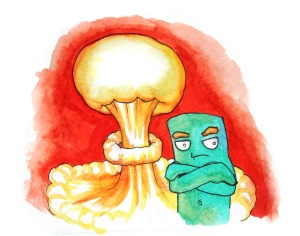
Domination: playing chess with another person or with people as in manipulation. The difference is the dominator has removed the opponent’s pieces without declaring so in the first place.

Intimidation: playing chess with another person or with people where winning and losing comes with either the threat of punishment or actual punishment.

Healthy Relationships: There is no element of either winning or losing; they are not a game of chess at all and are free of tactics and agenda.


February 1, 2006

Our sex life is boring

by Rod Smith

“My husband and I were happy until the birth of our son when our relationship changed. After our son was born he started cheating, lying, and drinking everyday. We spent less time together than we used to. I thought we were friends, but now it feels like we are distant cousins. Our sex life is boring.”

Take up your life

Take up your life

Your future must seem dull and painfully endless! While I am sorry that you are victim to your husband’s cruel behavior, I am more sorry for your child who is witnessing a marriage he could hardly want to emulate.

Please read David Schnarch’s book entitled Passionate Marriage. I will warn you that it is the very best book on sex and relationships I have ever read. While it is graphically sexual, it is never pornographic. It is to be read as a whole, cover to cover, before judgments are issued on its worth.

The book outlines the journey of couples who have lives as miserable as you describe yours to be, and offers valuable keys for all marriages and relationships.

I have gotten into trouble for recommending this book to couples, not only because it promotes very strong and healthy sex lives, but because it challenges people to live full, complete and adventurous lives.

January 22, 2006

The myth of love at first sight

by Rod Smith

Love requires knowledge and experience

Love at first sight is impossible. Love requires knowledge, time, maturity, conflict, fun, experience, mutual struggles, and a lot more together before authentic love can develop. People can know “at first sight” that love might develop. Such knowledge, in itself, is not love. Every “in love” couple knows they are still learning what love is and means. They know it requires a growth period of twenty, thirty, or even fifty years. Sadly, many couples give up on each other, and on love, before it has the time to mature into something exceptional. When they see it is very hard work, having hoped for something easier, sights are lowered and something approximating love develops, then boredom peaks, and even the divorce court can beckon. Sometimes an affair stands in the wings or a grave brings relief.

Authentic love is about effort, decisions, actions, attitudes, and commitment spread over many years.

Loving someone is about seeking his or her highest interests while, at the same time, not ignoring your own highest interests. It is impossible to love someone more than you love yourself. It is impossible to know someone more deeply and more intensely than you know yourself. Pseudo-love can masquerade as authentic love and, at first, feel very good. In its early stages, manipulation can be confused with caring, intimidation with a “watchful eye” and domination with “strong commitment.” These are the love’s poisons and distorted love follows. True love’s hallmark is freedom for both and a respected, acknowledged voice for each. Anything less is not love.

When a couple, say Anne and Bob, are both healthy people who develop a lasting and loving relationship, she is able to focus on him without losing or compromising herself. They don’t become each other nor are they glued together. Being apart does not mean falling apart or the undermining of the relationship; being together does not deny individuality. She’s decided to love him. Bob has decided to love Anne. It has nothing to do with the performance of either. The love lives inside each one for the other.

Anne and Bob focus on what they can give to each other without giving up themselves. They know a mature loving relationship is about total equality. They desire mutuality in every respect and both work very hard toward it. There is a palpable freedom between them and a team attitude even when they are involved in unrelated or separate activities. They inspire each other toward separate and shared goals. Neither is threatened by the other’s willingness to grow and achieve and both heartily applaud and encourage the success of the other.

They are willing to hear things from each other they would prefer not to hear. Neither changes what they think, feel, experience or believe to accommodate what they believe the other might prefer to hear. Truth is told with kindness. Anne and Bob share a sacred trust. Questions are born out of a desire to participate in each other’s lives and not from suspicion about each other’s activities. They know and often experience that love casts out fear.

Ann and Bob are faithful to each other because faithfulness builds healthy, sound friendships with all people. Ann is faithful to Bob because even if she did not know Bob, she’d be a faithful person. He is faithful to her because he already is a faithful man. In a sense, their faithfulness has nothing to do with each other.

An absolutely private world, holy territory, lies between them. They go to places together in this world that each has never been before. Here, they touch the heart of God through commitment, mutuality, freedom and respect. In this private place of communion, the depth they know in this sacred intimacy is never equaled with another or devalued or soiled through compromise with another. It is highly valued, a protected place for them both, and, like very expensive art, is defended, enjoyed and treasured by each of them.