Archive for ‘Voice’

July 15, 2009

Yes. It is all connected…

by Rod Smith

It all connected...

It all connected...

I have met parents concerned about the degree of conflict experienced with their children, who then, during the conversation, will openly confess they have no time for a mother or father-in-law, their own parent, or are out of sorts with an adult sibling. When I gently point out that these conflicts are possibly connected, fueling each other, I am met with disbelief.

“You’re saying that my fights with my son over his homework (or irresponsibility, or drinking) is connected to the fact that my father-in-law is an impossible man whom I have refused to talk to for the past five years?”

Indeed.

“You’re saying that my ridiculously controlling mother who walks in here like a movie director telling us all where to stand and what to say is connected to my 12-year-old daughter mouthing off to me however she likes.”

Indeed.

When the adult takes the challenge of embracing the “impossible” father-in-law, or standing up to the “controlling” mother, the adult is taking personal responsibility for his or her pivotal relationships. A parent who takes full responsibility for himself or herself when it comes to relating to members of their preceding generation, will see less anxious, less reactive, less rebellious behavior in the generation that follows. Yes. It is all indeed connected.

July 15, 2009

How do I get my daughter (7) to open up to me?

by Rod Smith

“I am a single mother of two girls (“C” 3 and “K” 7). I know children go through phases like trying to define themselves and find their place in the cycle of it all. “K” the 7-year-old is super defiant, but with only me. With her paternal grandmother, with whom I have my own issues with as she is a control freak, and seems to think she can dictate the comings and goings of everyone’s lives, but that’s another matter altogether, she is as sweet as anything. Whether I ask her to do, or not to do something, in a nice and sweet and calm manner, or whether it’s at the point where I’ve asked so many times and my voice is raised, she will always tell me no! She doesn’t talk to me. She shouts at me whether we are talking or arguing. She turns everything into an argument. I have discovered she is quite the little liar and frighteningly good at it and has a bit of a vindictive streak. I know all siblings have the ever-present sibling rivalry, but it seems to me that K is a bit over the top with her rivalry towards her sister. She constantly bullies her, punches, smacks, pinches, you name it, and she does it. Whether C (my younger daughter) has done anything or not, K will just walk up to her and hurt her. C does her fair share of pushing buttons, I am in no way choosing sides, I love both my daughters more than anything else in life. K, I think, has a few underlying anger issues in her little life, which I find very puzzling indeed. How can one so very young carry so much anger? I have tried to talk to her, but she always shuts up, or changes the subject. How do I get her to open up to me and talk things through with me? It feels as if there is a wedge between us (already), and we’re growing apart. I do not want that to happen, ever! How do I help her get over her anger? How do I teach her respect, for herself and others as well as her belongings? I am at the end of my tether. I have told her that if she does not make an effort to get herself together, and respect me and follow the rules, then I will send her to boarding school next year. And she doesn’t seem to care, she doesn’t think I will go through with it. Please help.”

USA

USA

Rod: Your daughter’s paternal grandmother is not “another matter.” It is THE story. Your child is trapped in the fray of a battle of wills between you and her grandmother. If this is crazy, dear mother, let me know. I am very open to being wrong. If it is even partially true, let’s talk more before you make any moves. Any moves you make to de-triangle yourself and your daughter must be sustainable and reasonable or, when the plans fail or you are unable to follow through on your decisions, things will go back to square one and you will be more deeply entrenched in patterns you already find unhelpful. Also, grandmother is NOT the problem but is as much a part of the problem as you are. This is something you have both found yourself in progressively. The solution does not depend on cutting anyone out, breaking off from anyone – but it will involve strong resolve to clarify roles. It is my hunch that grandmother has “found herself” through your daughter(s) and this, if true, will be a pivotal point of power for any child.

India via Hawaii

India via Hawaii

Gideon (India): Threatening to send a 7-year old child to a boarding school because of her ill behavior will only widen the chasm between you and your daughter. Not to mention add to the anger, resentment, and rejection that she will feel either now, or later in her life. I suspect and presume, as a single mother, that there has not been a steady father figure in her life? I have encountered many young children of single mothers who, having been given even just an ounce of attention by a positive male role model, will feel a sense of acceptance and love that can come from a nurturing male figure. My encouragement, if you haven’t already done so, is to ask an uncle, a trusted male friend or relative, if he can spend some quality time doing something that is fun and safe with her. See how she responds to interacting with a “father-like” figure who can speak words of encouragement, teach her mutual respect, and inspire to her to be a happier person. And hopefully, sending her away wouldn’t have to be a “last resort”.

ACT, Australia

ACT, Australia

Jean (Australia): There are many questions that come to mind as I read your letter. You obviously have a child who is very angry and I wonder what is under that anger. You don’t mention her father but what part does he play in her behavior? Is there pain because of unexplained absences? Can you trace her anger and defiance back to a specific event or time? Often when a child can’t put into words his or her confusion about the reality in the home, or the insecurity that results because unexplained events, intense emotions are the way he or she will communicate what’s going on inside. How about others’ anger? Is she able to see anger expressed in a healthy way?

July 11, 2009

My husband is charming the outside world but has violent outbursts with me…. Can he change?

by Rod Smith

Readers, kindly offer your insights through “comments” and read the therapists’ (Jean’s, and Kathryn’s) opinions in a day or two.

“I have been married for eight months to a man who seemed well educated and liberated. Barely months into the marriage he had a violent outburst and bullied me over a trivial things. In disbelief, I gave him another chance only to see him go off again. He used bad words, made me feel wretched, and blamed me for his outbursts saying I ‘provoked him’. We started therapy. I see him not getting violent. He is as touchy as ever, argues for hours, days even though I beg him to leave me alone. He makes demands and expects me to fulfill them and shows no appreciation. He makes me feel like I am a lowly creature with crude, unrefined thoughts. To the outside world, he is the most charming husband. Can he be expected to change?”

From Canberra

From Canberra

Change can happen – but it will be you who begins it. Are you able to tell him how you feel about the way he treats others in comparison with how he treats you? Would you be prepared to tell him that you won’t tolerate his choices to be violent with you? Change can happen, when you change the way you relate to him when he inflicts pain on you. If you need professional help to implement this, I suggest you go for it.

Can YOU change?

Can YOU change?

Can you change? Do not cooperate with his pathological outbursts and bullying. Leave whenever it begins. Say, “I’ll come back when you get over yourself and begin behaving like an adult.” Expose his dark side to your closest family and friends. These patterns of his behavior did not begin with you and nor are they provoked by you, and are beyond your role as a wife to even begin to attempt to fix. The man needs help (and discipline, and a tough stand) beyond the calling of any wife. In short, get out of the way of his pathology, expose – as far as you are able and as far as it directly affects you – his charming appearance, and find your own powerful voice whenever you have to deal with him.

Midwest, USA

Midwest, USA

KATHRYN: He has pent up anger which didn’t just develop after your marriage. You’re the closest person to him, therefore he chooses to release it on you. Blaming you for his outbursts is his way of not dealing with it, which allows him to continue doing so, as long as you are a willing participant. You have the power to let him know what you will and will not accept in your relationship. Take it back. He may need individual therapy before marriage therapy may prove helpful.

READER RESPONDS (NO PICTURE AVAILABLE): Regarding the query from the woman whose husband is so discontented (Mercury, 16 July 2009) – this man has no concept of what it really means to love someone, let alone be contented. In fact, he sounds very self-centred and immature. A Don Francisco song goes, “Love is not a feeling, it’s an act of your will”. There is also a book on depression, by Minirth and Meier, with a title I like: “Happiness is a Choice”. There are plenty of other cliched truisms along this theme.

The concepts of love and marriage have been done a great disservice by the media’s romance industry. Yes, there is a place for romance, passion and excitement, but these are essentially self-centred and depend on feelings. One cannot remain infatuated and at a peak of passion all one’s life. True love is unconditional and other-centred, not self-centred – on both sides of the relationship. It values the other person and involves mutual commitment and fidelity, regardless of what life throws at them. In a one-sided relationship, there is a giver and a taker, which is unbalanced. The tragedy is that this man will probably leave a trail of broken hearts as he pursues his self-centred agenda, charming women then getting bored once the infatuation abates. He really needs to grow up!

July 9, 2009

My husband is steadily gaining weight…..

by Rod Smith

“My husband is steadily gaining weight. He is obese (30kg over-weight) and we’re in our thirties. I’ve tried changing to a healthy eating routine and he loses interest. I’ve bought trainers to encourage him to begin walking with me. I have told him directly he needs to lose weight and he does nothing. It angers me that I make the effort to stay in shape by eating healthily and exercising regularly for various reasons, one of which is so that he can be proud of me in public. I am turned off in the bedroom and avoid intimacy whenever. I’m bothered that I’m looking at other men because I do love my husband. How do I get him to realize that this is a serious issue for me without hurting his feelings?”

KATHRYN: Pushing him to lose weight is producing the opposite results. No amount of energy spent on your part will ever be enough. The weight is symptomatic of a deeper issue, perhaps feelings of inadequacy. Thoughts about other men points to intimacy problems in your marriage that have nothing to do with sex. Plan a date for the two of you and look beneath the layers of subcutaneous tissue where you will indeed find your husband again. Energy spent in this way will not be wasted and perhaps he will begin discovering who he is and see you again in the process.

ROD: 1. Get his weight off your shoulders by telling him your complete truth. Your emotional health is more important than his feelings. Incredibly, he is free to dig his grave with his teeth or to find appropriate help.
2. Never have sex you don’t want.
3. Realize that while you perceive yourself as responsible for his health you will ruin your own. While it’s your issue it will never be his. The best help you can be is by NOT helping.
4. Get out of his sinking boat by taking your hands off his diet, exercise, and image. Remember the more your work the more he won’t. Sorry, this is not because your husband is in some manner peculiar, it is the nature of dependency.

JEAN: If you are frustrated that your husbandhas gained weight since your marriage, there must be frustration on his part too. Advice we listen to; but it’s pain we obey. Your husband will need to realize himself that he doesn’t want to be overweight because recovery for him will be hard work. Addiction in a relationship can subtly draw in the partner who tries to ‘fix’ the other. When he or she can’t, he or she can become controlling, angry, and resentful. Find ways to encourage your husband but look after your own needs. Seek help about wanting someone else.

July 3, 2009

(Mis)beliefs about love…

by Rod Smith

You can love and NOT worry...

You can love and NOT worry...

Easy-to-make fundamental (primordial) errors of belief humans often make in relationships can unsettle (challenge) the strongest of commitments. These “emotional fault-lines” can require intensive understanding on behalf of the one so inflicted, and, when not embraced and accepted by others (I do not mean appeased) these troubled foundations can result in consequential ramifications in day-to-day loving, living, and parenting:

1. Attention equals love and the amount of attention reflects the amount of love. To mistake attention with love and the lack of attention with the lack of love. “If you love me then I will be the focus of much (hopefully all) of your attention,” and,”If you give your attention to someone else it means you love them and not me or you love them more than you love me.”
2. Worry (anxiety) equals love. To think (or feel) that the presence of anxiety or worry or concern is a sign of love and commitment. “If I love you then I must worry about you,” or “If you love me then how can you be so seemingly worry-free about me?” or “When you love someone you think about that person and worry about what they are doing all day, or you don’t love them.”
3. Togetherness, unity, and being “on the same page” are signs of love and commitment. “How can we possibly love each other if we don’t think and feel and see things in as much the same way as possible? There, look at Jack and Jill across the street, they are so in love she even thinks for him, they dress the same, and he calls her 15 times a day at work to let her know he’s concerned about her safety. Now that – that is love.”

June 25, 2009

Voice lessons

by Rod Smith

Let your voice be heard!

Let your voice be heard!

Every person has a voice that is designed for full expression. Some have allowed their voice to be stolen or silenced and might find it necessary to take time to find or re-establish the voice they have chosen to deny or ignore. Thankfully, suppressing a voice seldom kills it. It can usually be found even after years of denial.

Any person who will not hear what you have to say, or who tries to silence you, does not love you even if he or she proclaims otherwise. It is never a loving act, except in very unusual circumstances, to stop someone from expressing who he or she is. Likewise, it is never a loving act to withhold your contribution to the world by maintaining your silence.

You were not created to be silent or to silence others. The world will benefit for hearing who you are and what you have to say. Part of having a voice, and using it, involves the process of discovering how best to package and express your voice so others can hear what you have to say.

Compromise yourself, your talents and skills for no one. Be silenced or made “smaller,” rendered voiceless for no one. It is never worth it. There is no cause, no relationship, worthy of your silence. There is no person of any rank, no spouse, boss, or spiritual leader deserving of your downplaying who you are. Only those with dark motives will seek for you to be less, minimized, diminished, or silenced. Walk away from such small-mindedness, even if it is costly to do so.

Find your voice; use your power!

Find your voice; use your power!

Loving, good people, will celebrate your strength, encourage your freedom, and admire your talent. Stick with such people. Stay with those who enlarge your world, not restrict, shrink, or contain it. Live fully, love fully, and speak fully.

I am weary of men and women, irrespective of who they are, who hold others captive, especially in the name of love.

I am weary of spiritual “leaders” who are afraid of gifted people; of bosses who silence talented people lest their own inadequacies be revealed. If you live above, and beyond, the damaging jealousies that surround you, you will stimulate the dreams of everyone in your circle of influence, and make your dreams come true before your very eyes – and the world will hear your voice.

June 24, 2009

The self and “self”-protection….

by Rod Smith

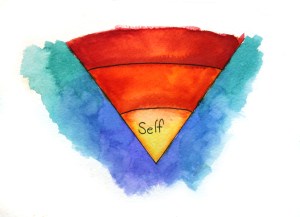
The deepest recess, where soul, spirit, body, intellect collide and connect and have their enduring party

The deepest recess, where soul, spirit, body, intellect collide and connect and have their enduring party


One failure of the so-called dysfunctional family (I prefer “higher” or “lower” functioning family) is a family’s inability to protect the emerging self (the sense of self, soul, spirit, inner being, heart) of persons in the family.

Characteristics of the self:
1. It is beautiful (created by God as the unique expression of who you are to the world). Even the “worst” person has, hidden beneath it all, a beautiful self.
2. It is relational (naturally wants to relate and engage). Every act – think about it – is an act of relationship.
3. It is sexual (naturally wants to procreate, build and nurture something larger than its-self). Nothing can be done to escape our gender; it is inextricably woven deeply within and finds expression in everything we do.
4. It naturally desires to engage in worship (naturally wants to ascribe greatness). This explains why BMWs, children, houses are “worshiped.”
5. It is enduring (it doesn’t change much in a lifetime). Parents say things like, “From the day he could walk he’s been a determined person.”
6. It is regenerative (naturally seeks to mend and heal). Like the body is always in a state of regeneration, so is the self.
7. It is resilient (can tolerate and survive enormous pain and suffering). Humans have endured untold horror when it has been inflicted upon them.
8. It is creative (naturally thinks outside its-self) and resourceful. It is the powerhouse (engine room) within every person.
9. It can be fed, trained, encouraged (one person can take better care of a self than another) and can grow.
10. Unfortunately, it can be starved, neglected (can wilt away without nurturing) and can give up the fight.
11. It is the place from within which people are able to want, to express desire; it is the center of desire within us.

Take Up Your Life

Take Up Your Life

Although the self within us all usually has a huge repertoire of protection mechanisms, when and if it is damaged, it is usually slow in healing. While the self is difficult to damage, considering its incredible resilience, it can be damaged. A damaged self displays the impacts of hurt and trauma most vividly in relational difficulties, in matters of closeness and intimacy. The effects of damage and trauma to a self can apparently leave a person quite unaffected regarding distant or impersonal encounters. It is in intimacy, in close friendships, that the damage most vividly reveals its presence. When in relationship, a person with a damaged self will find himself unable to “be him-self.”

June 20, 2009

His lover is alcohol…

by Rod Smith

“My father cheated on my beautiful mother for many years. He married the 100th ‘affair.’ For 25 years she never dated again, never said a word, but loved him all her life. I am married for the third time: met my husband two years ago, moved to another continent, gave up everything to be with him. My ‘knight in shining armor’ has not told me that he doesn’t love me anymore, but he might as well have. The emotional abuse is terrible; the things that are said remain in my heart like a knife. I try to forgive and forget. I am in a strange country, have no friends and nobody to turn to. Why do we take this? I see myself as a strong, independent woman, but lately have turned into a quivering, blubbering please-don’t-hurt-me idiot. My husband’s ‘lover’ is alcohol and I cannot compete. I am in new country, alone, still trying to hang on.” (Edited)

Take up your life

Take up your life

Your parents’ sad past is irrelevant. I will agree that it is interesting since it appears that you and your mother are (and were) willing to put up with disregard and indifference from the men on your lives, but knowing this will not help you out of this current situation. The knight you most need is the one living within you. In the stark reality of any day soon, summon your independent nature, take responsibility for your decisions and actions (the ones that got you here), and begin to plan our way out of victim-hood. You can do this. The reserves of strength are in you. How do I know? Well, moving countries is not easy, even if you were in the arms of whom you thought to be a knight in shining armor. And, in the midst of your trauma, pain, and unhappiness, you accessed this website, wrote a letter to other readers of these posts – and, while this is common, it does take some savvy. You have it, dear reader. You have all it takes to get yourself out of this and deliver yourself to your home-turf just as you had what it took to get yourself into this in the first place. TAKE UP YOUR LIFE!

June 8, 2009

Could he kill you?

by Rod Smith

Dangerous relationships are easier to endure than address, so it is not surprising that the murder of a wife, an ex-wife or lover usually takes everyone by surprise. Secrecy, cover-up, denial are the hallmarks of toxic binds.

I think women could use a set of criteria to evaluate whether they are involved with a man capable of committing a violent crime against them. Accurate or not, the list could help a woman escape a potentially abusive relationship, or at least eradicate the virus before it destroys her.

Men who are capable of killing a “loved” one often leave trails of early indicators, like rose petals around an open grave, before they commit a horrible crime.

Perhaps someone’s life will be saved because this list, incomplete as it is, will assist someone toward getting appropriate help:

1. He tells you how to dress and insists you obey his wishes in this regard. If you resist he becomes irrationally hurt or angry. You are beyond choosing what you wear because your dress is his domain. [Please realize that not all controlling men are potential killers.]

2. He checks up on you for “your own good.” He wants to know where you are, what you are doing and whom you are with. Time unaccounted becomes an accusation. You find yourself explaining or hiding everything, to avoid the laborious conflicts that inevitably ensue.

3. Any move toward independence on your part is rewritten as betrayal.

4. He tells you when you are happy, and rewrites what you feel if you are unhappy. He tries to keep you from your family, suggesting they are not good for you.

5. He tells you when you are hungry and what you like to eat. He says he knows you better than you know yourself. He gets upset if you insist you are not hungry when he says you are – so you relent and feign hunger!

6. He is jealous of your friendships, even those that predate him and those that are over.

7. Keeping peace is second nature to you. Ironically, the peace seldom lasts because he jumps on the smallest issues, magnifying them into major breaches of trust.

8. His highs are very high and his lows very low. It seems as if your response to him is inordinately powerful in changing or determining his mood.

10. He demands his own way and has an inordinate perception of his own importance. He shows off his “power” by threatening to “talk to the manager,” when he is not given the service he thinks he deserves. He becomes irrationally angry at the smallest of inconveniences. He accuses you of “taking sides” if you suggest he is being unreasonable.

11. He lives on the edge of “white hot” anger, becoming very angry with children, animals, and anyone or anything that doesn’t obey him. He hides this anger from people outside the “inner circle” and his mood quickly changes if an “outsider” appears so that his anger is kept secret.

12. He removes your car keys or your purse to restrict your movements and then denies doing so.

13. In the early days of the relationship you felt like you were on a fast ride on an unpredictable roller coaster. Everything was too much, too soon, but you did not know how to say it. Any comment about wanting to “slow down” on your part was ignored. You felt invisible, as if you were just along for his ride.

For such men, winning is everything — losing control is not an option, even for those whom they proclaim to love the most.

Four of MANY responses after this column first went to press. Excuse the language. I kept it “as is” for it illustrates an important point:

“HOPEFULLY, YOU ARE FREELANCE. OTHERWISE A DOLT, SUCH AS YOURSELF, SHOULD BE SHITCANNED. STUPIDITY IS THE HALLMARK OF A BRAIN STEM. YOUR RESPONSE WILL BE WELCOME, HOWEVER, INSIGNIFICANT. RE: YOUR BULLSHIT ARTICLE “TOXIC”.

“You saved mine and my children’s lives this Saturday. Thanks.”

“May flowers be placed at your front door this morning for writing about domestic abuse.”

“I am referring to your article published in the Indianapolis Star, Saturday, April 17, 2004. I am the mother of a 33-year-old daughter who was stabbed repeatedly by her controlling, abusive husband. We had returned from Florida the week before your article appeared after attending the sentencing hearing for his life imprisonment without parole. Your article brought such impact to us. I wish that we’d had all those pieces 3 or 4 years ago. Reading all the points of your article has brought image and explanation to many things that we already knew or suspected, but were unable to do anything about. For over 2 years prior to her death, our family had no contact with her. I thank you so much for writing such an article. I am hoping that it will bring some closure to our sons who are still coping with the past and losing their sister.”


 

April 21, 2009

Just when you thought there was hope….

by Rod Smith
I love Friedman. I hope you will too.

I love Friedman. I hope you will too.

I have reconstructed one of the late Rabbi Ed. Friedman’s parables which I first encountered as a footnote in his paper entitled “The Challenge of Change and the Spirit of Adventure.” (It’s essential reading, by the way):

A man was getting ready for heart bypass surgery when his organs called a (secret, of course) meeting. Lungs declared they would refuse to participate in the surgery saying the host had no business making them work harder after all they’d done for him for all these years.

Spleen agreed. Pancreas nudged in agreement. Actually Pancreas winked, but it is hard to tell with Pancreas.

Intestine mulled endlessly on the matter and felt (it was rather an emotional moment, actually) it should side, if he sided with anyone, with Spleen.

Intestine, who found it hard to have an opinion anyway, also did everything slowly.

The Kidney Twins, in unison and stony-faced, kidded a just little (they are not given to too much humor) that he had had the audacity to think they’d work any harder on his behalf, “Who does he think he is trying to get all well?” Their comment became a scoff.

Bowel, not given to small talk, churned the over the matter, repeatedly sighed a long conspiratorial, “Nooo. Nooo. Noooo!”

Liver, still seated, said he wasn’t about to change after all these years. Then, standing to address the meeting, said, “Who exactly is he to decide without due process anyway? New lease on life, a new Heart around here will mean new demands. Everyone’s been so worried about old Heart for all these years, no one gave a rip about us! We’ll show him who is boss! He’ll get all active – which means we’ll have to, too. No. No. No. What does he know about taking out the trash anyway? I do the REAL work around here!”

Round the table the organs voted and a decision was reached. “No! No to surgery for our ambitious, unreasonable, demanding, host.”

Just then Brain spoke up, “It’s none of your business. It is not your decision to make. Get back to work.”

(I highly recommend Friedman’s Fables and Failure of Nerve by the same author.)