February 20, 2010
by Rod Smith
“I have a daughter (5) and I have been with my partner for over a year. My daughter stays with her grandparents during the week to help me with gas. My partner does not work and I pay all the bills. He gets angry with me because he believes that I do not hold my daughter accountable. I don’t hit my child but I do talk to her so she has an 
Rod Smith, MSMFT
This will go nowhere worth going for you until you love yourself more than you love your daughter and you love your daughter more than you love him. I’d suggest you devise an immediate escape plan. Your daughter, not this manipulator, is your responsibility.

Jean Hatton
‘held accountable’ is a good idea, but not concerning him. I would ask you to consider that you have brought this man into your home and by so doing, have put yourself and your daughter’s well being at risk. It sounds like he has done nothing but add stress and guilt to your life as he makes demands on you to keep him happy. Loving your daughter is your priority. Be accountable for the decision that you made to bring this angry controlling man into your lives — and choose the healthy way out.
Posted in Attraction, Betrayal, Boundaries, Children, Communication, Differentiation, Difficult Relationships, High maintenance relationships, Manipulation, Marriage, Parenting/Children, Re-marriage, Triangles, Triggers, Trust, Victims, Violence, Voice |
2 Comments »
January 4, 2010
by Rod Smith
“It’s the sugar, hunger, or being tired that causes the my girlfriend’s children’s outbursts. It is never that ‘mom’ argues with her children and any threat of punishment never ever happens. My daughter is now refusing to be around us, wondering how and why she has to behave while my girlfriend’s children are allowed to be monsters. It’s about to end our relationship. I have sat in public too many times embarrassed by their behavior. It is sad but I am being asked to help her in controlling her children but when I do she defends their actions and then yells at me! I tell her if she’d treat her children the way she treats me her problems would be solved!” (Minimal edits)

Get out of the middle...
– and, I have seen myself do the same thing. It is illogical and unreasonable, but children often wield disproportionate power with parents and it seems more often so with single parents. The parent is often blind to unhelpful parenting behaviors while the “errors” are glaring for all who look on. Yet it remains a road to ruin when an “outsider” (even if you are the significant other) becomes involved in correcting another’s children – even, believe it or not, when such help is requested.
Posted in Anxiety, Attraction, Boundaries, Communication, Differentiation, Difficult Relationships, Step parenting, Stepfather, Stepmother, Teenagers, Triangles, Voice |
1 Comment »
November 16, 2009
by Rod Smith
Size matters...
I’ve seen many families where the children are “bigger” than the parents. The children’s needs, wants, and desires appear to determine almost everything. The parents’ needs are continually ignored while every desire the children become the parents’ marching orders.
Of course parents willingly sacrifice for their children, but in families with “super-sized” children, the imbalance becomes burdensome.
I have seen children pitch a fit, stamp and storm – when a parent makes a legitimate request of the child, or has to alter a minor plan, or must pursue a detour, which the child perceives as hindering his or her freedom, creativity, rights, or friendships.
Such toxic parent/child binds can drain all the enjoyment out of family life.
When a mother or a father sees the light (acknowledges his or her indulgence of the child, can see the child is unpleasant) and tries to bring the child down to an appropriate size, the child will understandably resist. Resistance can become ugly.
“Un-spoiling” a child is no easy task: it is better not to worship children in the first place.
Posted in Adolescence, Blended families, Boundaries, Children, Communication, Parenting/Children, Single parenting, Space, Step parenting, Stepfather, Stepmother, Triangles, Violence, Voice |
1 Comment »
September 20, 2009
by Rod Smith
“My husband checks my emails, my cell phone and computer history, and my credit card statements. He also grills me daily about my conversations. He’d really prefer me not to work so he knows where I am and what I am doing but we need the money. You’d think I have a history of indiscretions the way he goes on. He’ll even know I have written this email to you and he won’t be happy about it. What can I do?”
Stand up to him....
you are going to have to take back the legitimate power you have over your life. Jealousy and controlling behavior are NEVER signs of love. The man has a virus and cooperating with it (the virus) will only make things worse. While you have been conditioned to think you have few or no options, you have more than you realize.
Understanding you will pay for your actions, stand up to him, change your passwords – do whatever it takes to secure your privacy. That you have nothing to hide doesn’t mean anyone (even your husband) ought to have the freedom to look. Men who have the need to control their wives usually have real control over little else. If, as a result of your stand, he gets a life of his own, he won’t have the need to monitor or be so consumed with yours.
Posted in Affairs, Anger, Betrayal, Boundaries, Differentiation, Difficult Relationships, Divorce, Domination, High maintenance relationships, Triangles, Victims, Violence, Voice |
1 Comment »
August 4, 2009
by Rod Smith
“I am recently divorced and left my marital home with my son (4). The ex still lives in our marital home. He and his girlfriend (the reason for the divorce) and her kids spend most of their time at this house and so does my son. My son is acting out and wants us to go back home. It’s so difficult for me to make him understand we can’t go back. I love this child who is my absolute life but he seems to want to be with his dad rather than me. This hurts so much. I don’t know if I can cope much longer with him always crying for his dad. He cries for me when he’s with his dad and cries for his dad when he’s with me. He’s also turning into quite a manipulator like telling me that he won’t have breakfast if I don’t take him to his dad. Please help.”

India
Your son is trying his best to “communicate” how he is feeling… unfortunately, divorce is not something he will understand until he is older. You and his father must come to an agreement about how to put his needs first.

USA
This is difficult for you to grasp yet you want a four-year-old to get it! Increase your capacity to tolerate his pain while decreasing your dependence on his love. The boy wants to go home – don’t make it about preference of one parent over another.
ACT, Australia
distressed because of the divorce. His behavior is about what’s happening NOT because he prefers you or your husband. Really strong loving boundaries are needed for him in this painful transition.

Scotland
Your son really isn’t a happy little chap, his life is insecure and unpredictable. He ‘acts out’ because he can’t ‘speak out’. You and your husband must work together to provide stability for him.
Posted in Boundaries, Children, Differentiation, Difficult Relationships, Divorce, Family, High maintenance relationships, Manipulation, Parenting/Children, Re-marriage, Single parenting, Spousal abuse, Triangles, Voice |
1 Comment »
July 15, 2009
by Rod Smith

It all connected...
experienced with their children, who then, during the conversation, will openly confess they have no time for a mother or father-in-law, their own parent, or are out of sorts with an adult sibling. When I gently point out that these conflicts are possibly connected, fueling each other, I am met with disbelief.
“You’re saying that my fights with my son over his homework (or irresponsibility, or drinking) is connected to the fact that my father-in-law is an impossible man whom I have refused to talk to for the past five years?”
Indeed.
“You’re saying that my ridiculously controlling mother who walks in here like a movie director telling us all where to stand and what to say is connected to my 12-year-old daughter mouthing off to me however she likes.”
Indeed.
When the adult takes the challenge of embracing the “impossible” father-in-law, or standing up to the “controlling” mother, the adult is taking personal responsibility for his or her pivotal relationships. A parent who takes full responsibility for himself or herself when it comes to relating to members of their preceding generation, will see less anxious, less reactive, less rebellious behavior in the generation that follows. Yes. It is all indeed connected.
Posted in Anger, Anxiety, Betrayal, Boundaries, Communication, Differentiation, Difficult Relationships, High maintenance relationships, Leadership, Responsive people, Single parenting, Step parenting, Stepfather, Stepmother, Therapeutic Process, Triangles, Triggers, Trust, Victims, Violence, Voice |
Leave a Comment »
July 9, 2009
by Rod Smith
“My husband is steadily gaining weight. He is obese (30kg over-weight) and we’re in our thirties. I’ve tried changing to a healthy eating routine and he loses interest. I’ve bought trainers to encourage him to begin walking with me. I have told him directly he needs to lose weight and he does nothing. It angers me that I make the effort to stay in shape by eating healthily and exercising regularly for various reasons, one of which is so that he can be proud of me in public. I am turned off in the bedroom and avoid intimacy whenever. I’m bothered that I’m looking at other men because I do love my husband. How do I get him to realize that this is a serious issue for me without hurting his feelings?”
KATHRYN: Pushing him to lose weight is producing the opposite results. No amount of energy spent on your part will ever be enough. The weight is symptomatic of a deeper issue, perhaps feelings of inadequacy. Thoughts about other men points to intimacy problems in your marriage that have nothing to do with sex. Plan a date for the two of you and look beneath the layers of subcutaneous tissue where you will indeed find your husband again. Energy spent in this way will not be wasted and perhaps he will begin discovering who he is and see you again in the process.
ROD: 1. Get his weight off your shoulders by telling him your complete truth. Your emotional health is more important than his feelings. Incredibly, he is free to dig his grave with his teeth or to find appropriate help.
2. Never have sex you don’t want.
3. Realize that while you perceive yourself as responsible for his health you will ruin your own. While it’s your issue it will never be his. The best help you can be is by NOT helping.
4. Get out of his sinking boat by taking your hands off his diet, exercise, and image. Remember the more your work the more he won’t. Sorry, this is not because your husband is in some manner peculiar, it is the nature of dependency.
JEAN: If you are frustrated that your husbandhas gained weight since your marriage, there must be frustration on his part too. Advice we listen to; but it’s pain we obey. Your husband will need to realize himself that he doesn’t want to be overweight because recovery for him will be hard work. Addiction in a relationship can subtly draw in the partner who tries to ‘fix’ the other. When he or she can’t, he or she can become controlling, angry, and resentful. Find ways to encourage your husband but look after your own needs. Seek help about wanting someone else.
Posted in Anger, Attraction, Betrayal, Boundaries, High maintenance relationships, Love, Marriage, Recovery, Triangles, Triggers, Trust, Victims, Violence, Voice |
2 Comments »
July 3, 2009
by Rod Smith

You can love and NOT worry...
Easy-to-make
fundamental (primordial) errors of belief humans often make in relationships can unsettle (challenge) the strongest of commitments. These “emotional fault-lines” can require intensive understanding on behalf of the one so inflicted, and, when not embraced and accepted by others (I do not mean appeased) these troubled foundations can result in consequential ramifications in day-to-day loving, living, and parenting:
1. Attention equals love and the amount of attention reflects the amount of love. To mistake attention with love and the lack of attention with the lack of love. “If you love me then I will be the focus of much (hopefully all) of your attention,” and,”If you give your attention to someone else it means you love them and not me or you love them more than you love me.”
2. Worry (anxiety) equals love. To think (or feel) that the presence of anxiety or worry or concern is a sign of love and commitment. “If I love you then I must worry about you,” or “If you love me then how can you be so seemingly worry-free about me?” or “When you love someone you think about that person and worry about what they are doing all day, or you don’t love them.”
3. Togetherness, unity, and being “on the same page” are signs of love and commitment. “How can we possibly love each other if we don’t think and feel and see things in as much the same way as possible? There, look at Jack and Jill across the street, they are so in love she even thinks for him, they dress the same, and he calls her 15 times a day at work to let her know he’s concerned about her safety. Now that – that is love.”
Posted in Anger, Anxiety, Attraction, Blended families, Boundaries, Communication, Differentiation, Difficult Relationships, Education, Faith, Family, Forgiveness, Friendship, Grace, Listening, Long distance relationships, Love, Parenting/Children, Past relationships, Re-marriage, Reactivity, Recovery, Therapeutic Process, Triangles, Victims, Violence, Voice |
Leave a Comment »
June 28, 2009
by Rod Smith
Rod@TakeUpYourLife.com / 317 694 8669 (USA)
1.
Get over all your own issues about sex and talking about sex. In other words, get out from under your own childhood or adolescent embarrassments and move boldly into this arena as the adult you are. Your child will ferry MUCH of who you are into the future. Be sure it is worth ferrying.
2. Be the first to talk to your child about sex. Do not leave this large facet of your child’s life in the hands of the school, Hollywood, television, church, or other children. Your avoidance of this topic, when it is so prevalent in the culture, sends your child a confusing message. And, get over blaming Hollywood and current culture for the mess out there! This is a cop out. Be your child’s parent.
3. Rather than wait for some “big talk,” have many “small talks” about all manner of human matters. This will make a “big talk” unnecessary. I like to have on-going conversations about all sorts of things with sex being one of those many topics.
4. Don’t assume your child is a “blank slate” when it comes to matters of sex and relationships. Try to access what he or she already knows by allowing the conversation to take on a life of its own. Adults who “steer” conversations usually end up where the adult desires rather than where the child wants or needs to be.
5. Don’t trick or trap children into conversations. Parents trick or trap children and then wonder why children cease trusting parents.
6. Parents ought not to rely on “Spot had puppies” or “we visited a farm” to avoid warm and pointed talk about sex with their child. Animals have nothing to teach humans about human sexuality.
7. Parents who are guilt-ridden about sex and sexuality ought to work through their own hang-ups if they want their children to be less complicated than themselves. Married adults who cannot engage in meaningful conversations about sex are unlikely to be capable of helpful conversations about sex with their children. Talk with each other about this beautiful human gift without embarrassment, without trivializing its importance, or regarding it as taboo.
8. While it is often believed men should talk with sons and women with daughters about puberty and sexuality, both parents can do equally well in talking with both boys and girls.
9. Physical changes accompanying puberty ought not surprise children. Ideally many positive conversations will predate these changes for your child and therefore will be changes he or she knowledgeably expects and welcomes.
10. While physical changes might be “old hat” to other family members, the changes are likely to usher in a heightened sensitivity for the child. This journey ought not become a source of humor, teasing or belittling. Don’t announce Johnny’s “broken” voice or the hair on his upper lip. If you want a child to be willing to speak with you about important, private matters, respect the child long before such conversations become necessary.
11. Don’t be surprised when your carefree preadolescent, who has hardly closed a door in his life, wakes up one day and becomes Mr. Private, double locking doors everywhere he goes! The innocent child, who once gave no thought to running naked from the shower to his room, will probably stop this completely. He or she may also want you and other family members out of the room when he or she is dressing. Respect this without drawing attention to it.
12. Respect closed doors. The child who says he or she would rather not talk about matters of human sexuality ought to receive a secret gift of an age-appropriate book on the topic. Wrap it. Leave it for your child to find. Don’t pry.
13. Your child’s transition into adulthood, along the often-troubled road of adolescents, ought to be as guilt-free as possible. Almost all teenagers engage in regular, lone, sexual self-gratification. The heavy layers of guilt so frequently associated with such activity are, in my opinion, more damaging than the act could ever be. As a parent, do your part in alleviating potential for guilt.
14. Times have changed (or have they?): many young people think it is cool to be sexually active from a very young age, that oral sex is not sex, that everyone is bi-sexual to some degree,… that …. and on it goes. Read up. Hold your head up and parent your child to face confusing issues with confidence.
Posted in Blended families, Boundaries, Differentiation, Difficult Relationships, Family, Schnarch, Sex education, Sex matters, Triangles |
1 Comment »
June 24, 2009
by Rod Smith
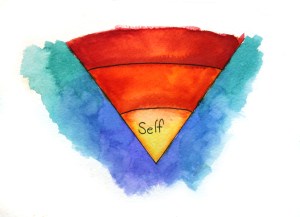
The deepest recess, where soul, spirit, body, intellect collide and connect and have their enduring party
(I prefer “higher” or “lower” functioning family) is a family’s inability to protect the emerging self (the sense of self, soul, spirit, inner being, heart) of persons in the family.
Characteristics of the self:
1. It is beautiful (created by God as the unique expression of who you are to the world). Even the “worst” person has, hidden beneath it all, a beautiful self.
2. It is relational (naturally wants to relate and engage). Every act – think about it – is an act of relationship.
3. It is sexual (naturally wants to procreate, build and nurture something larger than its-self). Nothing can be done to escape our gender; it is inextricably woven deeply within and finds expression in everything we do.
4. It naturally desires to engage in worship (naturally wants to ascribe greatness). This explains why BMWs, children, houses are “worshiped.”
5. It is enduring (it doesn’t change much in a lifetime). Parents say things like, “From the day he could walk he’s been a determined person.”
6. It is regenerative (naturally seeks to mend and heal). Like the body is always in a state of regeneration, so is the self.
7. It is resilient (can tolerate and survive enormous pain and suffering). Humans have endured untold horror when it has been inflicted upon them.
8. It is creative (naturally thinks outside its-self) and resourceful. It is the powerhouse (engine room) within every person.
9. It can be fed, trained, encouraged (one person can take better care of a self than another) and can grow.
10. Unfortunately, it can be starved, neglected (can wilt away without nurturing) and can give up the fight.
11. It is the place from within which people are able to want, to express desire; it is the center of desire within us.
Take Up Your Life
Although the self within us all usually has a huge repertoire of protection mechanisms, when and if it is damaged, it is usually slow in healing. While the self is difficult to damage, considering its incredible resilience, it can be damaged. A damaged self displays the impacts of hurt and trauma most vividly in relational difficulties, in matters of closeness and intimacy. The effects of damage and trauma to a self can apparently leave a person quite unaffected regarding distant or impersonal encounters. It is in intimacy, in close friendships, that the damage most vividly reveals its presence. When in relationship, a person with a damaged self will find himself unable to “be him-self.”
Posted in Attraction, Communication, Difficult Relationships, Triangles, Triggers, Voice |
Leave a Comment »


 difficultrelationships.com