All I want for Christmas has nothing to do with two front teeth as one of my aunts usd to sing when we were children.
I prefer a pre-Christmas lunch with friends of all ages seated at a large “let’s-talk-all-afternoon” table.
We’d tell stories. We’d make a concerted effort to listen to each other.
We’d speak of risks that paid off and those that didn’t.
Some of us would cry at least a few times for the losses endured, but even those who cry easily, for some have much to mourn, would also laugh a lot – we humans are like that.
As conversation ebbs and flows I know we’d marvel at our former naivete; the big ideas that turned to nothing, small ones that changed our worlds.
There’ll be talk of lost baggage, delayed flights, expired passports and some will go very quiet and silently recall the pain and the power of deep, trusted friendships lost.
I don’t want a tree or flashing lights tacked around my house but I would like to take friends home a few days before Christmas and have quiet hours together appreciating the simple joys of companionship, undeserved forgiveness, being seen, being heard, laced with supersized helpings of all-round Grace.
You will know your young matriculating adult sons and daughters have transitioned into adulthood when:
Your efforts as parents are acknowledged, appreciated, articulated and somewhat or approximately understood. They are aware of the commitments you made to facilitate their arrival at this juncture in their lives.
Your shortcomings as parents are not denied but are not used or held against you as weapons or as excuses for thier own shortcomings. Your sons and daughters are living without blame.
“Thank you” and “please” comes easy and both are expressed near – to you, to family, to loved ones – and far – to strangers and servers and to those who can do nothing for your young adults in return.
You are able to recognize there’s an acceptance of “the way things are” and that within the way things are there exist multiple opportunities and challenges. Some challenges are to be addressed and solved, some will not. Your budding adult is identifying what it means to “go with the flow of life” and when flow ought to be resisted.
Your young adults respond to your calls and texts because they come from you. They may “ghost” others but choose to respond, when possible, to you. They recognize that as parents, you occupy a unique place in their lives, deserving of appropriate and efficient responses.
I devised a list of how to participate in the healing of men and women who have been hurt:
Be willing to listen, even if what is being said is what you’d prefer to not hear. Try not to re-engineer (re-frame, recast) what you have heard so it is more fitting with what you’d really like to hear.
Resist understandable attempts to short-circuit growth by trying to ease necessary pain, by offering false affirmations, and by accepting empty excuses for irresponsible behavior. Pain is a very good motivator for change. Resist the urge to remove it when it appears to be helpful.
Offer your presence, not your answers. “I am with you” is more helpful than “let me help you fix it.”
Welcome silence. There are ways to communicate that do not include words. Resist the understandable urge to chase healing and learning away with the incessant use of words and stories.
Avoid minimizing (“it’s not so bad!”) or rationalizing (“What else did you expect?”) or normalizing (“Anyone would have done that!”) the issues that resulted in pain. Do not rob necessary pain of its usefulness.
Promote “future thinking.” Ask questions focused on future wellness and success.
Try to avoid searching for the genesis (the cause) of what has led to pain. Where something comes from is not nearly as important living your way out of it.
Israelite-Nathanael gets an invitation to meet Nazarene-Jesus and responds rather snarkily:
Can anything good come out of Nazareth?
This exchange, recorded early in the Gospel of John, intrigues me and, as a result, I’ve always loved the person and name Nathanael.
He questioned, appeared playful and unintimidated.
On meeting, Jesus greets Nathanael by name, interprets his name, tells Nathanael He had seen him before Nathanael was aware of being seen by Jesus.
In modern parlance Jesus saw through the Israelite, welcomed everything about him, called him into a life-changing journey and Nathanael readily responded
Nothing takes the Son of Man by surprise: Jesus saw Nathanael coming and New Testament Nate more than met his match.
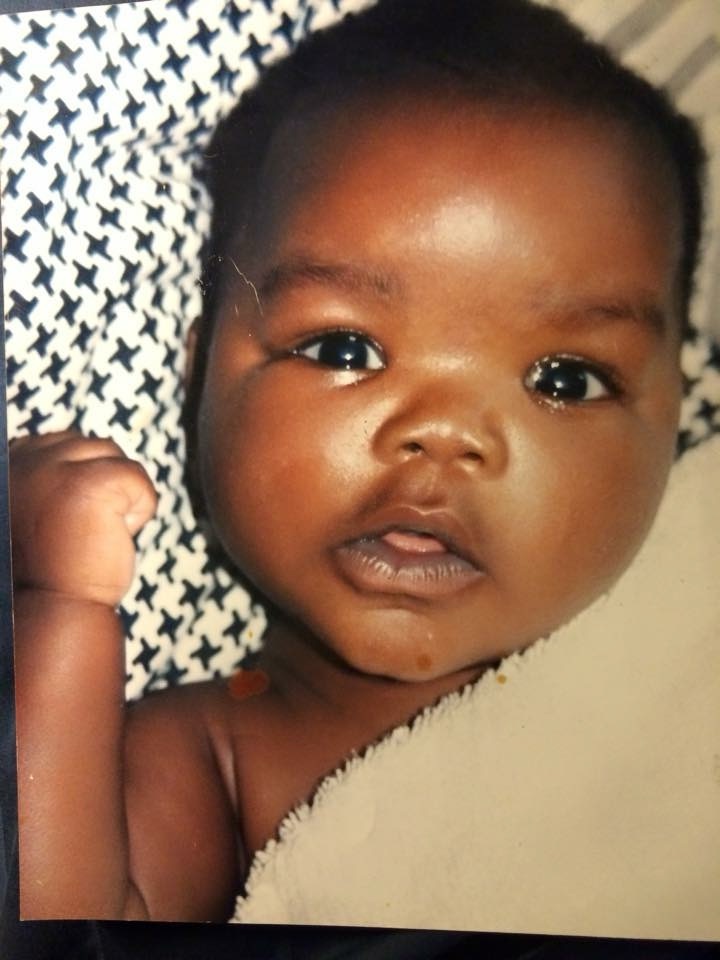
Jesus saw my Indianapolis-born son coming, too.
I didn’t. I had to decide blind.
Privacy laws permitted limited information – African American Male, Date of Birth, Full Term – was all I could know.
Pondering names for my son, whom I was yet to meet, the no guile or nothing false in Jesus’ description of Israelite-Nathanael wrapped it up for me.
Enroute from the courthouse to the hospital, custody papers in hand, with a stop at the K-Mart on Lafayette Road to pick up a few baby-essentials, I named a baby and formed a living link with a favorite character from the New Testament.
“Thula, Thula” I’d sing, following the maid around the house as she sang the prayerful lullabye. I could be on her back, tied with a blanket, listening to the Thula Thula song. The song was about a child urged not cry because the father will soon return from work on the gold mine. The song soothed and reached deeply into me, especially while tied to a maid’s back. There was not safer realm. Theres was no place warmer or more comfortable.
At 10 or 11 years old I learned from teenage boys and men named Thulani who came regularly into our dad’s tea-room the name means peace and stillness, to be quiet and comforted.
Temba means hope.
It is the name my adult Zulu friends called me once I reached adulthood and tried to unlearn so many things of childhood.
Although no one said it or taught it, I learned not to reveal excessive interest in the lives of the young men who came daily to the shop but rather to proffer indifference. I knew I was not to walk to the street corner too often in the evenings where they played lively music on guitars, hand made from wood attached to emptied cooking oil containers. No-one had to tell me of the barriers that came with my whiteness. I knew I was not to enjoy watching the young men dance and smoke the loose cigarettes – purchased from me at the tea-room, 2 cents each for unfiltered Lexingtons and 3 cents for filters – and laugh and rough-house bare foot on white suburban corners. The kitchen-boys’ or garden boys’ uniforms, white coarse red or blue trim v-neck shirts marked them legitimate workers in white suburbs even until late at night or at least until dad’s shop closed at 9.
They’d drift off to a concrete block room at the farthest corner of the yard of the property where they worked. The young men washed their master’s car and weeded the master’s yard, helped The Girl in the kitchen. I learned, although no one taught it or said it, to hide my interest. I wanted to join in and enjoy the lively music and playful antics and raucous laughter and the loud conversations which I could not understand.
But, I learned, although no one said it, to turn my desire to belong into a supervisory stance or glare which carried censure of the noise made by African young men in our white neighborhood where they were fortunate we allowed such antics.
Thulani and Temba were embedded into me by women who were our maids and who most certainly but unknowingly provided complete comfort, peace, solace for the living load tightly strapped to her body, riding her back and, everything I ever wanted for my infant son was provided unintentionally for me some 40-something years earlier when they sang his name.
“Choose something easier. Something American,” said a friend, “no one will remember it.”
As well-intentioned as we may be in desiring to avoid conflict and “keep the peace,” we create more problems we must face later by running or playing hide and seek. Then, when we do face matters, we’re not the people we once were.
Avoidance is a quick-change artist! It changes us in ways we are likely to regret.
We cannot solve or improve what we will not face. Denial gets us no place worthy of the journey or the unintended, unwanted destination. Until we gather the courage to look difficult situations directly in the eye and expedite what is necessary to face the difficulties, conflicts will stay as they are and they’re likely to deteriorate.
What we avoid shapes us in ways we may never notice. We modify our habits in order to sustain our denial and avoidance. We change our friendships in order to sustain our patterns. We go out of our way to keep the peace but the new path is one to further avoidance. Our defensive habits defend us in unhealthy and unhelpful ways and make us into people we’d rather not be.
Avoidance of necessary battles creates unintended distance from others — even those we truly love.
There is no worthwhile substitute for early honest approaches to family or business conflicts.
Avoidance makes the heart grow harder.
Ours.
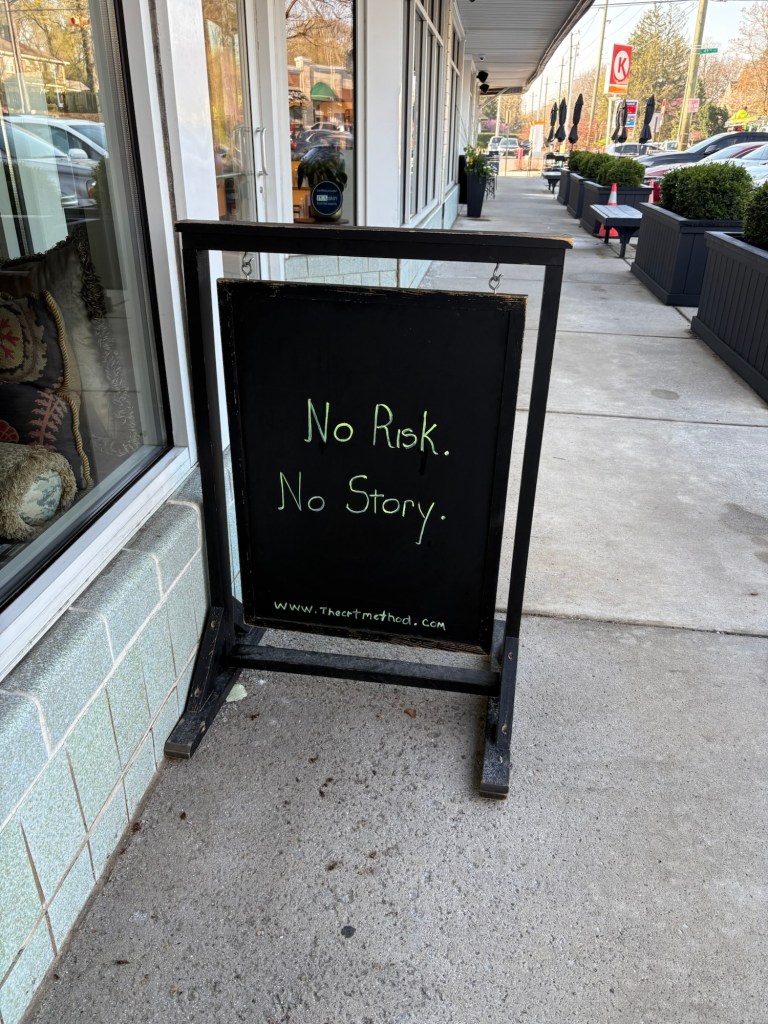
I enjoyed this side-walk art…… 49th and Penn in Meridian Kessler, Indianapolis
I shall strive to speak and teach as one who has indeed much to learn.
In every classroom we are all learners.
I shall strive to listen to people in the class (and out of it) as if I were listening to the mountains.
Mountains reveal their real beauty to the dedicated observer, beauty that’s easily missed by those who offer casual hurried glances or who are themselves caught up in how they look or are dressed or what the student may think of them.
Can there be a greater privilege than jetting to Penang to teach Family Systems?
Finding the opportunity to seek forgiveness, participate in repair or restitution with people whom I have hurt may result in their expressing forgiveness. While hearing such comforting words warms me, self-forgiveness remains difficult.
Do you have similar battles?
I know this is a particular struggle because having known what is right, good, wholesome, I have not always done what is right and good and wholesome. I find this painful to admit and address. Knowing better was hardly helpful.
While it is no excuse, I am aware that I am not too different from many.
When I am feeling down it feels as if my failures speak louder than any successes. Despite the knowledge that “people are more than their actions” shame seeps and runs deep and makes me feel vulnerable and fragile. It can be a physical sensation.
Again, I must ask, do you ever feel this way?
When I am at my best, I can humble myself, accept my imperfections and that I am a forgiven person.
Admitting I am flawed is key to my freedom which leads me to self forgiveness at which point freedom fills my soul.
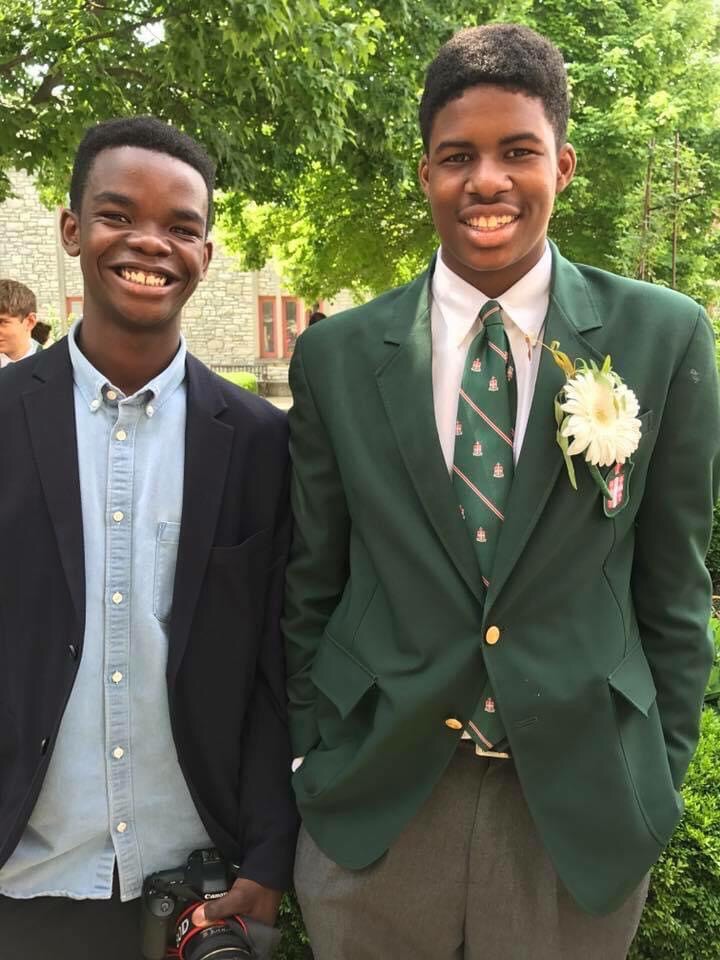
My sons, both of them, are in love, each with a woman who’d make any dad proud.
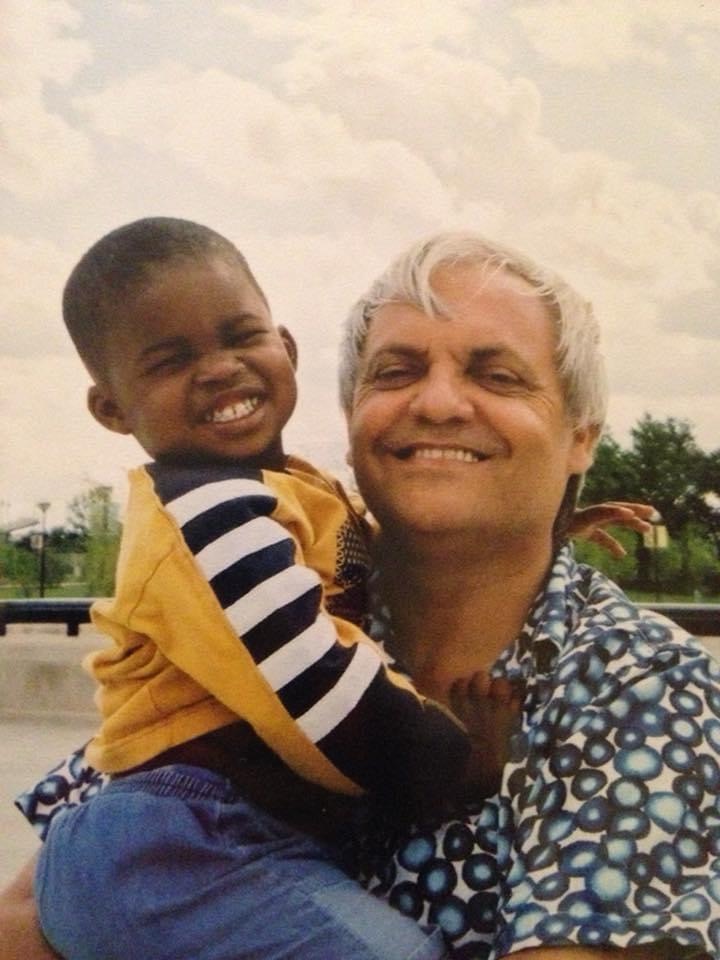
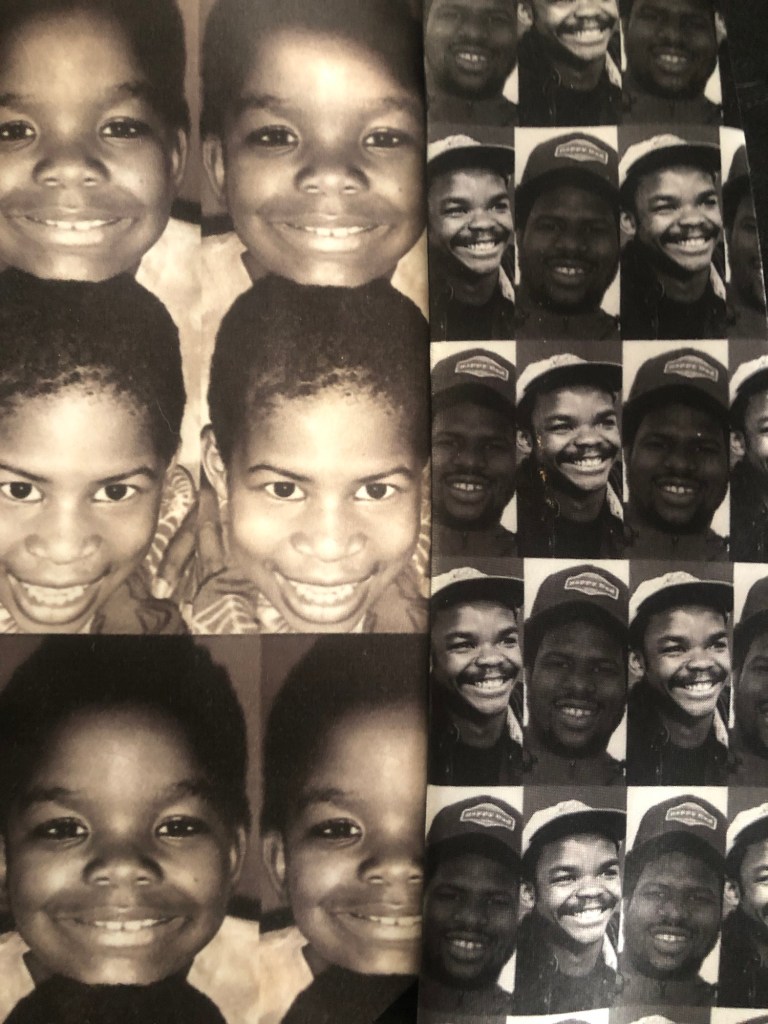
The first time I met Nate’s girlfriend I dressed for the occasion and wore a tie that bears a collaged image of both boys when aged about 12 and 8. Thulani’s head resting on Nate’s and they both have broad smiles. I donned the tie with playful snarkiness declaring, with zero subtlety, exactly where Nate belongs.
Harli visited a few days later and won my heart.
“Open it,” she said handing me a gift.
Treasure fell from the envelope. She’d re-produced the tie with updated images, my sons at 26 and 22, smiling as broadly from another necktie.
On Fathers Day I woke to this text which I publish with Harli’s permission:
“Happy Fathers Day, to a man I idolize. You welcomed me into your family with open arms and you single handedly raised two honest gentlemen that are so lucky and grateful to have you. I hope you enjoy your day!!”
The woman has no idea that my most ardent prayer for my sons was always that they learn how to love and that they be gentlemen.
Thulani met Alaina over a year ago and has gone so far as to purchase a ring. Last Saturday he ordered roses to surround a spot near Bow Street Bridge in New York City’s Central Park. Out for a walk the couple walked by at some distance from the bridge and the flowers caught Alaina’s attention.
“What if they were there for you,” he said.
On his knees, at the bridge, Thulani popped the question. Cameras rolled and the perfect moment of their shared joy was caught for all to see, you and me, and generations yet unborn.
From there the couple headed to a restaurant where forty of their friends waited in a reserved private room to welcome them, and welcome them they did!
Thulani coordinated all of this.
Alaina knew none of it.
I talked with my daughter-to-be the day after the engagement and I got to feel some of her joy.
Yes, I am looking forward to the wedding. No date is yet set. I am looking forward to their complete fulfillment as husband and wife. Truth be told, I can hardly wait to have at least 5 or 6 grandchildren.
I have enjoyed the run up to this event, rehearsing with Thulani, his speech to request Alaina’s parents for her hand in marriage, the design and purchase of the rings, receiving a most gracious text from my son to declare how he had learned about love from how I have loved him….
But, my real joy goes even deeper than all of that, if that is possible.
“What parenting advice could you offer my wife and me,” said the delighted dad, “my son is 16 months young.”
Above all, love your wife with joy, freedom and courage. This will reduce and deflect loads of the anxiety that naturally tries to derail all childhoods.
Lavish your baby, then young child, then pre-teen and teenager with affirmation and affection. No matter what you and your wife face, when you come home from work, or he returns after time away, or when he wakes in the morning or in the middle of the night — baby or teenager — be glad to see him, and, say so. Verbally express the joys your son brings you, to each other, and to him.
Teach him to talk Joy.
Regard the ages 5, 8, 12, 14 and 16 as transition ages. At these times discuss with him your parental plans (your mutually agreed upon plans you’ve made as parents) to do less and less for him, while expecting more and more from him. Yes, even at 5 — point out that he can make his own, age-appropriate decisions. Include him in planning and establishing his growing independence. Plan your parenting so that by his eighteenth year your parenting roles are accomplished and he has all it takes to be an interdependent young adult.
Hold in high regard the beautiful idea that you parent (the verb) for his sake and not yours.
Our new painting will go up in my home-office this week….. from Friday this week, both of my adult sons are launched and living independently of me. Oh the joy; oh the niggling pain. #graceupongrace