April 11, 2011

She is a constant downer…..

by Rod Smith

“My daughter (25) is constant downer. She enjoys little, complains much, and is always negative. If it is not the economy it is world politics. She is sad about the education of her children and complains we didn’t move to another country when she was a child. Her husband has to work at being the ‘up’ person or she brings a cloud to everything. What can I do to help?”

While there is a lot to be down about, being constantly down is not very helpful.

Suggest your daughter get a full medical examination with a view to treating possible depression.

If your daughter is one who is prone to see the proverbial glass half empty and is not suffering from a clinical depression (only diagnosable by medical or psychological professional) I’d suggest she do the moving she claims you failed to do.

Even if she does move, she will discover that negativity cannot be outrun. It will move with her no matter where she lives. Of course it is not where a person lives but how one lives that gives any degree of fulfillment and contentment.

If she is not clinically depressed and does not need medical help, I’d suggest you do all you can to avoid her attempts to sabotage your happiness.

April 8, 2011

The power of friendship

by Rod Smith

Friendship is the ultimate compliment.

Friendship IS the most powerful and important gift one person can offer another.

You can be someone’s child, parent, grandparent, doctor, lawyer, counselor, spouse, or benefactor – and not be his or her friend.

I see it frequently: men and women who are better friends to “outsiders” than they are to “insiders.”

But when you are someone’s friend, all other roles become secondary – even that of parent or spouse.

I am not suggesting parents and children ought to be pals or best friends in some odd arrangement of twisted roles. I have no desire to be my child’s best friend and nor does either one of my sons have a need for more friends. My sons need me to be their dad. But when being my sons’ dad is accomplished on my behalf, I trust we will continue as friends.

Yes. There is an end to our role as parents. When the time comes (around your son or daughter’s mid-twenties) I hope you and I will find the transition into that of a friend, easy.

When you are friends with anyone (family or not) – freedom, grace, openness, forgiveness, necessary confrontations, generosity, and the sharing of life’s delights and life’s pain become the currency in which you operate.

April 8, 2011

Do you need therapy? Here’s a quick list to guide you……

by Rod Smith

Family meetings!

The following are pointers (two are enough) to suggest you could use therapeutic help with your family, relationships, and your faith:

1. Being part of your family feels mechanical, rigid. You feel locked in – you are an actor in someone’s play and you don’t particularly like your assigned role.
2. No matter how hard you try, things (tensions, roles, anxieties, problems) stay the same. Faces and circumstances modify over the years but the stresses and the issues remain constant.
3. At family holidays (Christmas and Thanksgiving most intensely) you feel pressure about where to be. You are the rope in a tug-of-war.
4. You feel intimidated when speaking with your parents about anything meaningful even though you are an adult. You knees get weak at the thought of engaging your parents about substantial matters.
5. Old arguments often resurface; minor disagreements seem monumental – there’s little sense of proportion and little things are blown up into huge issues.
6. You find it easy to talk about your parents but find it difficult to talk to them. You’re loaded with material about them but feel silenced when it comes to taking with them.
7. Feelings of loyalty and disloyalty can rage within and you feel pressure to compromise your integrity with your family of origin (parents, siblings, grandparents).
8. Your career and family life interfere with each other. It seems as if you can’t have both with any degree of success.
9. New relationships get intense very quickly (becoming sexual, manipulative, or controlling) despite genuine attempts to make things different “this time.”
10. You enthrone (make saints) and dethrone (make sinners) people rather rapidly. Your heroes quickly prove fallible and you are disappointed once again.

Call me / Skype me (RodESmithMSMFT) / Email me – I can probably help you or steer you to someone who can.

April 7, 2011

Open your hand

by Rod Smith

Open your hand using all your strength. Stretch your fingers. Allow the lines on your palm to feel as though they might tear apart. Study the contours, colors, ridges and valleys, joints, dents and spaces. Push, pull, and rub. Move your fingers through their paces: together, apart, back, forward, curved, strained and relaxed, cooperative yet unique. Feel the texture and every curve. Touch the crevices. Spread your hand further, turn it at the wrist, examine and compare patterns from every angle. Here are pieces of yourself you might never have studied.

Your hands are your constant companions. They have met the needs of others, pioneered romantic moments and worn rings of commitment. They are the way your heart leaves fingerprints, the eyes at the end of your arms. Hands reflect a person’s being and are the front line agents of your life. If eyes are said to be the windows of a soul, hands express the soul.

Hold other people with your hand thoroughly open. Allow them to know the warmth and welcome of your hand, investigate its curves and benefit from its scars. Invite others to follow the lines into the fabric of your life and see the risks you have taken and the adventures that are yours. Allow them to wrestle and rest, search, see and speak. Let them stay; let them go, but let them find your hand always open.

The Open Hand of friendship, at its widest span, is most rewarding, most challenging and most painful, for it enduringly acknowledges the freedom others have while choosing not to close upon, turn on, coerce, or manipulate others. In such friendships, expectations and disappointments become minimal and the reward is freedom. As others determine a unique pace within your open hand, they will see freedom and possibly embrace their own with excitement and pleasure.

Openhanded people do not attempt to “fix” others, change, or control others even for their own good. Rather, each person is given freedom to learn about life in his own way. Openhanded people, instead, express kindly and truthfully what they think and feel, when asked, knowing even in the asking, others might not be interested or willing to learn.

The Open Hand is not naive. It is willing to trust, while understanding and accepting that no person is all good or all bad, and that all behavior has meaning. The Open Hand is convinced it cannot change others; it cannot see or think or feel or believe or love or see for others, but trusts people to know what is good themselves. It will not strong-arm, pursue or even attempt to convince others because it has little investment in being right, winning or competing. Here is offered a core-freedom of the deepest and most profound nature: allowing others to live without guilt, shame and expectation.

Further, the Open Hand offers oneself freedom that extends to one’s memories, ambitions, failures and successes. This allows for growth of enduring intimacy, greater personal responsibility, authentic autonomy, and the possibility of meaningful relationships with others.

In the discovery of a closed hand, even at the end of your own arm, do not try to pry it open. Be gentle. Allow it to test the risky waters of freedom. As it is accustomed to being closed and fist-like, it will not be easily or forcefully opened. So let the closed-handed do their own releasing and trusting, little by little, and in their own time and manner.

When openhanded people meet, lives connect in trust, freedom and communion. Community is set in motion. Creativity is encouraged. Mutual support is freely given. Risks are shared. Lives are wrapped in the safety of shared adventure and individual endeavor all at the same time.

April 7, 2011

Is your family “open” or “closed” handed?

by Rod Smith

Openhanded Families are close and healthy. People feel free, unique and have a sense of community. There is enduring approval. Disapproval’s short-lived. The love does not feel overwhelming. Love is not a trap, trade, or deal. Pressures from outside the family, the opinions of others, societal trends do not significantly modify the family’s direction. The family is internally driven. Relationships are self-sustaining. Each person, to differing degrees, dependent upon level of maturity, understands that every person in the family desires, at one and the same time, both community (togetherness, intimacy), and separateness (autonomy, independence).

It is within the movement, wrestling, imbalance, and the struggle that emerges from healthy families, that each person is empowered to be a unique person.

The freedom enjoyed by healthy people, embraces the family member who, for whatever reason, chooses to be less involved with the family.

Ironically, such families can appear to be less healthy or unhealthy because diversity is welcomed and individuals can be “all over the map.”

In an openhanded family a person can look, believe, feel, and speak very differently than everyone else in the family without having to face negative consequences.

(Interested persons are encouraged to read the work of Virginia Satir).

Closedhanded Families are “close” in a different way. They believe and need uniformity and control to keep people together. Togetherness is all-important. There is often disapproval between members of the family, often discernible when someone in the family will not “stay in line,” live in the family “box” or enjoy the closeness. In such families, people are “overly” close. “Closeness” (uniformity, togetherness) is insisted upon, even demanded. People feel cornered through an intricate play of rejection, judgment, and “love.”

Here, rather than relationships being self-sustaining, they are held together by musts and shoulds and hidden rules arising from an obscure idea of what constitutes a relationship and a family. In such families there are frequent tensions often from an unidentifiable source. A person can easily get the feeling that he or she is walking a tight rope of being “in” or “out.”

These families are reactive or legalistic and bonds are not chosen and togetherness is covertly coerced or overtly forced. In these families, fusion is mistaken for love and expressing the natural and God-given desire for autonomy is regarded as betrayal.

Ironically, these families can appear healthy to outsiders because of the appearance of togetherness, while some of the people within the family might be “dying” from the pressure to conform.

In a Closed-handed family a person can only look, feel, believe and speak differently than everyone else in the family according to the guidelines. Anything else might result in overt expulsion, a subtle shunning, or covert distancing.

April 7, 2011

Anxiety

by Rod Smith

• renders you partially deaf to what others are saying to you and you will tend to hear what you want to hear
• renders you partially blind to what is going on around you and will see what you want to see
• renders you hyper-sensitive to what others are doing and not doing and less aware of your own behavior

You will reduce your levels of anxiety if you….

“De-triangle” yourself by getting out of the middle of relationships that do not directly involve you (like stop trying to get your son to like his stepfather, your mother to like your wife, your boss to spend more time with his children).

Re-connect (appropriately) with people to whom you are related – especially when it is by “blood” (it is virtually impossible to be enduringly emotionally well if you have severed “blood” relationships).

Step out of the role of being a peacekeeper (one who avoids and helps others to avoid necessary and helpful conflict) and step into the role of being a peacemaker (one who welcomes and facilitating necessary and helpful conflict).

April 6, 2011

A note to all who subscribe to this page…..

by Rod Smith

The Smiths

I wanted to take a moment to thank you for your support as one who reads this column (or receives it) daily.

Your readership is very important to me and I trust you continue to find my work helpful.

Please spread the word – I will never ask you for anything but to disperse what you enjoy or find challenging, to others.

Sincerely,

Rod Smith

April 6, 2011

Could he kill you? Are you married to a violent man?

by Rod Smith

Are you married to a man who could kill you, or someone you love? Are you dating a man who could murder you one day?

Dangerous relationships are easier to endure than address. It is not surprising that the murder of a wife, an ex-wife or lover usually takes everyone by surprise. Secrecy, cover-up and denial are the hallmarks of these toxic binds.

I believe some women could use a set of criteria to evaluate whether they are involved with a man capable of committing a violent crime against them. Accurate or not, my list could help a woman escape a potentially abusive relationship, or at least eradicate the virus before it destroys her.

Men capable of killing a “loved” one often leave a trail of early indicators, like rose petals around an open grave, before they commit a horrible crime.

Perhaps someone’s life will be saved because this list, incomplete as it is, will assist someone toward getting appropriate help:

1. He tells you how to dress and insists you obey his wishes in this regard. If you resist he becomes irrationally hurt or angry. You are beyond choosing what you wear because your dress is his domain.

2. He checks up on you for “your own good.” He wants to know where you are, what you are doing and whom you are with. Time unaccounted becomes an accusation. You find yourself explaining or hiding everything, to avoid the laborious conflicts that inevitably ensue.

3. Any move toward independence on your part is rewritten as betrayal. His response is anger.

4. He tells you when you are happy, and rewrites what you feel if you dare say you are unhappy. He tries to keep you from your family, suggesting they are not good for you.

5. He tells you when you are hungry and what you like to eat. He says he knows you better than you know yourself. He gets angry if you dare disagree.

6. He is jealous of your friendships, even those that predate him and those that are over.

7. Keeping peace is second nature to you. Ironically, the peace seldom lasts because he jumps on the smallest issues, magnifying them into major breaches of trust.

8. His highs are very high and his lows very low. It seems as if your response to him is inordinately powerful in changing or determining his mood.

9. He pouts easily. He manipulates truth so you are taken by surprise. He plays “hurt puppy” if you’re not happy, thereby making your emotions his business. He expects you to always be glad to see him and to drop whatever you are doing to focus on him.

10. He demands his own way and has an inordinate perception of his own importance. He shows off his “power” by threatening to “talk to the manager,” when he is not given the service he thinks he deserves. He becomes irrationally angry at the smallest of inconveniences. He accuses you of “taking sides” if you suggest he is being unreasonable.

11. He lives on the edge of “white hot” anger, becoming very angry with children, animals, and anyone or anything that doesn’t obey him. He hides this anger from people outside the “inner circle” and his mood quickly changes if an “outsider” appears so that his anger is kept secret.

12. He removes your car keys or your purse to restrict your movements and then denies doing so.

13. In the early days of the relationship you felt like you were on a fast ride on an unpredictable roller coaster. Everything was too much, too soon, but you did not know how to say it. Any comment about wanting to “slow down” on your part was ignored. You felt invisible, as if you were just along for his ride.

14. If you work, he accuses you of having an affair with a man at work – especially if that man has innocently told him that you’re a good employee/colleague to work with or know. Any praise whatever of you – from anyone, really – is twisted into suspicion and jealousy. (Added by friend Jenny Lowen, Harpenden, UK)

For such men, winning is everything — losing control is not an option, even for those whom they proclaim to love the most.

April 6, 2011

Jesus at First Church (Traditional Service – 11:00 am)

by Rod Smith

Jesus walked in and sat between the Grumleys in the fifteenth row of First Church’s Traditional Service at 11am on Sunday morning. In all of his infinite wisdom he failed to realize the stir that would arise. An unfortunate snowball or wave effect began throughout the congregation as at least twelve families were displaced each by one seat. As people begrudgingly moved they tried to communicate a welcome to the stranger (so he would be sure to return) laced with enough censure to make sure he would be put in his place (or at least not in theirs) the next time he visited.

This uncharacteristic reshuffling (they hadn’t been moved in years) moved almost everyone in the congregation and skewed everyone’s view. The disruption extended the announcements sufficiently to annoy the choir who were waiting, fully robed, at the entrance to the sanctuary, hymnbooks in hand.

“I suppose of all people, I should have known better,” mused Jesus, all the while seeing the humor in Mr. Grumley’s polite, yet uncomfortable response when Jesus whispered his name to Grumley during the Passing of the Peace.

Grumley inched from side to side, a tad excited at the theological implications of this revelation. Not only did his surroundings take on a new look, he wanted to draw attention to the Guest. He wanted all the disrupted members know the inconvenience of having strangers in church was worth it. Alas, he glanced at the Order of Worship to see “Introduction of Visitors” was already over and the “Congregational Needs” were being announced. Besides, the choir was manifesting holy annoyance (the smiles, the gritting of teeth, the rolling of eyes in unison) while standing just outside the doors. Unaccustomed as they were to being “out of the loop,” word had already gotten to them (it was usually the other way around) via the deacons, that a stranger had entered the building and sat in Wally Grumley’s seat. The choir, who were usually first on everything, would be the very last to witness this unprecedented incident which had ruined for the fist time in 40 years their traditional procession.

“Tell them I am here,” Jesus said to Grumley. “Go on, stand up. Say I am here.”

“You mean actually interrupt ‘Congregational Needs’?” whispered Grumley with a faint but gentle “shush” in his voice in an attempt to keep Jesus quiet.

“I am terribly sorry but I am afraid we just do not do that here,” said Grumley in his best prayer voice.

“What if I am telling you to do so?” persisted Jesus. “After all, the pastor just said, that if two or three are gather in my name then I am in the midst of them? So, go on. Tell them he’s right and I am here.”

Wally Grumley peered around Jesus to his wife for assistance, “You do it Joy. You always said you would obey Jesus if he said something directly to you.”

“He is talking to you Wally,” said Joy. Her eyes were fixed on the pulpit proceedings, totally unimpressed with her husband’s freedom with strangers.

“Well actually, I am talking to you both.”

“You are interrupting my worship experience,” said Joy with an air of finality.

“I have come here to meet with God if you don’t mind,” she said, hoping for it to be the last word on the subject.

“I am God. And, I am… err, here to be met.”

“Well, God just wouldn’t do it like this,” said Joy Grumley, her teeth clenched, “God just wouldn’t just barge into OUR church and…. and….” She was lost for words.

“Do you believe I am here?” quizzed Jesus.

“Well of course I believe you are here,” replied Wally.

“Then go ahead and tell them I am here.”

Joy tilted her head a hairbreadth: “Will you stop talking during the service, even if it is to Jesus! If you don’t I am going to a quieter spot where I can enter the spirit of worship without interruption.”

“’Church Hospitality’ – will be the title of my message today,” boomed the pastor, unaware of the stir in the congregation, “and I will be challenging you to treat any stranger as you would treat Jesus.”

Wally and Jesus burst into uproarious laughter. They embraced, moved into the center aisle, circled each other holding hands with outstretched arms, giggled loudly, and danced.

“And now the choir,” announced the pastor, “will lead us in our opening hymn, ‘Stand Up Stand Up for Jesus,'” as the deacons ushered the disruptive couple out the door.


April 5, 2011

Simple metaphor, powerful truth for living……

by Rod Smith

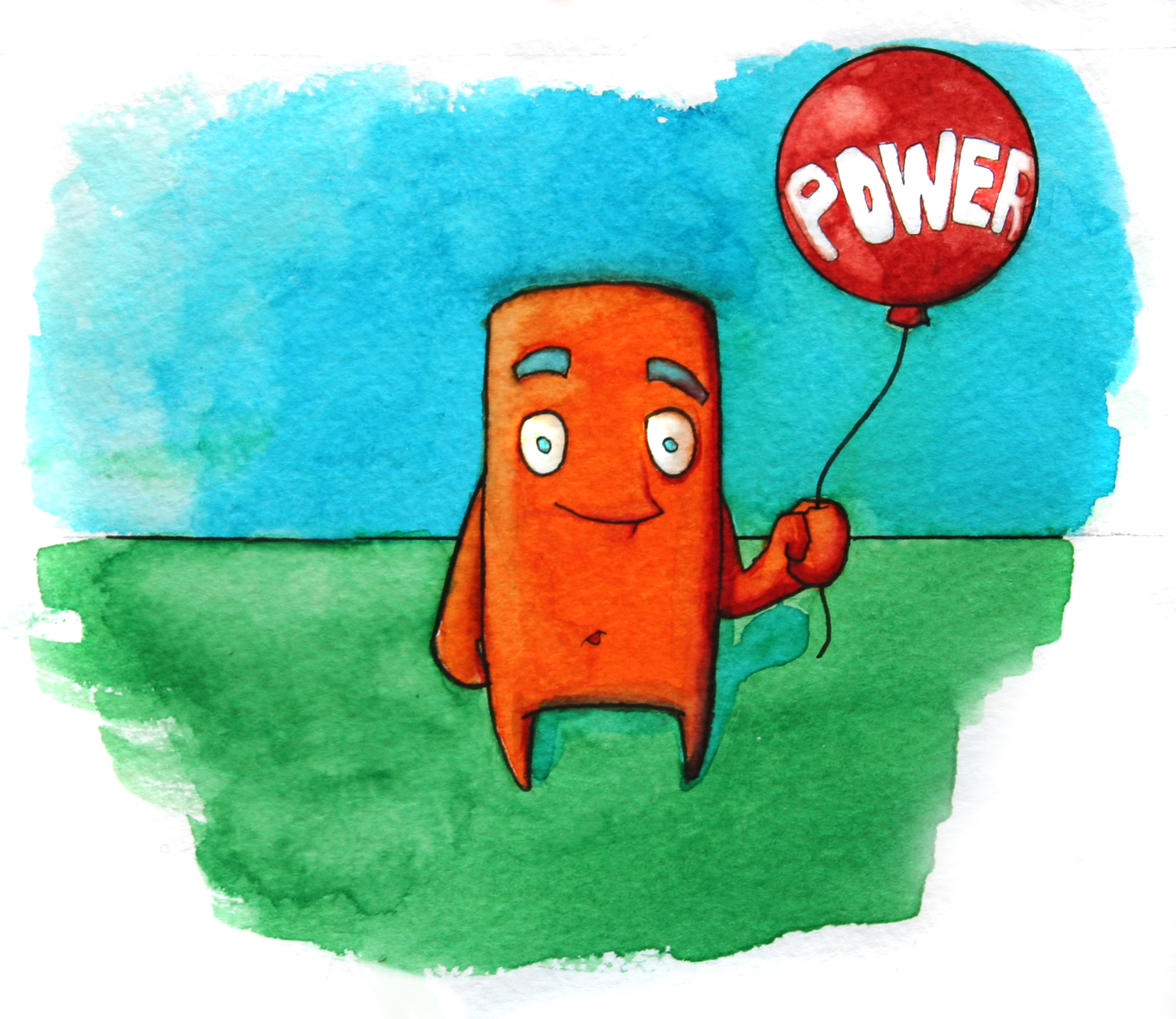
Power struggles abound

Every person has been given a Power Balloon that represents an allotment of power. This is the power to have a voice, to decide, to be, to have opinions, have fun, learn, experience, to be autonomous, to be intimate, to be fulfilled and to love. Within every person’s capacity (power) is the ability to do research and to decide things for oneself, to worship, pray, accept, reject, remain free of abusive relationships and to create and enjoy safe relationships.

Every act of manipulation, of cruelty, of “over-functioning ” and of “under functioning ” is the denial of the power of another or of others.

People, for various reasons, will try to burst your balloon, boost your balloon, take your balloon, give you their balloon or render your balloon insignificant. Resist such acts from others and resist doing them. Care for your balloon only; leave others to the divine task of caring for and nurturing their own balloon. This is not selfish. Think of how selfish it is to say to someone, “Here, let me take away your power from you,” or, “Here, I do not want to take care of my own life but you have to do it.”

Not even God will take your balloon from you. Your balloon is God-given to you for your care and nurture. (God has God’s own balloon to care for). The power for you to be fully human is yours and that power should be offered to no one under any circumstances and the position of exercising power over our own lives should never be abdicated except in extreme situations of medical emergencies.

Every baby and child has his own balloon to be respected as much as the balloon of every adult. This, of course, does not mean that babies should be caring for themselves or that children must be given their every whim. Reaching such a conclusion is to misunderstand the concept of what it means to have personal power. The art of parenting a baby, of nurturing children involves respecting and nurturing their sense of personal power.

Parenting is exercising the kinds of discipline and care that do not diminish a child’s self-worth or distort their capacity to discern and appreciate the power that is their birthright. Anything less is to “spoil and child.” It is to “spoil” their capacity to see and know themselves with accurate personal assessment.