Sometimes our father was silent on matters I’d hope he’d respond, defend himself, speak up, correct errors, adjust and align to brings matters a little more in his favor.
But now, I think I understand, or at least I am beginning to understand.
He seemed to sit and watch, observing closely all that was gong on around him, taking it all in, and I’d wait for an assessment but he’d offer none.
I think that now I understand.
Sometimes our father relayed naval stories of such graphic violence with such painful and long-lasting ramifications that I’d wish he’d hold his silence.
But, he could not.
Action at sea and losses of friends to the water, the onboard fires, the sirens and warnings of imminent attack were buried deeply in his memory and left him a gentle man, tolerant, but not naming of fools. He was one who entertained wild and youthful ideas while seeing it all against a backdrop requiring he not respond, speak up, correct the errors, adjust and align or brings matters a little more in his favor.
Perhaps, even though I hsve never faced action at sea or the graphic fears that are the backdrop of war, I can begin to understand why I tend to choose silence when others may prefer me to respond.
I am grateful to Mercury readers who inquire about my health following my bout with salmonella.
As I have written, it knocked me out.
Serendipitously, my sister was already scheduled to come to the USA from South Africa to attend my son’s wedding and Jenny has been more than able to assist me in my recovery.
My doctors inform it will take a while but assure me my “numbers” are “trending” in the right direction.
While it is not where I would like it to be, I am walking 5000 or more steps a day.
I have canceled my travel plans for the rest of 2025. I don’t like canceling arrangements with people who have relied on me for years to bring my academic portion to their family therapy programs.
My immediate goal is to rally all of my physical and emotional strength so I am strong enough to stand for long enough to perform my son’s wedding and hold onto my emotions while I do it. His walk down the aisle with 7 groomsmen (one being his brother) and me, and the entry of the 7 bridesmaids, then the bride, is sure to evoke powerful emotions for us all in the home church of his beautiful fiance in a city three hours from where we live.
It surprises me, now that my sons are adults, what catches my attention abou them and makes me burst with pride. They’re not the things I anticipated when they were young boys. I think I was falsely oriented around things of a more grandiose nature.
I enjoy watching them engage with other adults and how they do so with ease, respect, kindness and humility.
They know how to say “thank you,” and when to say “thank you.” This, in my opinion, is one of the most important skills a human can have. I meet men twice their ages who have apparently not acquired this skill.
They are naturally respectful of the elderly. They hold back at doors and open doors. They’re eager to give a seat to someone who needs it. They’re on the lookout for how they serve, how they can help. This is more impressive to me than a lot of other things I thought I’d find impressive.
They do not hold back if they want me to know something, want to ask me something, or request a favor. I love the fact that they’re open about their needs and their wants, but they’re quite willing to hear yes as they are to hear no. No is tough for me, but I am learning.
My sons live in different cities from each other yet it appears they’re almost daily in contact with each other. That they are friends with each other means the world to me.
Who are you? You don’t matter. I don’t care one way or the other. Your life, your existence means nothing. Get out of my way.
While such sentiments are usually unspoken they drive behavior.
Sometimes, mine.
Headlines? I don’t read them. Who wants bad news? What goes on Gaza and Israel and South Sudan and Ukrain and Russia and wherever else on the planet is too far removed for me to care, too complicated for me to understand. Let’s watch something feel good. What’s on Netflix?
The shooting on the street leaving a young man dead and his body in the street is an inconvenience. I am going to be late for work. The congested traffic gets more attention than the death of a young man and the pain his family must now face.
Indifference. Zero empathy. No room for cross-over human care. What’s that?
Perhaps it has always been this way.
I think not.
This is surely sin at its finest? The acceptance of the idea that I can be indifferent (unaffected, untouched, devoid of empathy) to the suffering of others.
As long as it does not inconvenience me, I don’t care.
Lead yourself, first. Lead yourself, only. Everything else will fall into place and grow.
Regard leadership for what it is. It is a function, something the leader does. Know what it is not: a place of power or status. The “leader” who seeks power or status will take himself/herself and the organization (church, hospital, school, political party, soccer team) nowhere worth going.
Authentic Leaders develop leaders without even trying. The authenticity is so novel and attractive others find it compelling and will naturally want to follow and learn.
Authentic Leaders give away, delegate, spread opportunities so others may grow without fear of being outdone by those to whom they delegate.
Authentic Leaders have a set of pre-decided principles and values that are in place before they are needed.
Authentic Leaders are constantly engaged in doing their homework and self work and family work because they know all sectors and compartments of life spin off and influence and drive each other. A leader can fake it for only so long until the parts of his or her life that are “out of integrity” will come crashing and cashing in.
Authentic Leaders are focussed on strength and freedom, not on anxiety and weaknesses (of self and others).
Authentic Leaders select their emotions, choose their responses, and are in charge of their reactions. Those who are not are a danger to themselves, their families, and to the organizations which they claim to lead.
“I am in my early thirties and my parents’ only child from my biological mom and dad. My dad left my mom and fathered three sons with three women. Those boys are 25, 21, and 18. My mom has three sons, now 24, 22, and 16, by two men. The first two are from the same dad (not my dad). I am a ‘big’ sister to six brothers. I live away but I go ‘home’ to my mom and dad and I know all the boys. They all live near each other but are not as familiar with the brothers from ‘another mother and father.’ I feel responsible for my brothers. How can I be a good sister in such a complicated set-up?”
Your question reveals the beautiful truth of invisible loyalties. Loyalties run deep in families and can escape reason. You can be a great “big” sister by being responsible to your brothers, not for them. They are indeed not your responsibility but you probably can build unique sets of relationships with each of them. A text and a call here and there. Birthday cards. Inexpensive gifts. Reach out to them not as a group but as individuals. Seek friendship at their pace. These efforts they will treasure and remember.
I devised a list of how to participate in the healing of men and women who have been hurt:
Be willing to listen, even if what is being said is what you’d prefer to not hear. Try not to re-engineer (re-frame, recast) what you have heard so it is more fitting with what you’d really like to hear.
Resist understandable attempts to short-circuit growth by trying to ease necessary pain, by offering false affirmations, and by accepting empty excuses for irresponsible behavior. Pain is a very good motivator for change. Resist the urge to remove it when it appears to be helpful.
Offer your presence, not your answers. “I am with you” is more helpful than “let me help you fix it.”
Welcome silence. There are ways to communicate that do not include words. Resist the understandable urge to chase healing and learning away with the incessant use of words and stories.
Avoid minimizing (“it’s not so bad!”) or rationalizing (“What else did you expect?”) or normalizing (“Anyone would have done that!”) the issues that resulted in pain. Do not rob necessary pain of its usefulness.
Promote “future thinking.” Ask questions focused on future wellness and success.
Try to avoid searching for the genesis (the cause) of what has led to pain. Where something comes from is not nearly as important living your way out of it.
I’ve taken a hit. A foodborne disease picked up somewhere en route from Madagascar to Cape Town completely knocked me out.
But now, I am in recovery.
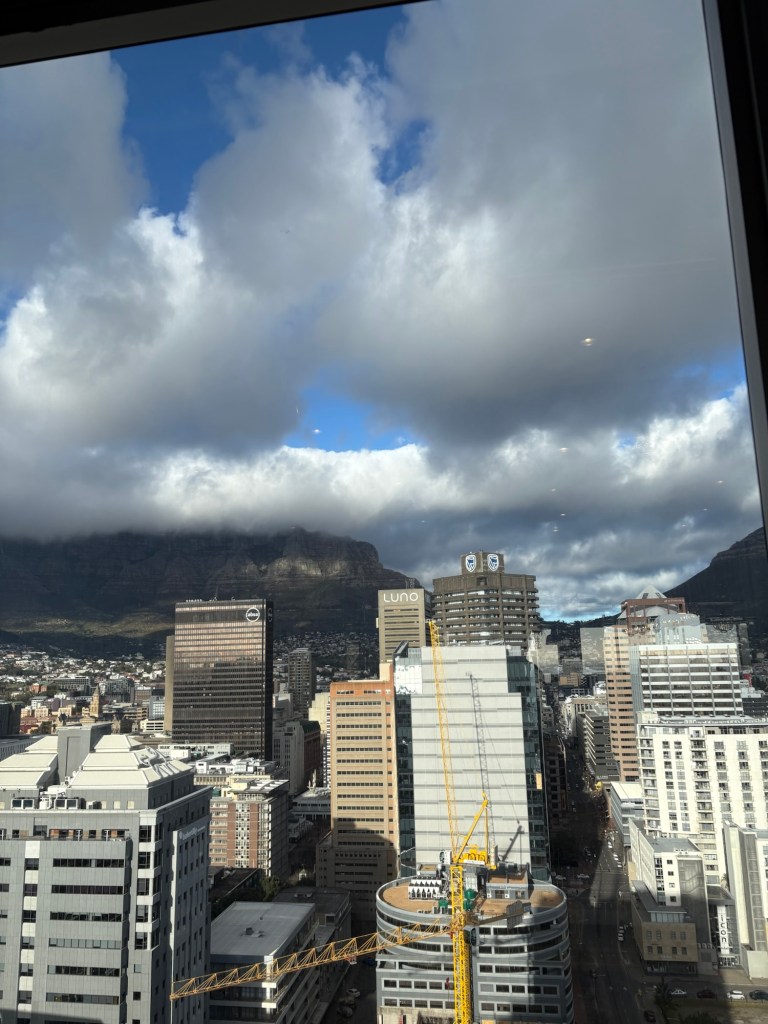
I clearly had no idea of exactly what was hitting me but all the while I felt I was living inside a weird game of Survival and a complex IQ test, all this with beautiful Table Mountain just outside my 12th floor hotel window.
Getting myself to the airport, checking in the vehicle, bidding my sister farewell as she set off for Johannesburg; ordering a wheelchair service to negotiate the vastness of the three airports awaiting me, I set off on a challenging journey home.
I did my absolute best not to lose my sense of humor or my sense of hope, often identified and described by others as foolish.
I found it hilarious in the local hospital when the young men and woman were doing all they could to protect my privacy, cover my body, maintain my integrity, honor my humanity.
I was seeking none of that.
I was seeking replenishment of the necessary, sustenance and nutrition and hydration my body was most desiring and demanding.
Something profoundly healthy happened in the middle of the first night when both my sons and their girlfriends arrived from near and afar be in the ward with me to spend most of the night, feeding me through an invisible lifeline of loyalty and love.
We were very sorry to read that you were not well. We wish you a complete recovery.
My husband and I are faithful readers of your column in the Natal Mercury. We have found your words so relevant, enjoyable and often exactly what we needed to hear. We have learned so much from your wisdom and experience.
If I remember correctly you grew up in the north of Durban and we remember your talk at the Durban Jewish Club, many moons ago under the auspices of the UJW. You were on the stage with your 2 sons.
May the Lord grant you many more healthy and fruitful years to continue writing and thus giving us pleasure.


 difficultrelationships.com