I devised a list of how to participate in the healing of men and women who have been hurt:
Be willing to listen, even if what is being said is what you’d prefer to not hear. Try not to re-engineer (re-frame, recast) what you have heard so it is more fitting with what you’d really like to hear.
Resist understandable attempts to short-circuit growth by trying to ease necessary pain, by offering false affirmations, and by accepting empty excuses for irresponsible behavior. Pain is a very good motivator for change. Resist the urge to remove it when it appears to be helpful.
Offer your presence, not your answers. “I am with you” is more helpful than “let me help you fix it.”
Welcome silence. There are ways to communicate that do not include words. Resist the understandable urge to chase healing and learning away with the incessant use of words and stories.
Avoid minimizing (“it’s not so bad!”) or rationalizing (“What else did you expect?”) or normalizing (“Anyone would have done that!”) the issues that resulted in pain. Do not rob necessary pain of its usefulness.
Promote “future thinking.” Ask questions focused on future wellness and success.
Try to avoid searching for the genesis (the cause) of what has led to pain. Where something comes from is not nearly as important living your way out of it.
Most USA schools are back in full swing…… at least around here they are:
Hats off……
Hats off to teachers and coaches who love the world and its peoples and whose zeal for both results in empoweing students of all ages.
Hats off to teachers and coaches who love their subjects and sports and whose passion for their work opens vast vistas of opportunities for their students.
Hats off to teachers and coaches who are as tough as nails over matters of integrity but are easy sells when it comes to listening and attempting to understand students and their home-lives, peer, and social struggles.
Hats off to teachers and coaches who know their students well enough to be able to anticipate and address problems before unnecessary escalation.
Hats off to school administrators who have the courage to support teachers and coaches in the face of often difficult parents and who have the courage to listen to all parties before they act.
Hats off to school administrators who aspire to serve rather than be served, who understand the power of humility, and who see their essential role as empowering coaches and teachers and students to get the very best from each other.
Hats off to parents of students who seek to respect and learn from their children’s school teachers and coaches and administrators rather than demand rights or seek to chastise or correct.
Hats off to Librarians, Musicians, Counselors, School Security Teams….. and all who work daily to keep our students motivated, kind, and safe.
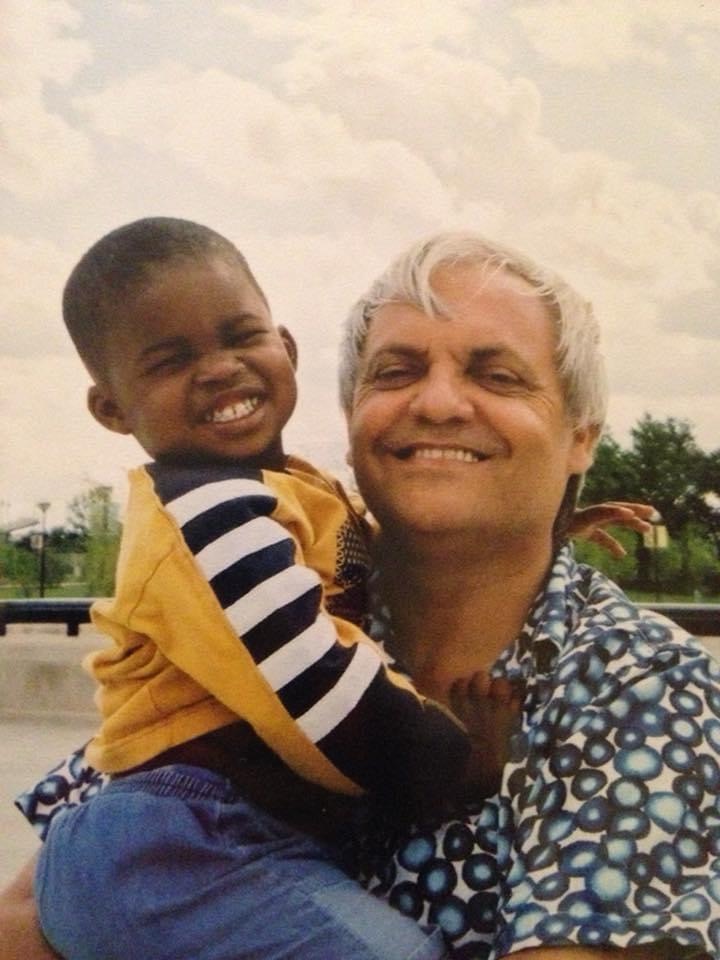
Andrea Neal, Jay Sherrill and so many others who regarded Thulani and Nate as their own.
Israelite-Nathanael gets an invitation to meet Nazarene-Jesus and responds rather snarkily:
Can anything good come out of Nazareth?
This exchange, recorded early in the Gospel of John, intrigues me and, as a result, I’ve always loved the person and name Nathanael.
He questioned, appeared playful and unintimidated.
On meeting, Jesus greets Nathanael by name, interprets his name, tells Nathanael He had seen him before Nathanael was aware of being seen by Jesus.
In modern parlance Jesus saw through the Israelite, welcomed everything about him, called him into a life-changing journey and Nathanael readily responded
Nothing takes the Son of Man by surprise: Jesus saw Nathanael coming and New Testament Nate more than met his match.
Jesus saw my Indianapolis-born son coming, too.
I didn’t. I had to decide blind.
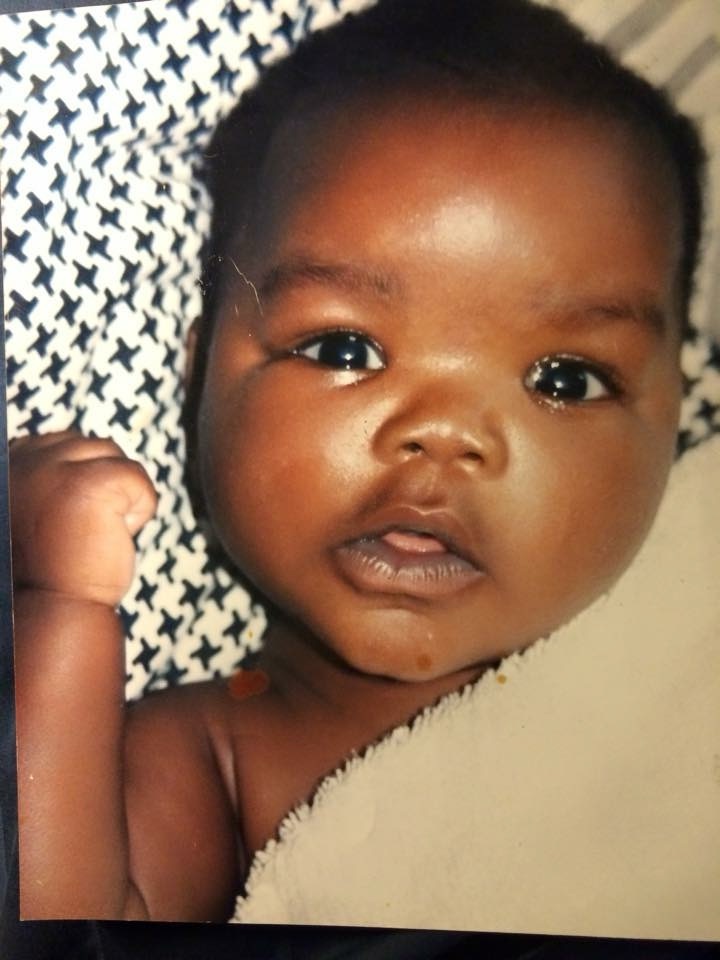
Privacy laws permitted limited information – African American Male, Date of Birth, Full Term – was all I could know.
Pondering names for my son, whom I was yet to meet, the no guile or nothing false in Jesus’ description of Israelite-Nathanael wrapped it up for me.
Enroute from the courthouse to the hospital, custody papers in hand, with a stop at the K-Mart on Lafayette Road to pick up a few baby-essentials, I named a baby and formed a living link with a favorite character from the New Testament.
“Thula, Thula” I’d sing, following the maid around the house as she sang the prayerful lullabye. I could be on her back, tied with a blanket, listening to the Thula Thula song. The song was about a child urged not cry because the father will soon return from work on the gold mine. The song soothed and reached deeply into me, especially while tied to a maid’s back. There was not safer realm. Theres was no place warmer or more comfortable.
At 10 or 11 years old I learned from teenage boys and men named Thulani who came regularly into our dad’s tea-room the name means peace and stillness, to be quiet and comforted.
Temba means hope.
It is the name my adult Zulu friends called me once I reached adulthood and tried to unlearn so many things of childhood.
Although no one said it or taught it, I learned not to reveal excessive interest in the lives of the young men who came daily to the shop but rather to proffer indifference. I knew I was not to walk to the street corner too often in the evenings where they played lively music on guitars, hand made from wood attached to emptied cooking oil containers. No-one had to tell me of the barriers that came with my whiteness. I knew I was not to enjoy watching the young men dance and smoke the loose cigarettes – purchased from me at the tea-room, 2 cents each for unfiltered Lexingtons and 3 cents for filters – and laugh and rough-house bare foot on white suburban corners. The kitchen-boys’ or garden boys’ uniforms, white coarse red or blue trim v-neck shirts marked them legitimate workers in white suburbs even until late at night or at least until dad’s shop closed at 9.
They’d drift off to a concrete block room at the farthest corner of the yard of the property where they worked. The young men washed their master’s car and weeded the master’s yard, helped The Girl in the kitchen. I learned, although no one taught it or said it, to hide my interest. I wanted to join in and enjoy the lively music and playful antics and raucous laughter and the loud conversations which I could not understand.
But, I learned, although no one said it, to turn my desire to belong into a supervisory stance or glare which carried censure of the noise made by African young men in our white neighborhood where they were fortunate we allowed such antics.
Thulani and Temba were embedded into me by women who were our maids and who most certainly but unknowingly provided complete comfort, peace, solace for the living load tightly strapped to her body, riding her back and, everything I ever wanted for my infant son was provided unintentionally for me some 40-something years earlier when they sang his name.
“Choose something easier. Something American,” said a friend, “no one will remember it.”
I’ve taken a hit. A foodborne disease picked up somewhere en route from Madagascar to Cape Town completely knocked me out.
But now, I am in recovery.
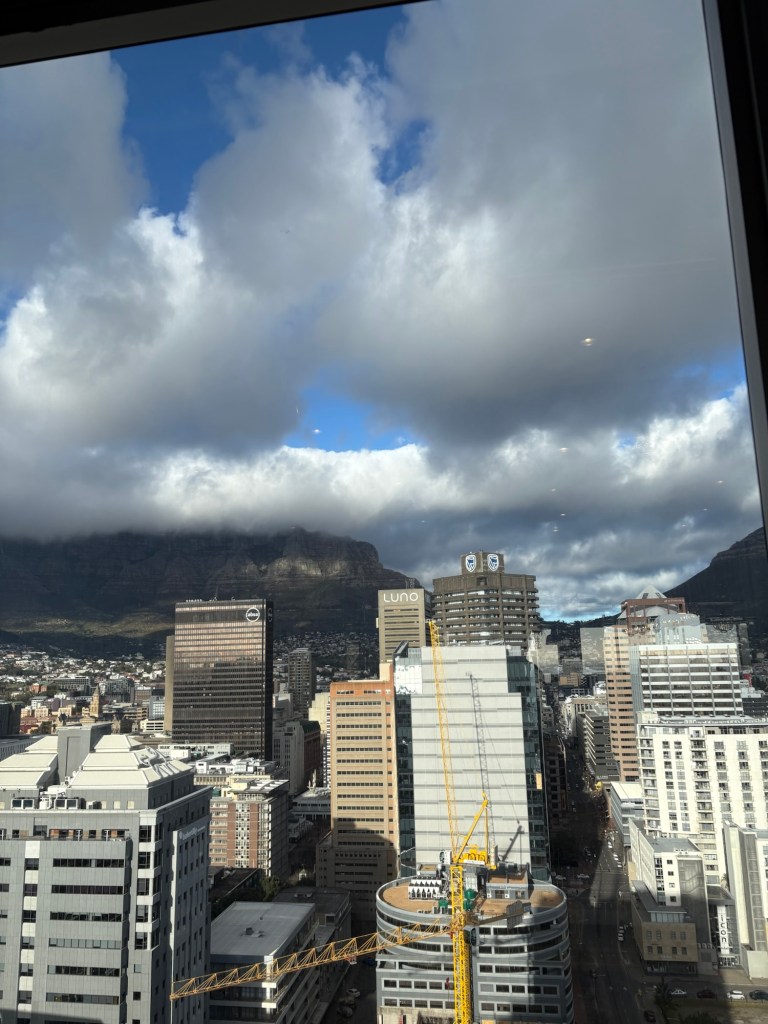
I clearly had no idea of exactly what was hitting me but all the while I felt I was living inside a weird game of Survival and a complex IQ test, all this with beautiful Table Mountain just outside my 12th floor hotel window.
Getting myself to the airport, checking in the vehicle, bidding my sister farewell as she set off for Johannesburg; ordering a wheelchair service to negotiate the vastness of the three airports awaiting me, I set off on a challenging journey home.
I did my absolute best not to lose my sense of humor or my sense of hope, often identified and described by others as foolish.
I found it hilarious in the local hospital when the young men and woman were doing all they could to protect my privacy, cover my body, maintain my integrity, honor my humanity.
I was seeking none of that.
I was seeking replenishment of the necessary, sustenance and nutrition and hydration my body was most desiring and demanding.
Something profoundly healthy happened in the middle of the first night when both my sons and their girlfriends arrived from near and afar be in the ward with me to spend most of the night, feeding me through an invisible lifeline of loyalty and love.
We were very sorry to read that you were not well. We wish you a complete recovery.
My husband and I are faithful readers of your column in the Natal Mercury. We have found your words so relevant, enjoyable and often exactly what we needed to hear. We have learned so much from your wisdom and experience.
If I remember correctly you grew up in the north of Durban and we remember your talk at the Durban Jewish Club, many moons ago under the auspices of the UJW. You were on the stage with your 2 sons.
May the Lord grant you many more healthy and fruitful years to continue writing and thus giving us pleasure.



 difficultrelationships.com