Archive for ‘Friendship’

August 2, 2024

The OpenHand

by Rod Smith

You open Your Hand and satisfy the desires of every living thing. PSALM 145: 16

Open your hand using all your strength. Stretch your fingers. Allow the lines on your palm to feel as though they might tear apart. Study the contours, colors, ridges and valleys, joints, dents and spaces. Push, pull, and rub. Move your fingers through their paces: together, apart, back, forward, curved, strained and relaxed, cooperative yet unique. Feel the texture and every curve. Touch the crevices. Spread your hand further, turn it at the wrist, examine and compare patterns from every angle. Here are pieces of yourself you might never have studied. 

Your hands are your constant companions. They have met the needs of others, pioneered romantic moments and worn rings of commitment. They are the way your heart leaves fingerprints, the eyes at the end of your arms. Hands reflect a person’s being and are the front line agents of your life. If eyes are said to be the windows of a soul, hands express the soul. 

Hold other people with your hand thoroughly open. Allow them to know the warmth and welcome of your hand, investigate its curves and benefit from its scars. Invite others to follow the lines into the fabric of your life and see the risks you have taken and the adventures that are yours. Allow them to wrestle and rest, search, see and speak. Let them stay; let them go, but let them find your hand always open.

The Open Hand of friendship, at its widest span, is most rewarding, most challenging and most painful, for it enduringly acknowledges the freedom others have while choosing not to close upon, turn on, coerce, or manipulate others. In such friendships, expectations and disappointments become minimal and the reward is freedom. As others determine a unique pace within your open hand, they will see freedom and possibly embrace their own with excitement and pleasure.

Openhanded people do not attempt to “fix” others, change, or control others even for their own good. Rather, each person is given freedom to learn about life in his own way. Openhanded people, instead, express kindly and truthfully what they think and feel, when asked, knowing even in the asking, others might not be interested or willing to learn. 

The Open Hand is not naive. It is willing to trust, while understanding and accepting that no person is all good or all bad, and that all behavior has meaning. The Open Hand is convinced it cannot change others; it cannot see or think or feel or believe or love or see for others, but trusts people to know what is good themselves. It will not strong-arm, pursue or even attempt to convince others because it has little investment in being right, winning or competing. Here is offered a core-freedom of the deepest and most profound nature: allowing others to live without guilt, shame and expectation.

Further, the Open Hand offers oneself freedom that extends to one’s memories, ambitions, failures and successes. This allows for growth of enduring intimacy, greater personal responsibility, authentic autonomy, and the possibility of meaningful relationships with others. 

In the discovery of a closed hand, even at the end of your own arm, do not try to pry it open. Be gentle. Allow it to test the risky waters of freedom. As it is accustomed to being closed and fist-like, it will not be easily or forcefully opened. So let the closed-handed do their own releasing and trusting, little by little, and in their own time and manner. 

When openhanded people meet, lives connect in trust, freedom and communion. Community is set in motion. Creativity is encouraged. Mutual support is freely given. Risks are shared. Lives are wrapped in the safety of shared adventure and individual endeavor all at the same time.

Copyright ©️ — Rod Smith, MSMFT, 1997

July 27, 2024

Emlyn Jones

by Rod Smith

Rev. Emlyn Jones was a regular guest at Durban North Presbyterian Church. He occupied the pulpit in such a way that despite his short stature he and his voice filled the entire church building. 

I was in my early twenties when I first encountered him and I couldn’t help but pay attention. His warmth and personality somehow drew every eye and ear toward the pulpit for a poetic, personal, often funny, romp with all things practical and spiritual.

Emlyn preached to crowds, but for the listener, it was intimate.

When he preached it was as if I was alone with him and we were chatting over a cup of tea.

I felt like he’d done all his preparation just for me. 

Emlyn Jones made God tangible, intimate, deeply caring. 

As a listener I was momentarily transfixed and believed I could become something for this caring God, a God who wanted me, had a place for me, and who desired for me to take it.

His preached word wooed me out of my complex and confused self and showed me I could be part of loving, seeing, and knowing the world and have something to say to the people in it. 

Emlyn Jones modeled love and wisdom.

I wanted to do the same.

I have never forgotten his pulpit manner, mastery, and presence, which I know has given me enormous respect for fine orators and, ironically, even as a young and complex man, a longing desire to be one. 

The very idea scared but never left me. 

A highschool assignment involving presenting to a group of peers had me planning my own demise. Yet Emlyn’s sermons, his pulpit manner, were wooing something, stirring something within my core into occupying a pulpit myself.

Emlyn preached a sermon about a self to live with and a cause to live for and it offered me a bridge into a future that, at the time, was beyond my capacity to imagine.

Even on leaving the building and making my way home, I knew something of my life’s trajectory had shifted. 

Can terror, possibilities, and joy dance together? 

I think so. 

They augmented into a respectful rhythm, a waltz of sorts, of hesitancy, gratitude, and freedom.

Emyln Jones played music and I was a willing listener.  

“Oh love that will not let me go…..”

July 27, 2024

Music music music

by Rod Smith

Music was very much a part of my childhood.

Mom often sang around the house.

Doris Day and Virginia Lee and Jim Reeves were her favorites.

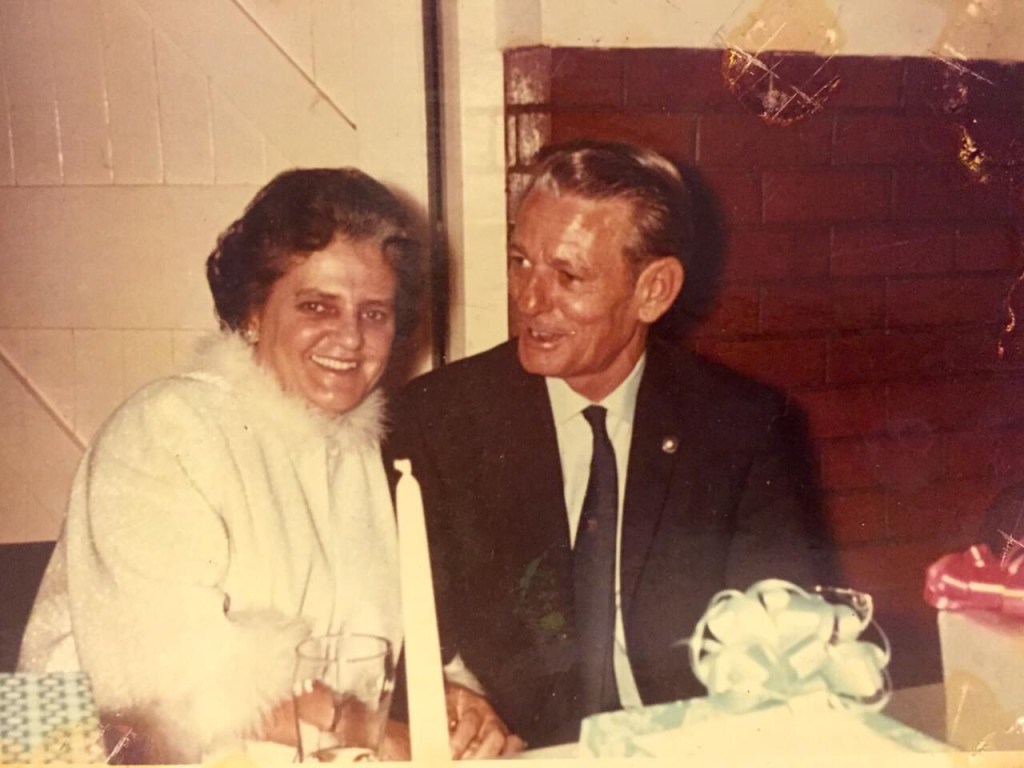
Dad loved to dance.

My parents turned heads on any dance floor.

Ancient hymns became markers for me.

I knew if they sang “From sinking sands He lifted me” we had no money.

“What a friend we have in Jesus” meant someone somewhere was in trouble.

When they sang about the “Three little fishies that swam, swam, swam all over the dam” I knew they had enjoyed a good time at a party.

“Abide with me” and “Nearer My God to Thee” meant Dad was thinking about the war and his time in the water after HMS Dorsetshire went down and he had to take to the ocean and swim for his life.

There was a duet only my parents sang that I have never heard performed by anyone else.

“With the kind of love that you’ve been giving,”….

…. dad would sing, holding the last note until mom joined him with...

“I could reach the moon up in the sky.”

They’d perfected harmonies for the rest of the song:

“A little cooperation my dear,
a kiss or something whispered in my ear,
would help me banish the thought of fear, with a little cooperation my dear.”

I liked unison parts best:

“Without your love I couldn’t go on living, wondering how I’d get by.
But with the kind of love you’ve been giving,
I can reach the moon up in the sky.”

July 12, 2024

The Alphabet of Healthy Relationships: M is for….

by Rod Smith

Meaning

I want my life to count, make a difference, contribute to the greater good, to have MEANING.

I cannot exist in a vacuum, but in a community with persons of similar desires to create something beautiful with the skills, resources, and years that we have at our disposal.

I want to serve a cause that is greater than my own fulfillment.

I want to plant now, so people I may never meet or know or hear of me, may harvest something rich and rewarding in their futures.

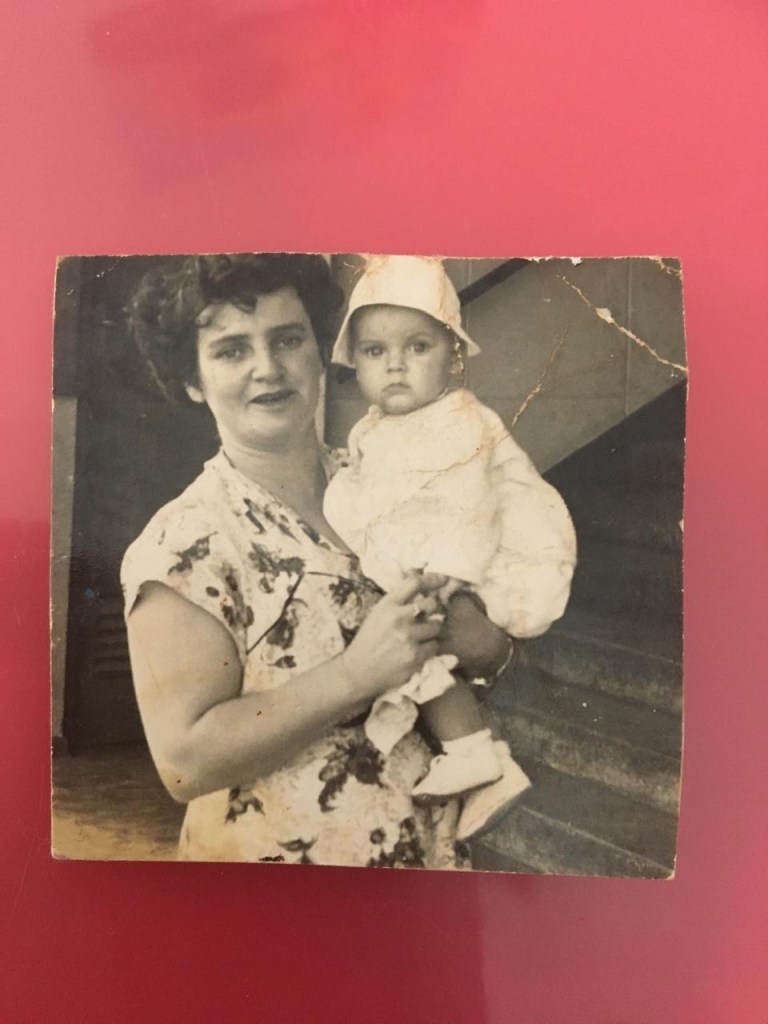
The only photograph — I’m aware of — of my mother and me.
July 4, 2024

The Alphabet of Healthy Relationships: F is for……

by Rod Smith

Forgiveness

The capacity to FORGIVE is a divine gift. It can precipitate healing within people and among groups of people. The person who initiates acts of forgiveness is usually (but not always) the one who reveals greater strength. He or she may be the one carrying the deeper burden. It is the stronger person (usually) who is first to forgive, and both parties – the forgiver and the forgiven – benefit from the act if apologies are expressed and accepted. When I choose to forgive I seldom have anything to lose, and usually much to gain.

I know I harbor resentment when I am uncomfortable being around a particular person and would rather avoid him or her. I know I am holding onto hurt when I have little or nothing positive to say to or about someone and when I find it hard to think positive thoughts about someone. I will forgive as efficiently as I find it possible and can muster the strength from within to do so. 

I will forgive when someone’s actions toward me (real or perceived) seem sealed into my consciousness and I can’t let them out of the prison within my head. I know it’s time for me to forgive when I feel haunted by someone whose acts against me will not let me go. Forgiveness links me with the divine, heals fragile families, calms hurting communities and restores hope within broken people – and – sets the forgiver free.

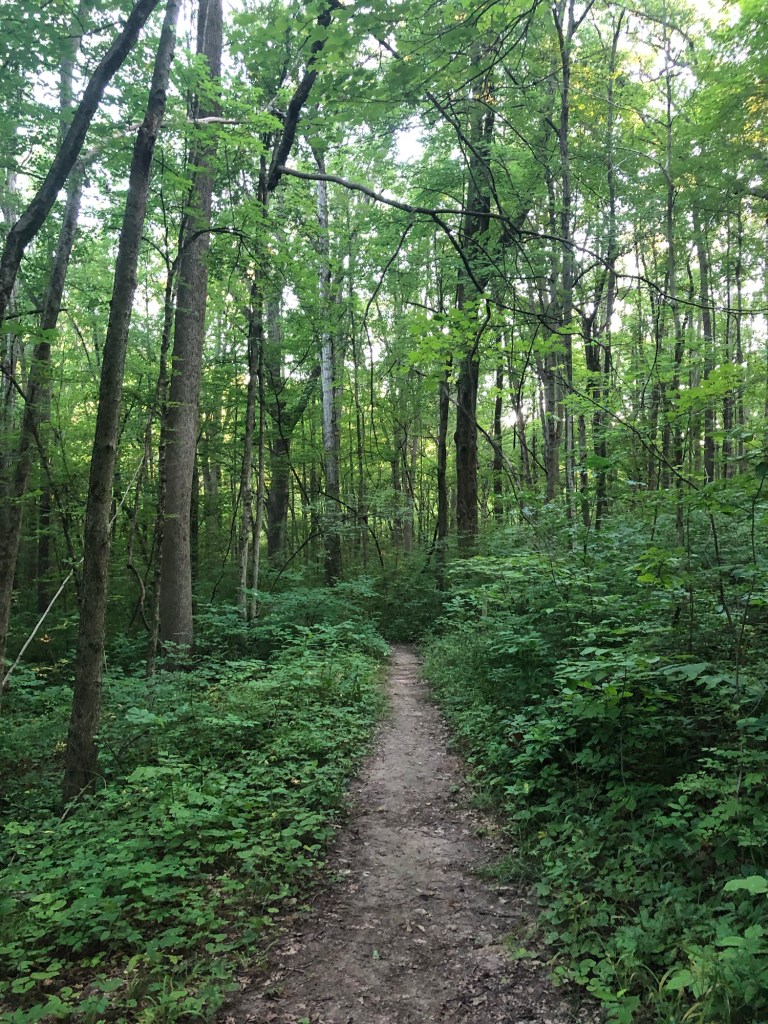
Our daily walk takes us through this forest — a 5 minute walk from our home

https://www.paypal.com/donate?hosted_button_id=ALW3DT7U2GFJ6

June 29, 2024

The Alphabet Of Healthy Relationships: A is for….

by Rod Smith

Autonomy*

Deep down where soul, spirit, will, heart, mind, join forces within me, I have a magnificent gift. 

It is the God-given desire for AUTONOMY. 

It comes packaged with my humanity. 

Yes. I want to be autonomous, occupy the driver’s seat of my life. I want and need ALONE time; an hour or two here and there, a day or two, even a week or two. I want the freedom to plan, enter my sacred, private space, engage in uninterrupted thinking, do my own seeing, feel my own feelings, forge my own pathways. 

This desire habitually whispers, and sometimes unfortunately, it has to yell for recognition. This is especially within my deepest, loving, closest and committed relationships. If I repeatedly ignore this primal beautiful part of me, I place my emotional well-being and physical health at risk. This beautiful gift, inextricably integrated with who I am, will demand attention if repeatedly ignored, denied, or overridden. 

Acknowledging, respecting , enjoying, my desire for autonomy, enhances my capacity to love myself, love others, and become, even more beautifully, fully human.  

(* to be read in conjunction with “I is for Intimacy” — Day 9!)

————

Donate, large or small, to empower another:

https://www.paypal.com/donate?hosted_button_id=ALW3DT7U2GFJ6

May 27, 2024

From Durban

by Rod Smith

Hi Rod,

I assume that your email address in this morning’s Mercury is current.

Thank you for taking the time to come to see me. I was sorry not to get to any of your talks. After two years in lockdown and not going out of the building, at 94 I find  that I can’t face going out! I had to go to the dentist and for hearing aids. I was really nervous and took a walker to lean on. My balance with even one little step is not good.  

Thank you for visiting us at Beth Shalom when you were in Durban. It was also good to see Jen with you. The residents were delighted that you gave us time. Your talk was of value, appreciated and taken to heart. That evening one resident, Marilyn Dinner, told me that she had gone straight to her room and emailed three letters asking for forgiveness, one to her daughter. She received three positive acceptances immediately. And later wrote a few more letters.

Your boys must have been happy to have you home but now you are away again, to benefit others, this time in Switzerland.

Keep well and fit and bringing light  into the world.

With kind regards and best wishes,

Elaine G.

May 27, 2024

When we meet…..

by Rod Smith

Much occurs when people meet. 

Within milliseconds the drawbridge – we each have one – may go down with a hearty welcome or remain up and sealed shut. 

There may be Immediate comfort or discomfort, or levels of both. 

Suspicions may be endorsed or deleted. 

Information and misinformation transmission occurs at a speedy rate. 

We read and misread and read and misread each other constantly – all within the backdrop of our unique experiences and training, our hurts, pains, goals, and desires – known and unknown.   

The accent (if one party is not from “here”) is loaded with meaning. Clothes (anything unusual); laid-back or dominant stance; voice tone, volume, intonations; levels of energy or lack thereof, are cumulatively processed. 

Triggers can be triggered. Stereotypes ignited. Warmth flows, or doesn’t. 

The wave, the handshake, the hug, smile or frown, degrees of sincerity or insincerity are downloaded by the “who-are-you” antenna and the “can I trust you” antenna issued to all at birth to be processed with the morass of stored history, experience, memories, good and bad. 

Every encounter is a miracle.

And, yes, with all that, we — you and I – are called to be neighbors and to love one another.  

May 21, 2024

The Art of Adulthood

by Rod Smith

The Art of Adulthood demands the practiced skill of knowing when to remain silent, when to speak, and to hold onto the tongue when do speak. 

Self-monitoring, self-awareness, an appreciation for the impact we each have on ourselves and others –  are crucial gateways to adult emotional health. 

I have left a gathering knowing I have talked too much, over-shared, made unnecessary comments, even, and this pains me to write, hurt another, someone present or absent.

Have you done this, too?  

You got a little thrill the moment the words came out of your mouth, a brief high of apparent inclusion. The tid-bit shared became a window or door or crack to the “inside” of who knows what. But, given time, which could be seconds or hours, there was regret.

You let yourself down. 

Said too much, hogged the floor, or bruised another with an unnecessary comment or story. Yet, at the time and in the context it felt real, important, or playful enough to get a giggle.

Then you were hit with a feeling you’d rather not have had.

I know about this. In a desire for some weird or momentary high or sense of importance I added content to a conversation that was unnecessary, even harmful. 

Silence would have been wiser.

Live. Learn. Decide. 

Apologize if necessary and possible  (it is not always possible). 

Do better next time.

I am now finally available for Zoom consultations  – email me if you are interested.       

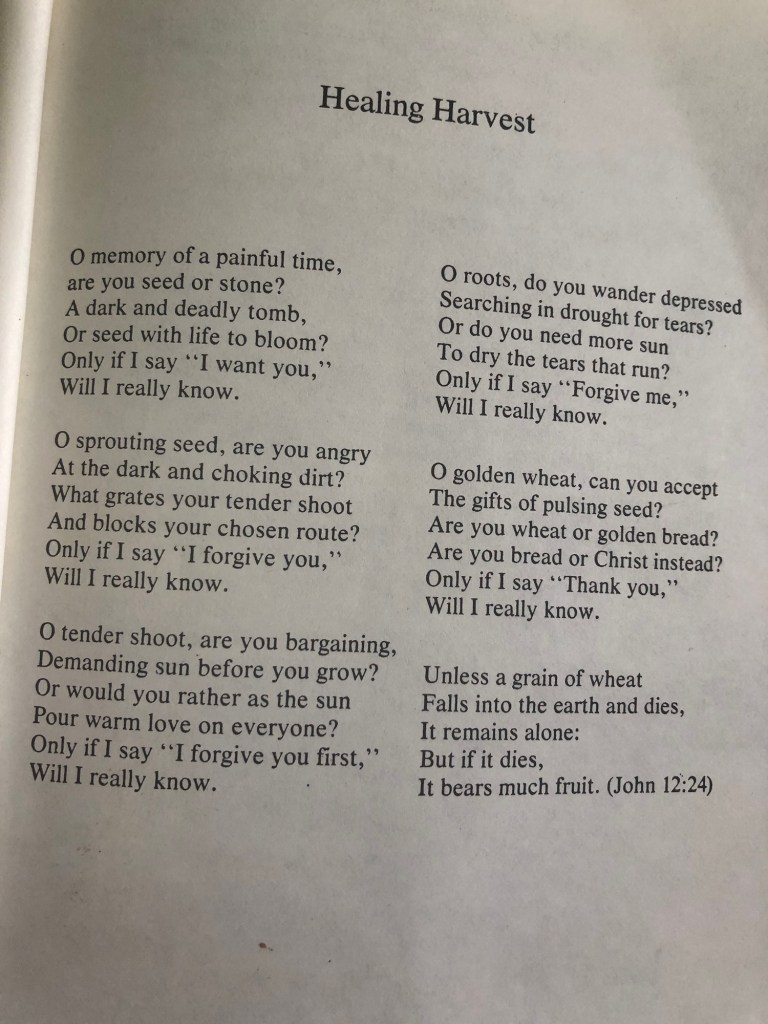
A poem I rather love —- by Dennis and Matthew Linn — from their book “Healing Life’s Hurts”
May 16, 2024

Go low…..

by Rod Smith

How to be low-maintenance. 

Join me as I continue my journey toward being a low-maintenance person:

  • Take care of yourself as best as you are able. If possible, pay your own way. Live in your own head, but more important, get out of the heads of others. Others want — or don’t — want to do their own thinking.
  • Offer information as needed and only to those who need it. Listen to yourself. Filter content. Negative talk about others reveals nothing about others but everything about you. 
  • Delete “you should, – ought, – must,” from your vocabulary even if you do think you know better or are more experienced. 
  • Take others at their word unless you have solid reasons not to. Believe people when they tell you who they are. People constantly communicate who they are but if you are already convinced you already know you will miss what they are telling you and only hear and see what fits with your already-made-up-notions. Observe without prejudice. 
  • Chase no one for anything. 
  • Resist the urge to convince others of what you think, believe, support, and desire to defend and know it is impossible to persuade the already convinced. 
  • People are always communicating. There is no such thing as “no communication.” This is a cop-out catchphrase used when a person prefers to avoid or deny what is being communicated.
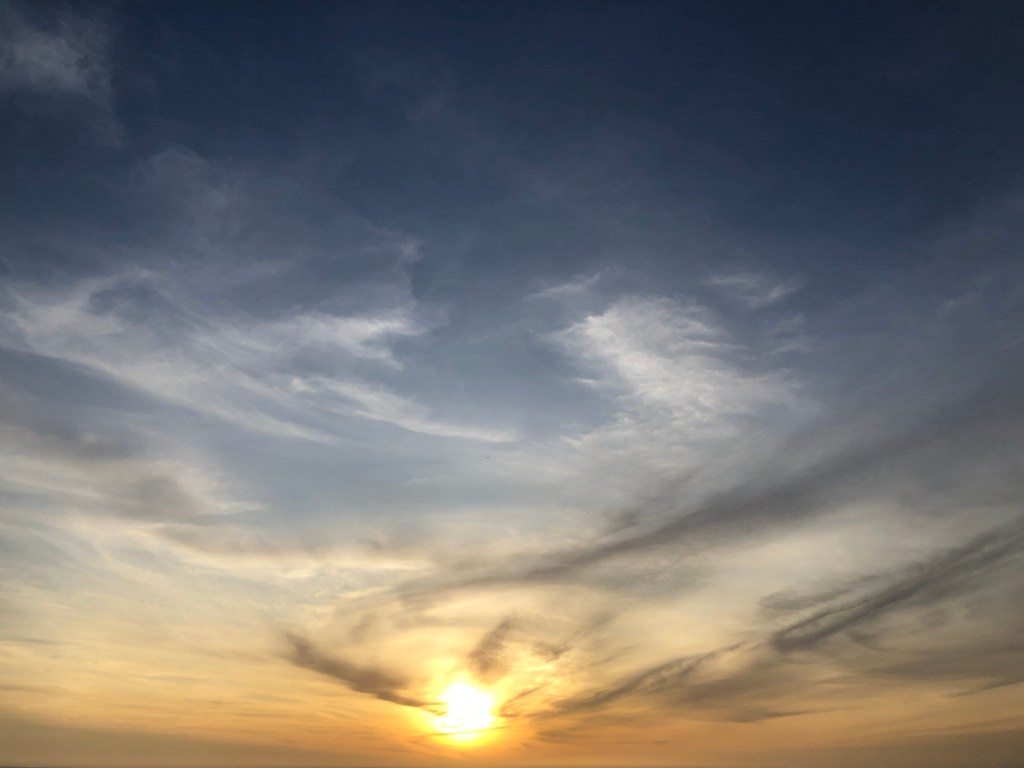
Seapoint Sunset — Cape Town