Apart from thinking outside of the box (kindly forgive the cliche) my challenge to myself, my sons, and those whom I have the joy of teaching, is to think alone. Have thoughts, plans, aspirations, that are not determined or shaped by commercials, fads, friends, or even by immediate and extended family.
This is a tough but liberating challenge. I encounter people who appear terrified to allow an independent thought to cross their beautiful minds. They give a sideways or backward glance seeking affirmation before the thought is permitted to step out.
The joy of owning their own thoughts, exploring unique possibilities even within their own heads, it appears, will not be theirs.
The fear cripples into conformity.
Seth Godin, speaker and top-selling writer, used the term “sheepwalking” in Tribes to describe mindless following.
I’ve extended his metaphor:
“Sheep-thinking” – borrowing thinking from others for fear of having an original or contrary thought.
“Sheep-talking” – sounding just like everyone else sounds, something particularly noticeable in churches and faith movements.
“Sheep-feeling” – to feel what everyone else feels, not in empathy or solidarity but in being caught up or swept up by the emotion of the moment.
“Sheeping” has become my catchall when it’s happening within me and I hear or see it around me.
Photographed in #Curitiba, %Brazil, with permission,
The soul – enigmatic, yet so incredibly powerful – is what brings to life, and is the essence of life, feuling and energizing an inner-being. We may refer to a young person, even a toddler, as an old soul and we know the toddler is, as many toddlers are, or appears to be a deep thinker. We may say a spritely person of advanced age is a young soul and we ready ourselves for an elderly person with a spring in her step or a youthful inside. Soul is often packaged with a prefix: broken-, angry-, critical-, abandoned-, creative- and all reflect on an inner-condition.
The Soul is the Person housed in flesh and bones; pulsating immortal vitality ferried, decade upon decade, within the mortal corpus, while not limited to it or by it.
May I illustrate? As I write my soul is reaching out to your soul. Hopefully our souls are connecting right now as you read. I have no idea where you are but I assure you, my soul is firmly here with me while simultaneously seeking to reach you and be received and embraced by you.
I hope it does, and is.
It has happened before.
I know it occurred through the thousands of newspaper columns I have had the joy of writing and hearing in return from many readers.
The soul is the spark of light within that lights up the eyes – eyes which will cease to ignite (yours and mine) once the soul is freed from the body, a body that, for whatever reasons, can no longer house or contain it. On this side of life we have named this moment of release, rather unfortunately, death. Perhaps, rather, it’s a new beginning, a refreshing adventure of deeper love and deeper companionship than any of us has ever before known, and it’s not death at all.
That’s my belief.
Installed, divinely imputed and imparted, at the milli-moment of conception, itself also learning, the soul begins immediately, within the womb, to impart strength and resilience into the made-from-dust flesh-and-bone outer form. Soul-power sweeps into the body, bringing with it a life-time’s worth of the capacity for love, a life-time’s worth of the desire for survival, a life-time’s worth of joy in human connection. It imparts to the physical being, an enduring and innate urge for worship, and a compelling desire to impact the larger environment and leave behind a beautiful and substantial legacy.
You and I are not limited to our physical bodies and I do not mean some outer-body experience, well, not exactly. It is much much more than about my soul reaching out to yours.
When we write, paint, sculpt, love and rear (raise) our children, adore our grandchildren, and enjoy great-grandchildren; when we arrange flowers, build skyscrapers, plant vegetables, light birthday candles for 3-year-olds, leave fortunes to find cancer’s cure, we are gathering the best of our pasts and throwing our souls into the future.
Generations yet unborn will know our departed souls:
They will know who we are from the stories told by those whom we have loved.
They will know who we are from what we have written.
They will see what we have painted, sculpted.
Our handiwork and heartfelt work, our generous love and nurturing gentleness will live on, revealing the power of our souls long after the fuel of our inner-being has escaped our aging, dust-to-dust, ashes-to-ashes bodies, the whereabouts of our remains marked with a stone or a plaque, and our souls have returned to the Place from whence they came.
So? Write it (whatever it is). Record it (whatever it is). Say it in poetry, with colorful paints on paper or on canvas. Write a book, gather photographs, place them in an album. Dance it (whatever it is). Sing it. Declare it, while you can.
You’re seeking a soul-mate in a great-great-grandson yet unborn.
When he is old enough to understand what you have created for him – your name signed at the end of a love letter or your family name on a high-rise research hospital – he will appreciate it and you will be generational soul-mates.
You may have noticed a certain keenness and sharpness within your soul, a sharpness and keenness that may far outpace the keenness and strength of your body, even your intellect, mind, memory. Perhaps your soul is more aware than you may think and knows it is teetering on inevitable escape, in a year, or three, or more. This is why this is as good a time as any to dance, to sing, to declare, and to do so while you can, however you can, ……. when you can.
Your soul is intricately invested in beauty and in your life’s legacy.
Reach for the diary, the photograph album, the compendium of letters your grandparents or great uncle or favorite aunt left to you and allow those precious souls – now adventuring or resting paradise – to speak to you anew across generations, and then, via you, let them, too, continue to live in the generations yet to come.
We are holding hands, not across a mere oceans, not across mere time zones, but with the generations, past and future, and so, let’s Do Like David did – DLDD – and let everything that has breath (life, soul, energy) Praise the Lord (Psalm 150:6).
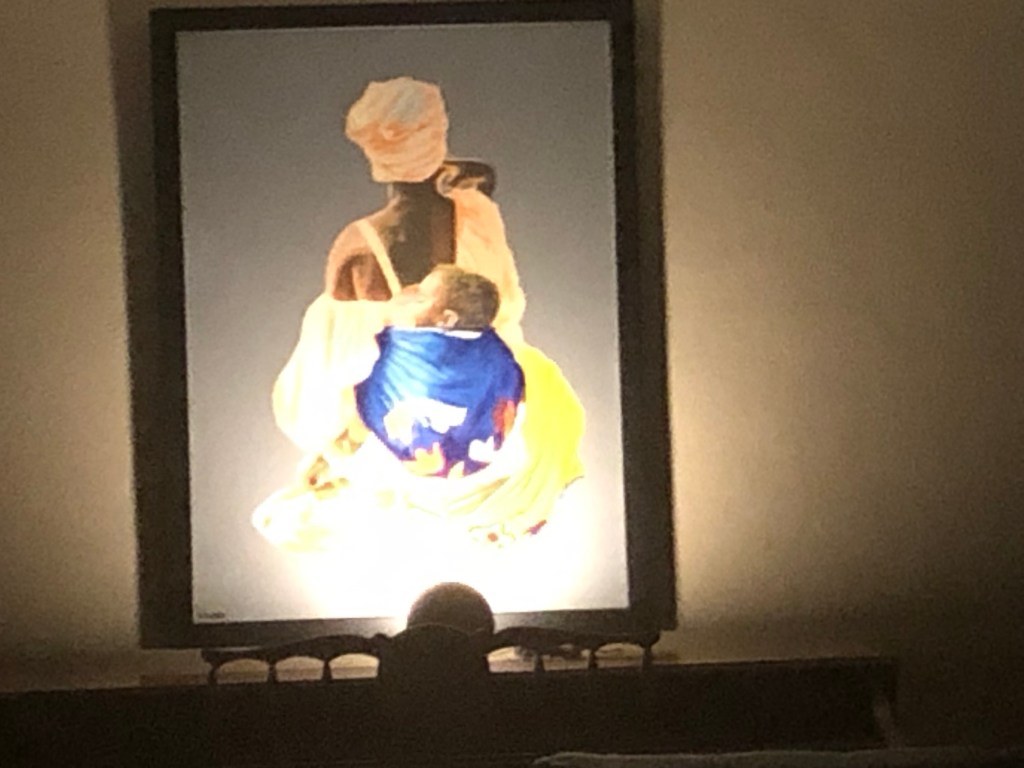
One of my favorite paintings — I keep it illuminated 24/7/365 to remind me ever of the women who made me a dad — and sent my soul soaring.
I had occasion to be with two women who work closely with the public. One, a hairstylist, the other is in guest services for a major hotel.
I asked how soon each was able to identify if a customer is going to be a difficult customer, high maintenance, or easy going.
“They tell on themselves,” said the hairstylist without taking a moment to think, “as soon as you open your mouth to welcome them they start with the demands, and you are wrong before you even start.”
“I can tell by how they walk in through the doors,” said the hotel employee, “and the first thing they do is tell you they booked online and they booked luxury. And now they want to upgrade this and upgrade that. I can see the booking. I know they are not truthful.”
“Easy going people are easy to see. They ask my opinion and really listen when I tell them what I can do. And they laugh a lot,” said the hairdresser.
“When someone comes to check into the hotel and they are not pushing, and I don’t mean by what they say. Difficult people push, push with attitude. Easy people are nice to help. They are not trying to get something all the time.”
Some people are just plain difficult— no matter what!
An honest day, a day of kindness, a forgiving one, a day with time and an ear for the elderly and a smile for the foolishness of the blatantly arrogant.
What kind of person will you be today?
A patient one, a person who listens to others, one who meets a financial need – small or large – of at least one other person today, a person who offers respect to people even if it is not returned.
It will not be by accident if you and I can ease into our beds this evening having had the kind of day and having been the kind of person as outlined briefly above.
It will be the result of a plan.
It will be the result of making decisions before we need them.
No doubt, unexpected things happen and get in the way and upset the best intentions. The best designed apple carts can be upturned.
None of the unexpected is likely to ruin your day if you have sat down and made a plan about what kind of day you want and what kind of person you will be.
It is really rather simple, and, well, what have we got to lose that’s not already worth losing?
Just a note to say that I value your pieces in The Mercury every morning. I hope that they continue as long as I do. There is usually something for me to read to my meditation and bereavement groups. Tuesday September 17 was a very good one, “Reach out in person if you need help.” In my weekly meditation groups I usually pick something relevant to read.
Didn’t I hear that one of your boys has got engaged? If so, congratulations. Lucky girl to become part of your family.
About “The Soul.” Could you please perhaps make one of your articles for The Mercury about the soul for me to read to the bereavement group and discuss?
From you it would make for a good meeting and I would appreciate it very much.
About the group – first Thursday of every month in the boardroom. Not everyone suffering a loss will come but we have about 17 regulars who are still coming after very many years. It is not all Jewish, we are also Christian, Catholic, a Moslem and a Buddhist. Lots of discussion over tea and cookies from the kitchen. The Moslem lady brings kosher biscuits. I always tell them that the soul enters the fetus at conception and stays with the body until it leaves at death and that only the physical body dies. Now I am having someone from each religion to tell us about the soul, one each month. We have had Shlomo from Chabad, to visit, on the Jewish soul and our member Mariam Motala from the Moslem aspect. Before continuing, a member wants to have a meeting about the Magnetic Field. The following month it will be Peter Huston, an Anglican minister who, surprisingly, actually also works at the Holocaust Centre!
If I say I love someone, I will invest the time required to hear what he or she wants to say.
Listening, like love, has no gimmicks, no tricks.
It is expressing genuine interest. It is putting my own concerns aside for a while and entering someone else’s world. It’s rewriting, reshaping, re-writing, nothing I hear. I will listen as if I am appreciating fine, complex, beautiful art, a masterpiece. I will not “listen” as if I’m engaged in a competitive game of verbal tennis. I will listen as one who has much to learn rather than hide behind the covert belief that I’m the one with much to teach.
Such arrogance neither hears, nor listens well, or accurately.
The arrogant listener hears what he or she wants to hear. Arrogance reshapes what’s said into what the listener prefers.
When I think “I”ve heard it all before” I’m not listening.
Listening opens new worlds for the speaker and the listener leading each down a path of brave discovery. It’s a mutual risk.
The loving listener listens to what is said and unsaid, without rearranging either.
The listener enters another’s world, then departs with it untouched, understood, admired, no matter how beautiful, troubled, complex, that world may be.
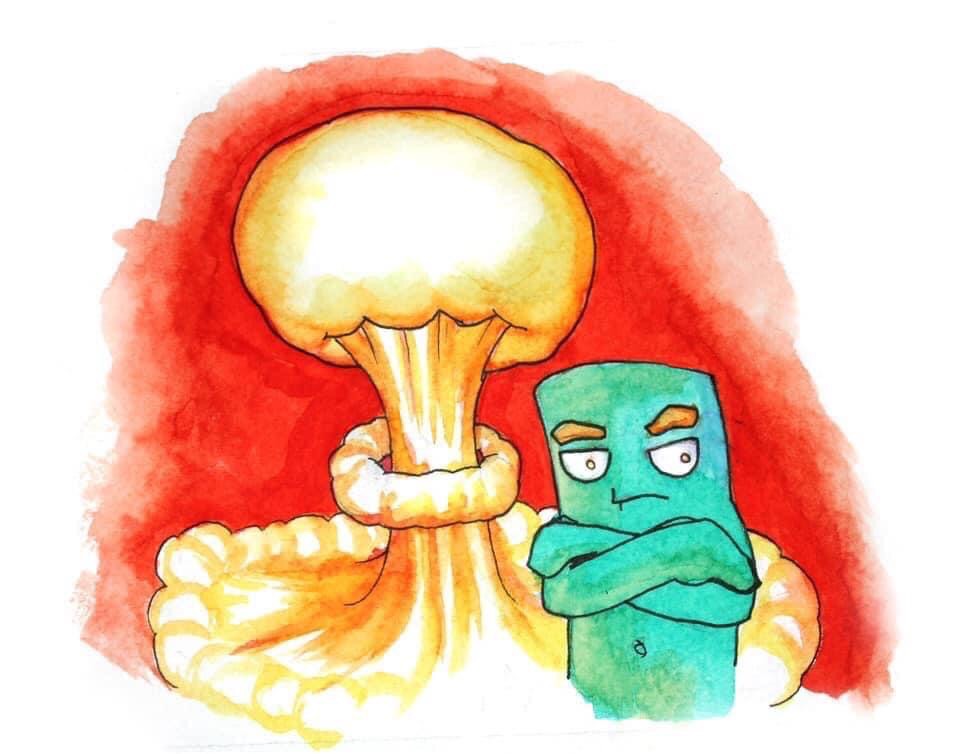
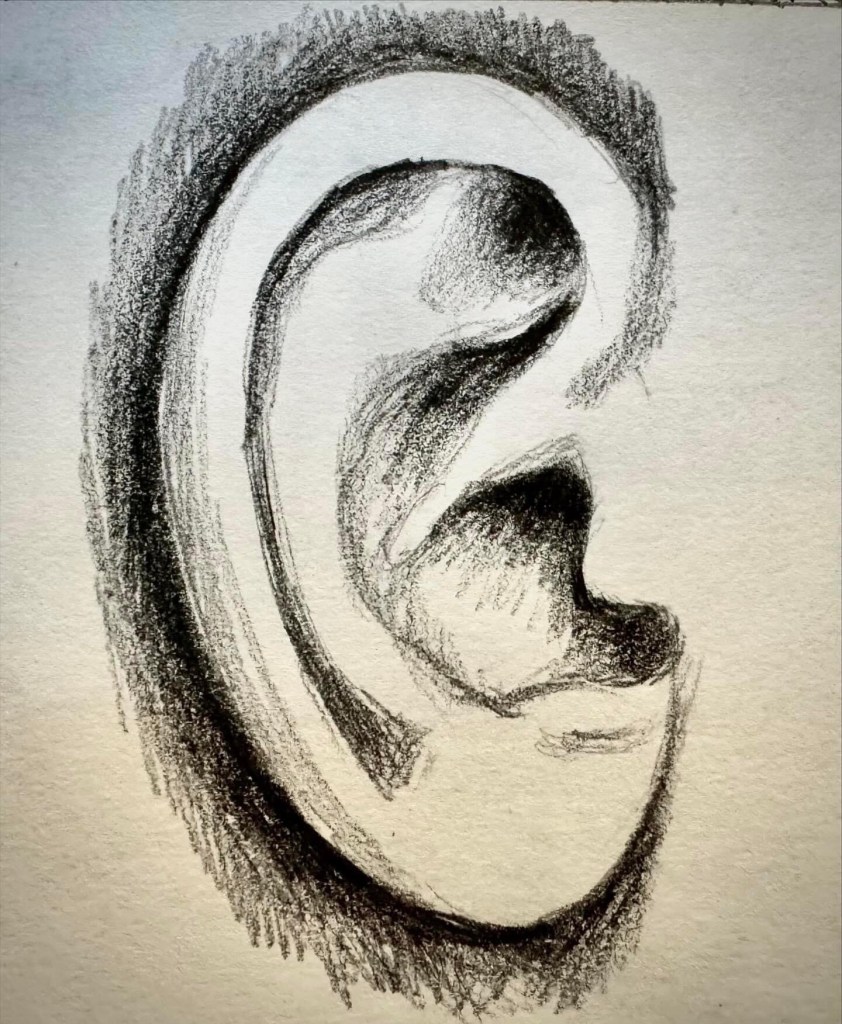
Illustration by Siggi Berg and used with permission.
People matter. How we treat people matters. How we treat all people matters. How we respect and treat those with whom we are close, say we love, those whom we encounter at arms length, or not encounter at all, matters.
It matters much.
How we treat those with whom we disagree matters as least as much as how we treat those whom we claim to love.
How we treat all others (near, far, loved, known, unknown, different, current family, former family, those on the other side of the political aisle) is a litmus test on our spirituality. It’s a test of our holiness if we claim to represent a faith or not. Every human encounter is an holiness check, a biopsy of our integrity – no matter who we are or what positions we may hold – megachurch pastor or atheist.
How we treat all others says nothing (zero, zilch) whatsoever about others.
How we treat others is a window – a large open window – revealing volumes about us, no matter how hard we may try to keep it closed, barred, and the blackout curtains taped shut.
How we treat people matters for many reasons, one being it mirrors the love and respect we have for ourselves. We love others as we love ourselves. The same is true for hate, rejection, and contempt.
“I have the most generous mother. Now 80 and strong as an ox. I remember her asking me to go for a drive some evenings as a teemager. She would chat to me about people who had less than us. We never had lots. She would have an envelope with money from her housekeeping and we would stop and I had to pop it into the letterbox (of people in need) without being seen. She never told my dad or anyone else. It taught me at a tender age that tithe was not always meant to be bought into the storehouse but sometimes distributed where the need was seen. I value her influence in my life. I have tried to emulate her motherly wisdom.”
Thank you for your beautiful letter. Your mother’s generosity and her habitual acts of generosity are inspiring. What’s also inspiring is that you, her son, recognize it and appreciate it. Your mother has etched an indelible memory into your whole being.
I have no doubt that you too, are a generous man. How could you not be, after what you experienced?
I continue to believe that generosity is a very powerful agent for goodness — not only for the recipients, but also for the givers.
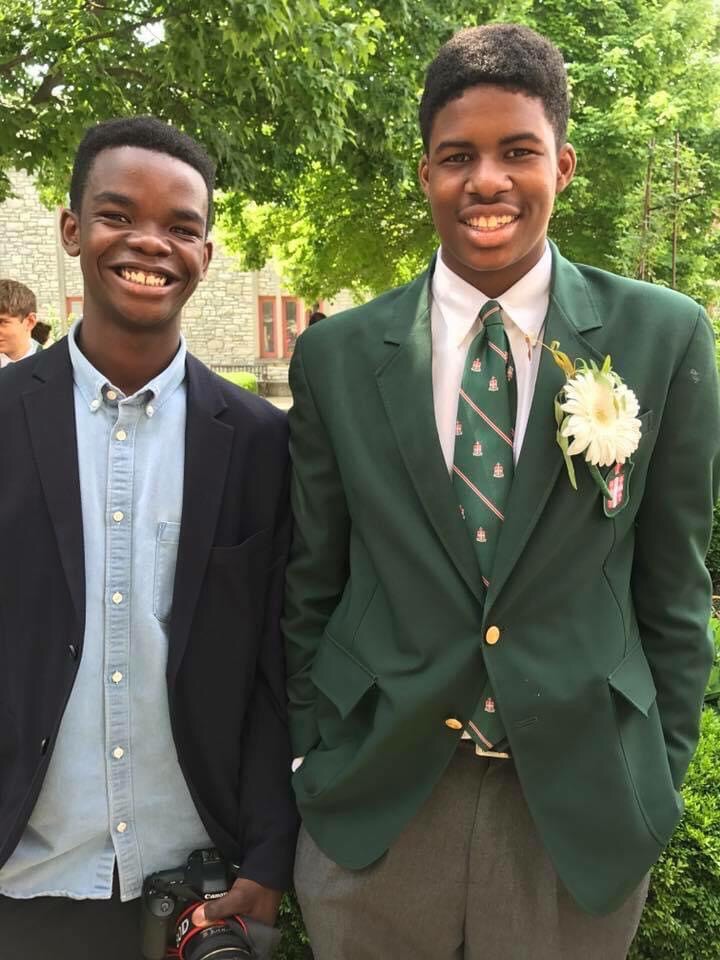
My sons, both of them, are in love, each with a woman who’d make any dad proud.
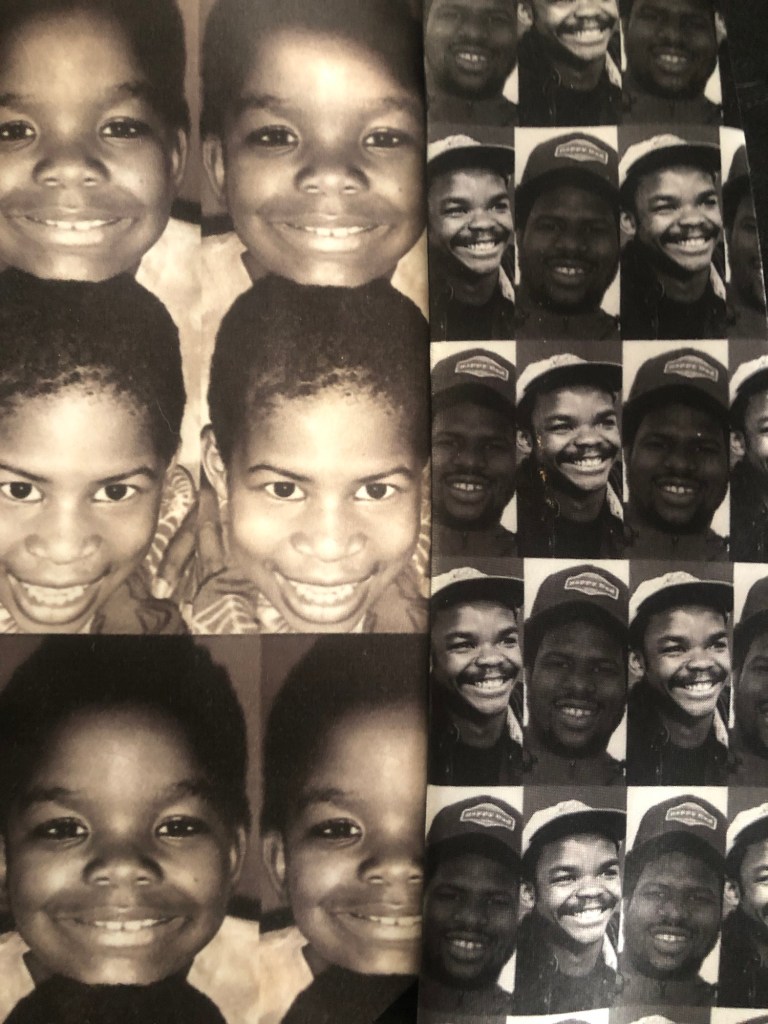
The first time I met Nate’s girlfriend I dressed for the occasion and wore a tie that bears a collaged image of both boys when aged about 12 and 8. Thulani’s head resting on Nate’s and they both have broad smiles. I donned the tie with playful snarkiness declaring, with zero subtlety, exactly where Nate belongs.
Harli visited a few days later and won my heart.
“Open it,” she said handing me a gift.
Treasure fell from the envelope. She’d re-produced the tie with updated images, my sons at 26 and 22, smiling as broadly from another necktie.
On Fathers Day I woke to this text which I publish with Harli’s permission:
“Happy Fathers Day, to a man I idolize. You welcomed me into your family with open arms and you single handedly raised two honest gentlemen that are so lucky and grateful to have you. I hope you enjoy your day!!”
The woman has no idea that my most ardent prayer for my sons was always that they learn how to love and that they be gentlemen.
Thulani met Alaina over a year ago and has gone so far as to purchase a ring. Last Saturday he ordered roses to surround a spot near Bow Street Bridge in New York City’s Central Park. Out for a walk the couple walked by at some distance from the bridge and the flowers caught Alaina’s attention.
“What if they were there for you,” he said.
On his knees, at the bridge, Thulani popped the question. Cameras rolled and the perfect moment of their shared joy was caught for all to see, you and me, and generations yet unborn.
From there the couple headed to a restaurant where forty of their friends waited in a reserved private room to welcome them, and welcome them they did!
Thulani coordinated all of this.
Alaina knew none of it.
I talked with my daughter-to-be the day after the engagement and I got to feel some of her joy.
Yes, I am looking forward to the wedding. No date is yet set. I am looking forward to their complete fulfillment as husband and wife. Truth be told, I can hardly wait to have at least 5 or 6 grandchildren.
I have enjoyed the run up to this event, rehearsing with Thulani, his speech to request Alaina’s parents for her hand in marriage, the design and purchase of the rings, receiving a most gracious text from my son to declare how he had learned about love from how I have loved him….
But, my real joy goes even deeper than all of that, if that is possible.
Try telling someone from my part of the world (Indiana, USA) a bad-weather story.
In seconds you will be interrupted.
No matter how deep the snow, severe the ice storm, or how strong the wind was, your “listener” will trump you.
The “listener” is not listening. He or she is waiting to speak, aching to one-up you, waiting to debate, waiting to win! His bad weather story will dwarf yours, no doubt about it.
It’s not a conversation.
It’s a duel!
I am convinced that in Indiana one cannot have one’s own weather and let it be.
This phenomenon is not restricted to weather-talk or to Indiana. Try telling friends in South Africa about your game reserve experience. In split seconds you will be told a more intense, more dramatic event that occurred in another better, bigger, greater game reserve than the one you enjoyed. Other similar topics: the best curry, the worst flying experience, the worst customer service, lost luggage tales, a recent surgery or illness.
Really listening, being present for each other, takes love and discipline. It takes the ability to hold our tongues if we want to enter the world and the experience of another. The temptation to crowd out that world with our own (bigger, better) material can be very strong.
Being present for each other is a gift.
Hold your tongue, give liberally.
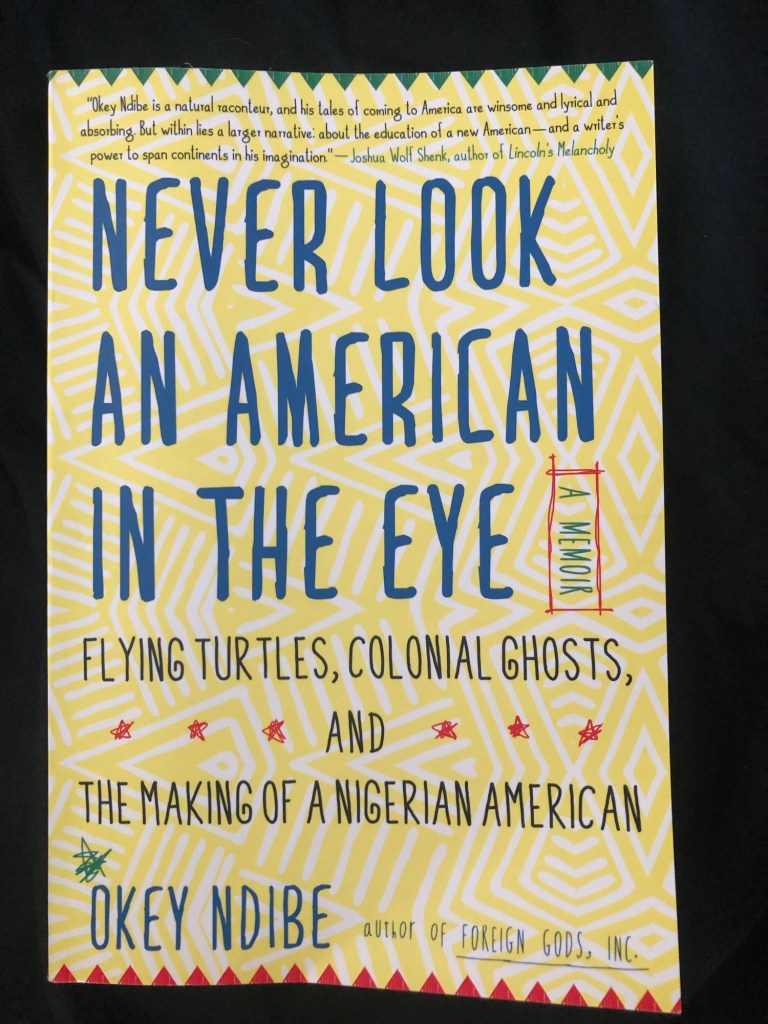
I’m enjoying this memoir very much and commend it to you.

 difficultrelationships.com