Archive for ‘Leadership’

January 30, 2011

Key terms for at least one approach to Family Therapy….

by Rod Smith

Who shows the most health and freedom?

Readers often express interest in the Science of Family Therapy. Here are a few key words to guide any reading to stimulate further interest in at least one of many approaches:

Murray Bowen – is considered one of the pioneers;
Genogram – a diagram of a family usually starting with immediate family or “family of origin”;
Space – the distance between and among people;
Under- and over-functioning – playing more than your own role or doing less than your role deserves or requires; Anxiety and chronic anxiety;
The human need for autonomy;
The human need for intimacy;
Differentiation of self;
Cut-offs, fusion;
Mutuality; respect;
Invisible loyalties – the often irrational and rational loyalty among family members;
Low- and high-functioning individuals; low- and high-functioning families.

Keys to change in a family (if change is indeed possible):

Change in a family often comes from first identifying the most self-differentiated person in the family. This person is challenged by the therapist to move his/her life toward greater levels of health and integrity, despite the cost and the sabotage that will naturally result. Family resistance to change is to be expected. When some seek greater health there will be “push back” from those who benefit from the status quo.

January 23, 2011

Living with an Open Hand…..

by Rod Smith

Hospiality, grace, radical freedom

Open your hand using all your strength. Stretch your fingers. Allow the lines on your palm to feel as though they might tear apart. Study the contours, colors, ridges and valleys, joints, dents and spaces. Push, pull, and rub. Move your fingers through their paces: together, apart, back, forward, curved, strained and relaxed, cooperative yet unique. Feel the texture and every curve. Touch the crevices. Spread your hand further, turn it at the wrist, examine and compare patterns from every angle. Here are pieces of yourself you might never have studied.

Your hands are your constant companions. They have met the needs of others, pioneered romantic moments and worn rings of commitment. They are the way your heart leaves fingerprints, the eyes at the end of your arms. Hands reflect a person’s being and are the front line agents of your life. If eyes are said to be the windows of a soul, hands express the soul.

Hold other people with your hand thoroughly open. Allow them to know the warmth and welcome of your hand, investigate its curves and benefit from its scars. Invite others to follow the lines into the fabric of your life and see the risks you have taken and the adventures that are yours. Allow them to wrestle and rest, search, see and speak. Let them stay; let them go, but let them find your hand always open.

The Open Hand of friendship, at its widest span, is most rewarding, most challenging and most painful, for it enduringly acknowledges the freedom others have while choosing not to close upon, turn on, coerce, or manipulate others. In such friendships, expectations and disappointments become minimal and the reward is freedom. As others determine a unique pace within your open hand, they will see freedom and possibly embrace their own with excitement and pleasure.

Openhanded people do not attempt to “fix” others, change, or control others even for their own good. Rather, each person is given freedom to learn about life in his own way. Openhanded people, instead, express kindly and truthfully what they think and feel, when asked, knowing even in the asking, others might not be interested or willing to learn.

The Open Hand is not naive. It is willing to trust, while understanding and accepting that no person is all good or all bad, and that all behavior has meaning. The Open Hand is convinced it cannot change others; it cannot see or think or feel or believe or love or see for others, but trusts people to know what is good themselves. It will not strong-arm, pursue or even attempt to convince others because it has little investment in being right, winning or competing. Here is offered a core-freedom of the deepest and most profound nature: allowing others to live without guilt, shame and expectation.

Further, the Open Hand offers oneself freedom that extends to one’s memories, ambitions, failures and successes. This allows for growth of enduring intimacy, greater personal responsibility, authentic autonomy, and the possibility of meaningful relationships with others.

In the discovery of a closed hand, even at the end of your own arm, do not try to pry it open. Be gentle. Allow it to test the risky waters of freedom. As it is accustomed to being closed and fist-like, it will not be easily or forcefully opened. So let the closed-handed do their own releasing and trusting, little by little, and in their own time and manner.

When openhanded people meet, lives connect in trust, freedom and communion. Community is set in motion. Creativity is encouraged. Mutual support is freely given. Risks are shared. Lives are wrapped in the safety of shared adventure and individual endeavor all at the same time.

Rod Smith, July 1997 / Copyright

January 7, 2011

Do you ENABLE or EMPOWER?

by Rod Smith

He or she who enables

1. Lies, covers-up, runs interference, for the enabled.
2. Feels over-burdened or rewarded with responsibility for the enabled.
3. Feels like he or she is living more than one life each day; as if the choices (good and bad) of the enabled are his or her responsibility.
4. Endures “borrowed” anxiety – bears anxiety about choices made by the enabled.
5. Seems unable to see the “self” as disconnected to the self of the enabled, and will often see this connection as “oneness” or love, or a soul-tie, or the “oneness of marriage” making the enabling somehow inescapable.

He or she who empowers

1. Learns to allow others to speak for themselves (“I will not lie for you. If you have to call in as sick when you really are hung-over you will have to make that call yourself.”)
2. Understands the critical distinction between being responsible to others and for others.
3. Learns to allow most choices (not all) of those he or she loves and their consequences to run their course.
4. Learns to distinguish between helpful pain, useful anxiety, and what is and is not legitimate cause for concern.
5. Works at healthy, necessary separation, even while being married, in love, or having soul-ties.

December 28, 2010

Keeping women “down” must be consistently challenged….

by Rod Smith

Attraction is only enduringly poss

Fully live (women, too!)

I am thoroughly aware that some cultures do not “allow” women to have a voice, make choices, speak up to husbands – having regularly addressed men and women from such cultures for years. I remain convinced that this robs said cultures of half of its creative capital.

Keeping women “down” must be consistently challenged. Thus my suggestion the woman in yesterday’s column (12-28-2010) define herself to her husband. Of course it flies in the face of many cultures – but if she is to give of her best to herself, her husband, to anyone, speaking up to all in her context is the place to start.

What can be so threatening for some men that some are terrified if women (whom they love) makes their full contribution?

Yes. It will more than ruffle the marriage. Rather a ruffled marriage than a life-time of control, submission, manipulation, leading to intimidation, then domination – not that all men in said cultures are this way at all.

If he really “treats her like a queen” he will also grow. If not, he will reject her; even leave her. At least she’d have expressed herself as a woman and be able to achieve, albeit at great cost, her selfhood as a woman and will have discovered she requires permission from no one to BE.

PS: I have delivered lectures in several Asian countries where it seems women are strongly discouraged from expressing their voices. While trying to be as culturally sensitive as possible, I did not water down my message at all and called on all men and all women to encourage all men and all women to find, express, and use their voices. While I have had some strong kick-backs (some rejection and exclusion) I have always been invited back. I’ve even asked leaders and organizers the reasons I am invited back despite my contrary message. I am told, “Yes. Your message is dangerous for us but we still need to hear it.”

December 27, 2010

The King’s Speech? Let me tell you about stuttering……

by Rod Smith

Attraction is only enduringly poss

It's a war of words in your belly

The King’s Speech, the new rage movie, and which I have not yet seen, is about stuttering. But let me, if I may, tell you a few things about it, stuttering that is if you’ve seen the movie or not.

First. I am a chronic stutterer. You might have known me for years and never known this about me. Chronic, yes, because it has been a life-long challenge and it can floor me in an instant. You may have heard me preach, seen me address thousands of people for days in a row, for hours at a time, and never heard even a momentary hesitation in my presentation.

But I am. I am a chronic stutterer.

It can debilitate me in a moment; trip me up like a vicious booby trap – the kind you see explode in Vietnam movies – and leave me afraid, humiliated, withdrawn, as if I’d committed some great, premeditated immorality.

But don’t feel sorry for me. I am used to it. I’ve been handling this recalcitrant, irascible puppy since “mama” wrestled around my throat refusing to come easy.

Really, if I’d known as a 12-year-old boy that there’d come a day when much of my future and income would depend on getting up in front of crowds of three (yes, three people waiting for you to speak when you are a stutterer can feel like a legion) to 5000, I think I’d have ended it all right then. I’d have (unannounced of course – since I might have bungled the delivery) walked off a high rise building in my city. I might have ended the anxiety, sleepless nights, practicing openers, trying to guess when a teacher would put me on the spot, the fear of the giggles, and the avoidance of the benevolent do-gooders who’d say “say it slowly” or “let’s try that again.” I’d have punched the self-appointed speech therapists in the face when I was 12 if I wasn’t also so darn eager to please, eager to be accepted, and, most importantly, didn’t have to explain my actions to anyone later.

So here’s a few tips about stutterers – keep in mind we are all very different:

Stutterers are cunning. They learn to negotiate the text, script, context – they become masters of improvisation. They are escape artists – they see the troublesome words fighting for position down the track (actually deep in the belly) and so they take detours in their own sentences. He or she can call the bluff on that difficult phrase like it was a surly or uncooperative adolescent, and chooses another more compliant, often more complex phrase, and go with that. You, the listener, are usually none the wiser. You’ve not been privy to the re-arrangement, the shifting of verbs and conjunctions for more oiled, more compliant combination to take its place.

Stuttering is pernicious. It goes underground for months then pops up like an angry ex to bark knowingly at your world when you least want her to.

Here’s the thing: I can speak to an auditorium jammed with people for an hour, and then have some adolescent coffee barista shrink in embarrassment as I try to say “small cappuccino” in the food court next door. I can read an entire chapter of a classic novel to a group of literature students and then I can’t get “where’s the restroom” out of my throat a minute later. I can make a flawless appeal to a foundation in London to a poker-faced board and then, even if my life was dependent upon it, I cannot say the name of the station I need to the ticket seller in the underground. It can get so bad that I carry and pencil and note cards for when mute is a more desirable option.

Stutterers are survivors. We go at it again and again. While we may avoid situations and not volunteer for certain roles, we are not looking for sympathy or accommodations.

So how to treat a stutterer? Look him in the eye. Don’t speak for him. Don’t prompt him. He’s probably not having a stroke so don’t immediately call 911.

Relax – that’s what we all need to do more of anyway.

December 9, 2010

Remaining human in a world that wants to knock it out of you…..

by Rod Smith

Attraction is only enduringly possible.....

"Love you enemies" (Jesus)

Remaining human, humane (able to be compassionate, to feel, think, plan, embrace your own pain and the pain of others) is a constant challenge in an environment that repeatedly attempts to dehumanize, objectify, and knock the humanity out of you.

Every murder, death of a child, every act of violence anywhere, ought to immobilize humanity, bring the world to its knees, ought to stop everything as we shudder at the ramifications of what we can do to each other. Every act of betrayal, act of gossip, act of physical and spiritual aggression ought to horrify us. But of course, through bitter, repeated experience, we become inured to all but the most immediate horror – that which impacts us very directly.

Yet, we are affected. We are all lessened by the moral chaos, terror, the violence, put-downs, rejections, rumors, gossip, thievery, and the evil that is rampant everywhere.

Yet the challenges of the Saints remain: do not return evil for evil; be generous in a world that is often not; be hospitable; do good to those who are not good. Love your enemies. No, not tolerate your enemies, love your enemies.

Trying to embody these humane values keeps us “foolish” and human.

Oh, what a joy results when our humanity prevails and rises above the conniving, the betrayal, the physical, emotional, and spiritual violence, the hardness, in our surroundings – each of which might just as easily consume us, render us inhumane.

December 6, 2010

A dozen ways to know your teenager is growing up…

by Rod Smith

He or she:
1. cleans his or her room
2. voluntarily gets a haircut
3. saves money
4. stops blaming everyone for anything
5. takes full responsibility for his or her decisions
6. greets you with kindness
7. stands up for himself or herself without compromising others
8. demonstrates healthy boundaries by choosing friends who are good for him or her
9. has plans for her life that stretch beyond the next few days
10. reads books and newspapers by choice
11. can engage in a meaningful discussion about world events
12. is assertive without being pushy and demanding

November 7, 2010

The power of friendship

by Rod Smith

Friends give you room to be right, wrong, late, or to be early. They allow you the “space” to be forgetful, sad, happy, angry, frustrated, when such space is necessary. In return you are careful with the liberty authentic friendships afford you. You don’t presume upon it. You remain respectful and you do not regard your friendships with a sense of entitlement.

Friends listen. They listen not only to the words you say but also for your soul to speak. They wait for your soul to trust, emerge, share, knowing it might take decades for it to say anything at all. They listen in order to love, not in order to advise, modify, or to assess, judge or condemn – but in order to love. They want to understand, hear, see, value and appreciate. In return you have become a skilled listener.

Friends live fully. While being committed to listening to you, while committed to waiting for your soul to speak, while being invested in building community with you and sharing life with you, they are first and foremost committed to finding and developing their own skills, developing their own dreams, and living their own ambitions. Friends know that among the greatest acts of friendship is the act of living one’s own life completely.

October 21, 2010

Single mother writes: thank you for acknowledging our bravery and struggles…..

by Rod Smith

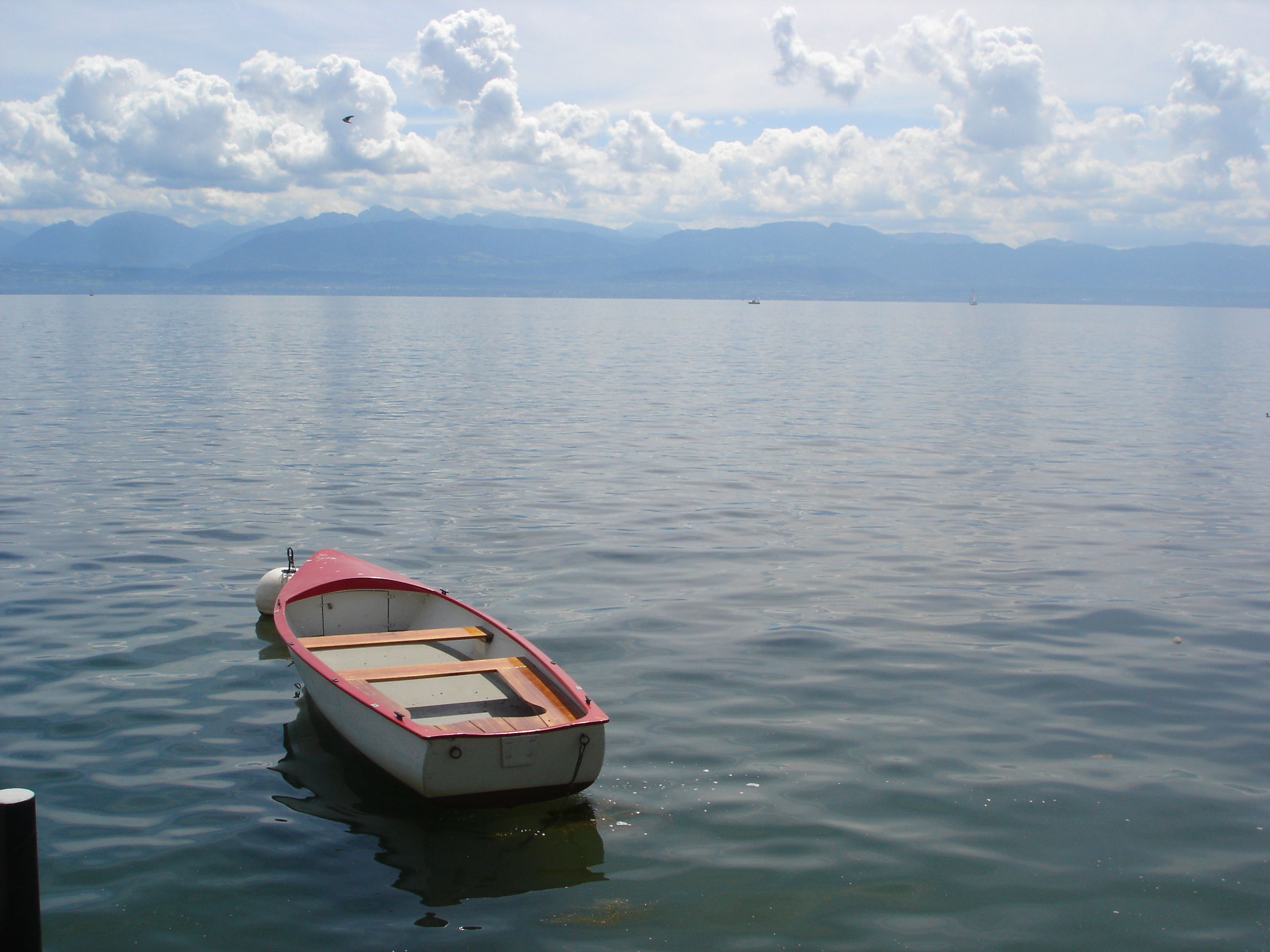
Lake Geneva, Switzerland

“Thank you on behalf all my many single mother friends for the article published yesterday. Thank you for acknowledging our bravery and struggles. Thank you understanding the many roles we play and the many difficulties we overcome because of our love for our children. Thank you for noting it is near impossible to have a romantic social life as solo parents. Thank you for listing and understanding what women do not need in a potential partner or in friendly advice. I am 50 and the mother of two sons whose fathers disappeared when the going got tough.

“I have been a single mom for 32 years, and despite the challenges, long hours, and little thanks associated with the job of single mom, I have been blessed to have my sons and love them dearly. I am also proud of having still managed to forge a career, own my home, a car, and travel the world. I have recently studied to become a Life Coach. I just sit with the thought that my children did not chose to be born and hence, are entitled to the best Mom and woman I can be. One thing I know is that my son’s will make wonderful Fathers.”

September 28, 2010

“Something Beautiful” – worldwide competition with prize

by Rod Smith

Send me your "Something Beautiful"

Write something beautiful – and send it to me.

Keep your contribution to 200 words. Pick a moment from today or from any time in your life and recount it.

I have a few motives:

1. I like to surround myself with beauty. Your writing will assist me toward that end.
2. I believe that each of our lives is a collection of its own set of miracles, its own quarry of joys and delights, even if it is, at the same time, filled with challenges.
3. I’d like to publish a few of your offerings (thus the word limit) and send a prize to the writer of the best piece.

So, have at it. I will be the sole adjudicator of your “something beautiful” submission, and, until it goes to press (if it does) your only reader.

I will send the winner his or her choice of three books: one of the Joan Anderson books I mentioned earlier this week or a copy of a book I have read every June for about 8 years: Failure of Nerve by Ed. Friedman. Please place “Something Beautiful” in the subject line of your Email or your comment. I will close submissions by Friday, October 1, 2010. I look forward to reading something beautiful from you.

Email address: Rod@TakeUpYourLife.com

Rod Smith
9/29/2010