No one feels healthy, and on top of the world, all the time.
Emotional ebbs and flows are normal.
Good days and bad days come with being human.
Give yourself a break.
If you are “down” for days, if you are unwilling to get out of bed, unwilling to engage in the regular and “normal” joys and tasks common to all people: like eating, bathing or showering, wearing clean clothing, getting ready for the day, the routines required of the general population, it may be time to seek help.
If you are overly tired and unmotivated, despite having had a good deal of sleep and find it tough to identify any joyfulness in any of your surroundings or activities or relationships, it may be time to seek help. If you sometimes feel plagued by dark thoughts, scary ideas you can’t seem to shed or shake – speak up to someone who can assist you to find help.
Emotional ebbs and flows are common but when the ebbs significantly outnumber the flows, it’s probably time to let someone know you are bordering on desperate or are already desperate.
While you think and feel you’re trapped in an emotional or relational cul-de-sac of desperation, you probably don’t have to remain there.
Reach out.
There are people willing, qualified, waiting to listen.
I have seen it in 13-year-olds and missing in adults.
The member of the family who is empowered to grow and foster healthy change within a struggling family (or church or business or not-for-profit) will demonstrate some (not necessarily all) of these abilities.
There are popular tests to measure this quotient.
Here are the abilities I look for when dealing with families or groups in conflict.
The capacity to switch lenses, to see the world, at least for a time, from another’s point of view.
The capacity to report what is heard, to be able to accurately report what is said even if the content are points of contention or disagreement.
The capacity for objectivity, to be able to remove oneself and one’s interests, at least temporarily, in order to gain a bird’s eye view of what’s going on.
The capacity to see the differences among “I” and “you” and “us” and be able to differentiate each person from his or her individual role and as a member of a group and therefore resist the natural urge to plunge into a boundary-less cloud of togetherness where individuality is threatened or lost.
The capacity for playfulness and for healthy humor under almost all circumstances as even the most intense of circumstances are usually laced somewhere with elements of irony and humor.
The capacity for kindness, even while under threat or attack (I know, I know, this is a tough one).
Our Forest….. a short walk from our home. Grace-upon-grace is ours.
My primary reason was to solemnize the wedding of friends, Eman and Natan.
Natan and I met several years ago in a small town near Geneva.
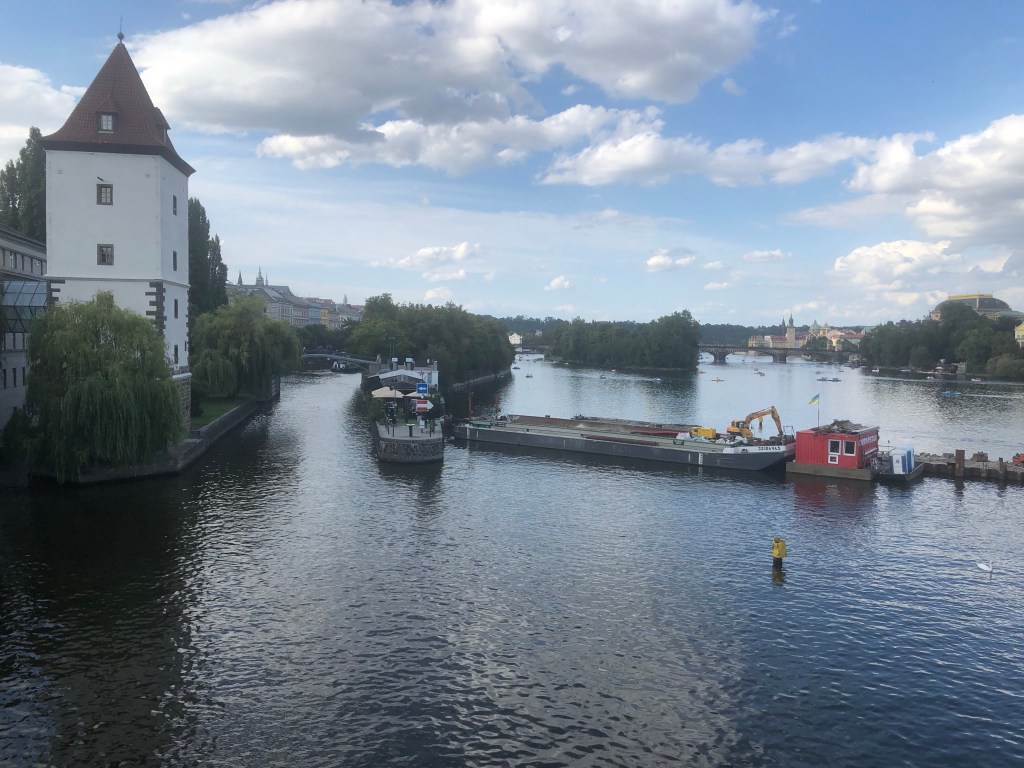
Soon after my arrival in Prague, Natan introduced me to Eman who hails from Sudan. It quickly became clear that Natan, a man of deep faith and courage, had met his match and found his soulmate.
I love expressions of courage and both bride and groom are overflowing with courage and joy and vision and care and so much else. Their combined natural charisma is as tangible as it is encouraging.
Natan and Eman met on a remote Indonesian island while each was pursuing a Masters Degree. They dated long-distance, and confronted multiple hurdles of visas, a war, and much else to make their marriage possible.
Natan announced at a wedding-preparation meal that they would honeymoon in South Africa and spend at least a day or two in Umhlanga.
Welcome to KZN, Eman and Natan, Mrs and Mr Ledvon.
May your next 50-plus or more years of marriage be as fun and beautiful as your wedding – and may some kind hotel guest be sure you see this column.
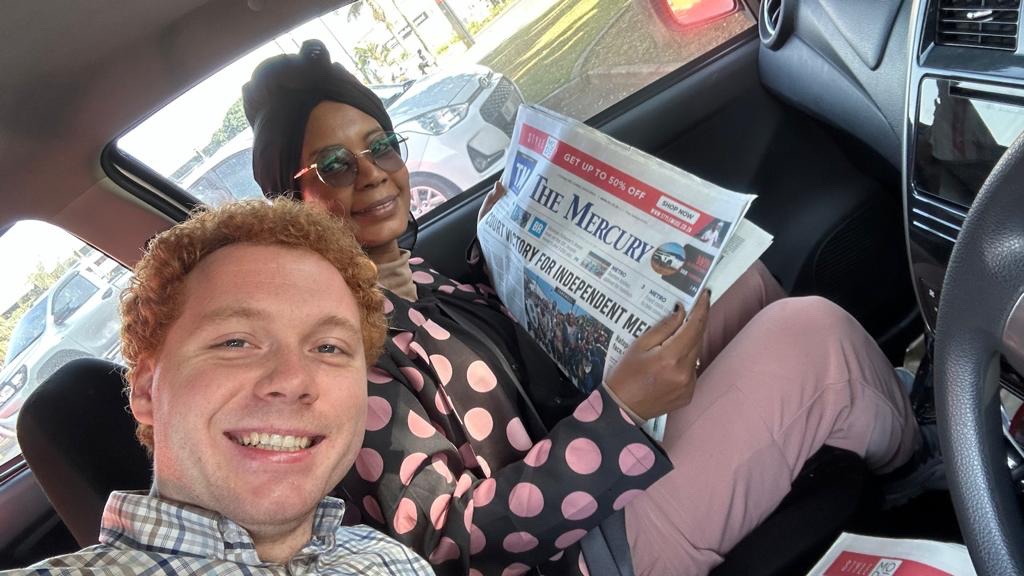
They’re on honeymoon abroad and get to read about themselves in a local paper. Content can be read above…..
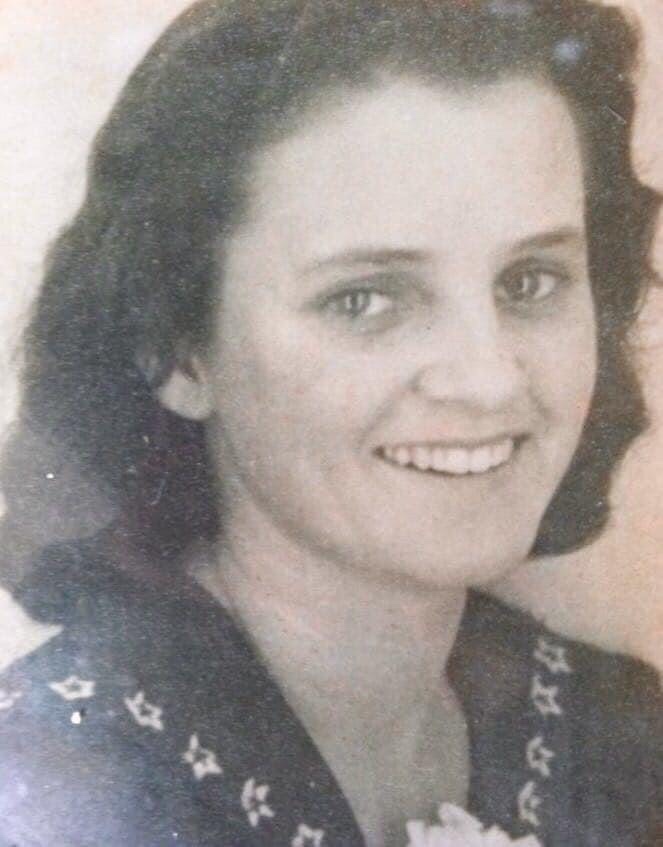
Writing, thinking, talking about our mother, Mavis Iona Smith, has never been easy.
I keep meeting unfinished business.
We confront each other occasionally – in casual social interactions when I regard, with an air of flippancy, a matter Mother would have offered serious consideration, or when I cook the “wrong” way.
It is among several of my chief regrets that I discovered, when it was too late, the importance of a man knowing his mother.
I hear Mom’s voice now and then.
Mom had a beautiful singing voice and would fill the house when mother sang.
“Just like Virginia Lee,” dad would say, “your mother sings just as beautifully. Listen, you can hardly tell the difference.”
Virginia Lee was one of South Africa’s top selling vocalists.
Sometimes my mother’s voice addresses me from some galaxy within my psyche. I usually smile and, despite her protestations, proceed however I choose. I get a perfected frown when I am tempted to bend the rules, stretch the truth.
I have seen Mother cast affirming smiles when I allow fairness, compassion, kindness and mercy to prevail.
I am regularly reminded that the umbilical cord is infinitely elastic; the woman who bore me, no matter how independent I appear to be, forever influences me, sometimes tugging a little, urging me toward what is right, good, merciful and honest.
(If the above is “bulky” in the reading it’s perhaps because dad permitted no pronouns when referring to one’s mother).
A parent of one of my son’s peers asked my son, then about 11, if I was a “helicopter” parent.
For the uninitiated, this is a somewhat playful but can be demeaning term teachers may use for the “over-parenting” types teachers must often engage.
It’s the hyper-vigilant, ever anxious, overly child-focussed parent whose entire life appears to hub around a child or children. It is the parent who is focussed almost solely on the child’s moods, grades, levels of content or discontent. It is the parent who sees parenting as a 24/7/365 forever-calling, and who, with the advent of a child or children, finally has something for which to live.
“No, he’s more like a submarine,” he replied.
This response entertained me. It revealed an uncanny understanding of how I usually operate. This compliment still enriches me even though my parenting has ended. (I am still their dad but my sons are launched).
When facing a challenge or an issue, I tend to circle the area, often undetected. I watch. I assess, get counsel.
Then, I act.
It may take a while.
What some may perceive as inaction — is not.
The submarine is scouting the territory, testing the tides, weighing options.
The sub is seeking objectivity, assessing an approach, trying to love, and timing the potential, if necessary, of one. or even several, strikes.
Be careful who you talk to about the deeper things, personal matters, losses, that may be troubling you.
Some people are unsafe.*
Unsafe people are seldom intentionally unsafe or even aware they are.
People are unsafe as a product of their own unaddressed, unresolved, or unidentified traumas.
Your trauma, abandonment, your loss, whatever, ignites theirs. This is what makes them unsafe for things confidential. Your pain expressed rekindles theirs, rendering them less capable, not necessarily incapable, of hearing you.
Yes, it’s that simple.
The unsafe are so — not because they are fraudulent or deceptive— but because their lives feel, or are, unsafe. If you are observant, you’ll see their anxiety, you’ll experience their anxiety — which is probably not what you want at a time you are seeking understanding and perhaps comfort. Uncomfortable people cannot offer comfort. It’s not in them.
A person recently betrayed or abandoned or suffering loss is not better equipped as a result of the experience to listen to you when you face something similar. While said person remains angry or bitter or anxious or overwhelmed with grief they can be of little comfort or assistance to you.
This person will become safe(r) if and when he or she has achieved some objectivity about the experience and is able to see that his or her experience is as unique as yours is.
With “separation” from you and your experience will come greater safety.
It is at these points, points of progressive growth in objectivity, your unsafe person will be transformed into one who can handle your story, one who can identify and empathize without being drawn back into his or her “stuff” as painful as it surely has been.
While your sharing (divulging, unburdening, “downloading”) becomes about them and not you, you are in a less-safe environment.
Safe people listen.
Safe people listen without spilling (their lives into yours or your life into theirs). They are able, and this is crucial, to put themselves aside for the time it takes to listen to you.
Safe people don’t leak or cross-pollinate your information no matter how juicy or tempting it may be or how important it may make them feel to do so. Unsafe people feel rewarded or affirmed by knowing things others don’t know about you — while safe people seek no such affirmation.
Safe people don’t ask you questions simply to lead into what they really want to tell you about their own lives and their pain.
Safe people seldom have to tell you they are safe people. You already know who they are or you become aware of it soon after meeting them. Their non-anxious presence calms you.
Safe people keep it about you.
* I don’t necessarily mean unsafe people are dangerous. Talking with them about your life may not be helpful to you. That’s all.
A grateful heart will lift your spirit, shift your lens from what you think you lack or need, to recognition of all you do have and enjoy.
A grateful heart will lighten your load and offer you helpful objectivity.
A grateful heart will sharpen your vision to see the miracles in the immediate – like the shifts in seasons, the births of neighbors’ babies, the happiness you see in a child when she runs to be embraced by her daddy.
A grateful heart will alleviate the necessity for sarcasm and cynicism as you find yourself expressing gratitude.
Gratitude will open your eyes to sunsets and sunrises in new ways, to regard each as an opportunity to be thankful for a good day ending and the arrival of fresh starts and new opportunities.
Gratitude welcomes the noises and interruptions of children, even other people’s children, and the elderly, even other people’s elderly, rather than considers both an irritation or interruption.
A grateful person is lavish with thank you-s and praise and enjoyment (in ways that are contagious) despite trying circumstances and, oddly, the gratitude has a way of rewarding those who spread it and rewards the grateful with even more for which to be grateful.
May you meet gentle and warm hearted people and be warm hearted and gentle toward yourself and towards others. There appears to be so much fury and anger and so many people living on edge. May you and I offer a counter experience and offer others a place of welcome and safety. In doing so we may not change the world or make a shift or dent in our immediate environments but we will lift and encourage the hearts of a few.
May you be firm in your decisions and be confident in your dealings with yourself and others. There is a vast difference between confidence and arrogance and, while they are often confused, may you and I have only confidence. Inner-confidence permits others to take a stand, for themselves. Confidence will assist you and me to live deliberately and avoid victim thinking.
May you be generous and kind in a world that seems to promote selfishness, greed, indifference and even promote unkindness. This does not mean we have to give beyond our means or be un-thinking in our giving of time and resources. Wise giving of cash, talent, and time empowers others. Unwise giving of cash, talent and time will exhaust and deplete you and me.