“What parenting advice could you offer my wife and me,” said the delighted dad, “my son is 16 months young.”
Above all, love your wife with joy, freedom and courage. This will reduce and deflect loads of the anxiety that naturally tries to derail all childhoods.
Lavish your baby, then young child, then pre-teen and teenager with affirmation and affection. No matter what you and your wife face, when you come home from work, or he returns after time away, or when he wakes in the morning or in the middle of the night — baby or teenager — be glad to see him, and, say so. Verbally express the joys your son brings you, to each other, and to him.
Teach him to talk Joy.
Regard the ages 5, 8, 12, 14 and 16 as transition ages. At these times discuss with him your parental plans (your mutually agreed upon plans you’ve made as parents) to do less and less for him, while expecting more and more from him. Yes, even at 5 — point out that he can make his own, age-appropriate decisions. Include him in planning and establishing his growing independence. Plan your parenting so that by his eighteenth year your parenting roles are accomplished and he has all it takes to be an interdependent young adult.
Hold in high regard the beautiful idea that you parent (the verb) for his sake and not yours.
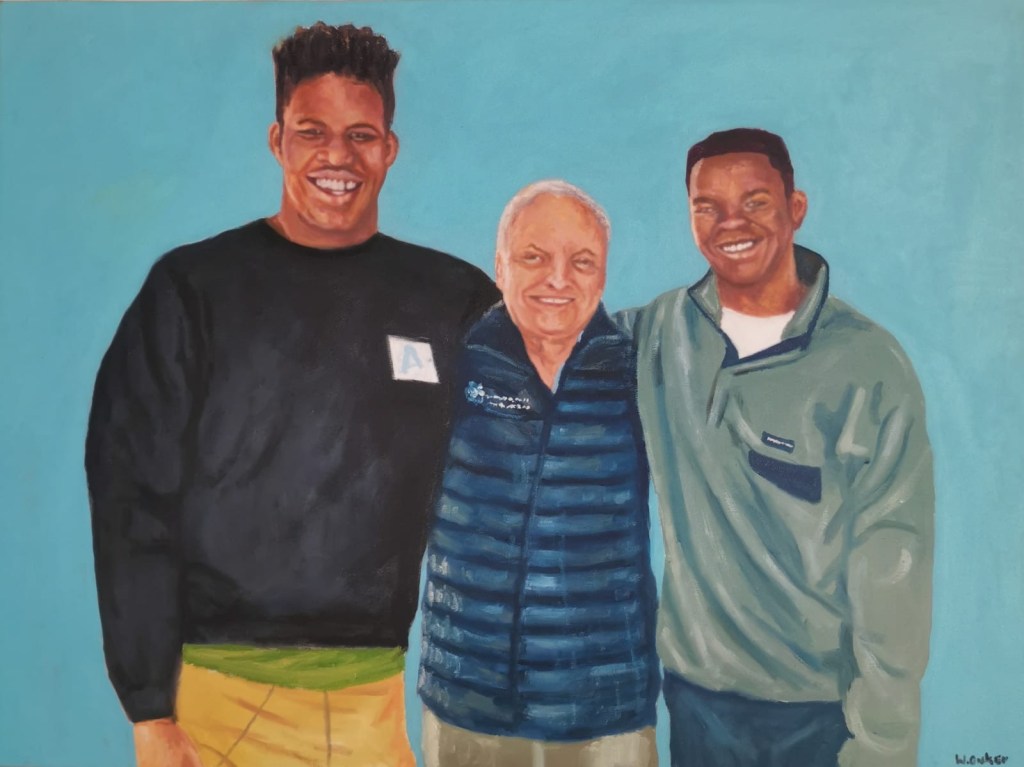
Our new painting will go up in my home-office this week….. from Friday this week, both of my adult sons are launched and living independently of me. Oh the joy; oh the niggling pain. #graceupongrace
“Chased,” he said, “I’m being chased, haunted by my past, my past of multiple addictions, — they follow me.”
“Like dogs?” I asked, “I have wild dogs too.”
“No,” he said, “large lions, and a tiger, coming from behind, waiting to pounce, attack. To scorn, belittle me.”
“How do you protect yourself?” I asked.
“I outrun them; get ahead. Do heroic things to prove them wrong. But, they follow, catch up, then I have to do it all again. What about you and the wild dogs?” he asked.
“I tried to ignore them,” I told him, “but they don’t like that. They squeal, bark louder. I tried to get ahead, outrun them as you do with your pursuers, but that’s temporary relief.”
“I know,” he confessed.
“I made a decision that made a big difference,” I said, “when I was at my most desperate when they were chasing me through dark hallways of my mind, barking at my heels, I stopped, slowly turned, faced them. Told them they were right, looked them in the eyes, gave them attention — then, they withdrew, got quiet, behaved as disciplined guide dogs. Now, they do their jobs.”
“Can I train my lion? My tiger?” he asked.
“You’ll never know,” I said, “until you look them in the eyes.”
You open Your Hand and satisfy the desires of every living thing. PSALM 145: 16
Open your hand using all your strength. Stretch your fingers. Allow the lines on your palm to feel as though they might tear apart. Study the contours, colors, ridges and valleys, joints, dents and spaces. Push, pull, and rub. Move your fingers through their paces: together, apart, back, forward, curved, strained and relaxed, cooperative yet unique. Feel the texture and every curve. Touch the crevices. Spread your hand further, turn it at the wrist, examine and compare patterns from every angle. Here are pieces of yourself you might never have studied.
Your hands are your constant companions. They have met the needs of others, pioneered romantic moments and worn rings of commitment. They are the way your heart leaves fingerprints, the eyes at the end of your arms. Hands reflect a person’s being and are the front line agents of your life. If eyes are said to be the windows of a soul, hands express the soul.
Hold other people with your hand thoroughly open. Allow them to know the warmth and welcome of your hand, investigate its curves and benefit from its scars. Invite others to follow the lines into the fabric of your life and see the risks you have taken and the adventures that are yours. Allow them to wrestle and rest, search, see and speak. Let them stay; let them go, but let them find your hand always open.
The Open Hand of friendship, at its widest span, is most rewarding, most challenging and most painful, for it enduringly acknowledges the freedom others have while choosing not to close upon, turn on, coerce, or manipulate others. In such friendships, expectations and disappointments become minimal and the reward is freedom. As others determine a unique pace within your open hand, they will see freedom and possibly embrace their own with excitement and pleasure.
Openhanded people do not attempt to “fix” others, change, or control others even for their own good. Rather, each person is given freedom to learn about life in his own way. Openhanded people, instead, express kindly and truthfully what they think and feel, when asked, knowing even in the asking, others might not be interested or willing to learn.
The Open Hand is not naive. It is willing to trust, while understanding and accepting that no person is all good or all bad, and that all behavior has meaning. The Open Hand is convinced it cannot change others; it cannot see or think or feel or believe or love or see for others, but trusts people to know what is good themselves. It will not strong-arm, pursue or even attempt to convince others because it has little investment in being right, winning or competing. Here is offered a core-freedom of the deepest and most profound nature: allowing others to live without guilt, shame and expectation.
Further, the Open Hand offers oneself freedom that extends to one’s memories, ambitions, failures and successes. This allows for growth of enduring intimacy, greater personal responsibility, authentic autonomy, and the possibility of meaningful relationships with others.
In the discovery of a closed hand, even at the end of your own arm, do not try to pry it open. Be gentle. Allow it to test the risky waters of freedom. As it is accustomed to being closed and fist-like, it will not be easily or forcefully opened. So let the closed-handed do their own releasing and trusting, little by little, and in their own time and manner.
When openhanded people meet, lives connect in trust, freedom and communion. Community is set in motion. Creativity is encouraged. Mutual support is freely given. Risks are shared. Lives are wrapped in the safety of shared adventure and individual endeavor all at the same time.
I want my life to count, make a difference, contribute to the greater good, to have MEANING.
I cannot exist in a vacuum, but in a community with persons of similar desires to create something beautiful with the skills, resources, and years that we have at our disposal.
I want to serve a cause that is greater than my own fulfillment.
I want to plant now, so people I may never meet or know or hear of me, may harvest something rich and rewarding in their futures.
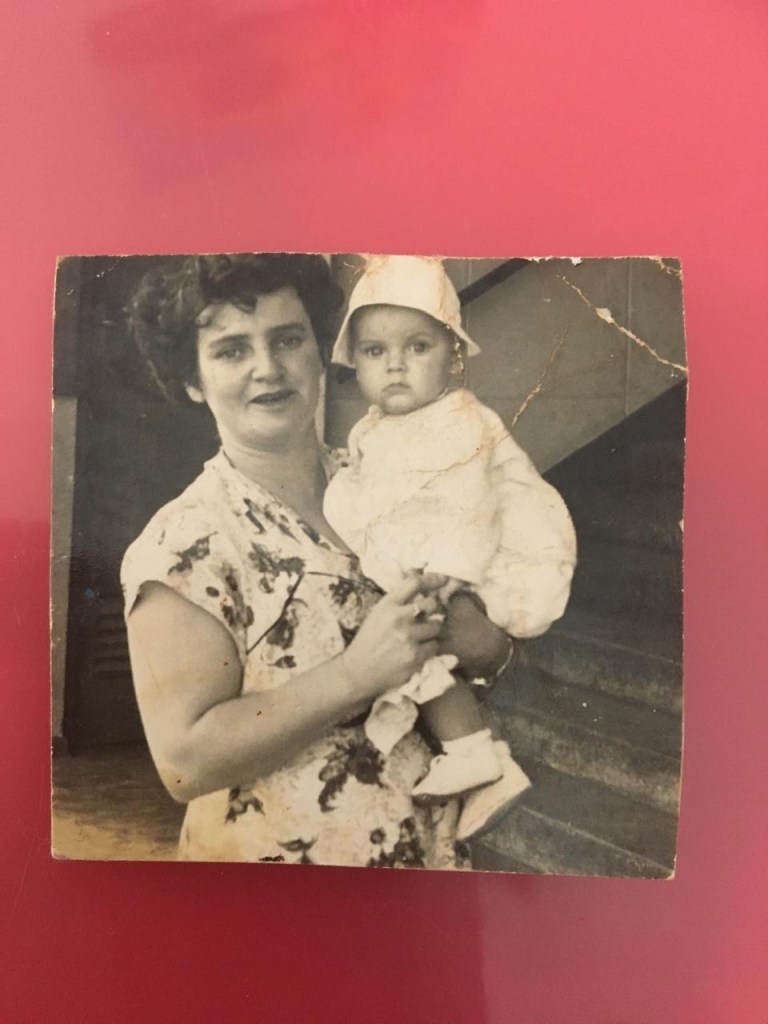
The only photograph — I’m aware of — of my mother and me.
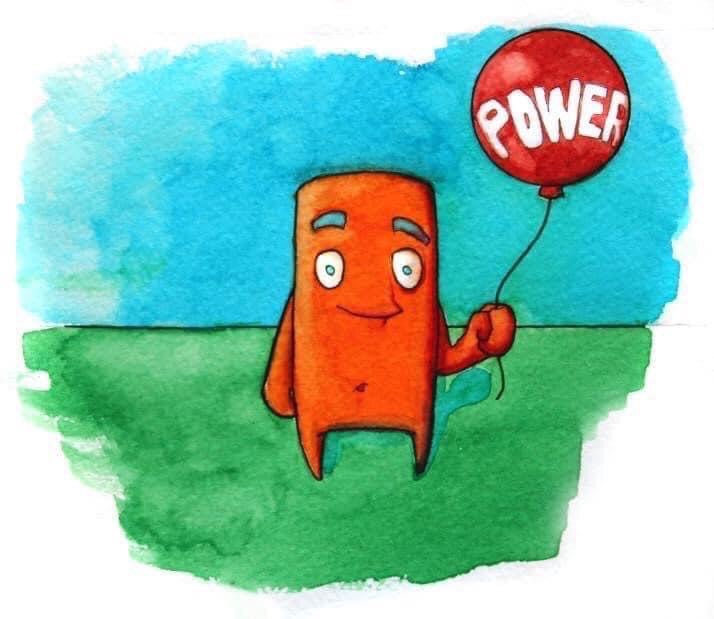
I EMPOWER others and myself when I get out of their way and anticipate that they will speak for themselves. I am empowered when I understand and apply the critical distinction between being responsible TO others but NOT and responsible FOR other adults. I empower others when I allow choices and consequences of choices to run their course. I am empowered when I learn to distinguish between helpful pain, necessary, useful anxiety, what to embrace and what to ignore. I am empowered when I work at healthy, necessary separation, even when in love, and even when having strong soul-ties.
I ENABLE others if I lie to cover, run interference, or protect others, in hopes of keeping people employed, protected, or “close.” I am an enabler if I feel overburdened with mis-placed responsibility or rewarded with mis-placed responsibility for anyone. I am enabling others when I feel like I am living more than ONE life. I am enabling when someone’s choices – both good and bad – feel like my responsibility. I am enabling when I am unable to see myself as a separate being from another, and regard the connection as “oneness” or love, a soul-tie, making the enabling crucial, necessary, and somehow inescapable.
DIFFERENTIATION of Self – a Murray Bowen family systems principle and term – is a life-long internal journey to be my distinct self, while also honoring, enjoying, recognizing the benefits of togetherness with others. It is the challenge every human must face.
If I avoid growth, I will fuse, I will be enmeshed with others, many of whom will appear to welcome the company of equally growth-avoidant people. They may find it very attractive, even “spiritual.” Little will feel as spiritual as a good fuse-buddy.
Enmeshment, or fusion, will make me more likely to place responsibility on others, even blame others, for the way in which my life develops.
Contrarily, to differentiate is to get into the driver’s seat of my life and provide a platform for maximum growth for myself and everyone in my circle of influence.
Differentiation of Self is being aware of not confusing the “I” the “you,” and the “we,” but giving the best of myself AND getting the best for myself from all three. I can be simultaneously intimate and autonomous, I can and will define myself, knowing that if I do not, others will naturally be inclined to fill the vacuum and define who I am for me.
We have repeatedly discussed each of the 8 Bowen Concepts and looked at discussed genograms. I think you have worked very hard. I have tried to demonstrate how the concepts interlock and how they are Bowen’s observations about how families and groups and society “works” and evolves.
In closing today I would like to look at:
ANXIETY (3 kinds) / NON-ANXIOUS PRESENCE
Definitions of Growth and Holiness and Spirituality
We have talked at various depths about 6 of the 8 concepts. Today we shall complete the underlined 2 – my hope is that you will see how they all interlock, a sort of rubik cube where all the parts are all the parts and yet all separate at the same time – I know, I know, not easy to visualize!
* Today’s Scripture passage illustrates Differentiation of Self under the most extreme of conditions. It also illustrates societal emotional process (mass behavior) although that comes later than the portion of reading,
** A family genogram
Your three adult (your NOW) genograms.
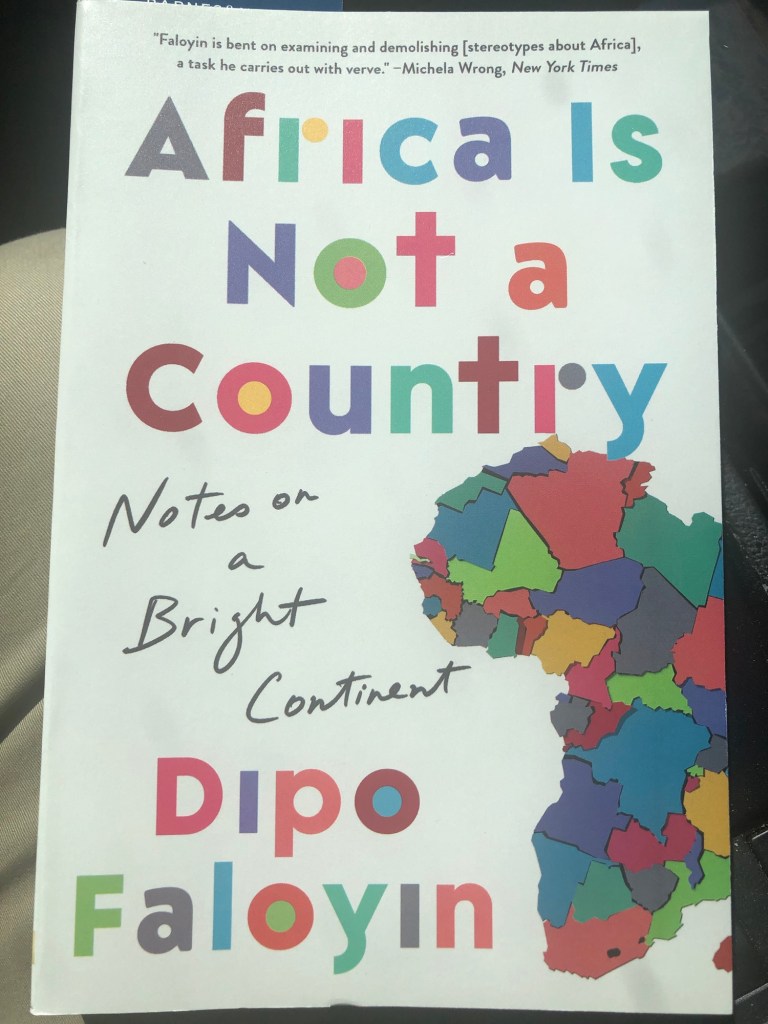
I highly recommend this book — I can hardly put it down.
Group Study: Luke 10:25-37 – an attempt to get a glimpse at how dangerous this parable really is, how brave Jesus was to tell it, and how dangerous it is to water it down to simply mean helping someone who is in distress. It is about far more than that.
Within milliseconds the drawbridge – we each have one – may go down with a hearty welcome or remain up and sealed shut.
There may be Immediate comfort or discomfort, or levels of both.
Suspicions may be endorsed or deleted.
Information and misinformation transmission occurs at a speedy rate.
We read and misread and read and misread each other constantly – all within the backdrop of our unique experiences and training, our hurts, pains, goals, and desires – known and unknown.
The accent (if one party is not from “here”) is loaded with meaning. Clothes (anything unusual); laid-back or dominant stance; voice tone, volume, intonations; levels of energy or lack thereof, are cumulatively processed.
Triggers can be triggered. Stereotypes ignited. Warmth flows, or doesn’t.
The wave, the handshake, the hug, smile or frown, degrees of sincerity or insincerity are downloaded by the “who-are-you” antenna and the “can I trust you” antenna issued to all at birth to be processed with the morass of stored history, experience, memories, good and bad.
Every encounter is a miracle.
And, yes, with all that, we — you and I – are called to be neighbors and to love one another.




 difficultrelationships.com