As well-intentioned as we may be in desiring to avoid conflict and “keep the peace,” we create more problems we must face later by running or playing hide and seek. Then, when we do face matters, we’re not the people we once were.
Avoidance is a quick-change artist! It changes us in ways we are likely to regret.
We cannot solve or improve what we will not face. Denial gets us no place worthy of the journey or the unintended, unwanted destination. Until we gather the courage to look difficult situations directly in the eye and expedite what is necessary to face the difficulties, conflicts will stay as they are and they’re likely to deteriorate.
What we avoid shapes us in ways we may never notice. We modify our habits in order to sustain our denial and avoidance. We change our friendships in order to sustain our patterns. We go out of our way to keep the peace but the new path is one to further avoidance. Our defensive habits defend us in unhealthy and unhelpful ways and make us into people we’d rather not be.
Avoidance of necessary battles creates unintended distance from others — even those we truly love.
There is no worthwhile substitute for early honest approaches to family or business conflicts.
Avoidance makes the heart grow harder.
Ours.
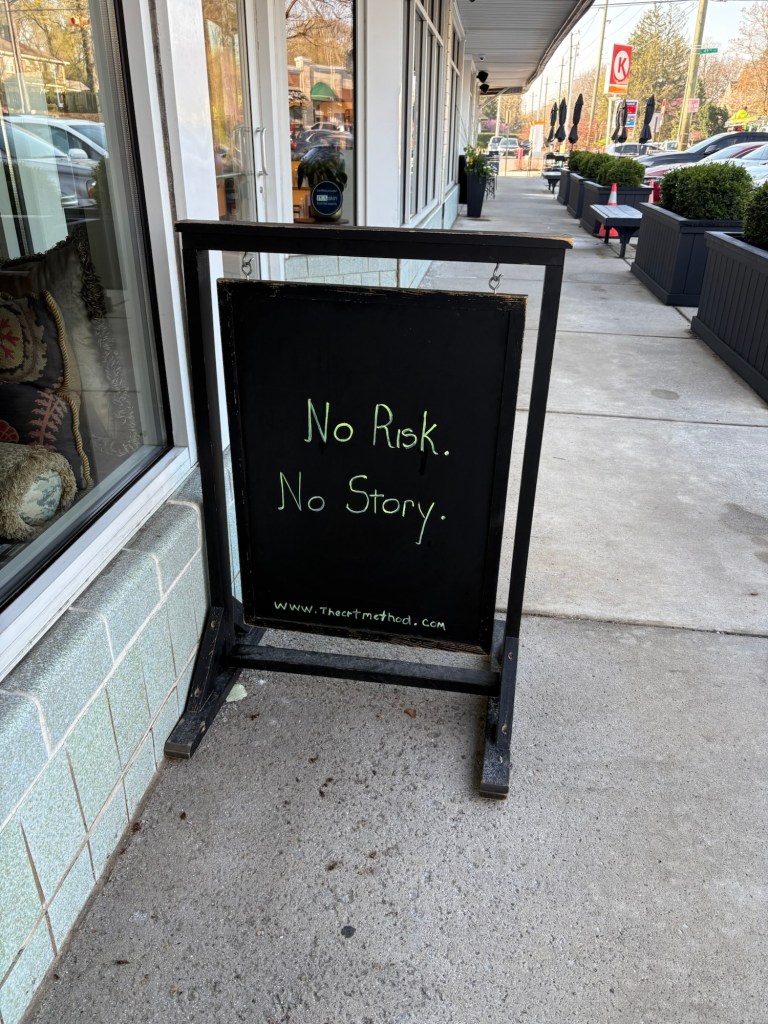
I enjoyed this side-walk art…… 49th and Penn in Meridian Kessler, Indianapolis
I shall strive to speak and teach as one who has indeed much to learn.
In every classroom we are all learners.
I shall strive to listen to people in the class (and out of it) as if I were listening to the mountains.
Mountains reveal their real beauty to the dedicated observer, beauty that’s easily missed by those who offer casual hurried glances or who are themselves caught up in how they look or are dressed or what the student may think of them.
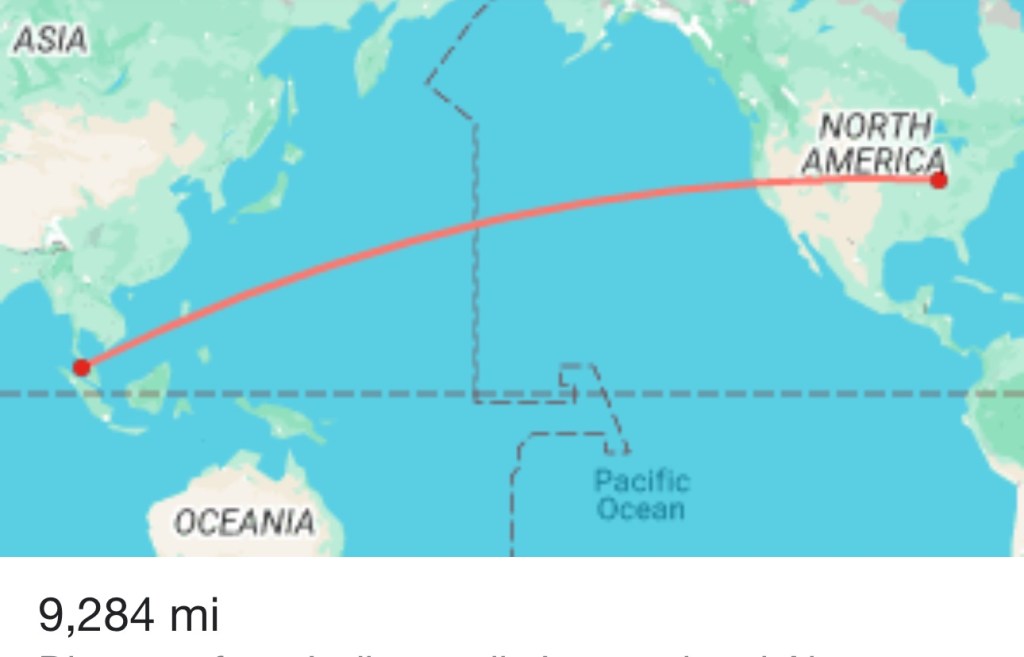
Can there be a greater privilege than jetting to Penang to teach Family Systems?
Real leaders, authentic leaders, as opposed to those who are in it for the illusion of power, love of money or the mirage of status will face multiple paradoxes and do so constantly.
Yes – daily.
It comes with the role – the “role” and not position. Leading is what leaders do.
It’s a function.
I have known “leaders” whose names are boldly declared on a suite’s entry – or the headmaster’s office, or the pastor’s study – but the leader is an under-appreciated someone somewhere whose name is upon nothing, and definitely not on a fat cheque.
Leaders lead, but must also follow.
It’s an art.
Leaders go first, but must also hold back, and know when to go last.
It’s a dance.
Leaders know that leaders are servers, first.
Leaders try to understand those whom they lead, yet cannot let their desire to understand, desire for empathy, derail decisions that are best for the whole, the calling, the gravitas, the goodness of the organization they lead.
Real leaders are aware that if they cannot lead themselves, monitor themselves, hold-onto themselves, they can lead anyone anywhere worth going.
Leaders are self-aware, self-assured, not selfish or self-less.
It’s an inner-tango, often the limbo, seldom a waltz.
And, here’s the kicker – it’s a solitary dance no matter what the music.
“There are two sides to every story” is a common belief.
I am of the opinion that things are usually more layered. It is probably more like 7 or 9 sides to every story.
Motivation – the “inside story” – is similar.
What drives me – or holds me back, demands I succeed, or prefers I don’t – is usually more than one or two identifiable factors. People have mixed, often confusing motivations. Hidden, often unknown internal compelling swells drive people to surf historic and aspirational waves.
Getting to the bottom of motive can be like any journey, beautiful, pleasing, satisfying, sometimes uncomfortably revealing.
Time spent with a wildly successful person who donates to great causes and is appropriately honored for doing so led him to inform that very few people know how angry he really is at extended family who unashamedly live off him.
“I have to,” he said, “I have to support them. My wife knows it makes me angry. Everything is for my (deceased) parents.”
Motives are cloaked, mixed bags, driving from deep within, often yielding incredibly beautiful results.
Considering others, delivering acts of kindness, will likely be of much benefit to people on the receiving end.
But, as a direct result of acts of consideration and kindness, possibilities for more such acts will kick into gear.
How could I use my power, as limited as it may be, to open opportunities for people?
I’m in no particular hurry and so I can move to the end of the line, or at least suggest those who are rushed for time go ahead of me.
I have more than I ever need or use so I will find creative ways to share and spread the favor that’s been mine.
This kind of thinking is good for our minds, hearts, wills, souls, spirits, as elusive as these “places” are that work together within us and define and shape who we are.
Looking for ways to consider others puts our selfishness and entitlement (at least temporarily) on hold while such thinking engages self awareness and service.
It’s healthy thinking.
It’s win-win thinking that even while we are thinking the thinking it realigns our attitudes and restores hope.
Considering others broadens, sharpens personal vision, does its part in renewing the mind. This can only have positive results, except for committed cynics, of whom, sadly, there are many.
The question is answered if I embrace the wealthy and look down on people of limited means.
If I am ignored by a waiter in a restaurant and threaten to withhold a tip or “go to the top” I have decided who I want to be.
If snubbed and I retaliate, my actions answer the question.
If I return evil for evil I have decided.
I am constantly revealing who I want to be.
Who I am is the product of thousands-upon-thousands of choices, and more, compounding, forming into habits that build platforms for actions and shape the lenses through which I see and respond to the world.
I will always be who I have always been when I am unthinking, reactive, and act out of entrenched stereotypes.
Until I am available for something different, acknowledge there may exist new and more gracious ways for me to be, I will be who I have always been.
The question, “what kind of person do I want to be?”, demands I take responsibility for myself and my behavior. It’s not the waiter, the line at the bank, the government, a dysfunctional family or unhappy childhood, or whomever a person may choose to blame.
This most helpful and life-changing question is answered in my every-day routines, my attitudes, and interactions.
Within each person is a holy place called The Self. It is here, in the deepest recesses of who each of us is, that the human spirit, soul, and intellect meld, forming the powerhouse for who each of us is. And, the subtle art of self-care (“subtle” because there is a delicate difference between being self-caring, selfish, and self-serving) is fundamental to good mental, emotional, and relational health.
Appropriate self-care is neither selfish nor self-indulgent. It is not self-centered-ness. It is not self-serving. It is self-awareness. It’s self-monitoring, with the firm understanding that each person is responsible for the condition of his or her self. Each of us is responsible for how we relate to all others (to neither dominate or be dominated). Each of us is responsible, when it comes to all other adults, for maintaining relationships that exemplify mutuality, respect, and equality.
Part of self-care is the enduring understanding that each person has a voice to be respected, a role to be fulfilled, and callings to be pursued. Every person (every Self) requires room to grow, space apart from others, while at the same time requiring meaningful intimacy and connection with others. The healthy Self is simultaneously connected and separate, underscoring again the subtlety required in the art of self-care.
I sometimes hear people of different faiths and denominations proclaiming to be “more spiritual” than others. Here’s a checklist list I hope is helpful.
A so-called “spiritual person”:
-Accepts and respects all people without prejudice. He or she does not allow creed, age, economic status, sexual orientation, or gender, or national heritage to shape his or her opinions or treatment of others.
-Forgives others for real or perceived grievances, yet puts in place necessary measures for future protection.
-Is good with money; understands money and how it works, and yet, at the same time, remains very generous.
-Repairs relationships where repair is possible but remains aware that not all relationships are forever and not all relationship breakdowns can or even can or should be repaired.
-Is free of the manipulation, intimidation, and domination of others and expects others to be similarly free.
-Cleans up quickly – emotionally, psychologically, and in every other way.
-Takes full responsibility for his or her life.
-Has no interest in power and its trappings, yet is invested in empowering others to live as powerfully as possible.
-Addresses conflicts and problems head-on and as efficiently as possible.
Apart from thinking outside of the box (kindly forgive the cliche) my challenge to myself, my sons, and those whom I have the joy of teaching, is to think alone. Have thoughts, plans, aspirations, that are not determined or shaped by commercials, fads, friends, or even by immediate and extended family.
This is a tough but liberating challenge. I encounter people who appear terrified to allow an independent thought to cross their beautiful minds. They give a sideways or backward glance seeking affirmation before the thought is permitted to step out.
The joy of owning their own thoughts, exploring unique possibilities even within their own heads, it appears, will not be theirs.
The fear cripples into conformity.
Seth Godin, speaker and top-selling writer, used the term “sheepwalking” in Tribes to describe mindless following.
I’ve extended his metaphor:
“Sheep-thinking” – borrowing thinking from others for fear of having an original or contrary thought.
“Sheep-talking” – sounding just like everyone else sounds, something particularly noticeable in churches and faith movements.
“Sheep-feeling” – to feel what everyone else feels, not in empathy or solidarity but in being caught up or swept up by the emotion of the moment.
“Sheeping” has become my catchall when it’s happening within me and I hear or see it around me.
Photographed in #Curitiba, %Brazil, with permission,
The soul – enigmatic, yet so incredibly powerful – is what brings to life, and is the essence of life, feuling and energizing an inner-being. We may refer to a young person, even a toddler, as an old soul and we know the toddler is, as many toddlers are, or appears to be a deep thinker. We may say a spritely person of advanced age is a young soul and we ready ourselves for an elderly person with a spring in her step or a youthful inside. Soul is often packaged with a prefix: broken-, angry-, critical-, abandoned-, creative- and all reflect on an inner-condition.
The Soul is the Person housed in flesh and bones; pulsating immortal vitality ferried, decade upon decade, within the mortal corpus, while not limited to it or by it.
May I illustrate? As I write my soul is reaching out to your soul. Hopefully our souls are connecting right now as you read. I have no idea where you are but I assure you, my soul is firmly here with me while simultaneously seeking to reach you and be received and embraced by you.
I hope it does, and is.
It has happened before.
I know it occurred through the thousands of newspaper columns I have had the joy of writing and hearing in return from many readers.
The soul is the spark of light within that lights up the eyes – eyes which will cease to ignite (yours and mine) once the soul is freed from the body, a body that, for whatever reasons, can no longer house or contain it. On this side of life we have named this moment of release, rather unfortunately, death. Perhaps, rather, it’s a new beginning, a refreshing adventure of deeper love and deeper companionship than any of us has ever before known, and it’s not death at all.
That’s my belief.
Installed, divinely imputed and imparted, at the milli-moment of conception, itself also learning, the soul begins immediately, within the womb, to impart strength and resilience into the made-from-dust flesh-and-bone outer form. Soul-power sweeps into the body, bringing with it a life-time’s worth of the capacity for love, a life-time’s worth of the desire for survival, a life-time’s worth of joy in human connection. It imparts to the physical being, an enduring and innate urge for worship, and a compelling desire to impact the larger environment and leave behind a beautiful and substantial legacy.
You and I are not limited to our physical bodies and I do not mean some outer-body experience, well, not exactly. It is much much more than about my soul reaching out to yours.
When we write, paint, sculpt, love and rear (raise) our children, adore our grandchildren, and enjoy great-grandchildren; when we arrange flowers, build skyscrapers, plant vegetables, light birthday candles for 3-year-olds, leave fortunes to find cancer’s cure, we are gathering the best of our pasts and throwing our souls into the future.
Generations yet unborn will know our departed souls:
They will know who we are from the stories told by those whom we have loved.
They will know who we are from what we have written.
They will see what we have painted, sculpted.
Our handiwork and heartfelt work, our generous love and nurturing gentleness will live on, revealing the power of our souls long after the fuel of our inner-being has escaped our aging, dust-to-dust, ashes-to-ashes bodies, the whereabouts of our remains marked with a stone or a plaque, and our souls have returned to the Place from whence they came.
So? Write it (whatever it is). Record it (whatever it is). Say it in poetry, with colorful paints on paper or on canvas. Write a book, gather photographs, place them in an album. Dance it (whatever it is). Sing it. Declare it, while you can.
You’re seeking a soul-mate in a great-great-grandson yet unborn.
When he is old enough to understand what you have created for him – your name signed at the end of a love letter or your family name on a high-rise research hospital – he will appreciate it and you will be generational soul-mates.
You may have noticed a certain keenness and sharpness within your soul, a sharpness and keenness that may far outpace the keenness and strength of your body, even your intellect, mind, memory. Perhaps your soul is more aware than you may think and knows it is teetering on inevitable escape, in a year, or three, or more. This is why this is as good a time as any to dance, to sing, to declare, and to do so while you can, however you can, ……. when you can.
Your soul is intricately invested in beauty and in your life’s legacy.
Reach for the diary, the photograph album, the compendium of letters your grandparents or great uncle or favorite aunt left to you and allow those precious souls – now adventuring or resting paradise – to speak to you anew across generations, and then, via you, let them, too, continue to live in the generations yet to come.
We are holding hands, not across a mere oceans, not across mere time zones, but with the generations, past and future, and so, let’s Do Like David did – DLDD – and let everything that has breath (life, soul, energy) Praise the Lord (Psalm 150:6).
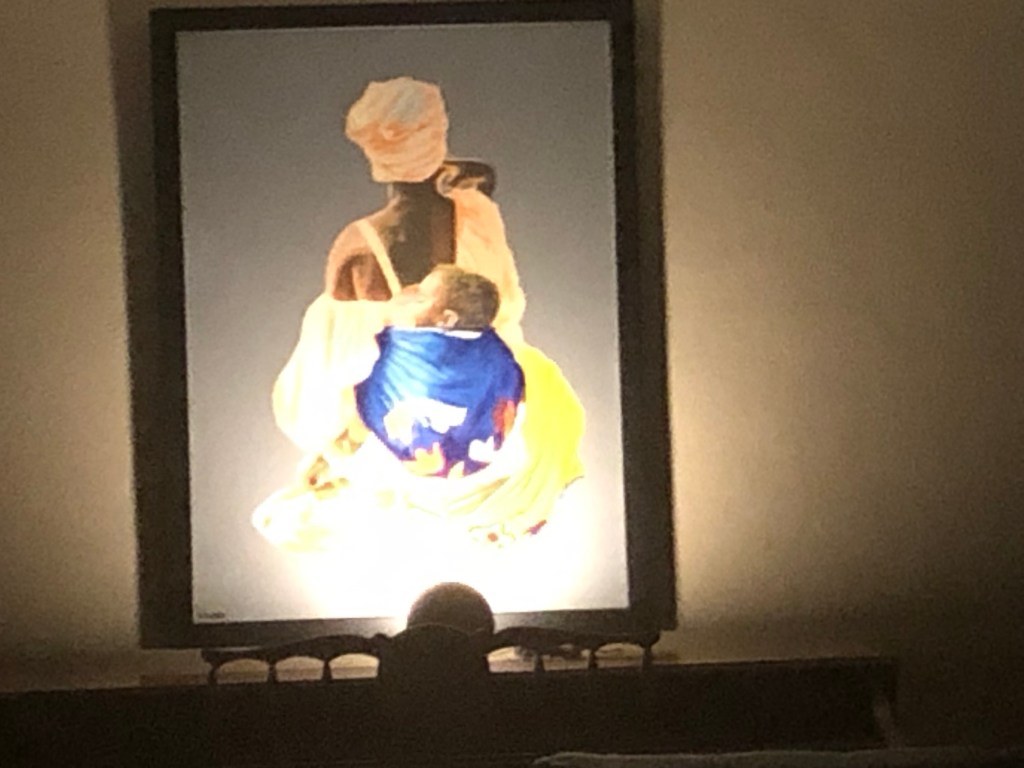
One of my favorite paintings — I keep it illuminated 24/7/365 to remind me ever of the women who made me a dad — and sent my soul soaring.




 difficultrelationships.com