Archive for ‘Education’

November 17, 2010

Indications your family is on a healthy trajectory…

by Rod Smith

It is counter-intuitive, I know......

It's the journey, remember...

A healthy family – and I will remind you that no person or family is healthy all of the time (that’s unhealthy!) – sets itself on broad and healthy goals that include being:

1. Unpredictable, spontaneous, flexible; allowing each person and each generation, to be different from the former generations.
2. Forgiving (reflective, gracious) – allowing little or no time for the gathering of injustices.
3. Funny – often self-deprecating.
4. Hospitable – welcoming of strangers and guests.
5. Generous – eager to share with persons in need.
6. Open – willing and able to embrace difficult issues.
7. Diverse – welcoming of persons of all shades, creeds, and ages.
8. Free – creative, honest, displaying growing integrity.

November 11, 2010

Thanks for the place I hold in your newspaper…..

by Rod Smith

Every now and again a real hold-in-your-hands Mercury newspaper finds its way to Indianapolis and I eagerly turn the pages. I read the news and marvel at the prices you are paying for stuff. As has been always so, I LOVE “The Idler” (it was my first real reading when I was a child) and then I see this column.

Seeing it. Reading it, evokes a few responses I’d like to divulge:

I’m humbled and honored. To occupy this prime position is a great honor, one that I do not take lightly.

I am thrilled to bring my perspective on families, relationships, therapy, and mental health to you.

I am delighted to be repeatedly informed of You and Me sightings on refrigerator doors, school bulletin boards, hospital notice boards, and in Church newsletters. What a delight.

But the real joy surges when a reader writes of how You and Me helped change his life or when a woman writes that she is learning to stand up for herself, speak her mind, declare he boundaries, I am reminded of the real reason I love writing You and Me.

Next week I will be write from two wonderful European cities: Amsterdam and Geneva – where I will be speaking for Youth With A Mission (YWAM).

September 1, 2010

Acts of love

by Rod Smith

1. Refusing to lie for you.
2. Allowing the consequences of your actions to hold you accountable.
3. Allowing you to fail.
4. Getting out of your way when you are angry so you may deal with whatever is upsetting you.
5. Refusing to rescue you from your moodiness.
6. Telling you the truth as I see it.
7. Resisting the urge to let your self-made issues pull me down.
8. Keeping my phone, Email, messages private, unless I choose to share.
9. Allowing myself to be happy and fulfilled even if you are not.
10. Supporting, loving you, while allowing my uniqueness (and your uniqueness) to blossom.

August 24, 2010

It’s all connected – even across the generations

by Rod Smith

Open yourself to growth

I have met parents concerned about the degree of conflict experienced with their children, who then, during the conversation, will openly confess they have no time for a mother or father-in-law, their own parent, or are out of sorts with an adult sibling. When I gently point out that these conflicts are possibly connected, fueling each other, I am met with disbelief.

“You’re saying that my fights with my son over his homework (or irresponsibility, or drinking) are connected to the fact that my father-in-law is an impossible man to whom I have refused to talk for the past five years?”

Indeed.

“You’re saying that my ridiculously controlling mother who walks in here like a movie director telling us all where to stand and what to say is connected to my 12-year-old daughter mouthing off to me however she likes.”

Indeed.

When the adult takes the challenge of embracing the “impossible” father-in-law, or standing up to the “controlling” mother, the adult is taking personal responsibility for his or her pivotal relationships.

A parent who takes full responsibility for himself or herself when it comes to relating to members of their preceding generation, will see less anxious, less reactive, less rebellious behavior in the generation that follows.

Yes. It is all indeed connected.

July 23, 2010

Are you a healthy member of your community (family, church, business, not for profit)?

by Rod Smith

Community is costly - if it is to be authentic - it's more than sharing a few meals and tea!

Community life, as in “we are starting an ‘Acts 2 thing’ at our church” tends to be is idealized. I wonder how long the Acts community lasted without severe conflict? We tend to hear about intentional communities when they are doing really well, or when they break up, or break away or split from the founding organization.

Have you noticed stories about communities always seem to portray groups that are be better, stronger, and wiser, or more blessed than the one you are in? Either that, or you read the account of what has occurred in some Christian community and fall on your knees with thanksgiving that whatever happened occurred somewhere else.

Leadership: It is not the leader’s (or group of leaders’) responsibility to make community more real, stronger, more fun, or more authentic, although the community will naturally place pressure on the leaders to do so. More Scrabble, more Pictionary, pitch-in dinners, and more communication will not do it. There is this

Lead.... and follow....

Take full responsibility only for your own life.....

tenaciously held belief that if leaders would just make it possible for people to “hang out” more, share more meals, play more games, and do more work projects then “more” community would result. A leader’s fundamental responsibility is to take care of his / her own growth and maturity – and try to lessen his or her focus on the people or the team or the “thing” he or she is trying to grow. It’s got to grow on its own or it won’t grow at all.

Community emerges when individuals authentically invest in diverse relationships, enjoy healthy personal boundaries, discuss (over an extended time) what they want as individuals and as a group, and mutually invest in the process of achieving what it is they say they want. There are no perfect communities. There are growing people in places where people are learning together about and growing into supportive and vibrant community.

Twelve signs of a healthy community

1. There is focused chaos. The organism is filled with activity as all pursue shared and individual goals with varying degrees of interest and intensity.
2. There are regular, often intense, conflicts over resources like rooms, cars, busses, schedules, and washing machines, washing powder, driers, refrigerators, kitchens, and copy machines.
3. There are frequent tussles over new vs. old, loud vs. soft, younger vs. older, traditional vs. contemporary, “experienced” vs. “inexperienced” and over what does or does not constitute healthy, respectful fun.
4. There are leaders, but it can be hard to tell exactly who they are. Leadership in a healthy community is not about age, experience or hierarchy, but about who understands what is needed of a particular leadership role, and at a particular time. In other words, the recognized leaders may “disappear” when person better equipped at a particular task steps up. Real leaders, also being good followers, can be led when necessary and so the community might sometimes forget whom the appointed leaders are. The same applies to teachers and teaching.
5. There are regular, natural celebrations that occur in spite of a leader’s desires to inspire such celebrations. In a healthy community a leader will often feel out of control, especially when it comes to celebrations.
6. There are times when it seems impossible to get all the key people together at one time, and so the persons in leadership of different groups and projects continually embrace compromise and approximation. People are not punished for their unavailability but supported for their continued work toward the greater goals of the community. In healthy communities there is on focus on punishment or banishment.
7. The weak members of a healthy community are embraced, accepted and challenged, but they do not set (or sabotage) the agenda even though they will quite naturally attempt to do so. Strength and vision set the agenda and the weak are challenged to grow and mature and heal and become strong rather than they are encouraged to hold back the communities natural growth.
8. Like faith, hope and love, negotiation, conflict and competition are always with us, and the greatest of these is approximation.
9. Flexibility is highly valued internal quality in all the members of the community. Flexibility comes from within and cannot be forced upon another.
10. Empathy and consensus are nice ideals, and they are encouraged, but they do not “carry the day.” Empathy has it legitimate place but tends, in my opinion, to be over-rated. I believe challenge is more useful than is empathy, and while healthy communities are also to be empathic communities, empathy is not the reason for its existence. Consensus is often the cop-out (“we just couldn’t come to a reasonable consensus – so we tabled the decision again”) when leaders lack nerve.
11. In healthy communities, all people’s views and voices are valued, but of course, not all are given equal power or weight. Weight (power) to an idea or a decision is given by how much responsibility a person holds and what their investment is in the organization.
12. In a healthy community, responsibility and authority go hand-in-hand.

Community killers

1. Gossip.
2. Dark alliances (hurtful inside jokes, negative labeling, boo-hoo-ing, mumble-mumbling).
3. Random (and specific) acts resulting from minimal or chronic anxiety.
4. Specific (and random) acts of sabotage.
5. Rigid rules about amoral issues, rituals, or programs.
6. Being “nicer than God” by accepting damaging or malicious behavior because we want to be
nice or inclusive.
7. Triangle-ing (cornering, trapping, coercing).
8. Speaking out of two sides of the same mouth.
9. Confusing worry with love and love with worry.
10. Confusing tolerance (putting up with someone) with love.
11. Under-functioning (by abdicating your role so someone else fulfills it) or by over-functioning (by doing someone’s job or occupying someone’s role to be sure it gets done).
12. Interfering in the relationships of others.
13. Insisting others embrace you point of view.
14. Being unwilling or unable to relate to people who do not agree with you.

Pseudo-community is exhausting. Authentic community is hard work can be very rewarding, even exhilarating. Do your part in being a healthy member of your community – or move on to a place where you can. This does not necessarily mean leaving. Reassessing your role and function in your community will bring you greater health.

Community Enhancers

1. Focus on your own growth and maturity.
2. Get out of the way of others and their conflicts – get out of the crossfire and give them
the joy of dealing with their own stuff.
3. For the INTIMATES – increase your AUTONOMY.
4. For the AUTONOMOUS – increase your INTIMACY.
5. Become the most GENEROUS person you know.
6. Say “yes” more than “no”.
7. Create a blueprint for your life.

July 20, 2010

He’s (She’s) divorced! How can I know he’s (she’s) ready to date…..

by Rod Smith

How to know it’s “a go” when dating someone who is divorced…

1. His/her divorce has been finalized (that means completed) for more than a year.
2. He/she takes appropriate responsibility for his or her part in the breakdown of the former marriage.
3. He/she wants a healthy spiritual, emotional, and intellectual relationship with a diverse range of people before becoming intimately involved with any one person.

It MUST get rough to get better

It will be a rough ride if red flags are ignored.....

4. He/she is involved in his/her children’s lives and willingly, generously, and punctually pays child support.
5. He/she places a high priority on rearing his/her own children, while being respectful toward your children and your relationship with them.
6. He/she can conduct meaningful conversations with the former spouse about matters pertaining to the children. That the divorce is REAL is clear – so there are no intimate, or “throw-back” conversations.
7. He/she is very respectful of marriage, sex, the opposite sex, despite the previous breakdown.
8. He/she remains non-anxious by your occasional encounters with his/her former spouse or persons associated with the former marriage.
9. He/she remains non-anxious by your occasional encounters with your former spouse or persons associated with your former marriage.
10. He/she has deep regard for the time and patience required to establish new relationships and is willing allow necessary time for intimacy to properly develop.

July 1, 2010

Our daughter is very fearful…..

by Rod Smith

“Our daughter (10) is riddled with fear. She won’t sleep in her room, get up in the night without one of us getting up with her, or even enter her own room after dark to get her clothes for the next morning. She is able to speak very openly and graphically about her fears. Please shed some light on how we can handle this.”

No blame or shame...

Your child’s fears probably don’t originate with your child. This sounds like family anxiety passed from generation to generation and your daughter is the recipient of unresolved generational anxieties. An effective family therapist will serve you well. He or she will give everyone in the family (as many people and generations as your can gather for a meeting) assignments to explore the family’s unresolved complexities. Reconnecting with each other, being willing to sit down as a tribe will increase the likelihood of calming everyone in the family’s cumulative anxiety, even if at first it appears to make it worse.

Encourage your daughter to write her immediate and long-term goals. Encourage her to plan small steps of growth like being willing to sleep in her own room one or two nights a week. Do not punish her for her worries and concerns – they did not begin with her.

May 23, 2010

How to fight with those you love….

by Rod Smith

“Rules of engagement” for conflict between friends and lovers and members of the family:

1. We fight to love each other more powerfully while understanding that conflict is sometimes necessary to remove or negotiate our way around natural restrictions that come in the way of all love.

2. We fight to better understand each other and because some deeply seated beliefs and positions are only clarified through benign conflict.

3. We do not fight to hurt, damage, or destroy but rather to clarify thinking, to define ourselves more clearly, and therefore, to see each other more fully.

4. When we fight we do not bring old issues into the fray, triangle others onto our side, or hide behind Scripture or other sacred writing.

5. When we fight we do not use stereotypes about men or women, race, creed, culture, or nationality.

6. We put a time limit on our conflicts, agreeing that the necessary conflict will not pervade every part of our relationship. Troubles in parts of our relationship do not need to contaminate the whole.

7. When we fight we will always give each other the benefit of the doubt, the offer of complete forgiveness, and an open dialogue free of cynicism, sarcasms, and retribution.

8. We will agree to disagree, respect our differences, and embrace our similarities. (From Gail S. Gibbons)

April 21, 2010

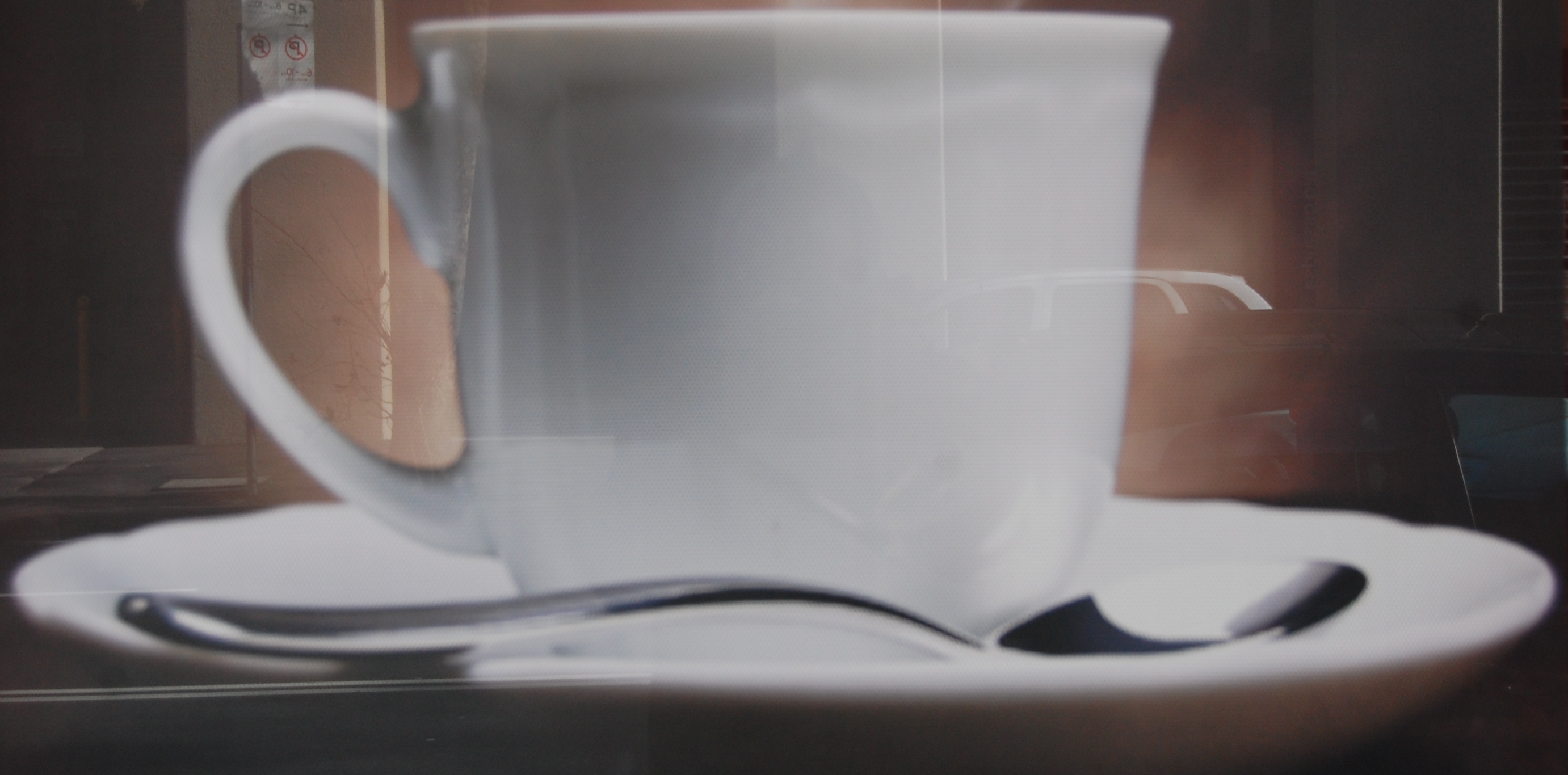
How to make a cup of tea

by Rod Smith

The primary error of tea (hot tea that is) etiquette is to regard it as simply a drink. It is not. It is a way of life. It is an act of celebration. When served using good china, sipped with an appropriate mystical gaze and a small, appreciative twist of the lip (extended “pinky” is optional), tea drinking is the salute of an unseen army pledging allegiance to all things refined.

To prepare the perfect cup of tea, boil the kettle, and, while the water edges toward boiling point, place teacups and saucers at the ready. Unless you are drastically ill, on your very last legs, please do not use a Styrofoam cup, a coffee mug, or even a teacup without the saucer. Such lackadaisical tea drinking should be kept in utmost privacy, never displayed in public.

Place a sugar bowl (the teaspoons nestled next to the cup and on the saucer) and milk jug around the centerpiece teapot and wait, suspended with expectation.

At the first piercing shrill of the boiling kettle, which, by the way, is music to the ears of long-time tea-drinkers, agility of mind and body are required. Much is at stake in this very brief, urgent moment. From the kettle, tip half a cup of boiling water into the teapot. Swill it around until the teapot is warm, then, in one swift movement toward the sink, rid the warmed pot of the water. The teapot yet warm, lift the teabags from their container (using one bag for each guest) and toss them into the hot water.

As the tea draws or steeps, quiet chatter might be deemed appropriate within some factions of the tea-drinking community, although I was taught to always maintain awe-filled silence.

It is at this point that milk (a mere drop) is poured into each cup. Entire populations argue that the tea precedes the milk into the cup, but I hope it is clear on which side of this chasm I sit. A little tea is poured into the cups until each has been visited perhaps three times until they are seven-eighths full. This circular motion to fill each cup with each visit ensures all participants are served a cup of tea that is equally strong. As free, somewhat uninhibited chatter naturally flows among guests, offer guests sugar. Once again, know there are factions who consider the addition of both milk and sugar an act of severe sacrilege, but many people are often very wrong about much.

Finally, an offer of tea should not be refused. If you really do not want tea, the reply to “Would you care for a cup of tea?” is “That would be really lovely thanks; I will participate later.”

April 15, 2010

Lies

by Rod Smith

I have told quite a few lies in my life. One from a long time ago was to my fifth grade teacher. Her name was Mrs. Hornsby. She definitely had horns. When I studied her face I could see them. If she was calm, they boiled and bubbled beneath the red blotches of her wide forehead. When she was angry, which was nearly always, they’d burst accusingly from her face. One day, she was really angry with me. After that, I didn’t matter to her. Most people who knew Mrs. Hornsby will know what I mean. Some will run to her rescue and say she had a good heart and say she was the best teacher that they ever had and all that kind of nonsense. I stand by my description. Mrs. Hornsby was a nasty, horned, witch.

Every day for weeks, she gave us tiresome lists of rules about how and when to use her favorite thing: a dipping pen. We had to chant in unison while standing next to our desks, following her hand motions as she danced trance-like with a giant dipping pen only she could see:

“Dip gently in the ink well,
Press down below the line,
Long curves lightly lifting,
DIPPING PENS are very fine.

Dip gently in the ink well
Lightly press to dot the ‘i,’
Cross your ‘t’s with little effort,
DIPPING PENS are very fine.”

After the slow and deliberate chant we had to take a vow, almost drawing blood that we would never use ballpoint pens in our composition books.

“Never, ever, ever!” as we all nodded our heads in a silent wide-eyed chorus of fear.

Hornsby said, with her face twisted in disdain, ballpoint pens were messy, even evil. She said only common people used them. Her voice flattened every time she saw a ballpoint pen on a desk. Even when she said, “dipping-pen” I could tell she love them. It brought a lilt to her voice. This passion for dipping pens confused me. Dipping pens smudged far more easily than was ever possible with ballpoint pens. Ballpoint pens were neater and much more practical as far as I could tell. I preferred ballpoint pens. But that’s the way she was—with a fixed opinion about everything, she alone, knew everything. To every question, she alone had the correct and complete answer. If we ever had the correct answer, she added to it to prove no ten-year-old could quite get it. The final word always remained securely in the hands of Mrs. Know-It-All-Hornsby-Witch.

We couldn’t relax around her even for a moment. It was “forbidden.” To “keep us on our toes,” questions flew from her in all directions about any of the subjects she taught us. She would stand back after a volley of fire and look at us with contentment when she confirmed our ignorance. Often she’d expect us to repeat our promises about where to write the date and when to leave a line and how to rule off our work. She taught these rules as if lives would be lost on distant battlefields if one of us ever did something different from what she commanded.

One day when it came time to do my homework, I used a ballpoint pen in my composition book. When I handed in my book after walking to the front of the classroom, I slipped my book to the bottom of the pile. I did this so she would get to it when she was at home rather than discover my crime while I was within reach. My whole afternoon was ruined as the ramifications of my transgression plagued me. I imagined her opening my book and seeing the worst possible thing any boy could do. I could see her staring at my work in utter disbelief. She would shriek in anger and goose-step up and down her house. She would break valued possessions as she ranted and raved about the evil child who would dare use a ballpoint pen in his composition book.

I don’t know what she did at home when she read my composition book. I do know that the next day, while the whole class was working quietly she shrilled, “Rodney Ernest Smith, come to my table!” and startled the whole building. She might as well have used the megaphone the school had for fire drill. Everyone looked up from his or her work, passers-by peered in at the windows and all eyes were fixed upon me taking the long, dreaded, slow march towards her table.

“Did you use a dipping pen in your composition book?”

“Yes.”

She held the book as far from her eyes as her arms would allow. She looked through her thick glasses. She looked over her thick glasses. She screwed up her face. She pushed her back against her chair. The chair screeched on the wooden floor. She got even further from the book. She rose from her chair and her shoulders turned towards me. She doubled in size and volume:

“Did you use a dipping pen in your composition book?”

“Yes.”

I shifted my weight side to side. My knees always looked so small in my ridiculous short school pants. My ears were too large. I hated my shaved haircut. I hated the striped tie that was always too short with a fat and bulging lopsided knot. It crunched my collar around my skinny neck. My protruding eyes were red and inflamed. They declared my lie. My eyes couldn’t focus on her. Tears watered down my cheeks. I longed for small, dry and clear eyes. I longed for a reasonable haircut like every other boy and wished I had a small neat knot in my tie. Heat swirled about my face. My legs wanted to climb each other. I wanted to urinate. I corkscrewed. I made my body rigid. I swayed nervously. With her face twisting and in a voiceless whisper, I heard the sounds of dry air scraping against the wall of her throat. It wheezed through her flaring nostrils. My throat dried instantly:

“Did you use a dipping pen in your composition book?”

“Yes,” I gasped with no intent to mimic her.

She didn’t ever blink. She had no eyelids. She huffed and blew up her cheeks. Blue protruding veins pushed her horns together on her forehead until the big red, glowing, wet and slimy horns pointed at me. I felt the walls move. Windows shattered. Traffic halted. Phone lines jammed. Bridges collapsed. Airports closed. Governments tumbled. Oceans drained.

She looked again in my direction, this time gazing ten feet over my head. She breathed deeply. Held it. Sighed, long and slow. She swallowed from the middle of her chest to lubricate her convulsing throat before she asked again:

“Did you use a dipping pen in your composition book?”

“Yes.”

She stood up, turned to face the door, held my book with both hands, stretched out her arms, leaned her body forward, thrust her head back and was gone down the hallway. Swish!

Pressure eased. The world economy settled. The class twitter began with quiet squeaks and giggles. I thought of the air force, the infantry and the navy gearing up for war against a neighboring nation. I thought of urgent peace treaties and dignitaries deployed to foreign countries because I used a ballpoint pen in my composition book.

Distant rumblings returned the class to silence and the barometer burst into a million pieces. She flew through the door and howled, with the evil echoes of an eerie cave:

“Did you use a dipping pen in your composition book?”

“Yes.”

“Sit down.”

I did. So did she.

My crime was never referred to again. To Mrs. Hornsby, I was the worst liar in the world. I became invisible to her and not deserving of her efforts.

While I was on the way out of the school grounds and somewhere between the last of the red brick building s and the first of the trees which lined the long road to the school gate, I discovered I had learned a new way of walking. I moved forcefully forward cuffing my black shoes purposefully against the curb with each step marring the polished finish. I pulled the knot in my tie from my neck so the tie dangled untidily at my second shirt button. I pulled my brown school cap, with its noble badge and Latin idiom, off-center. Then, casually, in front of many other boys in their gleaming white shirts and green and brown striped ties and caps displayed proudly on their heads, and girls in their white dresses and green trimmed hats, as if I had been saying it for many years, for the very first time in my whole life, out loud, fearlessly, I said F#@K!