August 20, 2024

Spirituality

by Rod Smith

Spirituality – The Mercury – Wednesday

Your “spirituality” is not measured by how much you (or I) read the Holy Scriptures, sing hymns, pray, clap your hands, run around a sanctuary with a purple flag, dance to contemporary religious music or reject those who do.

It’s not determined by how much you visit your place of worship or how much money you donate to its causes.

It’s not affirmed by your title (if you have one) or the ornate design of your robe (if you wear one) or the position you hold in the hierarchy of your faith tradition (if you’re part of one).

But, it is affirmed by your willingness to take responsibility for your life, your choices, and the good use of your skills and talents.

A biopsy of the validity and integrity of our faith and spirituality is revealed in how we treat people, especially loved-ones and strangers; how we love our enemies, offer hospitality, respect, regard, love those who reject our beliefs.

Do you clean up after yourself?

Are you wisely generous to a fault?

Do you love those who are different from you, whose lives might be in direct conflict with what you believe?

Do you love others by listening?

If you take full responsibility for yourself, become extraordinarily generous with what you have, embrace diversity, and love others by listening, you will fast-forward your “spiritual” growth.

Actually, you will put it on supercharge.

It’s not your title, the reach of your authority, how many of your memes “go viral” or the crowds who respect and adore you.

Rather, it’s how you respect and love and respond to those who don’t.


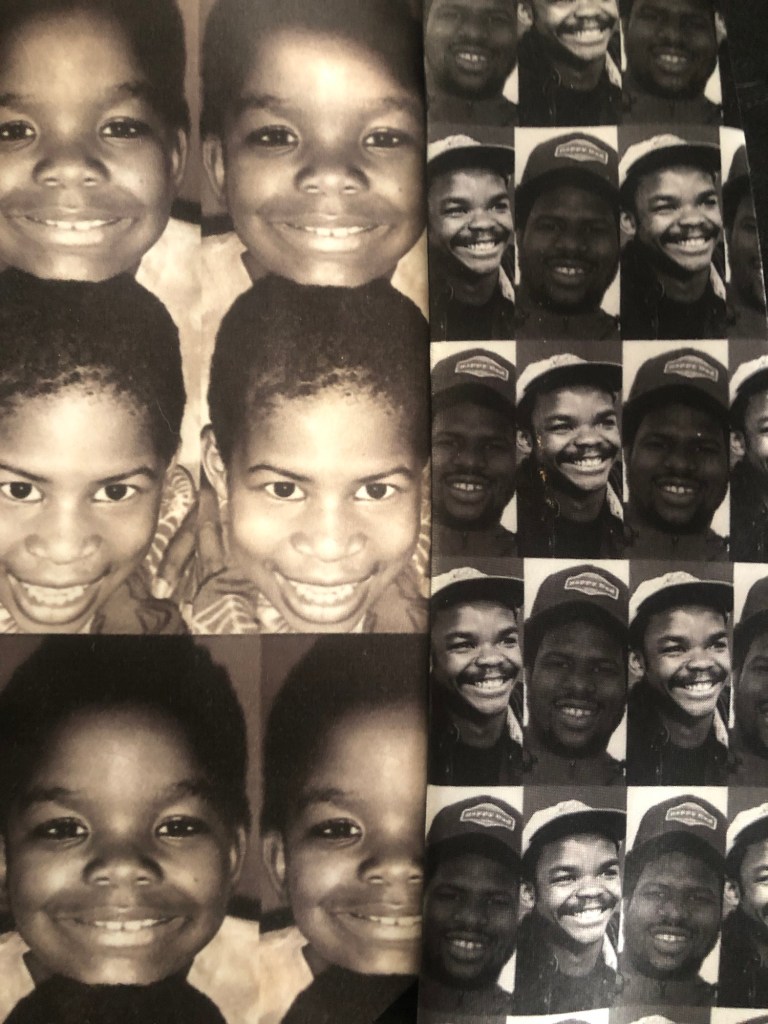
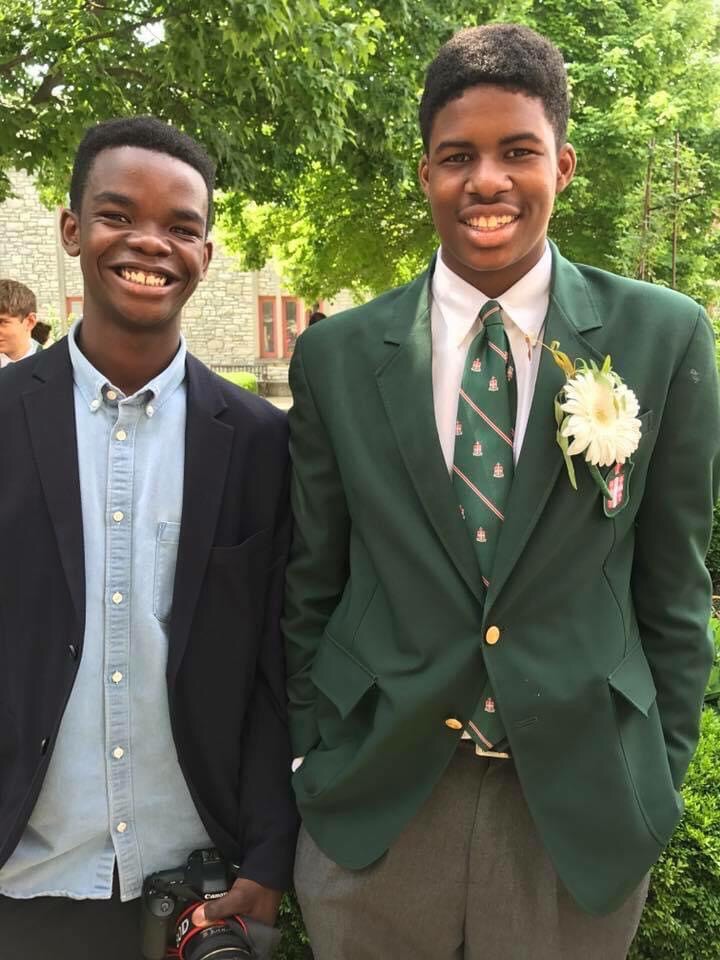
And now the boy is a man, engaged for marriage……. #graceupongrace

August 18, 2024

A note to daughters

by Rod Smith

Parents please teach your daughters:

1. You never have to shrink, soft-pedal, or sell yourself short, in order to secure a loving, lasting relationship. Any potential partner that is threatened by the power of your personality or the breadth of your talent is not worth your time or investment. Move on. 

2. You do not have to give up your dreams, talents, desires, and skills in exchange for a loving relationship. The potential partner who is man enough to love you will amplify your dreams, talents, and skills. He will do nothing at all to try and silence you. This is to be especially noted in religious circles – flee communities that silence women.

3. You do not have to hide your imperfections or pretend they do not exist. The person who is man enough to respect and love you will not expect you to be perfect and will seldom notice your shortcomings. A loving man will regard your imperfections as assets. 

4. You will benefit from having Zero Tolerance for people with less than perfect manners. If a potential partner swears at people, if he’s short-tempered, if he’s unkind to strangers – move on. There are myriads of men who are pure-mouthed, patient, and kind. Why would you spend a minute longer with one who is not?

A gift from my son Nate
August 15, 2024

Good weekends take planning

by Rod Smith

Have a good weekend – there are several things you and I can do that will ensure we have a good weekend.

Reach out with affirmation to a family member who does not routinely hear from you. Recall good memories you share. Talk of the joy you knew together. This act of connecting will leave you with positive feelings and you will have done something good for another.

Give time or treasure to a loved cause or to a person or family in need. While the act will benefit the recipient it will also have positive kickbacks for you. You will have done something good and you will enjoy the knowledge that your actions have resulted in a story that will be told and retold.

Even if you do not consider yourself a writer, put pencil to paper and write a sentence or two about the beautiful things that have happened in your life, then, let it flow. Without concern (yet) about punctuation or grammar, get out of the way and let the sentences multiply and grow into a paragraph or three. You will soon experience the benefits of bringing to the surface of your thinking the beauty that has been yours.   

Very early morning landing in New York – from Delhi
August 14, 2024

Planned Parenthood

by Rod Smith

“What parenting advice could you offer my wife and me,” said the delighted dad, “my son is 16 months young.”

Above all, love your wife with joy, freedom and courage. This will reduce and deflect loads of the anxiety that naturally tries to derail all childhoods.

Lavish your baby, then young child, then pre-teen and teenager with affirmation and affection. No matter what you and your wife face, when you come home from work, or he returns after time away, or when he wakes in the morning or in the middle of the night — baby or teenager — be glad to see him, and, say so. Verbally express the joys your son brings you, to each other, and to him.

Teach him to talk Joy.

Regard the ages 5, 8, 12, 14 and 16 as transition ages. At these times discuss with him your parental plans (your mutually agreed upon plans you’ve made as parents) to do less and less for him, while expecting more and more from him. Yes, even at 5 — point out that he can make his own, age-appropriate decisions. Include him in planning and establishing his growing independence. Plan your parenting so that by his eighteenth year your parenting roles are accomplished and he has all it takes to be an interdependent young adult. 

Hold in high regard the beautiful idea that you parent (the verb) for his sake and not yours.

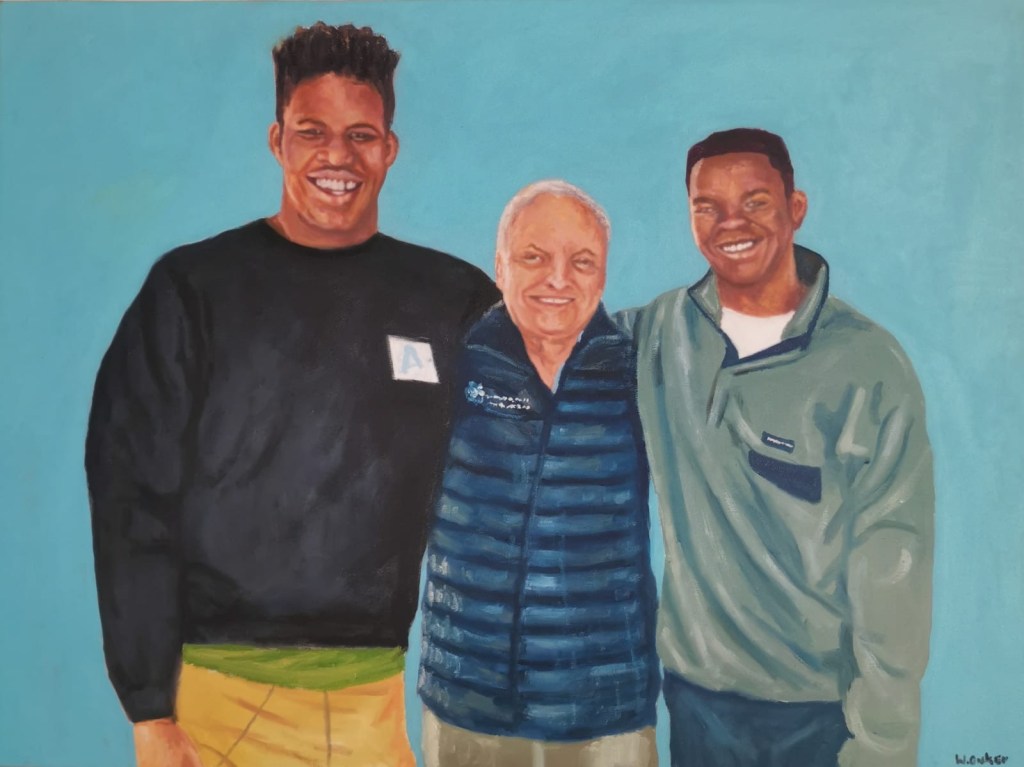
Our new painting will go up in my home-office this week….. from Friday this week, both of my adult sons are launched and living independently of me. Oh the joy; oh the niggling pain. #graceupongrace
August 10, 2024

If God so loved the world….. I might want to learn more about it

by Rod Smith

My head is full of experiences where I’ve been subjected to the innocence random people frequently display for the country of my birth (South Africa) and, when I’m abroad, my country of residence (the USA).

Regarding the land of my birth it may go something like — and both occurred — “Who helps you write good English?” and “Do you know my exchange student who was also white and from Africa?” It was once suggested I claim to be African to garner sympathy. Regarding the USA, it may be “can you see Hawaii from New York City?” or “do you see movie stars every day?”

Having spent ten days in India I more than doubly confess my ignorance regarding this vast sub-continent, its billions of people, thousands of languages, beautiful expressions of cultures that would take multiple decades to read about, explore in order  to begin to understand and appreciate.

But, in ten days, it’s clear and tangible that the people I’ve met and gotten to know, as well as one can in a few days, are kind, gentle, generous. They are people who are deeply interested in the world beyond their borders. They are committed to loving their elders and respectful of the accomplishments of prior generations. 

I’ve got so, so much to learn.

August 9, 2024

Love in action — listening

by Rod Smith

There is nothing like a good listener for the soul. 

A good listener determines there will be no distractions — no phones, text checking, no dings or app notifications or glances to see the time — and will offer complete and uninterrupted and undiluted attention to the speaker. 

A good listener listens, says very very little except may offer occasional brief words of encouragement like “tell me more” or “go back to the beginning if you want” or “go into as much detail as you think will be helpful” or “could you tell me that again so it’s clearer for me.”

The good listener knows listening and any attempts at multitasking — even the most subtle — distract the speaker and obliterate listening. A good listener gets all the potential impediments to listening out of the way before sitting down to listen. 

The good listener knows a listener’s inner-noise —- things the listener is refusing to hear or address from within — will emerge and sabotage attempts at hearing others and so addresses unresolved personal matters as much as possible so others may encounter a clear-headed listener.

The good listener does not formulate replies or develop counterpoints while listening and does not one-up the speaker with the listener’s own experiences whether they may appear to the listener to be helpful or not. 

A good listener sees, hears, knows, acknowledges the speaker by listening — the most powerful and tangible expression of love.

August 6, 2024

Look them in the eyes

by Rod Smith

A parable developed with a therapy client….

“Chased,” he said, “I’m being chased, haunted by my past, my past of multiple addictions, — they follow me.” 

“Like dogs?” I asked, “I have wild dogs too.”

“No,” he said, “large lions, and a tiger, coming from behind, waiting to pounce, attack. To scorn, belittle me.”

“How do you protect yourself?” I asked.

“I outrun them; get ahead. Do heroic things to prove them wrong. But, they follow,  catch up, then I have to do it all again. What about you and the wild dogs?” he asked.

“I tried to ignore them,” I told him, “but they don’t like that. They  squeal, bark louder. I tried to get ahead, outrun them as you do with your pursuers, but that’s temporary relief.”

“I know,” he confessed. 

“I made a decision that made a big difference,” I said, “when I was at my most desperate when they were chasing me through dark hallways of my mind, barking at my heels, I stopped, slowly turned, faced them. Told them they were right, looked them in the eyes, gave them attention — then, they withdrew, got quiet, behaved as disciplined guide dogs. Now, they do their jobs.” 

“Can I train my lion? My tiger?” he asked.

“You’ll never know,” I said, “until you look them in the eyes.”

Take back your power
August 2, 2024

Teachers

by Rod Smith

My teachers have never left me. 

They hover in my awareness and continue their holy work, despite the decades that separate me from their classrooms, lecture theaters, labs, fields, gyms, and studies. 

Almost all were highly motivated men and women who loved their jobs and regarded it as a calling. 

I hear them yet, beckoning me to adopt high standards for others and for myself.

I find it incredible that the teacher with the parrot – Mrs. Bradman – who dogged my third or fourth year of primary school and a psychology professor more than a decade later, and my family therapy professors, a lifetime later and nations apart, and Mr. Morey, Mr. Graham, Mrs. Hornsby, and Miss Chadwick – I could go on – cancan in my frontal lobe at the oddest moments.

Someone is going to tell me there is medication for my condition but I think not, I regard it a testimony to the power afforded men and women who are teachers and I know I could write extensively about each person named. 

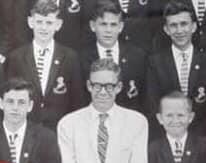
My English teacher, Richard Morey, at Northlands, now Northwood School, was the finest English teacher a boy could want. 

Mr. Morey made us write anything (“Heads down, Gentlemen, fill a page, write about anything you want. If don’t have anything to write about write about that.”) for the first five to seven minutes of almost every lesson. This daily exercise showed me I could try my hand at writing. Mr. Morey said splitting infinitives, ending a sentence with a preposition, using “less” when you mean “fewer,” misplacing an apostrophe, were as close to criminal acts as using “I” when it should be “me.” He made us recite “Quisque Sibi Verus” from our blazer badge and said the day may come when we’d fully understand its meaning. He debated whether Shakespear’s King Lear was “a man more sinned against than sinning” and argued about which of Lear’s two daughters was most evil. He talked of people he’d met in literature – Pip and Miss Havisham and Ralph and Piggy and Jem and Scout, to name but a few – as if they were long-time neighbors.

That’s an odd thing to observe when you’re 15. 

It was for me.  

I did think it a little odd that poetry could make a grown man cry. 

When Morey exposed the class to “Walking Away” by Cecil Day Lewis he could never have known how much the poem would shape my thinking and parenting. 

“I have had worse partings,” writes Lewis, referring to watching his son cross the rugby field and walk alone toward his boarding school education, “but none that so gnaws at my mind still,” and later continues, “how selfhood begins with walking away, and love is proved in the letting go.”

This sentiment steered me at each crucial departure in my sons’ lives. 

The lines reverberated when I released them to kindergarten, signed release forms for youth retreats, watched them walk away through an airport terminal, one to an adventure in Australia, the other to Europe.

Neither son is a “hesitant figure, eddying away” as Lewis describes his boy. Rather, by grace alone they are portraits of courage and determination – but there remains pain to be endured as they walk away. 

It’s mine, not theirs.

I bet you can recall word-for-word what an inspiring teacher did for you: One very ordinary day, I was about 14, Mr. Morey summoned me to his table. He took a minute portion of an essay I had written, about three lines, and circled it. Pointing with his red pen, he said, “Do more of this. Not, that,” the “that” referring to the other three pages.

I treasured the red circle. 

Built a career on it.

Mr. Morey
August 2, 2024

The OpenHand

by Rod Smith

You open Your Hand and satisfy the desires of every living thing. PSALM 145: 16

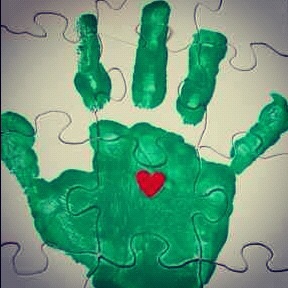
Open your hand using all your strength. Stretch your fingers. Allow the lines on your palm to feel as though they might tear apart. Study the contours, colors, ridges and valleys, joints, dents and spaces. Push, pull, and rub. Move your fingers through their paces: together, apart, back, forward, curved, strained and relaxed, cooperative yet unique. Feel the texture and every curve. Touch the crevices. Spread your hand further, turn it at the wrist, examine and compare patterns from every angle. Here are pieces of yourself you might never have studied. 

Your hands are your constant companions. They have met the needs of others, pioneered romantic moments and worn rings of commitment. They are the way your heart leaves fingerprints, the eyes at the end of your arms. Hands reflect a person’s being and are the front line agents of your life. If eyes are said to be the windows of a soul, hands express the soul. 

Hold other people with your hand thoroughly open. Allow them to know the warmth and welcome of your hand, investigate its curves and benefit from its scars. Invite others to follow the lines into the fabric of your life and see the risks you have taken and the adventures that are yours. Allow them to wrestle and rest, search, see and speak. Let them stay; let them go, but let them find your hand always open.

The Open Hand of friendship, at its widest span, is most rewarding, most challenging and most painful, for it enduringly acknowledges the freedom others have while choosing not to close upon, turn on, coerce, or manipulate others. In such friendships, expectations and disappointments become minimal and the reward is freedom. As others determine a unique pace within your open hand, they will see freedom and possibly embrace their own with excitement and pleasure.

Openhanded people do not attempt to “fix” others, change, or control others even for their own good. Rather, each person is given freedom to learn about life in his own way. Openhanded people, instead, express kindly and truthfully what they think and feel, when asked, knowing even in the asking, others might not be interested or willing to learn. 

The Open Hand is not naive. It is willing to trust, while understanding and accepting that no person is all good or all bad, and that all behavior has meaning. The Open Hand is convinced it cannot change others; it cannot see or think or feel or believe or love or see for others, but trusts people to know what is good themselves. It will not strong-arm, pursue or even attempt to convince others because it has little investment in being right, winning or competing. Here is offered a core-freedom of the deepest and most profound nature: allowing others to live without guilt, shame and expectation.

Further, the Open Hand offers oneself freedom that extends to one’s memories, ambitions, failures and successes. This allows for growth of enduring intimacy, greater personal responsibility, authentic autonomy, and the possibility of meaningful relationships with others. 

In the discovery of a closed hand, even at the end of your own arm, do not try to pry it open. Be gentle. Allow it to test the risky waters of freedom. As it is accustomed to being closed and fist-like, it will not be easily or forcefully opened. So let the closed-handed do their own releasing and trusting, little by little, and in their own time and manner. 

When openhanded people meet, lives connect in trust, freedom and communion. Community is set in motion. Creativity is encouraged. Mutual support is freely given. Risks are shared. Lives are wrapped in the safety of shared adventure and individual endeavor all at the same time.

Copyright ©️ — Rod Smith, MSMFT, 1997

July 29, 2024

I hate being in the middle….

by Rod Smith

“I hate being in the middle. My son tells me stuff about his wife’s family. My neighbor tells me things about the people over the road (also our friends but she doesn’t know we are friends) and even my grandchild tells me things going on in his family that I have to keep quiet about. I feel like I am living on egg-shells every time I meet people who are close to me.” 

If you hate being in the middle then get out of it.

You’re only there because you have cooperated with the gossip that has flowed your way. All you had to say to your neighbor is “you do know you are talking about people who are my  friends.” 

Quietly declare to people who speak to you about those not present that such talk is not something you choose to do. 

Yes, you can even tell your grandchild you’d prefer he talk with his parents about what is going on in his family.

If you do this with your grandchild (unless he is in an intolerable circumstance or something illegal is occurring) you will be teaching him the valuable art of going to the source or addressing his issues with those empowered to do something about the circumstances.

Gossip never forms “special bonds” – it is always unhealthy for all involved.