This arrived on my phone from my younger son’s girlfriend this morning;

This arrived on my phone from my younger son’s girlfriend this morning;
What kind of person do you want to be?
May this question help you to plan your day. I confess, it’s constantly in the back of my mind with almost all my daily interactions.
You’ve seen him demanding to see the boss, insisting on getting his way, banging fists on the counter. He becomes aggressive and threatening when things don’t go his way. You can be this person if you want. It all depends on what kind of person you want to be.
You’ve heard and seen her, raising her voice at a waiter in a fine restaurant because something wasn’t up to her standards. She plays dirty and attempts to humiliate helpers to land a free meal. You can be this way if you want. Everything depends on who you want to be.
You’ve seen him, kind and patient under stress, generous and openhearted, even when facing difficulties. You can be this way if you want. It’s always, and there are no exceptions, up to you.
You’ve seen her, helping the poor, serving the sick, making meals for neighbors, all-the-while undergoing her own stresses, suffering beneath her own burdens and loads. She serves while she herself deserves to be served. You can be this way if you want. Everything pivots on what kind of person you want to be.
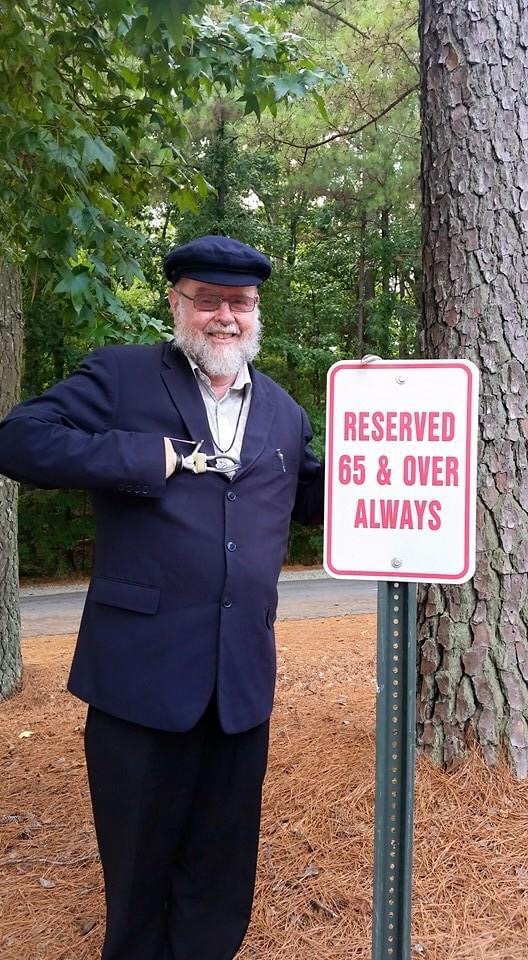
Genuine kindness expressed today, among us all –– colleagues at the office, the teachers in the staff room, doctors and nurses who pass each other running the hallways of a busy hospital –– wherever we find ourselves at work or at play, expressed kindness will be helpful to all.
Expressing kindness will change your mood and enhance your day.
Small acts of kindness might not change the world, but they will enhance our individual experiences of work, and add joy and meaning to the most repetitive of tasks.
Kindness in a nutshell:
Don’t gossip, or spread rumors, or tell tales about others. Don’t speak negatively about other people. Don’t lie. Try not to ignore people, or regard others as a means to getting your way — no one wants to be your stepping stone.
Be generous, and wide-hearted, open-handed. Offer accurate compliments to those who might least expect to hear kind words. Tip well, even if the service or food is not up to scratch. How you tip is about you, not the service or food.
Most of all, and this is a well-known secret to great fulfillment, do your job — whatever it is — very well. It is a powerful way to be kind both to yourself and to your boss!

I saw Santa at the Children’s Museum with a feather of a child pleading her case. They were locked in discussion, a confessional of sorts, as she entered into detail of her every Christmas wish. Hands, eyes, and all of her face enticed Santa closer lest he miss a detail living so clearly in her head.
“Oh, you want, oh, I see it. Why yes, of course. Perfectly,” Santa said, his voice tapering off into her ear, “I will see what I can do about that.”
Then she nestled into his side, her shoulders comfortably enveloped by his plush red suit as if to declare her mission accomplished. He was a perfect depiction of everything I imagined him to be and the sight easily immersed me in the voices and music of my own Christmases past.
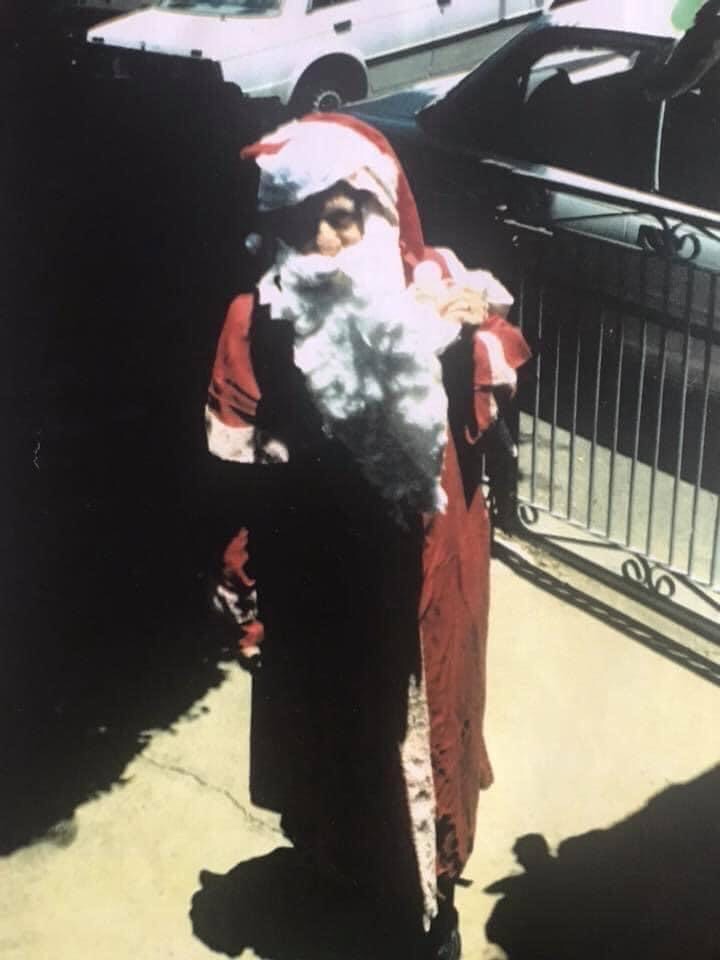
Santa came all year round to our home. I’d look through the window in April or mid-August and Santa would be strolling up the driveway on his return from visits to every home on the street. He’d be wearing dad’s shoes and one of his ties underneath the tatty red coat, but I knew better than to expose his identity. I wanted to believe in Santa and he in turn needed me to believe. Such faith had rewards. I knew better than to dash my own hopes. I wasn’t ready to lose my trust in Santa for anyone and certainly not by my own hand.
He couldn’t resist visits to the whole neighborhood and would drop in from time to time and inspire children toward good behavior, perfect obedience at school, and remind them to count their blessings one by one. At every appearance in our home we’d sing “The Little Boy that Santa Clause Forgot” and we’d all have to cry. He insisted on it.
The lines “he didn’t have a daddy” and “went home to play with last year’s broken toys” really got us going.
It was clear he sang to all the children of the world who’d had to skip childhood and who had known poverty; children who’s fathers had gone to war or whose fathers or mothers had fled their families.
Donning the suit, surprising the children, was our Santa’s way of making the world right.
His visits created intrigue in the neighborhood, and to every child he repeated the promise that this Christmas, no child on this street would be forgotten. As far as I could tell none ever was.
The last Christmas we had together was in August of 1994. We were riding in a car and in the curves of Bluff Road when spontaneously he began to sing, “Christmas comes but once a year.”
The car became a holy place as I heard once more of the boy who “wrote a note to Santa for some soldiers and a drum and it broke his little heart to find Santa hadn’t come.”
The tears we both shed required no encouragement for we both somehow knew this would be the last time he’d sing this nostalgic hymn.
Now this old song is top of my list of Christmas songs.
The melody emerges randomly in my awareness, most particularly when faced with children who are in need. I have had to silence it at all times of the year.
It was the little girl’s confidence, Santa’s grace, and the loving parents looking from the side that caught my attention last week. She touched his flowing beard and told him her every Christmas dream and I found myself listing my own requests with childlike zeal.
It gave me renewed hope that you and I, the real Santas of the world, could deliver a more hopeful tomorrow for “those little girls and boys that Santa Claus forgot.”
(First published December 9, 2000 in the Indianapolis Star)
Next week, aiming particularity for Thursday, millions of people in the United States will travel “home” to a family meal called Thanksgiving. It’s almost a given that, after turkey and mashed potatoes and all the “fixings” and before the football (American “Football” of course) on TV people will go around the table and express their gratitude for everything from the nation as a whole to grandma for fixing her trademark green beans.
I confess, it is no easy holiday for an immigrant given that it’s my sons and me and no extended family, but we have grown accustomed to it and are always included in Nolan Smith’s (former Beachwood and Durban North person) family for Thanksgiving.
I have my list ready to go:
I am grateful for my sons and the men they have become. They are honest and very hard working. They know how to conduct themselves in all contexts and I am often moved to tears when others tell me about some of the things they know about my sons.
I am grateful to my readers around the world. I never imagined that The Mercury would become the international platform that it has become for me.
I am grateful for my extended family around the world who do such an amazing job of keeping in touch. Not a week goes by without a vibrant back and forth involving several continents.
I am grateful for the speaking opportunities afforded me. It’s a demonstration of Beauty for Ashes and Grace-upon-Grace if ever I knew one.
I am grateful to be an American and to have dual citizenship with South Africa. Really, a man can love two nations. I know it is possible because I do.
There is no need to twist God’s Arm in ardent prayer seeking God’s Presence.
Hold God’s Hand, instead.
It’s nearer than you may think.
Right there, there’s God’s Hand.
See it?
It’s at the end of the arm of the woman begging at the traffic light. You and I and thousands of others drive off trying hard not to see her and when we do, many of us blame her for her addiction and say things like – in our heads of course – I am not paying for her next pack of cigarettes and I bet she has a cell phone.
Did you see God wave at the traffic light?
God’s Hand is the hand of the unshaved man holding the begging cup and grasping his homeless sign.
You and I and thousands of others drive off remembering just how hard we work for our money and think – to ourselves of course – why can’t he work hard for his money and then you and I remembered how we pulled ourselves up by our own bootstraps and why can’t he.
Then – to ourselves of course – we blamed the government.
What are they doing about this begging problem?
When we hold the hand of the lonely, the poor, the disenfranchised, the frightened, we are holding God’s Hand.
God’s Hand is near.

If you have been a caregiver to your spouse, a parent, friend, for any length of time and now that person has died, you may expect:
Take heart. Like a child, who, arms outstretched, turns and turns until dizzy, falls to the ground, then rises to walk and appears to have had too much to drink, in the act of walking, balance and order gradually returns.
You will reorient after your double loss: a loved one and an integral role and find your feet.

How will we (you and I)……?
When it is all said and done very few, if anyone, will know about my deepest regrets.
Will they know yours? Will it matter if they do or not? What have you done with yours?
My regrets run deep, run long.
Some have taken me a lifetime of attempts at repair, some with a degree of success, others with no indications of any success.
It has not been without trying.
I have looked at myself in the mirror on hundreds, if not thousands of occasions, taken stock, took responsibility for the ways in which I hurt others.
I have given much time to assess the seasons of my life when indifference was a way of life, seasons when it looked to others as if I was winning, achieving, succeeding, when I alone knew full well I was not.
If I am remembered at all – think of all the people who really are forgotten despite significant achievements – I hope it is for being a man of hope.
Perhaps closest to my heart is the hope that my sons will continue to be the fine men they are today: trustworthy, kind, and respectful; men who give up their seats for their elders, men who look people in the eye when they engage, men who listen more than they speak.
How will you be remembered?
What is closest to your heart?
Let me know.

You are pushing me.
I feel it.
When I tell you you are going to tell me it is out of love or concern.
There are better ways to love me than emotional arm-wrestling.
You want me to respond to my circumstances as you may respond to pressures you are facing.
I am not you.
You are not me.
We are not the same.
We each have our own way of handling matters, from matters insignificant to matters of deep consequence.
This is not a rejection of you or of your love or an insult. It is a tribute to both of us.
I have no problem with you being unlike me.
Could you afford me the same freedom and privilege?
Very different life experiences shaped us each and delivered us to our unique challenges. It is only to be expected that our responses will be quite different.
Even what we perceive as threats are not the same. What seems to be a threat to you lands on me as a challenge. It works the other way around, too.
Let’s agree to love each other so powerfully, that we learn the fine art of leaving each other alone so our friendship may truly flourish.
I am here for you.
We can discuss anything you want and I will do it without exerting any pressure whatsoever.
Promise.
Please, return the favor.

No one feels healthy, and on top of the world, all the time.
Emotional ebbs and flows are normal.
Good days and bad days come with being human.
Give yourself a break.
If you are “down” for days, if you are unwilling to get out of bed, unwilling to engage in the regular and “normal” joys and tasks common to all people: like eating, bathing or showering, wearing clean clothing, getting ready for the day, the routines required of the general population, it may be time to seek help.
If you are overly tired and unmotivated, despite having had a good deal of sleep and find it tough to identify any joyfulness in any of your surroundings or activities or relationships, it may be time to seek help. If you sometimes feel plagued by dark thoughts, scary ideas you can’t seem to shed or shake – speak up to someone who can assist you to find help.
Emotional ebbs and flows are common but when the ebbs significantly outnumber the flows, it’s probably time to let someone know you are bordering on desperate or are already desperate.
While you think and feel you’re trapped in an emotional or relational cul-de-sac of desperation, you probably don’t have to remain there.
Reach out.
There are people willing, qualified, waiting to listen.

 difficultrelationships.com