You might not be able to move mountains, but you can move part of one for someone, even if it is handful of rocks and stones and a shovel or two of hindrances.
Might not be able to turn water into wine, but you can offer sustaining food and beverage to someone who is in desperate need of recognition and who also may be hungry.
You cannot raise the dead but you can bring enthusiasm and enliven someone’s day with your call, your card, your good wishes, your loving thoughts expressed directly to him or her.
You probably cannot restore hearing to the deaf or sight to the blind, but you are able to listen even to the most desperate attempt to communicate with you, and you are able to see the person who might never have been truly seen.
You may not feel overly empowered to make a significant difference in your immediate environment, but you can forgive those who have hurt you and set free those whom you believe may owe you something, and makes a huge difference in their lives.
You’re probably not set up to bring peace to conflicting world powers but you are capable of living in peace with your neighbors.
It’s no secret that many men avoid deeper intimacy with other men. I suggest it would be helpful for men to form intentional support “MWE groups” or “Men Without Egos.”
While “WWW” for “Women Without Walls” is not original, I did come up with MWE.
Here are some guidelines to establish such a group:
1. Meet for a decided period of time, say monthly for 10 months, and for two hours. Begin by phoning and inviting 9 or 10 men you already somewhat know. This act makes you the facilitator.
2. Try to create a group that is diverse with age, race, and belief. I’d suggest every group have at least two members who are from different generations in the same family.
3. You may not discuss your career, achievements, sport, or politics.
4. Read a book together and talk about it for at least 15 minutes of each meeting. I’d suggest you begin with David Scharch’s Passionate Marriage which will challenge every aspect of every relationship you have.
5. Laugh a lot, cry sometimes, listen more than you talk, and call each other between meetings, and never discuss someone not present (not even your wife).
As well-intentioned as we may be in desiring to avoid conflict and “keep the peace,” we create more problems we must face later by running or playing hide and seek. Then, when we do face matters, we’re not the people we once were.
Avoidance is a quick-change artist! It changes us in ways we are likely to regret.
We cannot solve or improve what we will not face. Denial gets us no place worthy of the journey or the unintended, unwanted destination. Until we gather the courage to look difficult situations directly in the eye and expedite what is necessary to face the difficulties, conflicts will stay as they are and they’re likely to deteriorate.
What we avoid shapes us in ways we may never notice. We modify our habits in order to sustain our denial and avoidance. We change our friendships in order to sustain our patterns. We go out of our way to keep the peace but the new path is one to further avoidance. Our defensive habits defend us in unhealthy and unhelpful ways and make us into people we’d rather not be.
Avoidance of necessary battles creates unintended distance from others — even those we truly love.
There is no worthwhile substitute for early honest approaches to family or business conflicts.
Avoidance makes the heart grow harder.
Ours.
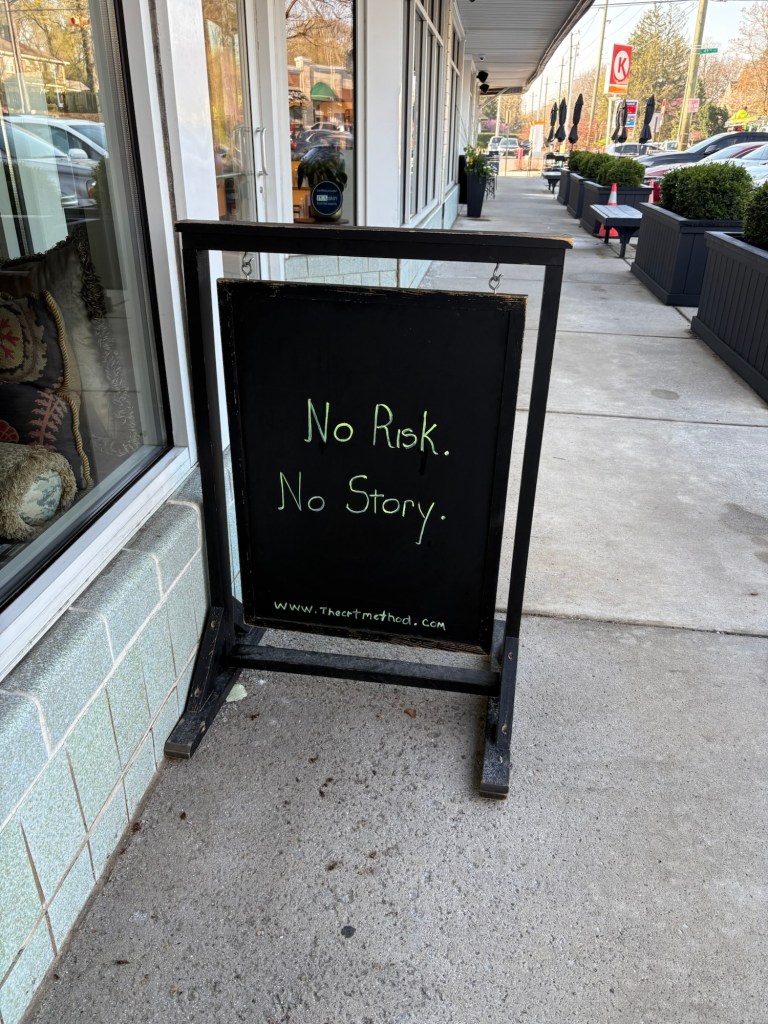
I enjoyed this side-walk art…… 49th and Penn in Meridian Kessler, Indianapolis
I shall strive to speak and teach as one who has indeed much to learn.
In every classroom we are all learners.
I shall strive to listen to people in the class (and out of it) as if I were listening to the mountains.
Mountains reveal their real beauty to the dedicated observer, beauty that’s easily missed by those who offer casual hurried glances or who are themselves caught up in how they look or are dressed or what the student may think of them.
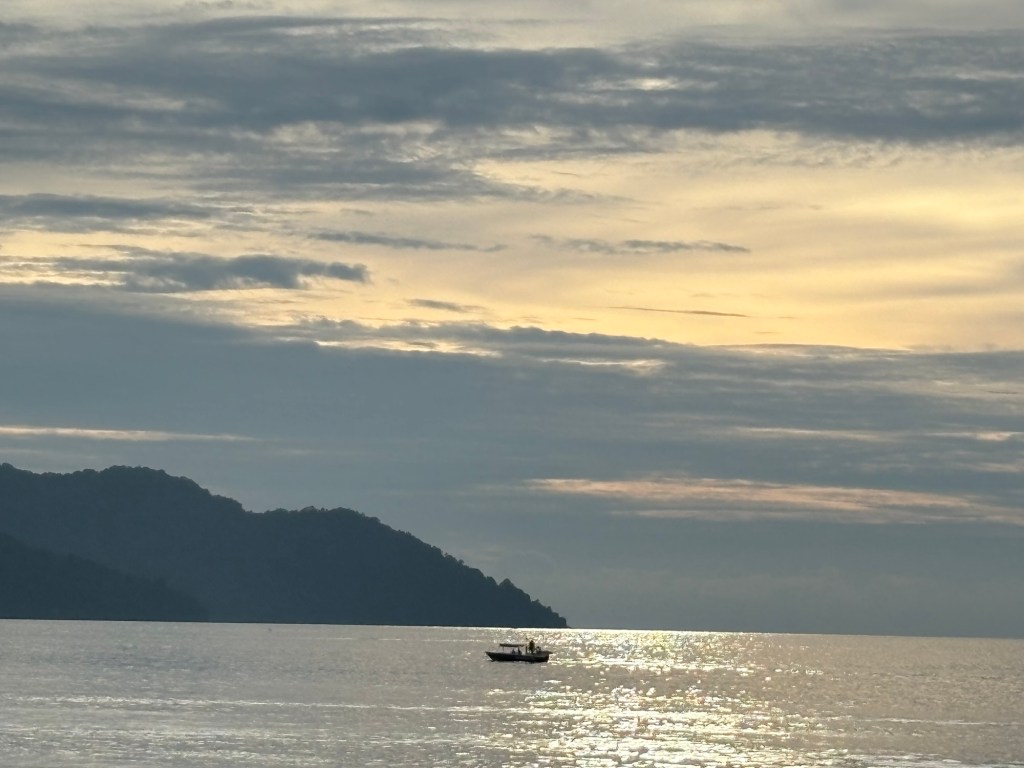
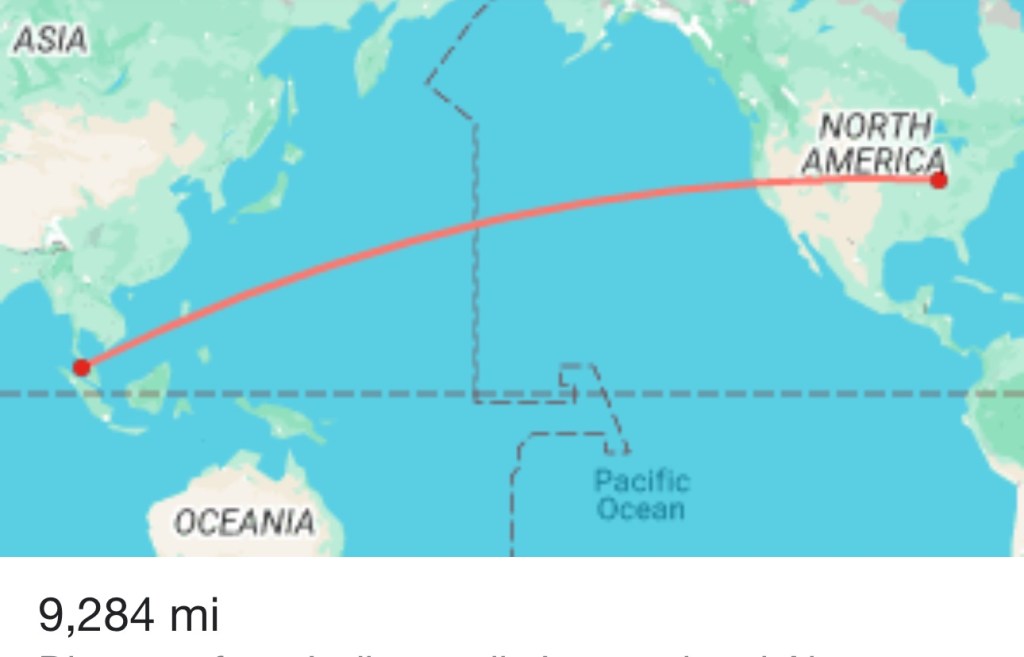
Can there be a greater privilege than jetting to Penang to teach Family Systems?
What is office or church or family gossip really about?
Why do people do it?
I am not referring to the content, the messy details.
Some people “enjoy” or feel the need and cannot resist speaking about others in degrading terms.
The gossiper does this because he or she feels uncomfortable with you – yes, the one to whom he or she unloads the gossip.
Sharing juicy details about an absent person gives the speaker a sense of importance, a feel of being in on something with you, closer to you than you really are, a false sense of intimacy. You have been verbally trapped in a toxic, harmful manner.
You are “in the middle” and the gossiper has the sense that you two are close and the victim is on the “outside.”
Gossip is never glue. Gossip never leads to deeper friendships.
Want out?
Try:
“Have you talked directly to him about what you are telling me?”
“Why are you talking to me about someone who is not here to speak for herself?”
“What’s wrong with our friendship that you think I will join you in gossip?”
“If you can talk this way about her when she’s not here, I wonder how you talk about me when I am not around?”
Do you have a pencil and paper and an hour or two to do yourself a huge favor?
Mental health, getting healthier, than you already may be will require determined effort. Here are some questions to consider and things worth doing to stimulate yourself toward greater or higher functioning than you currently enjoy….
What do you want? What kind of person do you want to be? What are you going to do with your life?
Take a few months to answer the 3 above questions in written form.
Review your responses and update it regularly. Things change, we change, life has quite a different look as we go from stage to stage and age to age.
Become an expert in your behavior – not your wife’s or husband’s or children’s, or in-laws’ – and focus solely upon improving your level of functioning within your many areas of involvement and influence.
Try to get “above” all of your important networks and entanglements in order to think them through.
Try to act upon your insights so you have greater freedom in each of your relationships.
As you are thinking things through, take no sides with or against anyone. Have no victims to blame and create no heroes.
If you do all this with a few pieces of lined paper you will ultimately participate in writing yourself towards greater wellness.
A note to single or solo parents OR things i am still learning…..
Your children, from babies and all the way up to off to university or marriage, want you to be fearless or at least honest about not being fearless at times when you are not.
Your children have little or no interest in what brought you to this joyful privilege of single or solo parenting and certainly will reap no benefit if you are carrying guilt or shame for what brought you to this honored place.
Your children are going to regard what you have as normal, as the way life is supposed to be, so get comfortable with your family as it is and play it to the full.
Your children are capable of much but not of meeting your needs for adult companionship or easing your loneliness and to expect that from your children is more than unfair.
You children want to feel safe and have fun and engage in story-telling and lots of play and lots of eye contact with you. Hold off on all manner of screen-sitting for as long as possible.
Your children are not a means to complete your unfinished or unhappy childhood. This is their turn and parenting is the ultimate adult challenge.
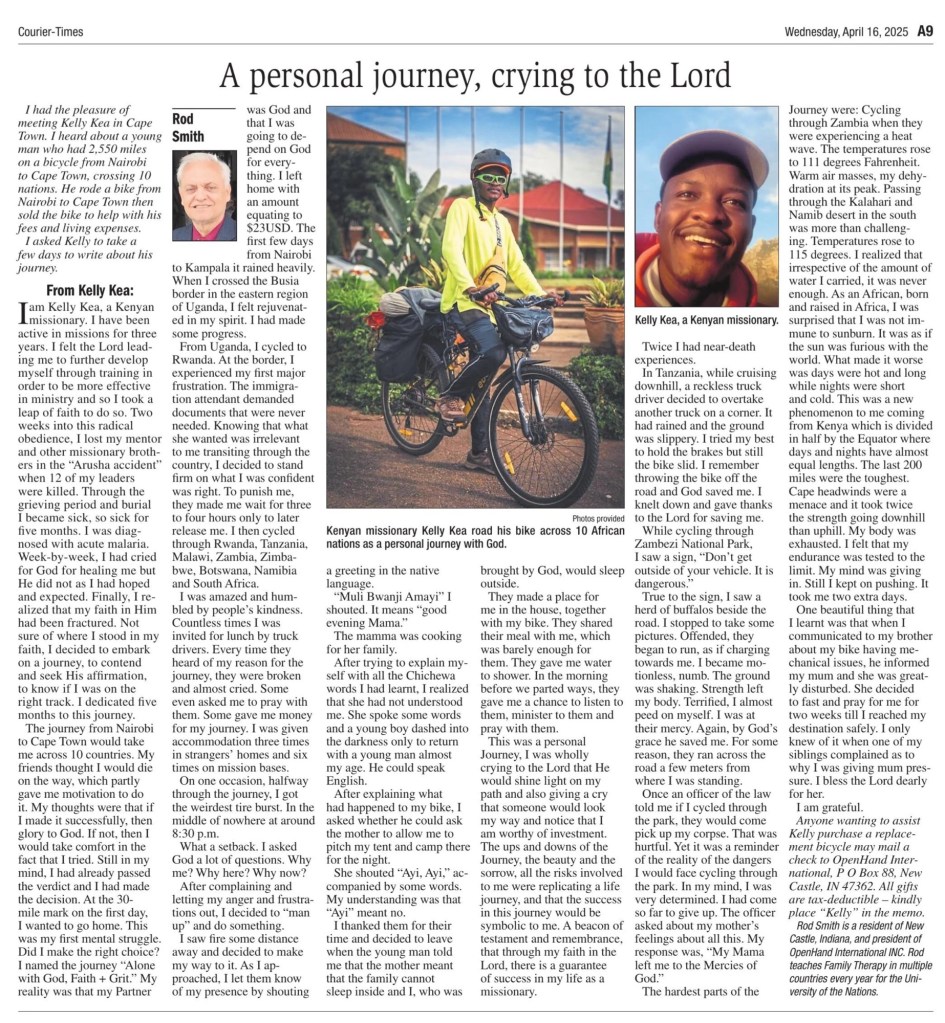
Last week I had the pleasure of meeting Kelly Kea at the The University of the Nations (YWAM) campus in Muizenberg, a beach town about 20 minutes from Cape Town. I heard about a young man who had ridden his bicycle from Nairobi to Cape Town – this is about 2500 miles and crossing 10 nations.
Face-to-face in a nearby coffee shop Kelly told about his journey. On my return to the USA (last weekend) I asked Kelly to take a few days to write about his journey.
This is longer than my usual posts.
I appeal to you to read what he wrote.
Kevin has never asked me for anything. I am posting this with a PayPal link to our nonprofit in the hopes I will be able to send a handsome sum to him within a few days. If you are part of a cycling club or aware of one – kindly repost and help me get this into the hands of interested and generous people. IN 2024 OpenHand International INC was able to give $26,000.00 in assistance and scholarships to people on 5 continents. With your help, I hope to give as much or more in 2025. Gifts are tax-deductible if you are a USA tax-payer.
From Kelly Kea:
I am Kelly Kea, a Kenyan missionary. I have been active in missions for 3 years. I felt the Lord leading me to further develop myself through training in order to be more effective in ministry and so I took a leap of faith to do so.
Two weeks into this radical obedience, I lost my mentor and other missionary brothers in the Arusha YWAM accident when several leaders were killed. Through the grieving period and burial I become sick, so sick. It lasted for 5 months. I was, at the end, diagnosed with acute malaria. Week-by-week I had cried for God to heal me but He did not as I had hoped and expected.
Finally, when He did, I realized that my faith in Him had been fractured.
Not sure of where I stood in my faith, I decided to embark on a journey, to contend, to seek His affirmation, to know whether or not I was on the right track. I dedicated 5 months to this journey. The final 2 months of what I had considered a rough year and the first 3 months of a year I had hope in.
The journey, from Nairobi to Cape Town would be 8500 km (about 2300 miles) on the route that I choose and I would cross 10 countries. My friends thought I would not make it. My friends thought I would die on the way. This partly gave me motivation to do it. My thoughts were that if I made it successfully then glory to God. If not, then I would take comfort in the fact that I tried. Still in my mind, I had already passed the verdict and I had made the decision.
My friend Kim rode with me for the first 30 kilometers (about 19 miles). At the 50 km mark, I felt like going home. Honestly, this was my first mental struggle. Did I make the right choice? I named the journey “Alone with God, Faith + Grit.” My family knew that I had everything covered and that I was with a group. It gave them peace. My reality however was that my Partner was God and that I was going to depend on him for everything.
I left home with an amount equating to $23 USD and my hope being the Lord. The first few days, from Nairobi to Kampala, it rained heavily. When I crossed the Busia border in the eastern region of Uganda, I felt rejuvenated in my spirit. I had made some progress.
From Uganda, I cycled to Rwanda. At the border, I experienced my first major frustration. The immigration attendant started demanding documents that were never needed. Knowing that what she wanted was irrelevant to me transiting through the country, I decided to stand firm on what I was confident was right. To punish me they made me wait for 3 to 4 hours only to later release me. I then cycled through Rwanda, Tanzania, Malawi, Zambia, Zimbabwe, Botswana, Namibia and South Africa.
I was amazed and humbled by people’s kindness. Countless times I was invited for lunch by truck drivers. Every time they heard of my reason for the journey, they were broken and almost cried. Some even asked me to pray with them. Some gave me money for my journey.
People are kind. I was given accommodation three times in strangers’ homes and six times in Youth With A MIssion (YWAM) bases.
On one occasion, halfway through the journey, I got the weirdest tyre burst. In the middle of nowhere at around 8:30 pm. What a setback? I asked God a lot of questions. Why me? Why here? Why now? After complaining and letting my anger and frustrations out, I decided to man up and do something. I saw fire some distance away and decided to make my way to it. As I approached, I let them know of my presence by shouting a greeting in the native language. “Muli Bwanji Amayi” I shouted. It means “good evening Mama.” The mamma was cooking for her family. After trying to explain myself with all the Chichewa words I had learnt, I realized that she had not understood me. She spoke some words and a young boy dashed into the darkness only to return with a young man almost my age. He could speak English. After explaining what had happened to my bike, I asked whether he could ask the mother to allow me to pitch my tent and camp there for the night. She shouted “Ayi, Ayi,” accompanied by some words. My understanding was that “Ayi” meant no. I thanked them for their time and decided to leave when the young man told me that the mother meant that the family cannot sleep inside and I, who was brought by God, would sleep outside. They made a place for me in the house, together with my bike. They shared their meal with me, which was barely enough for them. They gave me water to shower. In the morning before we parted ways, they gave me a chance to listen to them, minister to them and pray with them. Samson Njovu, who was my translator in that house, is still hoping to get a job. He is a skilled builder. Now he is my friend. I promised him that we would work together someday.
This was a personal Journey, I was wholly crying to the Lord that He would shine light on my path and also giving a cry that someone would look my way and notice that I am worthy of investment. The ups and downs of the Journey, the beauty and the sorrow, all the risks involved to me were replicating a life journey, and that the success in this journey would be symbolic to me. A beacon of testament and remembrance, that through my faith in the Lord, there is a guarantee of success in my life as a missionary.
Twice, I had near death experiences. In Tanzania, while cruising downhill, a reckless truck driver decided to overtake another truck on a corner. It had rained and the ground was slippery. I tried my best to hold the brakes but still the bike slid. I remember throwing the bike off the road and God saved me. I knelt down and gave thanks to the Lord for saving me. While cycling through Zambezi National Park, I saw a sign, “Don’t get outside of your vehicle. It is dangerous.” True to the sign, I saw a herd of buffalos beside the road. I stopped to take some pictures. Offended, they began to run, as if charging towards me. I became motionless, numb. The ground was shaking. Strength left my body. Terrified, I almost peed on myself. I was at their mercy. Again, by God’s grace he saved me. For some reason they ran across the road a few meters from where I was standing.
Once an officer of the law told me if I cycled through the park, they would come pick up my corpse.That was hurtful. Yet it was a reminder of the reality of the dangers I would face cycling through the park. In my mind I was very determined. I had come so far to give up. The officer asked about my mother’s feelings about all this. My response was . “My Mama left me to the Mercies of God.”
The hardest parts of the Journey were: Cycling through Zambia when they were experiencing a heat wave. The temperatures rose to 44 degrees celsius (111F). Warm air masses, my dehydration at its peak. Passing through the Kalahari and Namib desert in the south was more than challenging. Temperatures rose to 47 degrees celsius. I realized that irrespective of the amount of water I carried it was never enough. As an African, born and raised in Africa, I was surprised that I was not immune to sunburn. It was as if the sun was furious with the world. What made it worse was days were hot and long while nights were short and cold. This was a new phenomenon to me coming from Kenya which is divided in half by the Equator where days and nights have almost equal lengths.The last 500 kms (200 miles) were the toughest. Cape Town headwinds were a menace and it took twice the strength going downhill than uphill. My body was exhausted. I felt that my endurance was tested to the limit. My mind was giving in. Still I kept on pushing. It took me two extra days.
One beautiful thing that I learnt was that when I communicated to my brother about my bike having mechanical issues. He informed my mum and she was greatly disturbed. She decided to fast and pray for me for two weeks till I reached my destination safely. I only knew of it when one of my siblings complained as to why I was giving mum pressure. I bless the Lord dearly for her and for Ratego. I had other people continuously lifting me up to the Lord. Andy and his family, Mum and Dad Ngao, Ron and Faith. My friends Rabin and Kim and Vini and Rose. Friends I met on the way.
Have a full, meaningful life before you conceive, adopt, or foster a child. Do this so the child is unlikely to become the center of your universe and therefore have to occupy a place in your life, and have power in your life, that no child is designed or equipped to hold.
Have a life outside of your child. Children who are least important to their parents’ salvation (success, reputation, happiness) are more likely to enjoy healthy adult lives than those who are faced with the unreasonable task of making their parents happy or appear successful.
Allow natural, reasonable consequences to occur so that your child may appreciate the power of cause and effect, as imperfect as it sometimes is.
Get out of the way as much as possible so your child learns to show up, speak up, and stand up and self-advocate as early in life as possible. Be this way especially with the school.
Try to do fewer things for your child so that your child has to do more and more for him or herself. Self-sufficiency is among the holiest of gifts you can give your child and it is truly a gift that keeps on giving.



 difficultrelationships.com