My head is full of experiences where I’ve been subjected to the innocence random people frequently display for the country of my birth (South Africa) and, when I’m abroad, my country of residence (the USA).
Regarding the land of my birth it may go something like — and both occurred — “Who helps you write good English?” and “Do you know my exchange student who was also white and from Africa?” It was once suggested I claim to be African to garner sympathy. Regarding the USA, it may be “can you see Hawaii from New York City?” or “do you see movie stars every day?”
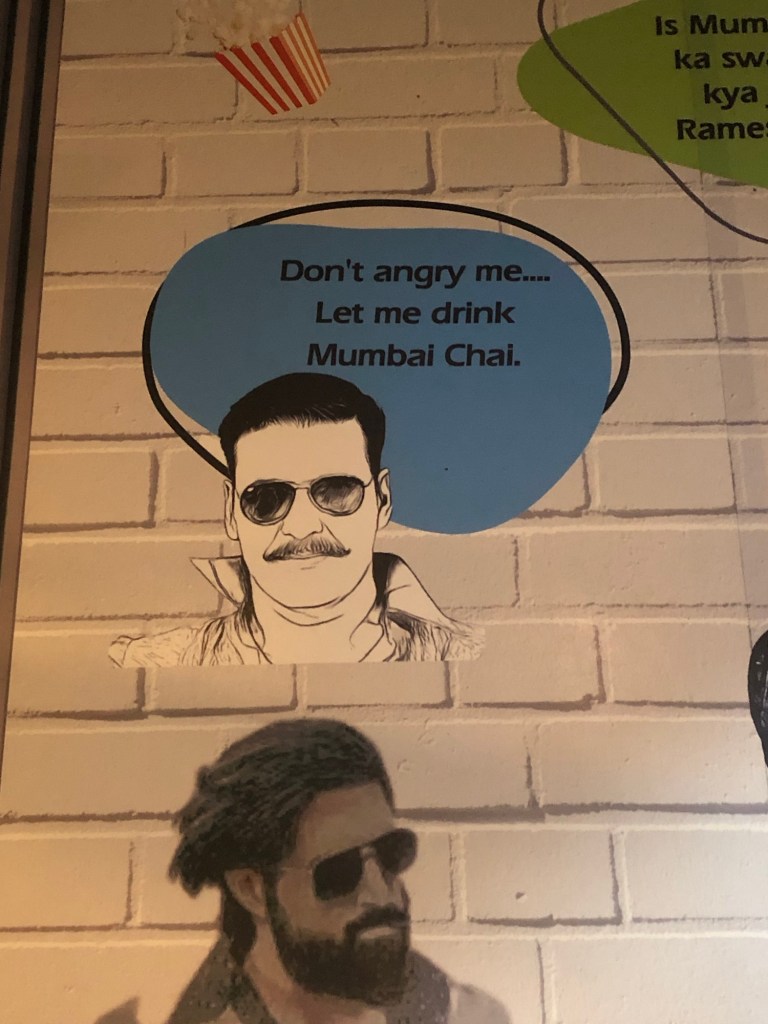
Having spent ten days in India I more than doubly confess my ignorance regarding this vast sub-continent, its billions of people, thousands of languages, beautiful expressions of cultures that would take multiple decades to read about, explore in order to begin to understand and appreciate.
But, in ten days, it’s clear and tangible that the people I’ve met and gotten to know, as well as one can in a few days, are kind, gentle, generous. They are people who are deeply interested in the world beyond their borders. They are committed to loving their elders and respectful of the accomplishments of prior generations.
“Chased,” he said, “I’m being chased, haunted by my past, my past of multiple addictions, — they follow me.”
“Like dogs?” I asked, “I have wild dogs too.”
“No,” he said, “large lions, and a tiger, coming from behind, waiting to pounce, attack. To scorn, belittle me.”
“How do you protect yourself?” I asked.
“I outrun them; get ahead. Do heroic things to prove them wrong. But, they follow, catch up, then I have to do it all again. What about you and the wild dogs?” he asked.
“I tried to ignore them,” I told him, “but they don’t like that. They squeal, bark louder. I tried to get ahead, outrun them as you do with your pursuers, but that’s temporary relief.”
“I know,” he confessed.
“I made a decision that made a big difference,” I said, “when I was at my most desperate when they were chasing me through dark hallways of my mind, barking at my heels, I stopped, slowly turned, faced them. Told them they were right, looked them in the eyes, gave them attention — then, they withdrew, got quiet, behaved as disciplined guide dogs. Now, they do their jobs.”
“Can I train my lion? My tiger?” he asked.
“You’ll never know,” I said, “until you look them in the eyes.”
They hover in my awareness and continue their holy work, despite the decades that separate me from their classrooms, lecture theaters, labs, fields, gyms, and studies.
Almost all were highly motivated men and women who loved their jobs and regarded it as a calling.
I hear them yet, beckoning me to adopt high standards for others and for myself.
I find it incredible that the teacher with the parrot – Mrs. Bradman – who dogged my third or fourth year of primary school and a psychology professor more than a decade later, and my family therapy professors, a lifetime later and nations apart, and Mr. Morey, Mr. Graham, Mrs. Hornsby, and Miss Chadwick – I could go on – cancan in my frontal lobe at the oddest moments.
Someone is going to tell me there is medication for my condition but I think not, I regard it a testimony to the power afforded men and women who are teachers and I know I could write extensively about each person named.
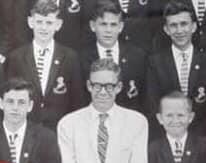
My English teacher, Richard Morey, at Northlands, now Northwood School, was the finest English teacher a boy could want.
Mr. Morey made us write anything (“Heads down, Gentlemen, fill a page, write about anything you want. If don’t have anything to write about write about that.”) for the first five to seven minutes of almost every lesson. This daily exercise showed me I could try my hand at writing. Mr. Morey said splitting infinitives, ending a sentence with a preposition, using “less” when you mean “fewer,” misplacing an apostrophe, were as close to criminal acts as using “I” when it should be “me.” He made us recite “Quisque Sibi Verus” from our blazer badge and said the day may come when we’d fully understand its meaning. He debated whether Shakespear’s King Lear was “a man more sinned against than sinning” and argued about which of Lear’s two daughters was most evil. He talked of people he’d met in literature – Pip and Miss Havisham and Ralph and Piggy and Jem and Scout, to name but a few – as if they were long-time neighbors.
That’s an odd thing to observe when you’re 15.
It was for me.
I did think it a little odd that poetry could make a grown man cry.
When Morey exposed the class to “Walking Away” by Cecil Day Lewis he could never have known how much the poem would shape my thinking and parenting.
“I have had worse partings,” writes Lewis, referring to watching his son cross the rugby field and walk alone toward his boarding school education, “but none that so gnaws at my mind still,” and later continues, “how selfhood begins with walking away, and love is proved in the letting go.”
This sentiment steered me at each crucial departure in my sons’ lives.
The lines reverberated when I released them to kindergarten, signed release forms for youth retreats, watched them walk away through an airport terminal, one to an adventure in Australia, the other to Europe.
Neither son is a “hesitant figure, eddying away” as Lewis describes his boy. Rather, by grace alone they are portraits of courage and determination – but there remains pain to be endured as they walk away.
It’s mine, not theirs.
I bet you can recall word-for-word what an inspiring teacher did for you: One very ordinary day, I was about 14, Mr. Morey summoned me to his table. He took a minute portion of an essay I had written, about three lines, and circled it. Pointing with his red pen, he said, “Do more of this. Not, that,” the “that” referring to the other three pages.
You open Your Hand and satisfy the desires of every living thing. PSALM 145: 16
Open your hand using all your strength. Stretch your fingers. Allow the lines on your palm to feel as though they might tear apart. Study the contours, colors, ridges and valleys, joints, dents and spaces. Push, pull, and rub. Move your fingers through their paces: together, apart, back, forward, curved, strained and relaxed, cooperative yet unique. Feel the texture and every curve. Touch the crevices. Spread your hand further, turn it at the wrist, examine and compare patterns from every angle. Here are pieces of yourself you might never have studied.
Your hands are your constant companions. They have met the needs of others, pioneered romantic moments and worn rings of commitment. They are the way your heart leaves fingerprints, the eyes at the end of your arms. Hands reflect a person’s being and are the front line agents of your life. If eyes are said to be the windows of a soul, hands express the soul.
Hold other people with your hand thoroughly open. Allow them to know the warmth and welcome of your hand, investigate its curves and benefit from its scars. Invite others to follow the lines into the fabric of your life and see the risks you have taken and the adventures that are yours. Allow them to wrestle and rest, search, see and speak. Let them stay; let them go, but let them find your hand always open.
The Open Hand of friendship, at its widest span, is most rewarding, most challenging and most painful, for it enduringly acknowledges the freedom others have while choosing not to close upon, turn on, coerce, or manipulate others. In such friendships, expectations and disappointments become minimal and the reward is freedom. As others determine a unique pace within your open hand, they will see freedom and possibly embrace their own with excitement and pleasure.
Openhanded people do not attempt to “fix” others, change, or control others even for their own good. Rather, each person is given freedom to learn about life in his own way. Openhanded people, instead, express kindly and truthfully what they think and feel, when asked, knowing even in the asking, others might not be interested or willing to learn.
The Open Hand is not naive. It is willing to trust, while understanding and accepting that no person is all good or all bad, and that all behavior has meaning. The Open Hand is convinced it cannot change others; it cannot see or think or feel or believe or love or see for others, but trusts people to know what is good themselves. It will not strong-arm, pursue or even attempt to convince others because it has little investment in being right, winning or competing. Here is offered a core-freedom of the deepest and most profound nature: allowing others to live without guilt, shame and expectation.
Further, the Open Hand offers oneself freedom that extends to one’s memories, ambitions, failures and successes. This allows for growth of enduring intimacy, greater personal responsibility, authentic autonomy, and the possibility of meaningful relationships with others.
In the discovery of a closed hand, even at the end of your own arm, do not try to pry it open. Be gentle. Allow it to test the risky waters of freedom. As it is accustomed to being closed and fist-like, it will not be easily or forcefully opened. So let the closed-handed do their own releasing and trusting, little by little, and in their own time and manner.
When openhanded people meet, lives connect in trust, freedom and communion. Community is set in motion. Creativity is encouraged. Mutual support is freely given. Risks are shared. Lives are wrapped in the safety of shared adventure and individual endeavor all at the same time.
Rev. Emlyn Jones was a regular guest at Durban North Presbyterian Church. He occupied the pulpit in such a way that despite his short stature he and his voice filled the entire church building.
I was in my early twenties when I first encountered him and I couldn’t help but pay attention. His warmth and personality somehow drew every eye and ear toward the pulpit for a poetic, personal, often funny, romp with all things practical and spiritual.
Emlyn preached to crowds, but for the listener, it was intimate.
When he preached it was as if I was alone with him and we were chatting over a cup of tea.
I felt like he’d done all his preparation just for me.
Emlyn Jones made God tangible, intimate, deeply caring.
As a listener I was momentarily transfixed and believed I could become something for this caring God, a God who wanted me, had a place for me, and who desired for me to take it.
His preached word wooed me out of my complex and confused self and showed me I could be part of loving, seeing, and knowing the world and have something to say to the people in it.
Emlyn Jones modeled love and wisdom.
I wanted to do the same.
I have never forgotten his pulpit manner, mastery, and presence, which I know has given me enormous respect for fine orators and, ironically, even as a young and complex man, a longing desire to be one.
The very idea scared but never left me.
A highschool assignment involving presenting to a group of peers had me planning my own demise. Yet Emlyn’s sermons, his pulpit manner, were wooing something, stirring something within my core into occupying a pulpit myself.
Emlyn preached a sermon about a self to live with and a cause to live for and it offered me a bridge into a future that, at the time, was beyond my capacity to imagine.
Even on leaving the building and making my way home, I knew something of my life’s trajectory had shifted.
Can terror, possibilities, and joy dance together?
I think so.
They augmented into a respectful rhythm, a waltz of sorts, of hesitancy, gratitude, and freedom.
Emyln Jones played music and I was a willing listener.
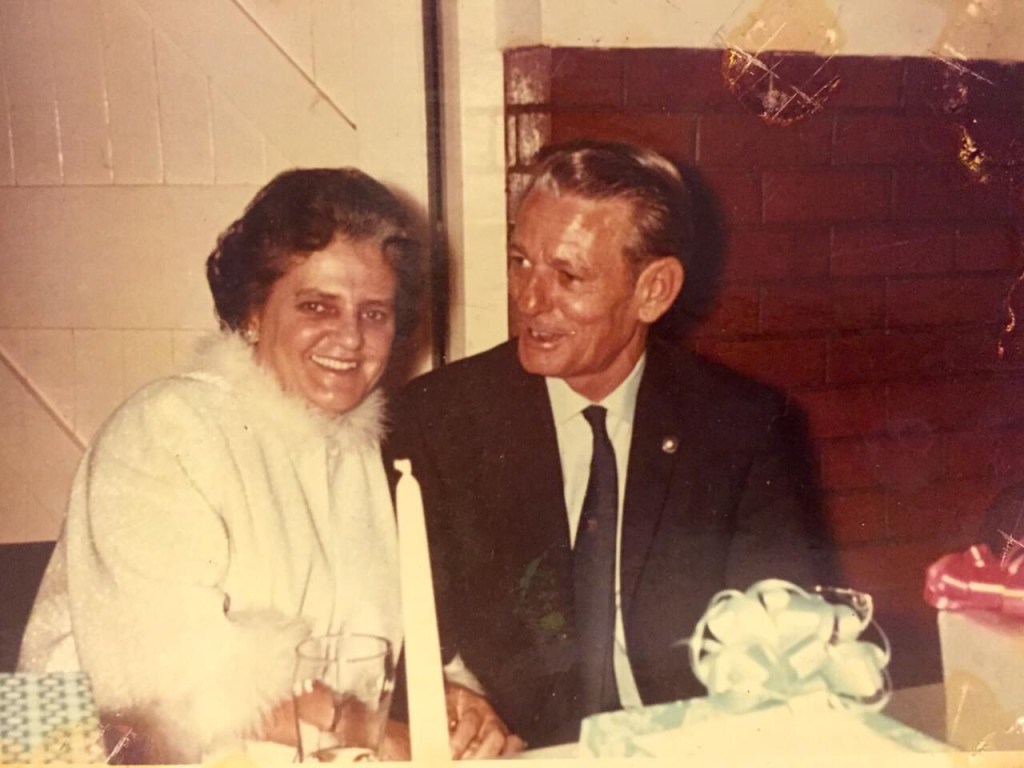
Doris Day and Virginia Lee and Jim Reeves were her favorites.
Dad loved to dance.
My parents turned heads on any dance floor.
Ancient hymns became markers for me.
I knew if they sang “From sinking sands He lifted me” we had no money.
“What a friend we have in Jesus” meant someone somewhere was in trouble.
When they sang about the “Three little fishies that swam, swam, swam all over the dam” I knew they had enjoyed a good time at a party.
“Abide with me” and “Nearer My God to Thee” meant Dad was thinking about the war and his time in the water after HMS Dorsetshire went down and he had to take to the ocean and swim for his life.
There was a duet only my parents sang that I have never heard performed by anyone else.
“With the kind of love that you’ve been giving,”….
…. dad would sing, holding the last note until mom joined him with...
“I could reach the moon up in the sky.”
They’d perfected harmonies for the rest of the song:
“A little cooperation my dear, a kiss or something whispered in my ear, would help me banish the thought of fear, with a little cooperation my dear.”
I liked unison parts best:
“Without your love I couldn’t go on living, wondering how I’d get by. But with the kind of love you’ve been giving, I can reach the moon up in the sky.”
I was in the Western Cape these last two weeks. It rained and rained and rained even more.
When I tell you the following I’m telling you because you know, those among you who read my posts, that it is you, not me. It is you who have empowered me to do this. I’ve said a hundred times, I’m the bridge and not the giver.
I was able to give (“Targeted Giving” – I call it) to 5 individuals and families I know, people I trust — $2500.00 ($500 each) to boost their good works and enhance their impact where they work.
For one family: it was a very cold and windswept afternoon. I called and asked the mom to meet me on the sidewalk at her address.
She was suprised to get my call — I do live 8000 miles away.
Dressed for the weather the whole family (I think I’m recalling correctly) came out.
I requested she and her husband get out of the weather and into the car and that we take them to their bank. The young son and dad joined us and they were able to deposit a large sum of Rands – they were not anticipating a gift — which I’d already exchanged on their behalf.
This gave the family what appeared to be an unimaginable boost!
Fewer than 24 hours later the mom sent my sister, not me, a photograph.
The family fed a huge crowd breakfast of porridge and bread the very next morning — because now they had extra.
Can you imagine the joy of getting such a call when it’s unexpected and the weather is pounding. Oh the stories that will be told of your generosity for ages to come.
How nice it indeed was to be the bridge (5 times) for your gift, your generosity.
You know who you are.
Thank you.
Let it be known we were also able to give $1000.00 to a local (in my town) safe house for young girls and women and send a local (from my town) boy or girl (I requested not to know who) to Summer Camp with Young Life. Cynics will often say and correctly say — “we have enough needs right here in Indiana.” I will assume they are giving handsomely to a local fund offering assistance.
Contact me if you’d like to help me repeat this community act of Grace.
I want my life to count, make a difference, contribute to the greater good, to have MEANING.
I cannot exist in a vacuum, but in a community with persons of similar desires to create something beautiful with the skills, resources, and years that we have at our disposal.
I want to serve a cause that is greater than my own fulfillment.
I want to plant now, so people I may never meet or know or hear of me, may harvest something rich and rewarding in their futures.
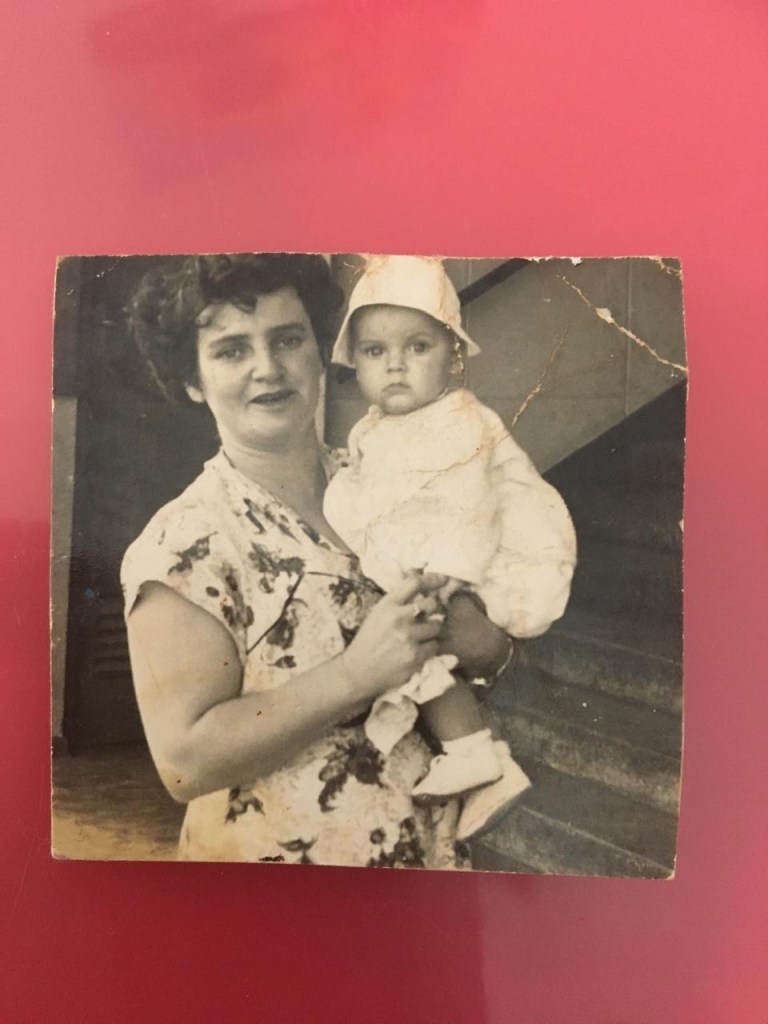
The only photograph — I’m aware of — of my mother and me.
Deep down where soul, spirit, will, heart, mind, meet, I have a magnificent gift – the instinctual, God-given, desire for INTIMACY.
Togetherness.
It comes wrapped into my humanity. I want to be intimate, to belong, to be part of a family, groups, teams, causes.
I don’t want to be alone.
I want to know others and be known by others. This desire usually whispers, but must sometimes yell, for recognition, especially when my equally powerful instinctual desire for autonomy has enjoyed its pleasures.
I want to be heard and treasured as a companion and friend. I want to be an integral part of the lives of close family and friends.
I want to be fearlessly open with a handful of loving friends and for them to be similarly open with me. If I repeatedly ignore this primal desire, I place my emotional well-being and physical health at risk.
I was not designed to be alone. I am designed for connection with others.
Acknowledging this essential part of who I am, respecting it, enjoying it, enhances my capacity to love myself, love others, and become fully, and more beautifully human.
*to be read in tandem with A is for Autonomy
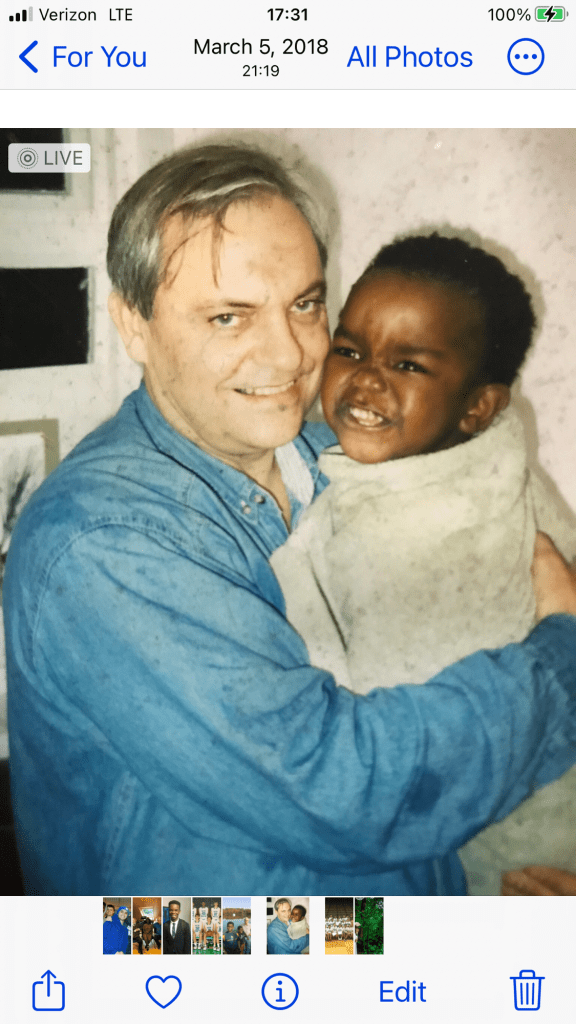
My 1st born son and I enjoying our beautiful connection which is as meaningful today as it was the day of his birth…. He’s 26 now!
I am convinced that there are always reasons to HOPE.
No matter how dire, or conflicted the circumstance, no matter how bleak the prognosis, while there is life, and even beyond it, there remain reasons to be hopeful.
I’ve seen hope in action.
I’ve seen painful family scenarios, the most estranged of siblings, the most obstinate of personalities, turn, then find previously unimagined degrees of humility, and move in healthier directions.
But, of course, evil abounds. It tries to rob people of hope. Sadly, we all know men and women who are capable of inflicting much hurt and destruction.
Nonetheless, I will continue to believe that good far outweighs evil.
Goodness, kindness, benevolence, empathy, are latent in every man, woman, and child, and such qualities exercised by individuals, squelch humanity’s sometimes crazed desire to spread hate and destruction.
While I am well aware my ideas will be considered absurd in some circles, heresy in others, I’d suggest that when a lonely woman reaches again for alcohol, or a depraved man engages in illicit behavior, or an adult or teenager self-destructs, these behaviors are desperate acts of prayer, desperate attempts at sanity, desperate attempts to relieve pain and restore hope.
I will be an agent of hope to those who feel hopeless, abandoned, or aimless. Having seen my own life change, and an occasion, my own difficulties diminish, I know others can successfully face fearful, problematic situations, and emerge with increased hope. I will live a hopeful life and spread hope wherever I go.
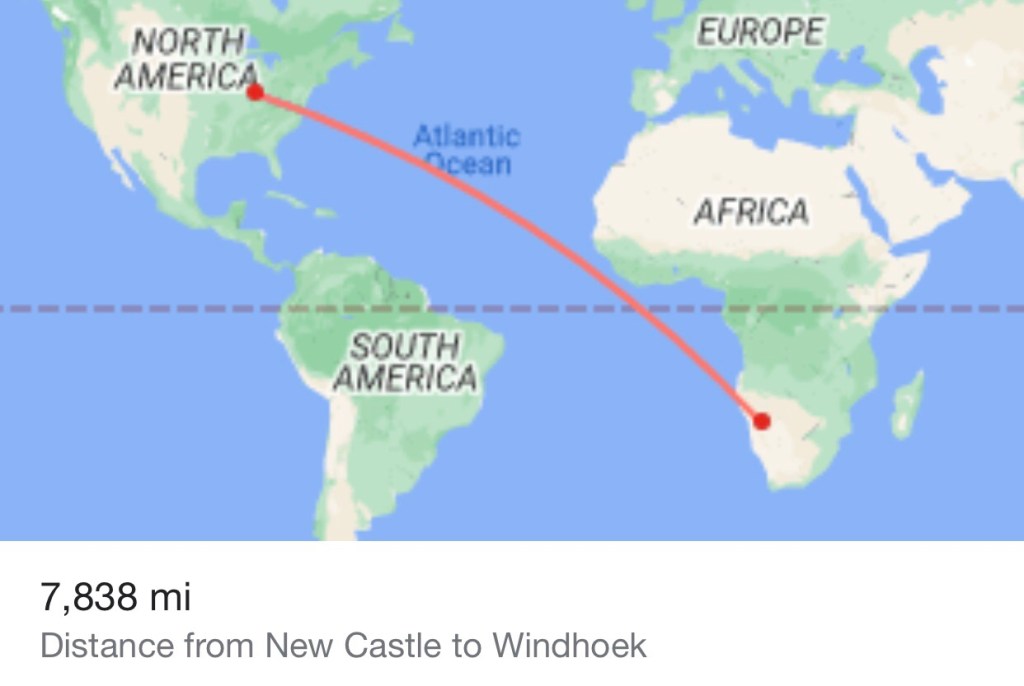
Today I’m headed, not to Windhoek, but to Cape Town #graceupongrace

 difficultrelationships.com