Archive for ‘Divorce’

June 29, 2006

Finding your unique voice in ALL your relationships

by Rod Smith

Every person has a voice that is designed, urging, even aching, for complete use and full expression. Some people have allowed their voices to be stolen, silenced or modified and such people might find it necessary to take time to find or re-establish the voice they have chosen to deny or ignore. There is nothing “spiritual” or humble about giving up your voice — not even God demands your silence!

Thankfully, suppressing a voice seldom kills it. It can usually be found even after years of denial and even cruelty. This is as true for individuals as it is of entire populations.

Having a voice means exerting your right to see, evaluate, and express who you are, and what you stand for, without apology. It means speaking up. It means telling the world who you are, and what you want. It involves telling the world who you are not and what you will and will not accept or tolerate. It is allowing your life to speak appropriately and boldly, without explanation or excuse.

When you find your voice, you will not allow people to speak for you, decide for you, and prescribe how you feel, think or see the world. Of course, you in turn will not take the voice of another away from them.

It is not loving to give up your voice, or to allow someone else to take your voice from you. People can hardly handle the power of their own voice, let alone handle the voice of two or three others.

Any person who will not hear what you have to say, or who tries to silence you, does not love you even if they say they do. It is never a loving act, except in very unusual circumstances (like severe illness), to stop someone from expressing who they are. Likewise, it is never a loving act to withhold your contribution to the world through maintaining your silence.

You were not created to be silent, and nor were you created to silence others. The world will benefit for hearing who you are, and what you have to say when the authentic voice within you is allowed growth and expression.

Part of owning a voice, and using it well involves the process of discovering how best to package and express your voice in a manner that facilitates others to hear who and what you are and what you have to say.

Please, compromise yourself, your talents and skills for no one. Be silenced or made “smaller,” rendered without a voice for no one. It is never worth it. There is no cause, no relationship, marriage or job, worthy of your silence.

There is no person of any rank, no spouse, boss or spiritual leader deserving of your downplaying who and what you are. It is those with dark motives, who seek for you to be less, minimized, diminished or silenced. Walk away from such small-mindedness, even when and if it is costly to do so.

Loving, good people will celebrate your strength, encourage your freedom and admire your talents. Stick with such people. Stay with those who enlarge your world, not restrict or contain it. Live fully, love fully, and speak fully – while embracing all the freedom life offers.

I am weary of men and women, irrespective of who or what they are, who hold others captive, especially in the name of love; of spiritual “leaders” who are afraid of gifted people; of bosses who silence talented people lest their own inadequacies be revealed.

If you live above, and beyond, the damaging jealousies that surround you, you will stimulate the dreams of everyone in your circle of influence, and make your own dreams come true before your very eyes – and the world will hear your voice.


June 27, 2006

Girlfriend and wife behavior at parties gets lots a mail…

by Rod Smith

Recent columns about friendliness, interpreted as flirting, have generated a lot of mail. Of course I do not support deception in relationships, and of course, when a partner salaciously fishes for the attention of the opposite sex it can damage the sanctity of a committed relationship.

But open (not covert) friendliness at parties that generates a jealous and anxious response from the partner, suggests deeper problematic issues between the couple, quite apart from the “flirting.”

A person who tries to curtail a significant other’s open friendliness through threats, withdrawal, the angry eye, by driving home in silence or in a rage, has a bigger issue than the one who “flirts.”

Love, aside from being the polar opposite of controlling behavior, resists jealousy. Love refuses to accommodate the demands of the jealous party. No relationship benefits when jealousy gets it nasty way.

I’d suggest women who are openly friendly at parties, who innocently enjoy people, continue to do so. I’d suggest jealous husbands deal with their jealousy without blaming it on the woman.

Then, if a woman is so desperate for male affirmation that she is truly salacious, I’d suggest something more helpful than curtailing her behavior at parties is required if the relationship is to survive.

June 13, 2006

Wife flirts at parties and I do not like it

by Rod Smith

My wife and I have lots of fights because at parties and family occasions she flirts with all the men. And NEVER flirts with me. She says she is just being friendly. I cannot understand why she carries on doing something she knows I do not like. What should I do?

It sounds like your wife has a lot more fun at parties and family occasions than you do. I'd suggest you stay home. If her friendliness is so threatening to you she ought to go alone. There are several reasons she "carries on doing something she knows" you do not like: she likes it; it is innocent; she understands it is not a good idea for you to control how she has fun.

Perhaps, if you took your focus off your wife and relaxed a little, she would want to flirt with you. Jealousy is not very attractive. The sooner you realize that your jealousy is your problem and that it has nothing at all to do with her behavior, the sooner you will be over it.

Two things: 1. He (or she) who has the feeling (in this case jealousy) has the problem. 2. Love and control cannot coexist in the same relationship.

June 6, 2006

It all began so well — then he showed who he really is

by Rod Smith

“I met my ‘Prince Charming’ through an acquaintance. We hit it off from the beginning, but without any emotional fireworks. We shared a passion for ballroom dancing, and found we had much else in common: a love of the outdoors, music, humor; we are both financially independent, and we are both divorced with grown-up children. I thought it strange that he had no close friends and did not socialize beyond a very small circle, and that he showed no interest in introducing me to any of his family members, other than his married daughter. This should have been the first alarm bell to ring.

”Gradually he became more controlling, but in very subtle ways. He monitored what I ate and drank. He criticized my dancing when it wasn’t up to his standard. I had to live up to all his expectations all the time. He criticized my political opinions. Slowly but surely, he began to criticize all my opinions. There were violent outbursts of temper if I stood up to him in any way. Yet through all this, he remained the caring, thoughtful man I had grown to love, particularly when we were in the company of others, and I was so flattered that he was interested in me.” (Extracted from a much longer letter)

June 5, 2006

Daughter doesn’t want to go back and forth anymore….

by Rod Smith

Since I make it almost essential (occasionally I agree it is inappropriate) for both parents to attend appointments with me (even if the parent are divorced) when the topic is a child, I was faced once again with divorced parents of a young girl. Dad was upset. The daughter, they reported, no longer wants to visit him every second weekend. Dad’s no longer her idol. Mom can’t get her to want her dad. The child misses her friends. Dad’s house is “boring.” All the moving unsettles her.

I suggest the parents consider switching houses every second weekend leaving their child permanently in one home. This way mom and dad would see the daughter as frequently, the child would remain near her friends, and her need to travel back and forth would be eradicated. An added bonus, which is obvious to me, involves the parents getting to know what it is like to live in two places and have to pack up and move every second weekend.

My clients were at first confused, and then furious that I would consider suggesting such disruption to their lives! Of course they had spent very little time considering how much children are “punished” and how significantly children’s lives are disrupted by visiting schedules that appear to be designed solely around the needs of the adults.

May 31, 2006

Divorced dads – living without blame and loving your children

by Rod Smith

Children will, at various times, blame both parents for a family’s breakup, no matter who is to blame. Don’t try to get your children to be on your side even if your wife was wrong on every count and you, in your perfection, sprouted angel wings. Two people marry and both contribute to the need for a divorce when it becomes necessary.

I’ve met men (and women) who claim to be innocent victims of divorce but I hardly ever buy it.

Look a little deeper at what you did or did not do in the marriage. Get your focus off your ex-wife and ask yourself what your role was in the deterioration that necessitated dissolution of the marriage. Growth, and healing in your relationships with your children will elude you until you assume full responsibility for your part of the family’s breakup.

Until then, until you are cognizant of your role and take responsibility for it, any strategy you employ to more effectively love your children will serve only to create a further wedge between you and seem to “push” the children further from your urgent love. Until you stop all blame and victim thinking, your toxicity will permeate all your relationships, especially the one you want with your children.

May 29, 2006

Things dads can do to get closer to their children (requested re divorced dads but applies to all)

by Rod Smith

Embark on ruthless personal inventory. If you want to know your children better, the first building block is to know yourself better. Don’t fall into the trap of thinking this is a task you have already accomplished. Many men who think they know themselves well are really quite familiar with the person whom they wished they were. Your children are unlikely, beyond about the age of four, to be impressed with who you think you are, while also possessing really good takes on who you actually are.

Every negative habit, memory, unresolved grievance, prejudice, “hot button” that you keep hidden within you will act like a filter and distort what and who your children are in your eyes (and impact your other intimate relationships).

This does not mean you have to spill your guts and divulge every dark secret in some small group (although this would not be a bad idea if you can find the right kind of group) but it does mean that you have to stop fooling yourself about who and what you are. Come to terms with the fact that our children are seldom as impressed with us as we ourselves are.

Appreciate that just because you want to get closer to your children it does not mean they, at the same time, will have similar inclinations toward you. If you are insistent (pushy, demanding) with a reluctant child, your attempts are likely to be counter-productive. Being close to dad in the heart-to-heart, arm-over-shoulder kind of way is the fodder of sitcoms and movies than it is a part of real life.

Real-life-close-to-dad is more about the capitalizing on conflict and turning it into a means of greater understanding and love. It’s about being committed to learning from each other, and long periods of silence. It is about sometimes feeling used, sometimes feeling taken for granted. It is about learning to appropriately speak up. It is about knowing what to address and when and how to address it. It is about knowing what to ignore. It is about knowing when to be loud and when to be soft. It is about knowing when to be visible and when to be in the background.

Television sitcoms can go from conflict to resolution in thirty minutes (including six to eight minutes of commercials). In real life, successfully loving children can take forty years.

May 14, 2006

Son (13) comes home from dad’s house with bruises…..

by Rod Smith

Reader’s Letter: “I am divorced but live with a wonderful man and have a very stable and loving home environment for my son (13). My ex-husband and his new wife have boys aged 17 and 13. All three boys get on very well. My son arrived home from the weekend with his dad and showed me a black bruise on his arm. When I asked him how he got the bruise I was told that his dad had made a new rule: if the boys don’t brush their teeth by 9.30am, don’t pick up clothes, or use bad language, the boys are allowed to punch each other as punishment. So my son was punched in the arm by the seventeen-year-old for not brushing his teeth. I contacted my ex-husband about this and he told me to keep my nose out of his affairs how he runs his home. Your advice would be greatly appreciated.”

Everything pertaining to your son is always your business – keep your nose in it. Meet with your son’s stepmother, who will surely share your concern, and request this barbaric approach to cleaner teeth, rooms and mouths, stops! Such behavior among three boys can do none any possible good. But be wise; the children do get along. Be unrelenting in seeking your son’s absolute safety. “Running his home” is about who vacuums the house, who takes out the trash – abusing your son does not quite fit into that category!

March 21, 2006

Seven “essentials” before marrying someone with children?

by Rod Smith

Enjoy it? Pass it on...

Enjoy it? Pass it on...

1. Plan several sessions of “hard” talking with your potential spouse. It is essential that you temporarily forget the romantic elements of your relationship to talk business. Blending families is one of life’s most difficult challenges, which is further compounded when both parties have children.

2. Don’t try to be the stepparent before you legally occupy the role. Prematurely playing a role will create problems once you legitimately occupy it. It is essential you do not assume roles you don’t occupy. If a child (or future spouse) treats you as a parent, it doesn’t mean you are one. Troubles brew when people push themselves, or are pushed by others, into roles they do not occupy. (This is true even beyond families!)

3. Bridges are best built before they are needed. It is essential that you insist on multiple meetings with both parents of ALL the children before you consider marriage. These meetings will focus on methods of co-parenting in order to secure everyone’s best advantage. If implementing such meetings seems overwhelming to you, you are probably heading for a minefield of countless unexpected, unwelcome complications – that will seem (believe it or not) even too large for love to overcome! What is avoided (denied, glossed over, minimized) pre-wedding will rise like a rabid monster quite soon after the wedding.

4. Financial integrity is as important as sexual fidelity! It is essential that you look into every detail of all financial records of your spouse-to-be and offer your own finances for similar scrutiny — before you plan a wedding. Persons who cannot responsibly handle money are unlikely to be able to handle the pressures of thriving within a blended family. If a would-be spouse suggests information* about his or her finances are off-limits to you, wipe the dust off your feet and depart, no matter how much love you may feel. Authentic love, apart from having many other facets, is also measured in the degree of financial partnering* (not necessarily blending) is established between lovers. Resilient love seeks the wise, open use of combined resources. Because blending families also often involves complex financial arrangements (child support and so forth, divorce costs, education bills for children of a former marriage) hiding the details from a would-be spouse is exceedingly unfair to all involved.*

5. Flee “blamers.” An adult who blames their former spouse (or parents, or childhood, the new political order) for everything will also, before long, blame you for everything.

6. Avoid people who cannot engage in civil conversations with an ex, with their parents, or their children.

7. Getting Johnny (or Mary) a stepparent will not ease his dissatisfaction with the divorce, school, or his craving for a “real family.” It is essential to understand that getting married will not solve any but the most superficial current family issues. Blending families is likely to unveil and exacerbate more problems than it solves.

This said, and so much of it sounds negative, blended families hold the potential to enrich and empower all the people involved. Some of the healthiest, happiest families I have met in many years of meeting with families (in all manner of circumstances) have been blended families!

* A reader kindly pointed out that my column suggests finances ought to be blended. I do not believe this is always wise or necessary. I do believe the couple MUST be OPEN about the details or all financial matters. See comment here: http://rodesmith.com/2008/01/20/reader-comments-on-blending-finances/

March 15, 2006

Three poisons for love: Manipulation, Intimidation, and Domination

by Rod Smith

TUYL

Stay OUT of control...

When people have to use intimidation, manipulation or domination, the relationship is already spoiled or poisoned. It has become a power play of control. Redeeming such a relationship is possible with the implementation of a wise plan, strongly re-defined boundaries, enduring commitment, and the possibility of a time of separation in order that perspective might be gained.

Willingness and desire to be together, equality between people and complete mutuality are the hallmarks of healthy relationships. Where any form of strong-arm tactics are used, the relationship has already taken a turn to become something harmful to both the parties.

Each of these relationship-poisons (manipulation, domination and intimidation) can be very subtle, coming in different shapes, sizes, and intensities.

Here are some of the evidences of manipulation, intimidation, and domination in a relationship:

1. The relationship has been kept on an unequal footing in order that one person might keep power over another. In a severely controlling relationship, both persons might have forgotten there are choices at all.

2. One person tries to get what he or she wants without declaring what is wanted. In attempting to get what the one person wants, both persons are in some way diminished.

3. One person does not see the other as totally free.

Confused boundaries4. One person tries to get what he or she wants through threats or withdrawal.
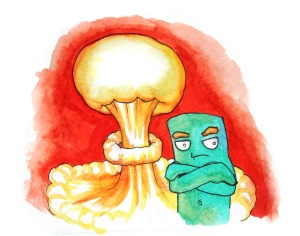
5. It is expected that every move, thought, and feeling will be reported at least from the less-dominant person to the other. If one person is unwilling to tell all, it is assumed there is something to hide.

6. One person is not free to make plans without consulting or getting permission from the other.

7. One person in the relationship continually evaluates and examines the commitment and love of the other.

8. The dominant person tells the other how they should feel and usually re-scripts any division or disagreement into the appearance of unity.

9. One person feels at liberty to speak for both people and then, is offended when the partner wants to express his or her own views.

10. Desire for self-expression or a distinct voice (by one) is considered betrayal or a lack of trust (by the other).

11. One person expects unilateral support for his or her opinions, choices and desires, declaring somewhat of an attitude which says: If you say you love me then you have to love everything about me, under all conditions, and all of the time.

12. Difference in opinion or having different interests is considered a lack of love, or a lack of respect and commitment.

Simple definitions and a metaphor which might be helpful in considering the three “cancers” of relationships:

Manipulation: playing chess with another person or with people. Maneuvering as if life were an attempt to checkmate others into loving us or doing what we want.Explosive

Domination: playing chess with another person or with people as in manipulation. The difference is the dominator has removed the opponent’s pieces without declaring so in the first place.

Intimidation: playing chess with another person or with people where winning and losing comes with either the threat of punishment or actual punishment.

Healthy Relationships: There is no element of either winning or losing; they are not a game of chess at all and are free of tactics and agenda.