
Archive for ‘Differentiation’

November 25, 2009

Size in families – five columns in one

by Rod Smith

Be your size, no bigger, no smaller....

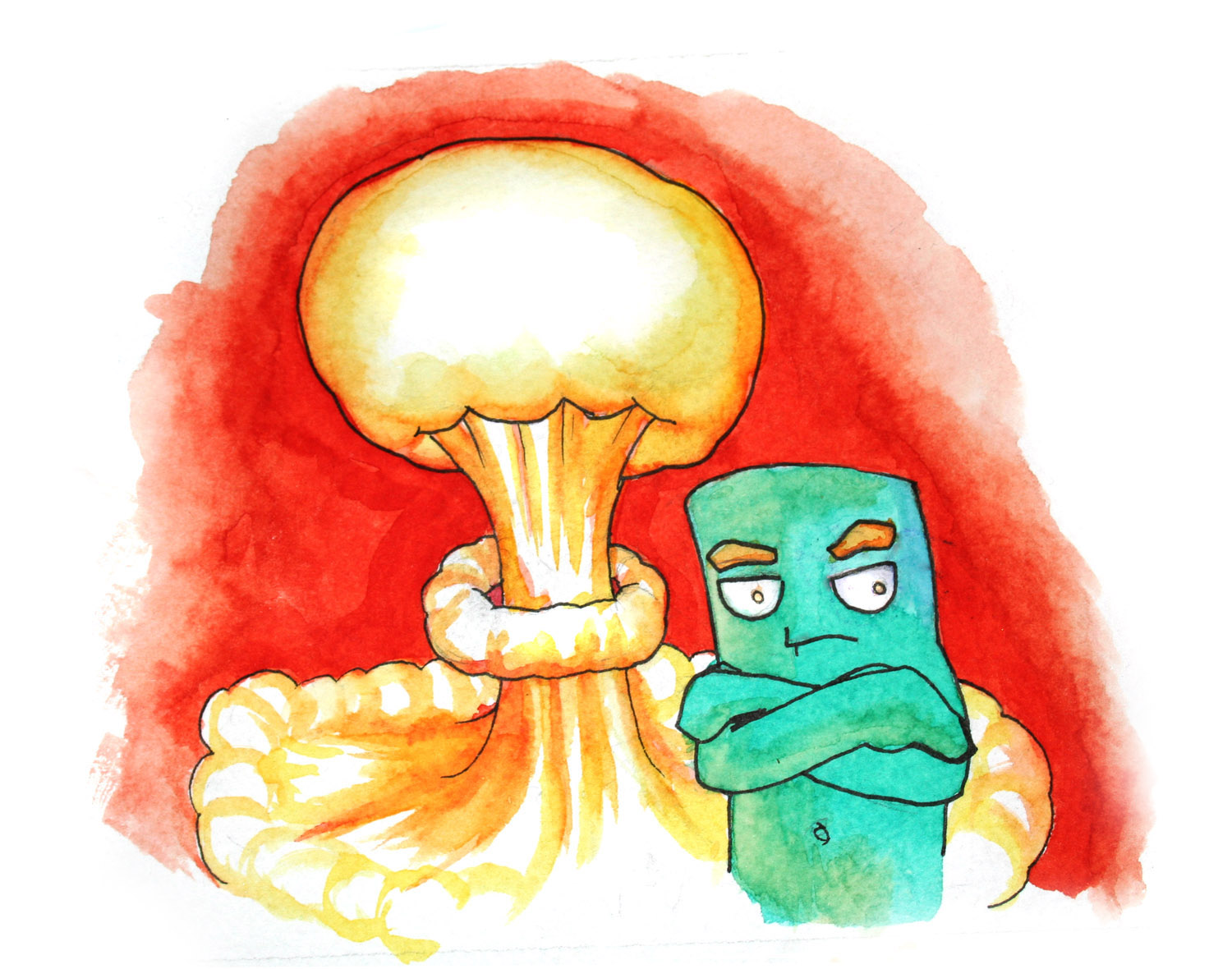
Size is all-important in a family. I’ve seen many families where the children are “bigger” than the parents. The children’s needs, wants, and desires appear to determine almost everything. The parents’ needs are habitually ignored while the desires of the children are the parents’ marching orders. Of course parents willingly sacrifice for their children, this is part of what it means to be a parent, but in families with “super-sized” children, the imbalance becomes burdensome.

I have seen children pitch a fit, stamp and storm – when a parent makes a legitimate request of the child, or has to alter a minor plan, or must pursue a detour, which the child perceives as hindering his or her freedom, creativity, rights, or friendships.

Such toxic parent/child binds, where the strong emotions of a child brings fear to the parent, can drain all the enjoyment out of family life.

When a mother or a father sees the light (acknowledges his or her indulgence of the child, can see the child is unpleasant to be around) and tries to bring the child down to an appropriate size, the child will understandably resist. Resistance can become ugly. “Un-spoiling” a child is no easy task: it is better not to worship children in the first place.

Bringing children “down to size” sounds harsh, even cruel. It sounds like something that should be against the law. On the contrary, allowing, or grooming children to be too big (dominant, controlling, demanding) is where the harshness and cruelty really lies. If you have discerned that your son or daughter is too big, and that you are too small, it is probably not a good idea to attempt the imposition of all manner of restrictions and changes to “bring him down to size.”

I would suggest that ALL the adults (biological, step parents, grandparents who foster the super-sizing of the child or cooperate with it) have an extended face-to-face conversation about your mutual issue. Depending on the magnitude of the problem this might take several hours, in which case I’d suggest you spread your meetings over several weeks so people have a chance to think things through. Talking openly about these matters is often half the battle – and as you have probably guessed, it is quite a battle.

Implementation of the strong, caring principles that result from your conversations (and the success of what you decide to implement) will pivot on the age of the child, upon how “late” the parents “catch” it, and upon the adults’ unified ability to stay the course. It is my experience that one or two adults will not possess the ability to follow through with the best made approaches – their threshold of pain for the child is too low. But, as I said, it is not easy to un-spoil a child; the fact that children get too big in the first place is riddled with meaning.

Dads and moms (not only children!) can be super-sized too, but it usually only one per family unit. A super-sized dad (demanding, dominant, controlling) usually requires a wife to be super-small (submissive, voiceless, fearful). The really deceptive nature of this kind of family is that a “small” mother and a “big” father are often praised as the “biblical” order for the family – something I have even heard preached as if it is something for which to strive!

A super-sized dad (I’ll consider mothers later) is quite easily identified: he usually gets his own way, he sulks and stamps and steams if his authority is resisted, and he plays the “hurt puppy” when not duly honored. He will pull out the “big guns” on a regular basis (threatening, withholding, colluding, and “The Bible says”) if his will is threatened. Occasionally I’ve seen a super-sized dad humble himself. But, if it is tough to un-spoil a child, you can only imagine how difficult it is to get a self-centered parent to discover authentic humility.

A way out of this hurtful and debilitating trap is for individual family members to work on getting a voice (this is a way to increase in size) and resist placating the persistently controlling, demanding parent.

Many mothers are too small, and too busy. They have so yielded to the demands of mothering, of being a wife; of trying to balance an imbalanced world on two frail shoulders, it has caused mother-shrinkage. They have shrunk, not from a natural process of aging, but from the pressures of trying to be perfect, of trying to make their world work perfectly, of keeping children in line, their husbands sober, responsible, or happy.

I have discovered there is no stopping a woman who is hell-bent on disappearing into a life of “sacrifice” and “service.” The best approach is to get out of her way until they sees the light or, sadly, she collapses in sheer exhaustion. When a woman equates some twisted belief about humility and self-imposed punishment with selflessness, there is no reasoning, no convincing, that will successfully deliver her from herself.

Anxiety drives people and everyone “benefits” when mother becomes the High Priest of Perpetual Service and Motion – until it all falls apart. Then, if she doesn’t get wise, caring help, she will probably bury herself in a boatload of guilt.

When family members are all the appropriate size there is mutuality among the adults and cooperation among the adults and the children. The give and take of daily life becomes more and more joyful as each person fills his own shoes, stays out of the way of the growth and health others, and lives out his or her part of the family bargain. You will notice that:

1. Who is “in charge” or who is “the boss” or who is “the spiritual leader” becomes irrelevant.
2. Love and cooperation trump all.
3. Individual family members assume a high degree of appropriate personal responsibility.
4. Over-functioning (doing things to help others avoid responsibility) and under-functioning (expecting others to save you from yourself) are avoided.
5. People are afforded a wide berth for learning and growth.
6. Forgiveness and grace are easily given and readily received when things go awry.
7. Individuals stand up for themselves without hurting others.
8. Spontaneity is highly valued.
9. Humor is ever-present, even in the toughest of circumstances.
10. Dialogue and insight, shared among family members, is embraced rather than avoided.

November 20, 2009

Finding health and awareness

by Rod Smith

Small steps to greater health and awareness

Growing in Autonomy and Intimacy all at the same time…

November 20, 2009

Where do all these STRONG feelings come from?

by Rod Smith

How attractive is this much anger....?

November 20, 2009

Piggy in the middle is not much fun for Piggy…

by Rod Smith

Being trapped in a triangle is no fun....

November 20, 2009

Here I was thinking it is GOOD to have boundaries…..

by Rod Smith

Isolation is hardly helpful either

November 20, 2009

How come THIS close doesn’t feel too good?

by Rod Smith
It's hard to dance when you are too close, too connected!

It's hard to dance if you are too connected....

November 19, 2009

Friday meditation

by Rod Smith

May our thoughts and prayers be focused upon….

Open your handChildren who seldom (or never) see one (or both) of their parents
Men and women who are “content” living partial (unfulfilled, discontented) lives
Groups harboring prejudice
Churches selling guilt
Businesses that exploit customers and employees
Those who refuse to forgive
The chronically (and minimally) anxious
Betrayed spouses
Men and women who are indifferent to their own aged parents
Men and women who accumulate wealth and power on the backs of those who have little of both

November 18, 2009

His children and I go without for his parents….

by Rod Smith

Dialogue first....

“My in-laws can get anything they want from their son while his children and I have to go without. This is getting in the way of our marriage and he can’t see it. Quite soon I am going to leave him if it doesn’t change. This is not something we can talk about because of our culture.”

You get to decide if you wish to be subjected to cultural expectations at the expense of your marriage and your mental health. I’d suggest you have a conversation, and not a confrontation, with your husband over this matter. Do not suggest he resist assisting his parents, but rather finds a way, with you, to serve his parents without sacrificing the needs of his immediate family.

Dialogue first. Negotiations, second. Ultimatums, polarized positions (“us or them”) to be avoided at all cost.

November 14, 2009

The more I see, the more I am ready to call it quits…

by Rod Smith

“I have a girlfriend (35) with children ages 18, 17, 14, 13, and a granddaughter who just turned 1. The 17-year-old is the mother of this child. I am 28. Everything started well until I was laid off from work. Now we are all together more. It’s funny how things come to light when you are around more. These kids are very clever at school but their behavior is

1a1Rod

Tough call for anyone....

very nerve wrecking. They lack respect for others and are very inconsiderate. Every time they do something wrong, its brushed off and they are showered with gifts. I’ve repeatedly expressed how displeased I am with their actions. The more things that happen and the more that I see the more I’m ready to call it quits.”

This would be a tough context for anyone to enter – not because this family is necessarily more difficult than any other, but because there are so many established relationships and permutations that pre-exist you. You won’t “fix” the children or their mother – but you will have to decide how resilient you are in the face of at least 6 people who will all see you, at least at times, as an intruder. I say “at least” because you have made no mention of the fathers of the children or the grandchild. Anyone who was here “before” will feel as if he or she has more rights and more say than you do when there is pressure in the family.

November 12, 2009

How do I tell him his breath smells?

by Rod Smith

“I have been in contact with a guy for the past 18 months, chatting online. He lives in another city. A few months ago we met, and really hit it off. I have met him a few times since, and had initially thought that I was imagining, his bad breath. The last visit which was a few days ago, left me quite repelled as he seems to have a serious halitosis problem that he is not aware of. The sad thing is that other than that, he is absolutely wonderful, but I really feel that I will be unable to go on with a person who has such bad breath. Both of us have been divorced previously, with no children and we are both in our thirties. Please help! How do I approach this?”

1a1Rod

Tell him...

You tell him as kindly and directly as possible. Try to be humorous; first tell him of some of your own “blind spots” and ask if he is “open” to hearing some you have noticed. If this relationship progresses to levels of greater commitment and deeper love, you are going to have to have far more difficult conversations. This conversation will be good practice for what is to come – if you are anything like millions of other healthy couples.

Gideon

India

Be blunt! You’re both mature thirty-plus year olds right? And I’m assuming life has taught you both that there is never a need to “beat around the bush” at this age. Having bad breath is like having bad body odor, your always the last one to notice (or so I’ve heard). So in the grand scheme of things, and it sounds like this man is “absolutely wonderful” as you say, telling him he has bad breath will probably be one of the easiest relationship issues you’ll have to address together. And this is nothing that couldn’t be solved with, like gifting your boyfriend with a year’s supply of Cool Mint breath strips!

Jean Hatton

ACT, Australia

After eighteen months chatting online and then meeting him and enjoying the times together, you have probably communicated to him your enjoyment of the relationship. It sounds as if you like each other. It’s with that in mind that I suggest that he might appreciate your honesty about how you are struggling with his bad breath. Telling the truth to someone (not in a critical manner) is one of the healthiest things you can do for yourself as well as the other.

1111111KTHRYN

Midwest, USA

From a distance! No really- its probably something that you’ll need to bring up with him if you do in fact want to remain in relationship with him. Have the courage to do so even if it doesn’t end up working out. If he can seek medical help for it it may be something you laugh about later in your relationship. The way he responds to you when you tell him will speak volumes to the future you may or may not have with him.