Considering others, delivering acts of kindness, will likely be of much benefit to people on the receiving end.
But, as a direct result of acts of consideration and kindness, possibilities for more such acts will kick into gear.
How could I use my power, as limited as it may be, to open opportunities for people?
I’m in no particular hurry and so I can move to the end of the line, or at least suggest those who are rushed for time go ahead of me.
I have more than I ever need or use so I will find creative ways to share and spread the favor that’s been mine.
This kind of thinking is good for our minds, hearts, wills, souls, spirits, as elusive as these “places” are that work together within us and define and shape who we are.
Looking for ways to consider others puts our selfishness and entitlement (at least temporarily) on hold while such thinking engages self awareness and service.
It’s healthy thinking.
It’s win-win thinking that even while we are thinking the thinking it realigns our attitudes and restores hope.
Considering others broadens, sharpens personal vision, does its part in renewing the mind. This can only have positive results, except for committed cynics, of whom, sadly, there are many.
“Dad, are we normal?” my son asked, bending from his perch on my shoulders, trying to look into my face.
“Why do you ask?” I said, looking up at him while holding his ankles in one hand and feeling his weight swirl to one side.
We did these “walks” around the block almost daily. We’d start out, his five year old body striding out ahead of me, beckoning me to hurry, usually toward the steel climbing equipment on the public school play area. I knew that if the walk was in the evening light was dimming and the alleys between the houses were throwing darker and changing shadows my son would plead tiredness, beg to ride on my shoulders.
I braced for big questions.
Was his question going about the deeper things in life? I wondered in these brief moments if he’d noticed some of the economic disparities that surrounded him. Race? I thought perhaps he’d been exposed to something at school and seen how unusual bi-racial families were in our part of the world. Perhaps he wanted to explore the intricacies of adoption or solo-parenting.
“We have a truck, dad. Everyone has cars. Everyone’s gate works. Ours doesn’t,” he said.
Days of riding on my shoulders are long past…… but the joy has not.
Thulani was 4 and, coming down stairs he screamed siren-like, a prolonged yell and fell, his whole body convulsively sobbing. When I reached him and picked him up and held him close, my hold necessitated a shift from hug to restraint until the boy convulsed less and relaxed enough to reveal the carpet nail lodged flush in his underfoot.
I had spent the afternoon, while Thulani and his infant brother were napping, ripping, tearing, hauling an old carpet off a stairwell.
Dr. Yancey made me do it.
He said something was bothering infant-Nate’s breathing, perhaps an old carpet and ordered it out.
I examined the exposed hardwood time and again, running my open hands carefully over each newly exposed stair for a missed carpet nail and found none.
Now the nail I did miss plugged Thulani’s foot.
With a boy hanging around my neck I headed for the living room sofa and, using my full body weight, held him down to lock kicking legs.
He froze seeing I was about to remove the nail.
Silent, transfixed – he watched me pull it out and puked as I held him tight against my chest.
The warm flow spewed from his anxious tummy, gluing us together as it snaked down my shirt.
The sludge, a sloppy mucus curtain, dangled between us and, to trap the flow, I held him even closer and waddled to the basement and stripped him. Maneuvering his frame from arm to arm I removed my soiled and dumped our soggy clothes into the washer.
Upstairs, I eased him into a warm soapy bathtub and sat on the rim.
If I say I love someone, I will invest the time required to hear what he or she wants to say.
Listening, like love, has no gimmicks, no tricks.
It is expressing genuine interest. It is putting my own concerns aside for a while and entering someone else’s world. It’s rewriting, reshaping, re-writing, nothing I hear. I will listen as if I am appreciating fine, complex, beautiful art, a masterpiece. I will not “listen” as if I’m engaged in a competitive game of verbal tennis. I will listen as one who has much to learn rather than hide behind the covert belief that I’m the one with much to teach.
Such arrogance neither hears, nor listens well, or accurately.
The arrogant listener hears what he or she wants to hear. Arrogance reshapes what’s said into what the listener prefers.
When I think “I”ve heard it all before” I’m not listening.
Listening opens new worlds for the speaker and the listener leading each down a path of brave discovery. It’s a mutual risk.
The loving listener listens to what is said and unsaid, without rearranging either.
The listener enters another’s world, then departs with it untouched, understood, admired, no matter how beautiful, troubled, complex, that world may be.
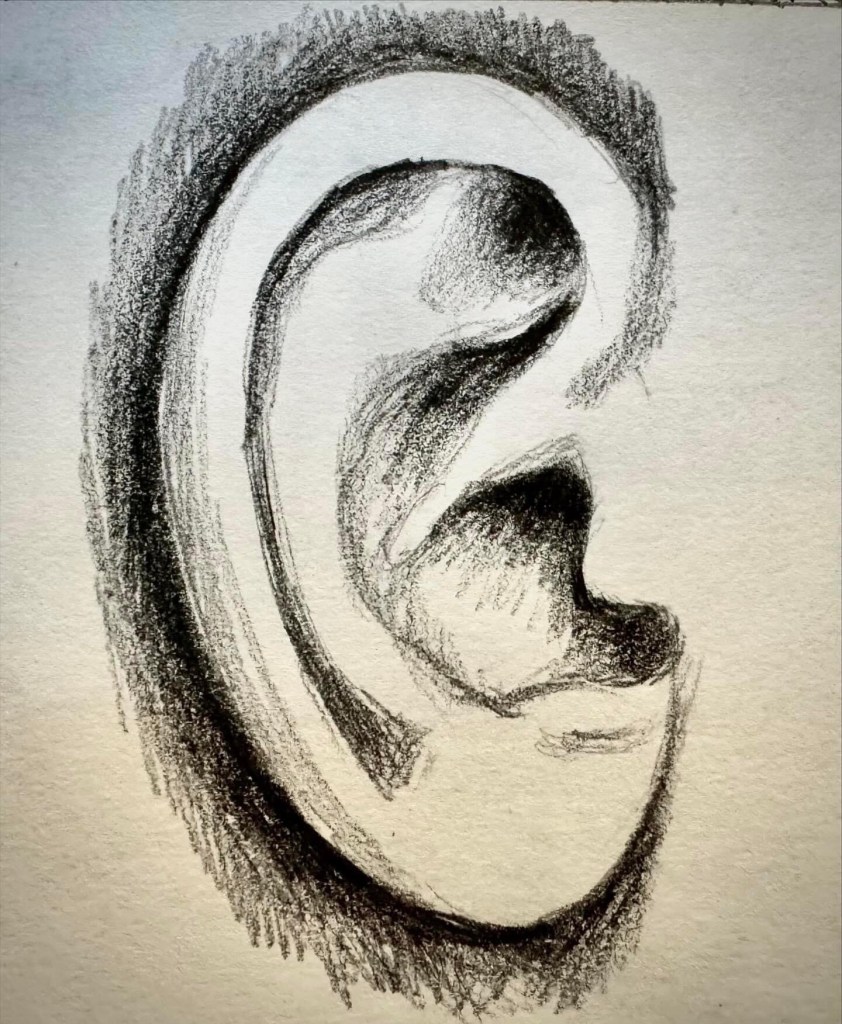
Illustration by Siggi Berg and used with permission.
“I have the most generous mother. Now 80 and strong as an ox. I remember her asking me to go for a drive some evenings as a teemager. She would chat to me about people who had less than us. We never had lots. She would have an envelope with money from her housekeeping and we would stop and I had to pop it into the letterbox (of people in need) without being seen. She never told my dad or anyone else. It taught me at a tender age that tithe was not always meant to be bought into the storehouse but sometimes distributed where the need was seen. I value her influence in my life. I have tried to emulate her motherly wisdom.”
Thank you for your beautiful letter. Your mother’s generosity and her habitual acts of generosity are inspiring. What’s also inspiring is that you, her son, recognize it and appreciate it. Your mother has etched an indelible memory into your whole being.
I have no doubt that you too, are a generous man. How could you not be, after what you experienced?
I continue to believe that generosity is a very powerful agent for goodness — not only for the recipients, but also for the givers.
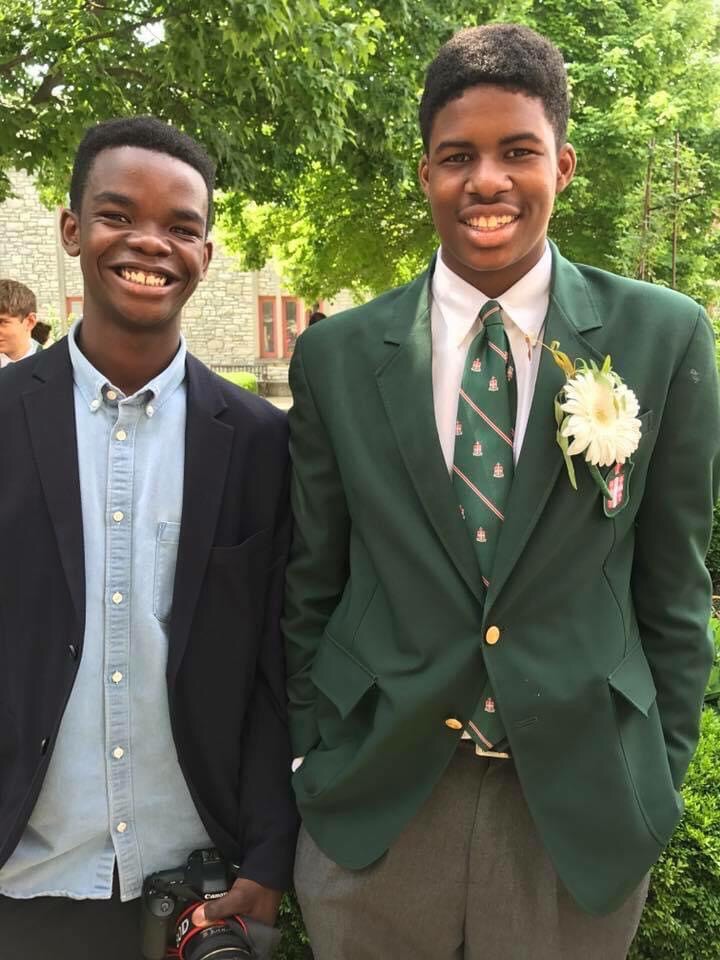
My sons, both of them, are in love, each with a woman who’d make any dad proud.
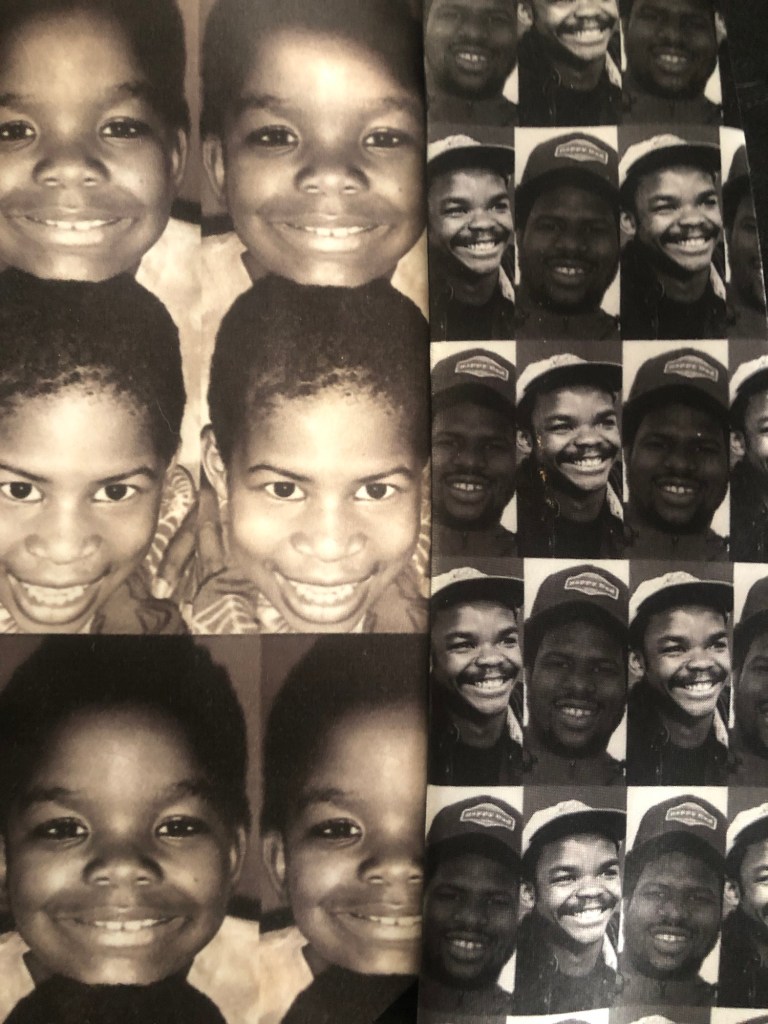
The first time I met Nate’s girlfriend I dressed for the occasion and wore a tie that bears a collaged image of both boys when aged about 12 and 8. Thulani’s head resting on Nate’s and they both have broad smiles. I donned the tie with playful snarkiness declaring, with zero subtlety, exactly where Nate belongs.
Harli visited a few days later and won my heart.
“Open it,” she said handing me a gift.
Treasure fell from the envelope. She’d re-produced the tie with updated images, my sons at 26 and 22, smiling as broadly from another necktie.
On Fathers Day I woke to this text which I publish with Harli’s permission:
“Happy Fathers Day, to a man I idolize. You welcomed me into your family with open arms and you single handedly raised two honest gentlemen that are so lucky and grateful to have you. I hope you enjoy your day!!”
The woman has no idea that my most ardent prayer for my sons was always that they learn how to love and that they be gentlemen.
Thulani met Alaina over a year ago and has gone so far as to purchase a ring. Last Saturday he ordered roses to surround a spot near Bow Street Bridge in New York City’s Central Park. Out for a walk the couple walked by at some distance from the bridge and the flowers caught Alaina’s attention.
“What if they were there for you,” he said.
On his knees, at the bridge, Thulani popped the question. Cameras rolled and the perfect moment of their shared joy was caught for all to see, you and me, and generations yet unborn.
From there the couple headed to a restaurant where forty of their friends waited in a reserved private room to welcome them, and welcome them they did!
Thulani coordinated all of this.
Alaina knew none of it.
I talked with my daughter-to-be the day after the engagement and I got to feel some of her joy.
Yes, I am looking forward to the wedding. No date is yet set. I am looking forward to their complete fulfillment as husband and wife. Truth be told, I can hardly wait to have at least 5 or 6 grandchildren.
I have enjoyed the run up to this event, rehearsing with Thulani, his speech to request Alaina’s parents for her hand in marriage, the design and purchase of the rings, receiving a most gracious text from my son to declare how he had learned about love from how I have loved him….
But, my real joy goes even deeper than all of that, if that is possible.
“What parenting advice could you offer my wife and me,” said the delighted dad, “my son is 16 months young.”
Above all, love your wife with joy, freedom and courage. This will reduce and deflect loads of the anxiety that naturally tries to derail all childhoods.
Lavish your baby, then young child, then pre-teen and teenager with affirmation and affection. No matter what you and your wife face, when you come home from work, or he returns after time away, or when he wakes in the morning or in the middle of the night — baby or teenager — be glad to see him, and, say so. Verbally express the joys your son brings you, to each other, and to him.
Teach him to talk Joy.
Regard the ages 5, 8, 12, 14 and 16 as transition ages. At these times discuss with him your parental plans (your mutually agreed upon plans you’ve made as parents) to do less and less for him, while expecting more and more from him. Yes, even at 5 — point out that he can make his own, age-appropriate decisions. Include him in planning and establishing his growing independence. Plan your parenting so that by his eighteenth year your parenting roles are accomplished and he has all it takes to be an interdependent young adult.
Hold in high regard the beautiful idea that you parent (the verb) for his sake and not yours.
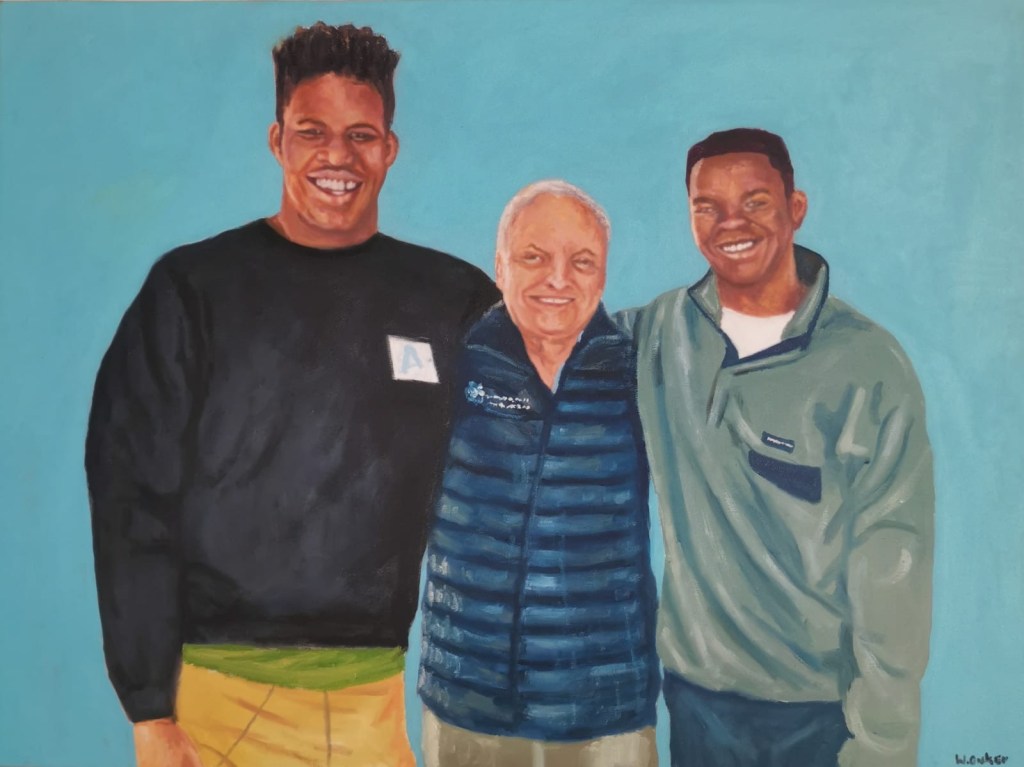
Our new painting will go up in my home-office this week….. from Friday this week, both of my adult sons are launched and living independently of me. Oh the joy; oh the niggling pain. #graceupongrace
They hover in my awareness and continue their holy work, despite the decades that separate me from their classrooms, lecture theaters, labs, fields, gyms, and studies.
Almost all were highly motivated men and women who loved their jobs and regarded it as a calling.
I hear them yet, beckoning me to adopt high standards for others and for myself.
I find it incredible that the teacher with the parrot – Mrs. Bradman – who dogged my third or fourth year of primary school and a psychology professor more than a decade later, and my family therapy professors, a lifetime later and nations apart, and Mr. Morey, Mr. Graham, Mrs. Hornsby, and Miss Chadwick – I could go on – cancan in my frontal lobe at the oddest moments.
Someone is going to tell me there is medication for my condition but I think not, I regard it a testimony to the power afforded men and women who are teachers and I know I could write extensively about each person named.
My English teacher, Richard Morey, at Northlands, now Northwood School, was the finest English teacher a boy could want.
Mr. Morey made us write anything (“Heads down, Gentlemen, fill a page, write about anything you want. If don’t have anything to write about write about that.”) for the first five to seven minutes of almost every lesson. This daily exercise showed me I could try my hand at writing. Mr. Morey said splitting infinitives, ending a sentence with a preposition, using “less” when you mean “fewer,” misplacing an apostrophe, were as close to criminal acts as using “I” when it should be “me.” He made us recite “Quisque Sibi Verus” from our blazer badge and said the day may come when we’d fully understand its meaning. He debated whether Shakespear’s King Lear was “a man more sinned against than sinning” and argued about which of Lear’s two daughters was most evil. He talked of people he’d met in literature – Pip and Miss Havisham and Ralph and Piggy and Jem and Scout, to name but a few – as if they were long-time neighbors.
That’s an odd thing to observe when you’re 15.
It was for me.
I did think it a little odd that poetry could make a grown man cry.
When Morey exposed the class to “Walking Away” by Cecil Day Lewis he could never have known how much the poem would shape my thinking and parenting.
“I have had worse partings,” writes Lewis, referring to watching his son cross the rugby field and walk alone toward his boarding school education, “but none that so gnaws at my mind still,” and later continues, “how selfhood begins with walking away, and love is proved in the letting go.”
This sentiment steered me at each crucial departure in my sons’ lives.
The lines reverberated when I released them to kindergarten, signed release forms for youth retreats, watched them walk away through an airport terminal, one to an adventure in Australia, the other to Europe.
Neither son is a “hesitant figure, eddying away” as Lewis describes his boy. Rather, by grace alone they are portraits of courage and determination – but there remains pain to be endured as they walk away.
It’s mine, not theirs.
I bet you can recall word-for-word what an inspiring teacher did for you: One very ordinary day, I was about 14, Mr. Morey summoned me to his table. He took a minute portion of an essay I had written, about three lines, and circled it. Pointing with his red pen, he said, “Do more of this. Not, that,” the “that” referring to the other three pages.
“I hate being in the middle. My son tells me stuff about his wife’s family. My neighbor tells me things about the people over the road (also our friends but she doesn’t know we are friends) and even my grandchild tells me things going on in his family that I have to keep quiet about. I feel like I am living on egg-shells every time I meet people who are close to me.”
If you hate being in the middle then get out of it.
You’re only there because you have cooperated with the gossip that has flowed your way. All you had to say to your neighbor is “you do know you are talking about people who are my friends.”
Quietly declare to people who speak to you about those not present that such talk is not something you choose to do.
Yes, you can even tell your grandchild you’d prefer he talk with his parents about what is going on in his family.
If you do this with your grandchild (unless he is in an intolerable circumstance or something illegal is occurring) you will be teaching him the valuable art of going to the source or addressing his issues with those empowered to do something about the circumstances.
Gossip never forms “special bonds” – it is always unhealthy for all involved.
Deep down where soul, spirit, will, heart, mind, meet, I have a magnificent gift – the instinctual, God-given, desire for INTIMACY.
Togetherness.
It comes wrapped into my humanity. I want to be intimate, to belong, to be part of a family, groups, teams, causes.
I don’t want to be alone.
I want to know others and be known by others. This desire usually whispers, but must sometimes yell, for recognition, especially when my equally powerful instinctual desire for autonomy has enjoyed its pleasures.
I want to be heard and treasured as a companion and friend. I want to be an integral part of the lives of close family and friends.
I want to be fearlessly open with a handful of loving friends and for them to be similarly open with me. If I repeatedly ignore this primal desire, I place my emotional well-being and physical health at risk.
I was not designed to be alone. I am designed for connection with others.
Acknowledging this essential part of who I am, respecting it, enjoying it, enhances my capacity to love myself, love others, and become fully, and more beautifully human.
*to be read in tandem with A is for Autonomy
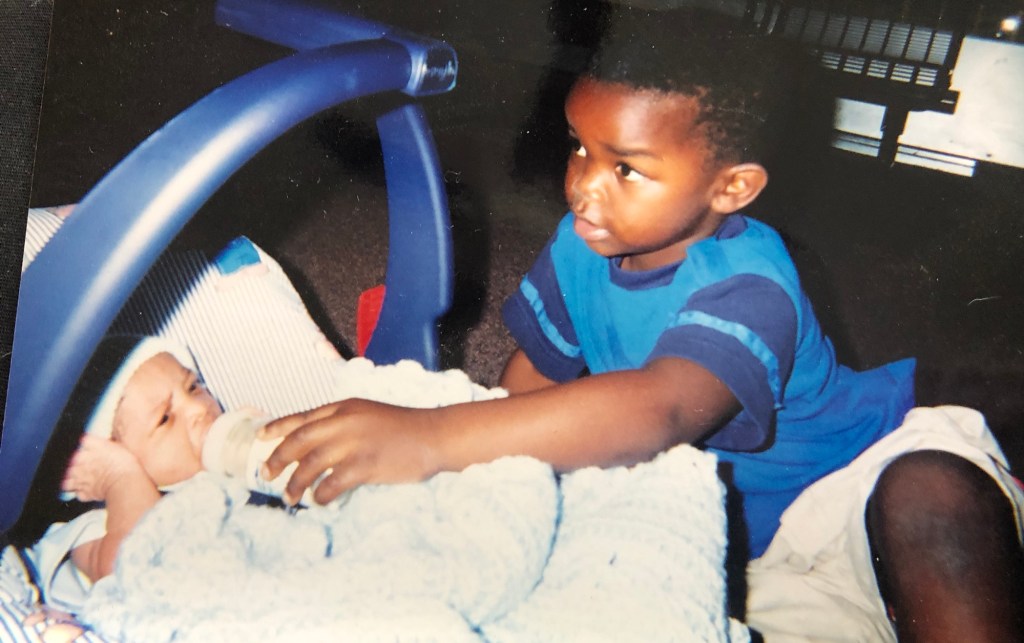
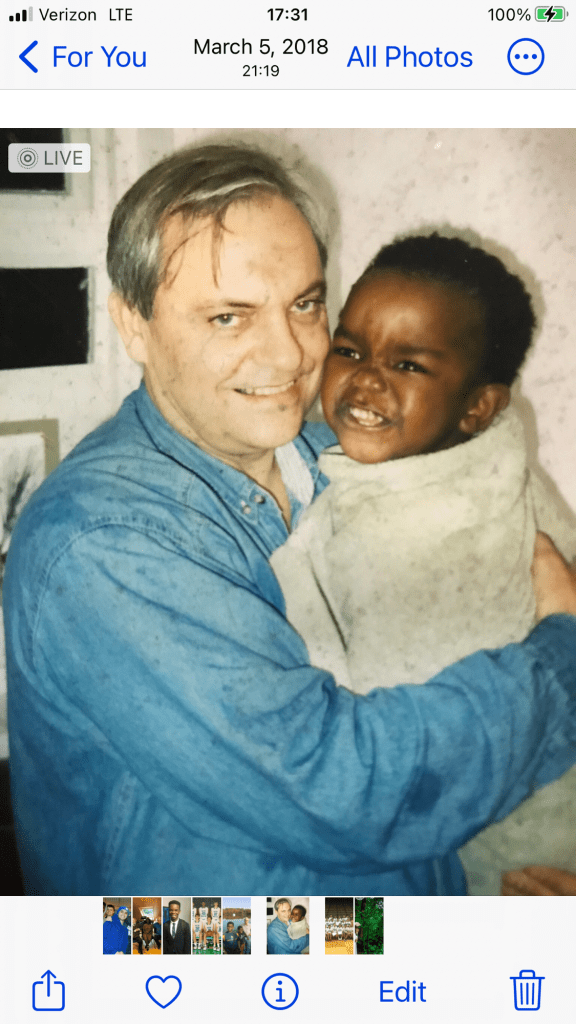
My 1st born son and I enjoying our beautiful connection which is as meaningful today as it was the day of his birth…. He’s 26 now!


 difficultrelationships.com