My primary reason was to solemnize the wedding of friends, Eman and Natan.
Natan and I met several years ago in a small town near Geneva.
Soon after my arrival in Prague, Natan introduced me to Eman who hails from Sudan. It quickly became clear that Natan, a man of deep faith and courage, had met his match and found his soulmate.
I love expressions of courage and both bride and groom are overflowing with courage and joy and vision and care and so much else. Their combined natural charisma is as tangible as it is encouraging.
Natan and Eman met on a remote Indonesian island while each was pursuing a Masters Degree. They dated long-distance, and confronted multiple hurdles of visas, a war, and much else to make their marriage possible.
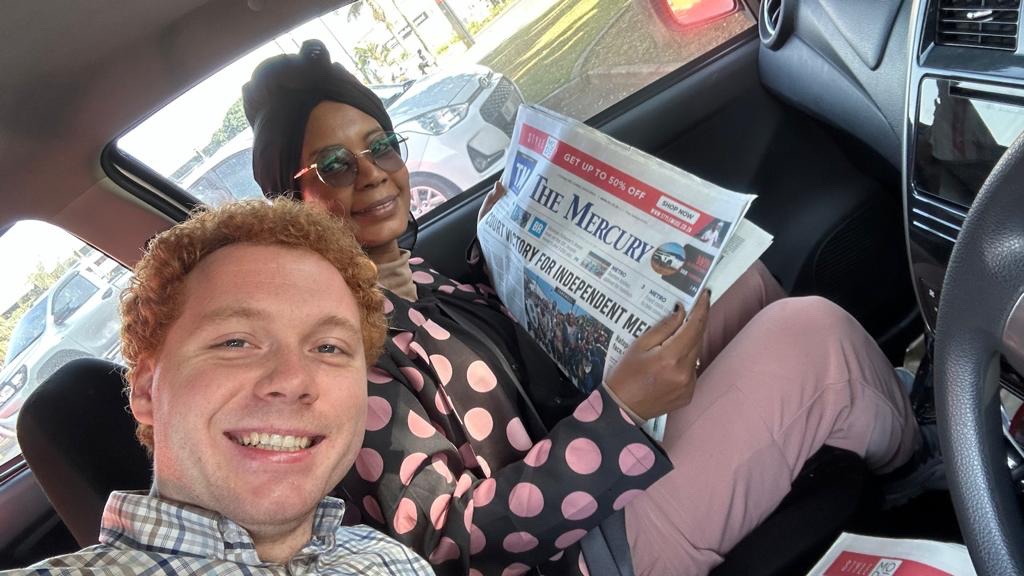
Natan announced at a wedding-preparation meal that they would honeymoon in South Africa and spend at least a day or two in Umhlanga.
Welcome to KZN, Eman and Natan, Mrs and Mr Ledvon.
May your next 50-plus or more years of marriage be as fun and beautiful as your wedding – and may some kind hotel guest be sure you see this column.
They’re on honeymoon abroad and get to read about themselves in a local paper. Content can be read above…..
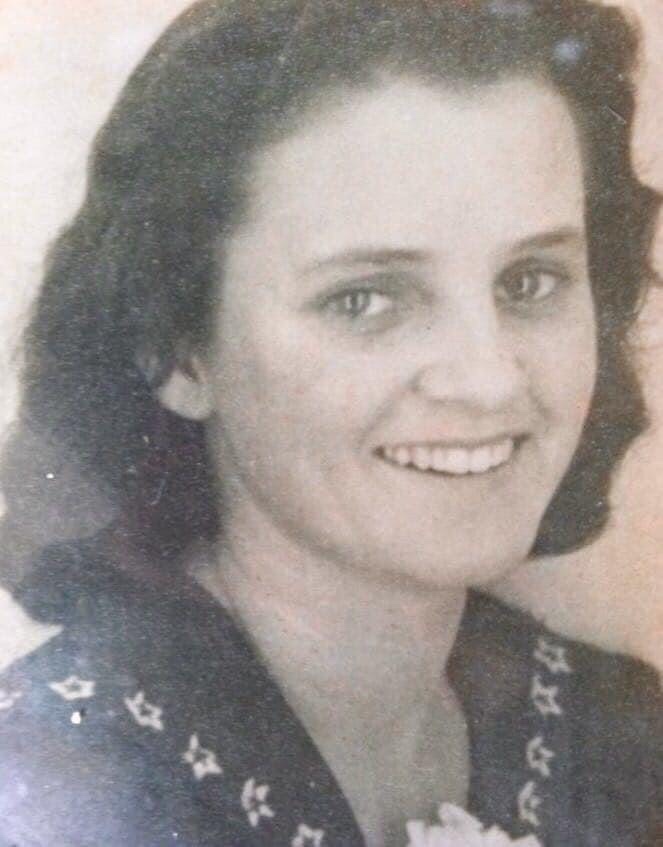
Writing, thinking, talking about our mother, Mavis Iona Smith, has never been easy.
I keep meeting unfinished business.
We confront each other occasionally – in casual social interactions when I regard, with an air of flippancy, a matter Mother would have offered serious consideration, or when I cook the “wrong” way.
It is among several of my chief regrets that I discovered, when it was too late, the importance of a man knowing his mother.
I hear Mom’s voice now and then.
Mom had a beautiful singing voice and would fill the house when mother sang.
“Just like Virginia Lee,” dad would say, “your mother sings just as beautifully. Listen, you can hardly tell the difference.”
Virginia Lee was one of South Africa’s top selling vocalists.
Sometimes my mother’s voice addresses me from some galaxy within my psyche. I usually smile and, despite her protestations, proceed however I choose. I get a perfected frown when I am tempted to bend the rules, stretch the truth.
I have seen Mother cast affirming smiles when I allow fairness, compassion, kindness and mercy to prevail.
I am regularly reminded that the umbilical cord is infinitely elastic; the woman who bore me, no matter how independent I appear to be, forever influences me, sometimes tugging a little, urging me toward what is right, good, merciful and honest.
(If the above is “bulky” in the reading it’s perhaps because dad permitted no pronouns when referring to one’s mother).
A parent of one of my son’s peers asked my son, then about 11, if I was a “helicopter” parent.
For the uninitiated, this is a somewhat playful but can be demeaning term teachers may use for the “over-parenting” types teachers must often engage.
It’s the hyper-vigilant, ever anxious, overly child-focussed parent whose entire life appears to hub around a child or children. It is the parent who is focussed almost solely on the child’s moods, grades, levels of content or discontent. It is the parent who sees parenting as a 24/7/365 forever-calling, and who, with the advent of a child or children, finally has something for which to live.
“No, he’s more like a submarine,” he replied.
This response entertained me. It revealed an uncanny understanding of how I usually operate. This compliment still enriches me even though my parenting has ended. (I am still their dad but my sons are launched).
When facing a challenge or an issue, I tend to circle the area, often undetected. I watch. I assess, get counsel.
Then, I act.
It may take a while.
What some may perceive as inaction — is not.
The submarine is scouting the territory, testing the tides, weighing options.
The sub is seeking objectivity, assessing an approach, trying to love, and timing the potential, if necessary, of one. or even several, strikes.
I am repeatedly reminded that everyone you and I meet, and everyone you and I already know, is capable of goodness and kindness —- I believe it comes with our humanity — and is living a story worth hearing. It’s amplified for me when I’m traveling.
A woman from Ukraine cut my hair this morning in a Prague barbershop. I wish I could have spoken her language and spent an hour in a coffee shop listening to her. Her kindness, her artist’s approach to my limited amounts of hair (lacking in potential to warrant her advanced skills) reached something in me.
It was much more than a haircut.
The Russian Uber driver who drove me home from dinner last evening made me wish I spoke Russian. The photographs of his wife and children mounted on his dashboard gave hint that he is far from his family. I would have loved the opportunity to hear more about his life. He treated me with kindness and got quite a kick out of seeing a photograph of my sons as I exited his vehicle.
It was much more than a safe ride to the hotel.
The woman who checked me into an earlier flight than the one I was supposed to take to my Czech Republic destination was thrilled to tell me in broken English that she too is a Smith. The delight in her eyes when expressing that there indeed was a seat for me on an earlier flight revealed genuine joy.
Her zeal meant much more to me than an earlier than scheduled arrival.
Richard McChurch always made a concerted effort to be a good public witness to the Gospel, the Church Universal, and the Legion of Invisible Witnesses – to whomever the book of Hebrews was referring – and the angels and archangels whenever he was in public.
“I might be the only Bible someone ever reads,” was something he often said. “I’ll be God with skin on,” was another.
Even though it was sometimes a source of embarrassment to others, Richard always closed his eyes, held the hands of whomever he was sharing a meal, and prayed out loud, very specifically: “God bless the very food and bless the very hands that prepared it, Lord, and in the very name of Jesus.”
Richard held firmly to the belief that you could never know who was watching. You never know the possible consequence of a public display of gratitude with the rampant onslaught of secularism that was consuming the nation.
Richard seldom ate alone. Meals were opportunities. Meals were a very Biblical way to witness.
One day Richard grabbed a quick meal at a fast food outlet near his office. While unwrapping his whopping triple-burger, burger — hold the cheese to reduce the calories — boldness overtook him and he decided to pray out loud even though he was dining alone.
“Almighty God,” he bellowed.
“Yes, Richard. You called My name,” said God.
“Well, I was just about to ask You to bless this food and to bless the very hands that prepared it.”
“Bless? Richard. What exactly do you mean? Would you like me to reduce the fat content so it won’t clog your arteries or would you like me to do a little divine angioplasty while you are eating? Bless? I mean look, Richard. You are doing the dietary equivalent of a free-fall off a high-rise building, and, and asking me to ‘bless’ your fall.”
“I get it, God. I think. Could you at least bless the hands that prepared it?”
“That’s up to you,” replied God.
“What do you mean?”
“Blessing others is up to you. That’s what I mean. Go to the counter and ‘bless’ the woman who served you. Take out your wallet. Give her all the money in it. That will ‘bless’ her.”
“God, You know sometimes You can be….”
“Yes. I know Richard. I can be so awfully practical, so downright unspiritual.”
“Are you making fun of me?”
“No Richard, I am having fun with you. Now don’t change the subject…… go ahead and ‘bless’ that dear woman who helped you.”
My mind, my thinking, my brain — all that happens in my head — is quite good, still.
I know because half the time I beat my very bright friend “Obie” (and he was head prefect and dux of his school) in Words With Friends. Currently we are almost tied at 96/97 games. I’m not going to say who is ahead.
Besides beating Obie half the time I also know my thinking is just fine because I can remember stuff. I can plan activities. I can find my way in new-to-me cities after being lost for hours.
These are positive signs.
I also know when to use the words “fewer” and “less” and I’m occasionally successful in letting it go when others don’t. Every time someone says “have” when “has” is correct, and this does happen even on National Public Radio, I resist yelling “HAS.” I’m proud I possess a degree of restraint as demonstrated with the lackadaisical uses of “less” and “fewer” and “have” and “has” by many (even in influential leadership positions) and so I know I have the capacity to monitor my emotions (most of the time). Obie lives halfway around the world from me so he never sees how upset I get when I have a really good word all lined up to play and then he takes the place I planned to use, and so, rather than getting a bonus of 50 points for using all my letters, Obie wins.
I keep all these pent up emotions to myself which takes some brain willpower and useful skills of avoidance.
I certainly don’t want you to have the impression that my brain zips along and tackles everything with ease and success.
It doesn’t.
But, I can efficiently tell you how many South African rand you can get from any amount of US Dollars and if I don’t know I know how to ask SIRI.
I can tell you all about time zones and difficult things like the metric system.
I can even help you find Togo on a map.
What I struggle with is those new parking meters in Indianapolis where the print is so small on a screen half the size of a credit card and you have to put in your parking space number you forgot to look for when you parked. Even on good days I can’t find my car once I’ve parked it but with those new age parking meters my car is usually only a few spaces away and so after three or four trips back and forth I usually manage to enter the right number and add significantly to my 10,000 steps my phone insists I do every day.
Tangentially, when I park at the mall or someplace like that and I can’t find my car I lock and unlock the car from a distance with that thing that replaced car keys and follow the beeps. This usually works unless I’m in the wrong level of the parking garage which has also happened.
I’m really trying to say that my mind is in good shape, not perfect, but I trust it.
Mostly.
Some days — even for weeks — it can lead me down dark and scary passages and very lonely rabbit holes.
I can hear or see or read something, or I don’t hear or read or see something, and my brain makes it mean something and that something is most unpleasant, even unbearable and lonely to the max at times.
I read meaning into things and I get so convinced that I’m right and it makes me jumpy.
It’s at these times I don’t care how many times Obie wins.
Then, something happens (even if I drink strong coffee) or I read something or overhear a tidbit and put a few things together — a jigsaw-puzzle-with-thoughts kind of thing — and my head bumps into finding out I was wrong, very wrong, and I spent all that time being anxious in dark and scary places and lonely places for what.
For zilch.
Yes. I can spell onomatopoeia (without autocorrect) and I have known how for decades. I can beat Obie (half the time) in Words With Friends. I recently even did the parking meter thing successfully in Indianapolis and paid for the right car, mine.
Then, sometimes that same old brain takes me places, painful places, lonely places, I really don’t want to go.
“What shall I do with this grief,” she asked, having lost so much, one thing on top of another, enough loss for many people in a life-time.
You shall sit with it. Embrace it. As difficult as that may sound, you will let it do its work.
“What shall I do with the pain, the gaping hole in my chest, a wound in my soul, my very being?”
You will go into survival-mode, operate on automatic, auto-pilot, if you can operate at all. Then, you will arrange your life around it, at least for a while.
“But, I do not want this, the anguish, this disorientation.”
Nobody does. It is always an uninvited guest. It barges in without notice, without invitation. It is no respecter of persons.
“You are not being much help.”
Grief will do its work and ultimately you will find it in you to respond. The person within you, yes, the one who is, and who feels overwhelmed, drowned in sorrow, will be shaped by the losses and will emerge to be even more beautiful than you already are.
You will know and sense things and gain remarkable intuition and offer presence for others in ways you could never have imagined.
Despite it being a path that you’d never have chosen, you will use it well.
When I sat in a tree and dangled my legs they seemed longer and could reach anywhere.
Mine did.
My legs could reach all the way to the ends of the earth.
I would wander next door into the Halgreen’s yard and climb a tree – I had a favorite tree – and dangle my feet from my branch and I’d see lines, like lines on a map. They’d come out the ends of each of my toes and race at high speed all the way through the vast expanse of surrounding trees and then leave the Halgreen yard and go into all the world. Some ran aground on the rocks of the uneasy coast-lines and were lost in the aggressive ebb and flow of pounding waves off Cape Horn. Others staggered slowly, as if they were hot and tired and thirsty into white-sand deserts and got buried and scorched, until they got a second breath and rose to the surface and burned like a firework fuse and continued their journey into the shifting haze of noon heat.
When I sat in my tree pointing my toes through Africa and beyond — this way to the Cape and the South Pole, stretching and pointing behind myself, straining my neck and my leg muscles — and that way, behind me, to the Sahara and the North Pole — the world was mine. I was connected to it. I could point to the opposite ends of the earth at the same time with each foot while my warm and soft heels touched each other like companions linked for an exciting adventure. My lines raced over the cliffs and through rocks and, ran under the oceans, inter-continental telephone lines, delivering voices to distant countries and ran up beaches and criss-crossed places like England and North America and Iceland, all from the ends of my curved bare feet.
My legs, locked at the knees, often became binoculars. I’d swing them higher and higher, searching Africa and the rest of the planet. One eye closed, using my big toes as view-finders, I could see to the end of our vast continent, deserts in the north, jungles in the middle, valleys in the south, beaches around the edges. Colors of bright days turned to night, vivid sunsets became hazy mornings and smells of foods and flowers and the sounds of music and voices rushed up my legs into my belly and from the insides of my being and warmed my heart. The Halgreen’s backyard forest gave me the continents and the continents danced in my heart. If I stood on the branch I could see all the way to our new brick house and, anytime I wanted, I could slip off the branch, leave my lines where they were and land on the rich, red and cool damp soil, and run home.
If you visit my home in small-town-USA I think you’ll be surprised by my art collection.
A local artist, and prolific one at that, seeing my framed prints – mostly European art – told me politely but pointedly that there is so much original local art that framing and hanging a print of anything is unnecessary.
I took that to heart.
Overtime, through the wonders of the Internet, I have purchased several pieces of South African art – and in making the purchase have talked with the artists.
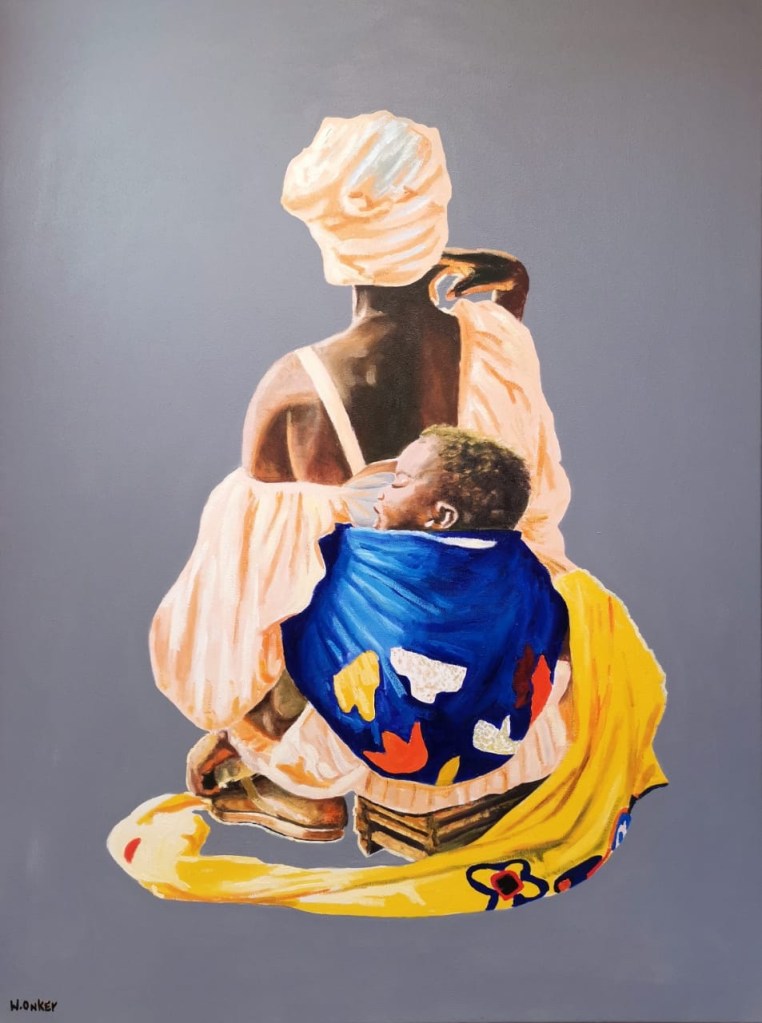
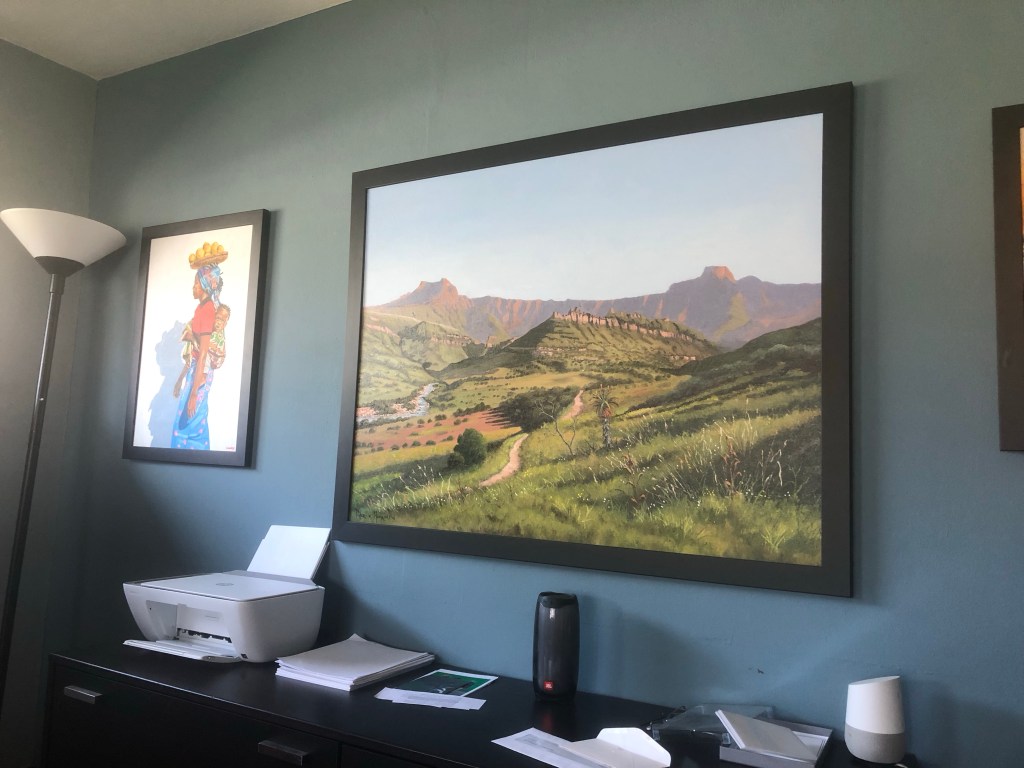
I love our large painting of the Berg’s Amphitheater by Peter VanHeereden which hangs in my counseling study. The living room has several Western Cape scenes and one large up close protea. A conversation starter and much loved piece is a painting of a woman with a sleeping baby tied to her back and a basket of fruit balance on her head. Each of these is by Western Cape artist Willem Onker. There are two breaking wave scenes by Pretoria’s Trevor Beach – who only paints waves!
It is all very beautiful and I love it all but our home screams one thing very loudly and very clearly: I miss living and being in South Africa.





 difficultrelationships.com