I devised a list of how to participate in the healing of men and women who have been hurt:
Be willing to listen, even if what is being said is what you’d prefer to not hear. Try not to re-engineer (re-frame, recast) what you have heard so it is more fitting with what you’d really like to hear.
Resist understandable attempts to short-circuit growth by trying to ease necessary pain, by offering false affirmations, and by accepting empty excuses for irresponsible behavior. Pain is a very good motivator for change. Resist the urge to remove it when it appears to be helpful.
Offer your presence, not your answers. “I am with you” is more helpful than “let me help you fix it.”
Welcome silence. There are ways to communicate that do not include words. Resist the understandable urge to chase healing and learning away with the incessant use of words and stories.
Avoid minimizing (“it’s not so bad!”) or rationalizing (“What else did you expect?”) or normalizing (“Anyone would have done that!”) the issues that resulted in pain. Do not rob necessary pain of its usefulness.
Promote “future thinking.” Ask questions focused on future wellness and success.
Try to avoid searching for the genesis (the cause) of what has led to pain. Where something comes from is not nearly as important living your way out of it.
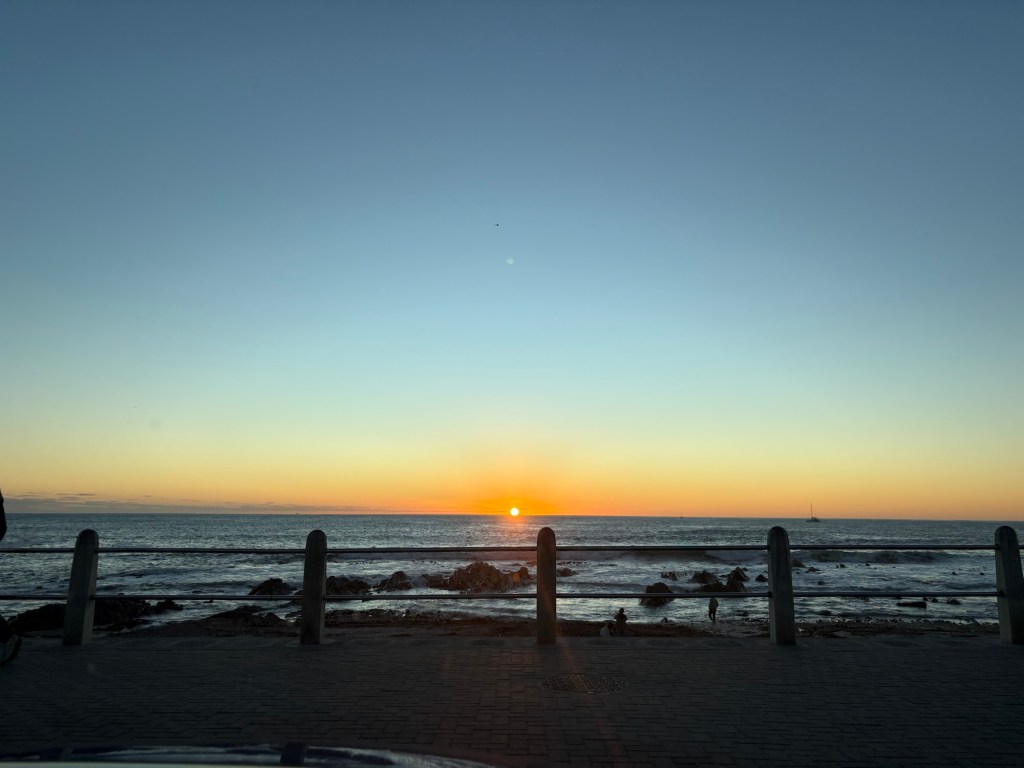
I’ve taken a hit. A foodborne disease picked up somewhere en route from Madagascar to Cape Town completely knocked me out.
But now, I am in recovery.
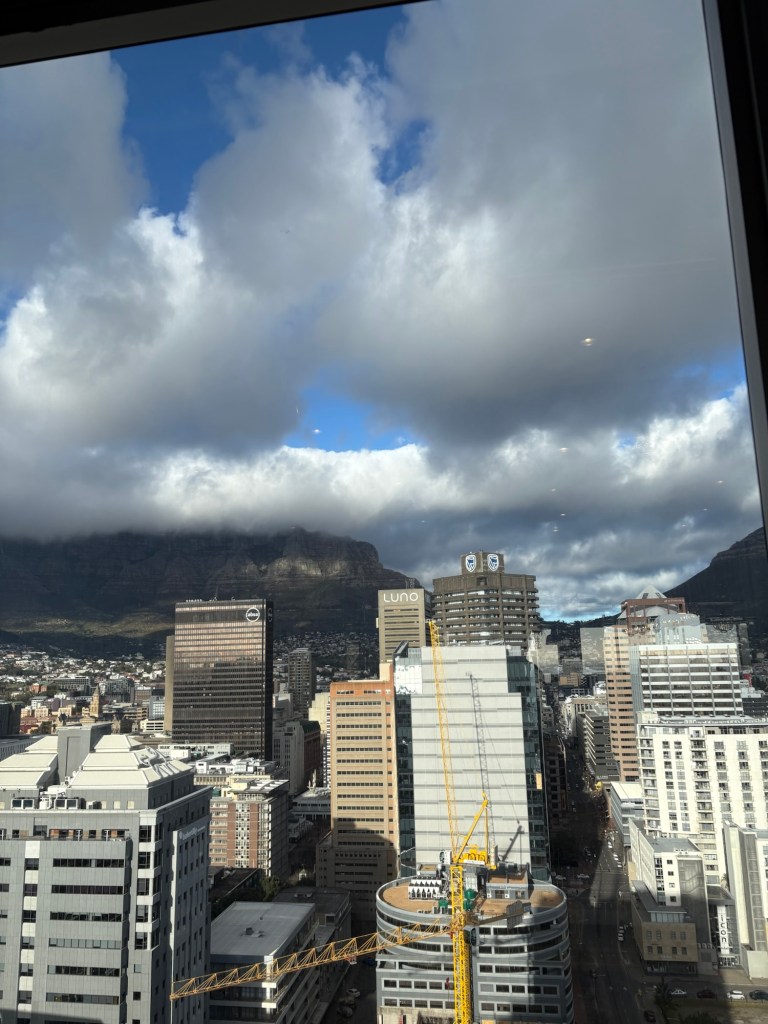
I clearly had no idea of exactly what was hitting me but all the while I felt I was living inside a weird game of Survival and a complex IQ test, all this with beautiful Table Mountain just outside my 12th floor hotel window.
Getting myself to the airport, checking in the vehicle, bidding my sister farewell as she set off for Johannesburg; ordering a wheelchair service to negotiate the vastness of the three airports awaiting me, I set off on a challenging journey home.
I did my absolute best not to lose my sense of humor or my sense of hope, often identified and described by others as foolish.
I found it hilarious in the local hospital when the young men and woman were doing all they could to protect my privacy, cover my body, maintain my integrity, honor my humanity.
I was seeking none of that.
I was seeking replenishment of the necessary, sustenance and nutrition and hydration my body was most desiring and demanding.
Something profoundly healthy happened in the middle of the first night when both my sons and their girlfriends arrived from near and afar be in the ward with me to spend most of the night, feeding me through an invisible lifeline of loyalty and love.
We were very sorry to read that you were not well. We wish you a complete recovery.
My husband and I are faithful readers of your column in the Natal Mercury. We have found your words so relevant, enjoyable and often exactly what we needed to hear. We have learned so much from your wisdom and experience.
If I remember correctly you grew up in the north of Durban and we remember your talk at the Durban Jewish Club, many moons ago under the auspices of the UJW. You were on the stage with your 2 sons.
May the Lord grant you many more healthy and fruitful years to continue writing and thus giving us pleasure.
I suppose the real regret of not really knowing her began to emerge when I was a teen-ager, but it became most compelling, predictably, when I had to disperse her ashes. For what I am sure were good reasons, none of which I can now recall, and despite being the youngest of three with a father still living, the task of sprinkling her remains was assigned, perhaps by default, to me. I did it alone one warm and sunny morning, having told no one what I was about to do.
The crematorium had called twice to say mother’s ashes were ready before I picked her up, then, instead of scattering the ashes immediately, I took them home and placed them under my bed. It was months before I retrieved them for the priest-like act of dispersal, even though she had told me exactly where and how and when she wanted it done. On the day I chose, I placed her on the car seat next to me – the car boot did not seem right – and made my way to the Japanese Gardens. Her name in gothic print caught my eye and at every glance, I felt the need to make conversation like strangers on a bus may feel but I resisted, not knowing how or where to begin.
According to her repeated wishes, I made my way toward a public garden I knew she loved. As I prepared to cross the wooden bridges into the carefully manicured gardens, holding the box uneasily away from my body, all of what I had not done as a son tumbled through my mind in the uneasy and disjointed style of a rather crass home movie.
I walked the carefully tended lawns holding her at arm’s length, tripping over my guilt. Persisting to a place I considered more beautiful than any other, from some distant universe, relayed through the sky, reflecting off the ocean to the surrounding trees, moving through my body and securing me to the earth, I heard Mother affirm my choice of rolling deep green landscape and I held the box to my chest and stood alone against the moment, this final act, a sense of wonder, an acknowledgement of deep regret.
I waited.
I was ready to spread the ashes.
Seated on my haunches, I rented the box open, peered at the gravel, white and coarse, and I placed my fingers knuckle deep, feeling the dry chalk and dust. I felt again the talcum powder she so liberally used in the sweet-smelling, steamy bathroom of fogged mirrors and slippery floors, wet with scattered, twisted towels. I saw again the powder’s trace from the bathroom to her bedroom to the tranquil gardens that surrounded me, and I knew again the scented smell, strong and lingering all through the house of my early years. Her sandy remains powdered my hands, falling easily through my fingers to the grass around my feet and to the beds of colorful flowers. The ashes fell into the colors of the tropical flowers and became part of the robust flesh, touched then, with new and delicate shading. Her dust colored the dirt between the rows of saplings, lending it a sallow complexion. Remains blew and landed, leaving a trail of white against the sturdy, solid green of the African buffalo grass.
When the dust had settled, I tipped the drab empty box, her full name declared loudly in a gothic font on one side, into a refuse bin I saw attached to a nearby tree and broke into a steady run, weaving my way past crowds of playing children, adults chatting on picnic blankets, all oblivious of my morbid but accomplished, task.
I cried all the way home. My chest heaved. My body rocked. When my throat clogged with phlegm, I stopped the car at a familiar clearing in a sugarcane field to vomit. Bent double, I got out and, as if from the center of the Earth, spewed a lifetime of missing the mark.
Then I turned from the pungent odor, shut the car door and made my way home.
I have treid to capture the essence of what I heard a woman say about her mother. I think I have covered all the points and, althoug using my own words, capatured the tone of love and expressed admiration as she talked on hre mother…
My mother (in her 80s) is one of the most active women of her age I have ever known or heard about. It is quite wonderful how she keeps in contact with her family all over the world and remembers everything important. She forgets ‘little things’ here an there but no more or less than people half her age. I hsve never known anyone to be so forgiving and trusting and it is not that she has had an easy life. She has outlived two husbands and two or her 5 sons and daughters and three grandchildren. There has been so much change in the world during her lifetime but she has never been ‘stuck’ in the past or afraid of change. Mother follows sports, gives to charites, visits her friends and knows her neighbors. She hss never lost ber sense of humour – especially when it comes to the retirement home where she lives. Mother is not critical of the young and never gives the impression that the ‘old days’ were better than today.
We respond. We react. We learn. We hurt. We recover. We become. And we become more and more. We become day-by-day, year-by-year. We become what we do want. We become what we don’t want.
A healthy identity is found in knowing, doing, enjoying what you are good at while accepting and embracing what you are not good at.
It is being brave enough to discover and articulate what you want and what you do not want.
There is much about your identity over which you have had no control and no say like where and when and to whom you were born.
There is much about your identity that is in your hands to shape like how ardently you will seek an education, how strongly you will enforce your personal boundaries, how much you will protect and enjoy your deepest friendships.
Our identities are wrapped in several layers, that which know and don’t know (think Iceberg). In concert, they have had a profound impact on who we have been, who we are, and who we will be.
Enjoy yourself and who you are becoming.
If you cannot enjoy yourself can you just imagine how difficult it may be for others to enjoy you.
I am reminded why I, an immigrant, love the USA…..
Opportunities are real: It is no exaggeration that this is a land of opportunity. Men and women of all ages, racial groups, ethnic groups, from scores of nations have “made it” here in the USA.
Freedom is real: I can, I do, hold opposing political views of some close friends. Like i think I do, they have very good reasons for voting the way they vote and believe what they believe.
Resilience is real: It is a credit to this nation that vast extremes find simultaneous representation and hundreds of millions of people are able to “hold the tension” such extremes deliver.
I have visited several nations where extremes would not be tolerated. It is my experience that in the USA one can be “left of Bernie and right of Rush” and find a welcome and acceptance with neighbors who reject both. (For those outside the USA Bernie is a US senator known for left wing views. Rush was a national radio personality considered by many to represent the far-right.)
I am on rare occasions asked why I don’t typically post political content. First, a son asked me not to. Then, people vote how they vote for far deeper reasons than is likely to be influenced by social media. I seek no debate. I post this today because I do want my friends to know why I love the USA as much as I also love the land of my birth – I have lived exactly half my life in each.
Learn the ART of living fully in your own head, and only, in your own head. Think for yourself. Try not to interfere when others think for themselves even when they express thoughts you’d never think. It’s allowed. MINDing your own business, avoiding crossovers, is a crucial and necessary art in the empowering business. Like everything, it begins at home. Your spouse, adult sons and daughters, your parents, all the adults you know have unique brains capable of their own thinking. You may find this harder than it sounds if you are accustomed to living in multiple heads other than your own, and in your own.
Why is this important? It’s fundamental to trust, growth, respect, equality, mutuality and all those good things. I’d suggest it would be highly disrespectful of me to assume I am better at doing your thinking than you are at doing your thinking. If I focus my mind on my business and trust you will do the same, the meeting of our minds has the potential to enhance both of us. Conversely, if every time we talk or spend time together you cross over in my head it is likely much of my energy will be spent, not in thinking and exploring with you, but in attempts to safeguard my head-territory.
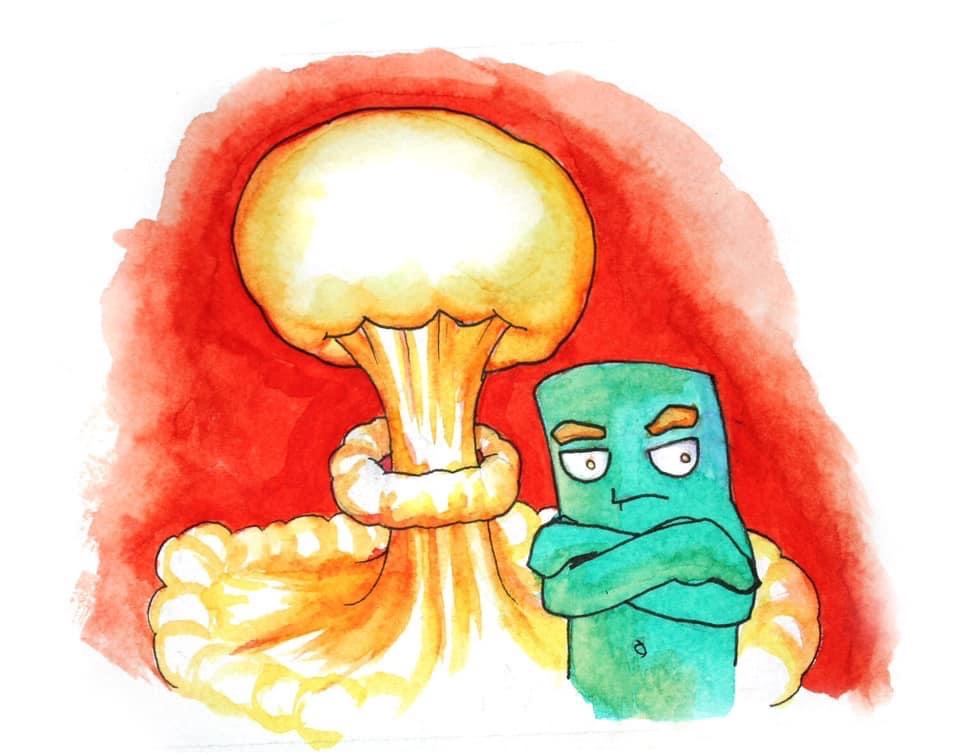
You will either deal with it or it will deal with you.
Yes, get in first.
Waiting too long may be to your detriment (it tunnels deeper and deeper into you) and the detriment of those who love you (who are subject to your hurtful outbursts) and those around you (who dance on eggshells around you).
What many fail to understand is that Anger does not have the same capacity for denial its hosts have. The angry man or woman may claim “No Anger Here” and call the outbursts by more acceptable, nice-sounding names names, but anger doesn’t care about its hosts or how it is named or paraded.
Its a destroying virus and like any virus it attaches and grows and spreads and has no boundaries or limitations.
You will either deal with Anger or Anger will deal with you.
If you are reading this and getting angry – well, what more do you need?
Get the help you think you don’t need.
When you are calm and objective and can talk about how anger is eating you up – you are most available for help.