My teachers have never left me.
They hover in my awareness and continue their holy work, despite the decades that separate me from their classrooms, lecture theaters, labs, fields, gyms, and studies.
Almost all were highly motivated men and women who loved their jobs and regarded it as a calling.
I hear them yet, beckoning me to adopt high standards for others and for myself.
I find it incredible that the teacher with the parrot – Mrs. Bradman – who dogged my third or fourth year of primary school and a psychology professor more than a decade later, and my family therapy professors, a lifetime later and nations apart, and Mr. Morey, Mr. Graham, Mrs. Hornsby, and Miss Chadwick – I could go on – cancan in my frontal lobe at the oddest moments.
Someone is going to tell me there is medication for my condition but I think not, I regard it a testimony to the power afforded men and women who are teachers and I know I could write extensively about each person named.
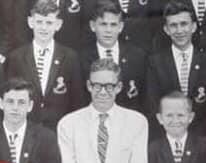
My English teacher, Richard Morey, at Northlands, now Northwood School, was the finest English teacher a boy could want.
Mr. Morey made us write anything (“Heads down, Gentlemen, fill a page, write about anything you want. If don’t have anything to write about write about that.”) for the first five to seven minutes of almost every lesson. This daily exercise showed me I could try my hand at writing. Mr. Morey said splitting infinitives, ending a sentence with a preposition, using “less” when you mean “fewer,” misplacing an apostrophe, were as close to criminal acts as using “I” when it should be “me.” He made us recite “Quisque Sibi Verus” from our blazer badge and said the day may come when we’d fully understand its meaning. He debated whether Shakespear’s King Lear was “a man more sinned against than sinning” and argued about which of Lear’s two daughters was most evil. He talked of people he’d met in literature – Pip and Miss Havisham and Ralph and Piggy and Jem and Scout, to name but a few – as if they were long-time neighbors.
That’s an odd thing to observe when you’re 15.
It was for me.
I did think it a little odd that poetry could make a grown man cry.
When Morey exposed the class to “Walking Away” by Cecil Day Lewis he could never have known how much the poem would shape my thinking and parenting.
“I have had worse partings,” writes Lewis, referring to watching his son cross the rugby field and walk alone toward his boarding school education, “but none that so gnaws at my mind still,” and later continues, “how selfhood begins with walking away, and love is proved in the letting go.”
This sentiment steered me at each crucial departure in my sons’ lives.
The lines reverberated when I released them to kindergarten, signed release forms for youth retreats, watched them walk away through an airport terminal, one to an adventure in Australia, the other to Europe.
Neither son is a “hesitant figure, eddying away” as Lewis describes his boy. Rather, by grace alone they are portraits of courage and determination – but there remains pain to be endured as they walk away.
It’s mine, not theirs.
I bet you can recall word-for-word what an inspiring teacher did for you: One very ordinary day, I was about 14, Mr. Morey summoned me to his table. He took a minute portion of an essay I had written, about three lines, and circled it. Pointing with his red pen, he said, “Do more of this. Not, that,” the “that” referring to the other three pages.
I treasured the red circle.
Built a career on it.

 difficultrelationships.com